A Facel Vega coupe from Paris, a Jensen Interceptor and a Bristol 411 all shared one secret under the hood. Each used an American V8 from the Chrysler family, and each wrapped it in a hand-finished body that cost far more than the engine did. For a few decades, small European firms built some of the fastest and most comfortable cars on the road this way.
Yet most of those names faded once the money ran out. Today, a lot of people know the Ferrari and Aston Martin coupes of that era, but few could pick an Iso or a Monteverdi out of a lineup. That’s a shame, because these cars were built to cover long distances quickly, and that makes them a joy behind the wheel.
So these are our picks: seven forgotten luxury coupes that we think were pure blasts to drive. The verdict is our opinion. The years, engines and production figures come from maker histories, auction records and reference sources.
1. 1957 Facel Vega FV2 coupe
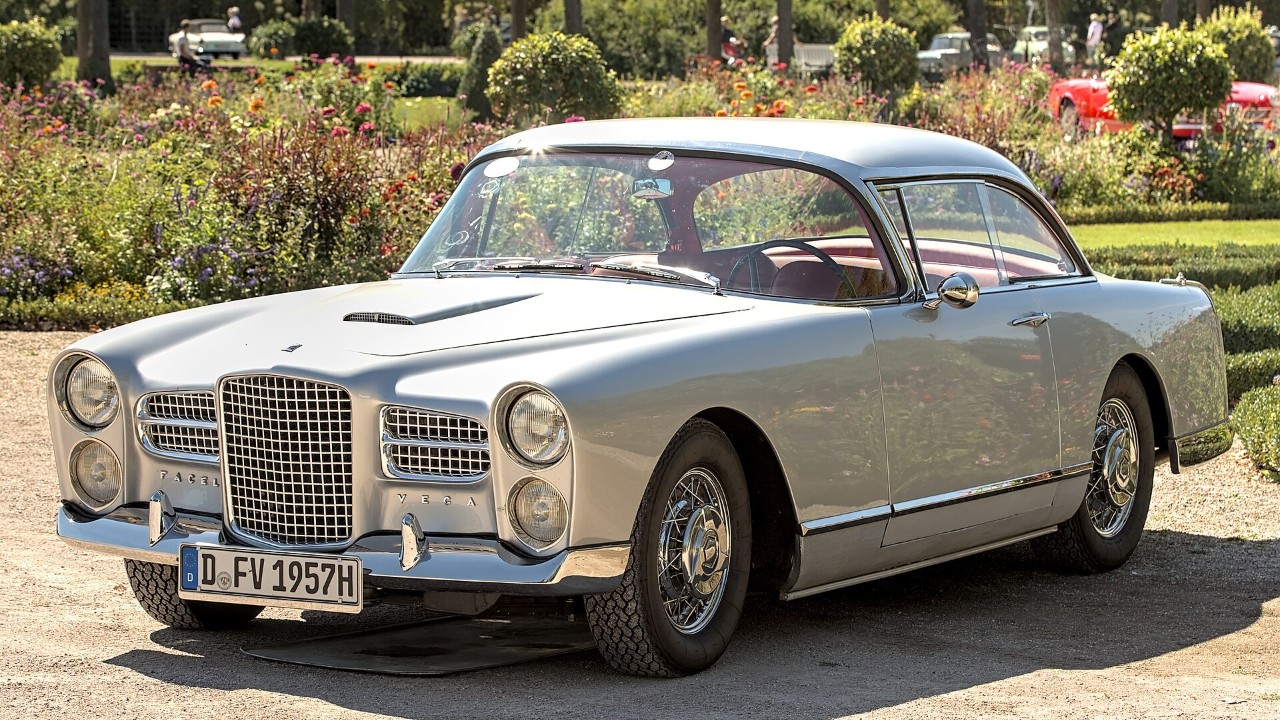
Jean Daninos founded Facel in 1939 to make aircraft parts and stainless steel trim, and the company later built bodies for Panhard and Simca. Then, at the 1954 Paris Salon, he showed a car under his own badge. The FV and FVS line ran from 1954 to 1959, and it set the pattern for everything Facel built afterward.
The FV2 arrived in October 1955 with a wraparound windshield. It also had a metal dashboard that was hand-painted to look like burled wood. Power came from a 4.8-liter V8 rated at 250 horsepower. As a result, a Facel Vega coupe had serious pace, and it carried its passengers in wood and leather.
According to conceptcarz’s Facel Vega history, buyers of the marque included Pablo Picasso, Ava Gardner and racing driver Stirling Moss. That tells you who these cars were for. If you want the bigger, later version of the story, our look at the Facel Vega HK500 picks up where the FV2 left off. In our view, the earlier car is the purer driver’s coupe, because it pairs American torque with a lighter, simpler French body.
2. 1963 Lancia Flaminia Coupe Pininfarina 3B
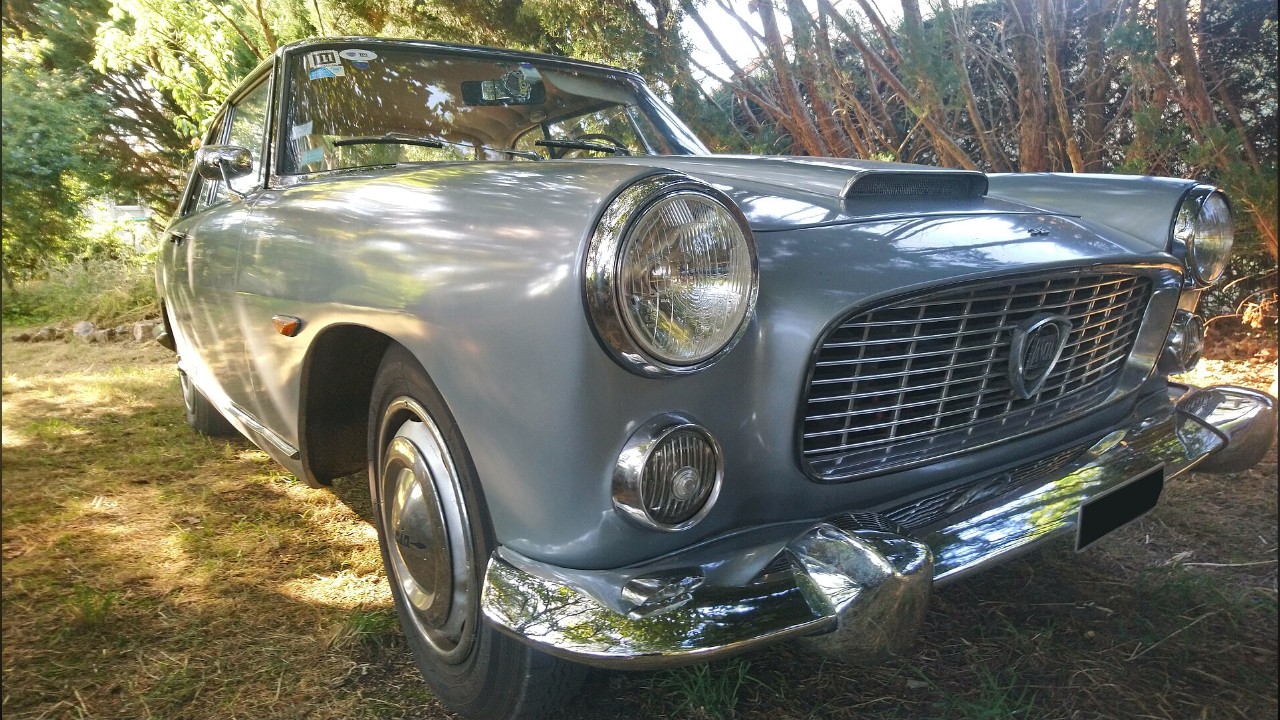
Lancia’s Flaminia was the company’s flagship from 1957 to 1970. Across all body styles, Lancia sold 12,633 of them. Oddly, the two-door Pininfarina coupe outsold the four-door sedan it was based on, with 5,236 coupes built.
The “3B” badge tells you something important. In October 1962, Lancia gave the coupe its first performance upgrade. According to Dorotheum’s auction catalog, three Solex carburetors replaced the single unit, output rose to 128 horsepower, and Lancia added the 3B initials to the trunk lid. Underneath, the car kept a De Dion rear axle with the gearbox mounted at the back, an expensive layout that balanced the weight well.
We love this coupe because it drives like an engineer’s car, not a showpiece. The V6 is smooth, the chassis is well sorted, and the Pininfarina shape is calm and elegant. Values stay sensible, too. In June 2018, Dorotheum sold a 1963 3B coupe for 16,100 euros, below its estimate, although that car had a later 2.8-liter engine fitted. For a hand-built Italian GT, that’s a lot of car for the money.
3. 1966 Iso Rivolta IR 300
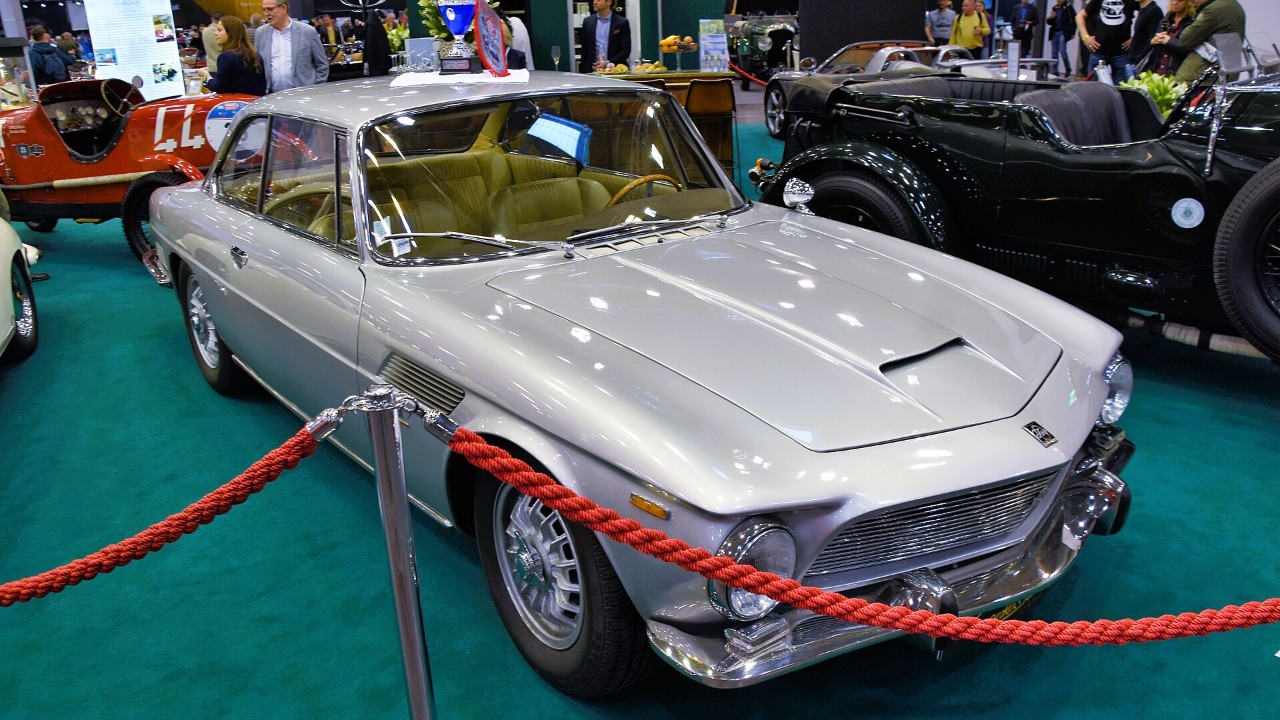
Iso’s first big coupe, the IR 300, debuted at the 1962 Turin Motor Show. Giorgetto Giugiaro drew the body while he worked at Bertone. Meanwhile, Giotto Bizzarrini developed the pressed-steel chassis.
Power came from a Chevrolet 327 V8 of 5,350 cc, rated at about 300 horsepower. Instead of a cheap live axle, Iso used a De Dion rear end with a Watt’s linkage and coil springs. The result was a four-seat coupe with a top speed of about 135 mph. Iso built 797 IR 300s between 1962 and 1970. A stronger IR 340 version also existed, but Iso made only 167 of those.
In our view, the IR 300 is the most practical car on this list. The small-block Chevy is easy to service almost anywhere, and it pulls hard from low revs. Meanwhile, the chassis was designed by someone who understood race cars. The car also looks understated, which suits a long, fast road trip. If you want Italian style without Italian engine bills, this is the one we would chase first. Just budget for the bodywork, since a hand-built Italian shell is the costly part to put right.
4. 1972 Jensen Interceptor SP
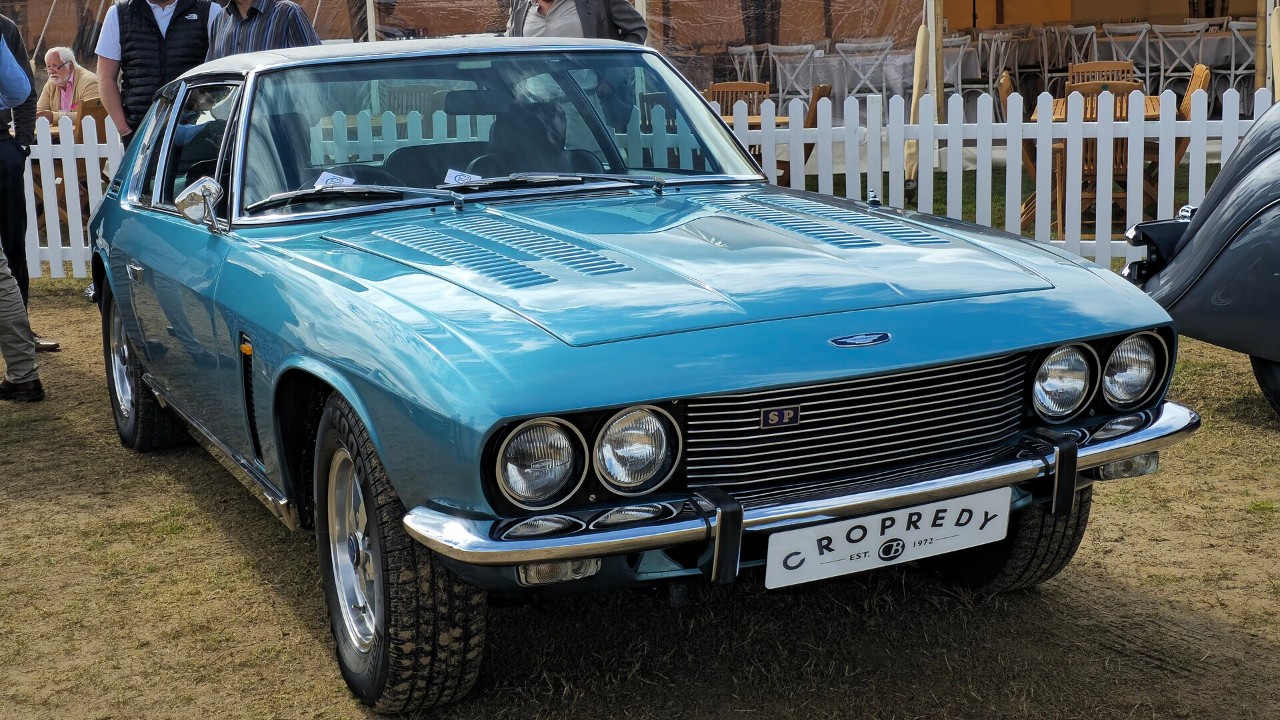
Jensen built the Interceptor by hand from 1966 to 1976, and it made 6,408 of them in all. Carrozzeria Touring designed its body. In 1971, Jensen added a new flagship called the SP, which replaced the four-wheel-drive FF at the top of the range.
The SP used Chrysler’s 440 V8 with three two-barrel carburetors, the setup Mopar fans call the Six Pack. It also came with a fully louvered hood, a vinyl roof and a Learjet 8-track player as standard. Only 232 SPs left the factory, and 219 of them had right-hand drive. That leaves just 13 left-hand-drive cars for buyers outside Britain.
We think the SP is the most entertaining Interceptor because it adds a big-block punch to a comfortable British cabin. It is still a heavy car, so it rewards smooth driving over hard cornering. However, few coupes from the period could cover a motorway as quickly or as quietly. If you find an SP for sale, check that the louvered hood and the 8-track survive, because they set it apart from a regular Interceptor. For more on how the Interceptor began, our story on the 1969 Jensen Interceptor covers the earlier cars.
5. BMW 2800 CS
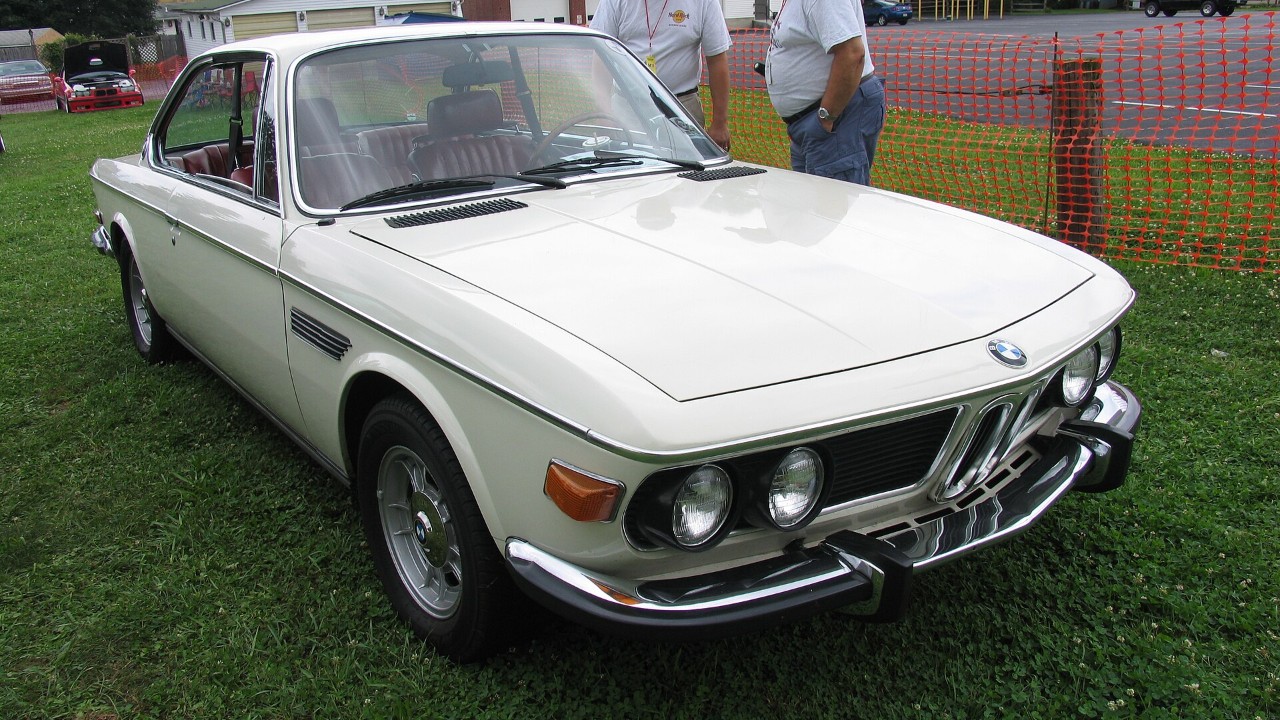
BMW built the 2800 CS from 1968 to 1971, and it replaced the four-cylinder 2000 C and 2000 CS. Karmann built the bodies. To fit BMW’s new six-cylinder engine, the company stretched the wheelbase and gave the coupe a new nose that echoed its big sedans of the time.
That engine was a 2,788 cc straight-six with a single overhead camshaft. It made roughly 170 horsepower at 6,000 rpm, and it loved to rev. Buyers who preferred two pedals could order the 2800 CSA with an automatic. Then, in 1971, the 3.0 CS and 3.0 CSi took over. The lightweight 3.0 CSL later won several European Touring Car Championship driver titles, so the 2800 CS sits at the start of a racing family tree.
Why does it belong here? Because the 2800 CS gives you the shape that made those racers famous, with a big, airy glass area. To us, it feels lighter on its feet than the American-engined cars on this list. In our opinion, it’s the best pick for someone who likes a car that rewards a twisty road more than a long straight one.
6. 1967 Monteverdi 375 S
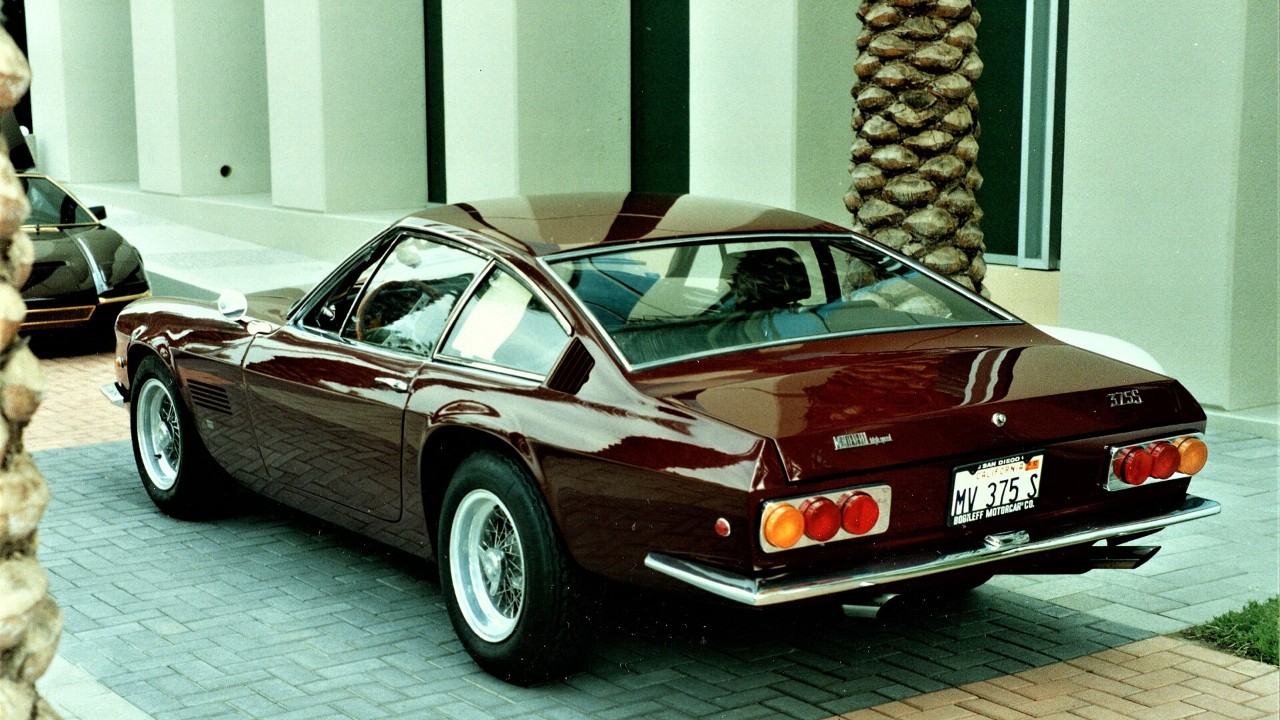
Peter Monteverdi took over his father’s garage at age 22 and turned it into a dealership for Ferrari, BMW and Bentley. He also raced. According to Silodrome’s history of the car, he founded his own car company in Binningen, Switzerland, in 1965.
The High Speed 375 S was his first big coupe, and it debuted at the Frankfurt show in September 1967. That was the 43rd IAA, a big stage for a brand-new maker. Pietro Frua designed the body, and a big-block Chrysler V8 of around seven liters sat under the hood. An automatic gearbox came as standard. However, the partnership with Frua soon broke down, and a court ruling later barred further use of Frua’s design. As a result, Frua-built 375 S coupes are very scarce, although sources differ on the exact number.
We include it because it shows what a well-connected dealer thought a fast coupe should be. It pairs Italian lines with a lazy, torquey American engine and Swiss build standards. If you’d like the rest of Monteverdi’s story, our feature on the 1970 Monteverdi High Speed follows the later Fissore-bodied cars.
7. 1973 Bristol 411
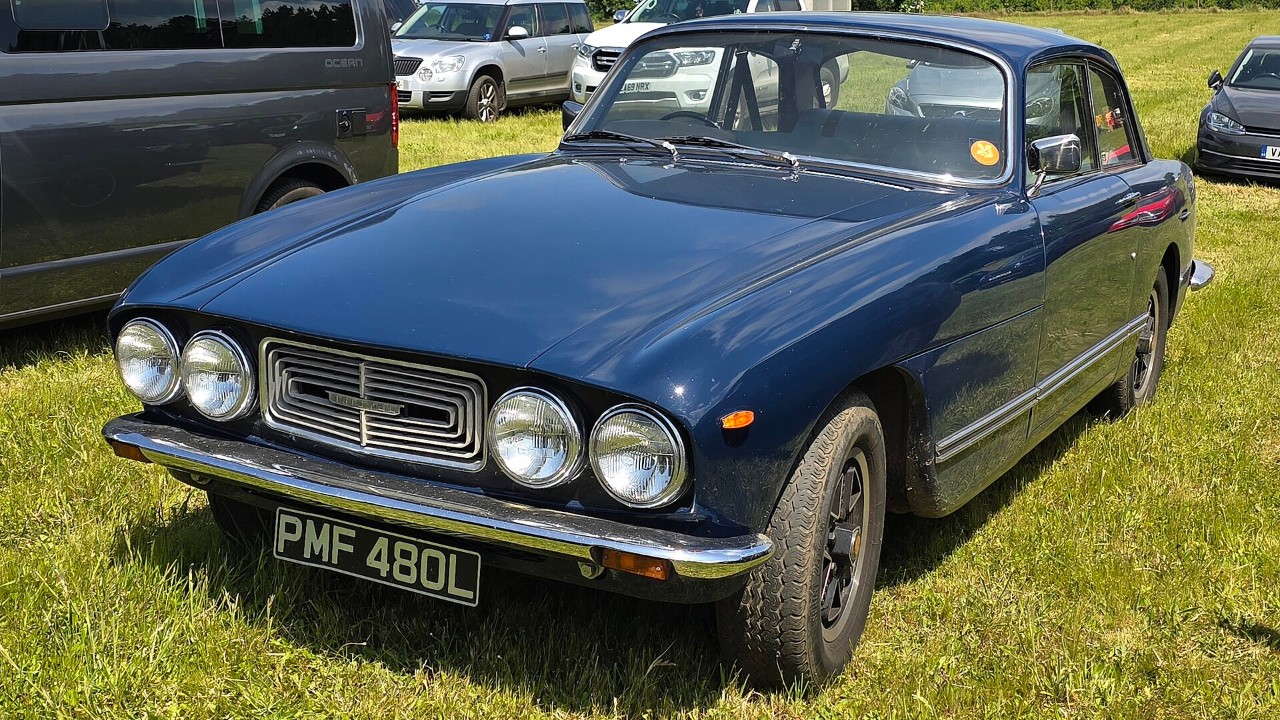
Bristol’s cars always felt engineered rather than styled, and the 411 is a good example. It ran from 1969 to 1976, and Bristol built only 287 of them. It was the fifth series of Bristol’s Chrysler V8 cars, so the company had a long time to refine the formula.
Early 411s used Chrysler’s 383 cubic-inch V8. Later Series 4 and 5 cars moved to a 400 cubic-inch engine to make up for a drop in compression. From 1971, the 411 also gained self-levelling suspension, which helped it stay composed with luggage on board. Then, in 1972, the Series 3 became the first Bristol with four headlamps. Top speed was about 143 mph, a remarkable figure for a car with a proper back seat.
In our view, the 411 is the most underrated car here. It doesn’t shout, and few people outside Britain know what it is. Still, it offers big-block thrust, a firm and well-balanced chassis, and a cabin built for four adults. With just 287 built over eight years, it is scarce, too. On this list, only the Jensen SP and the Frua-bodied Monteverdi are rarer.
More from Fast Lane Only