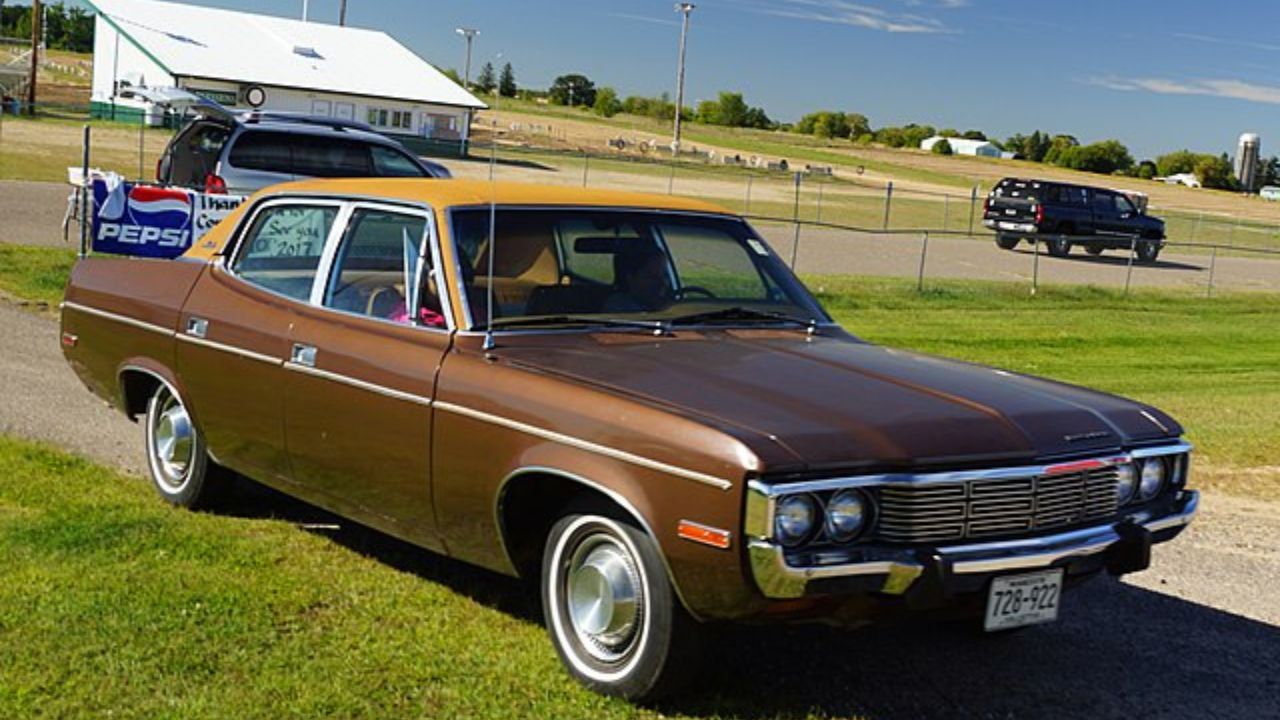
The LAPD bought 534 AMC Matadors in 1972 alone. That’s a lot of trust to place in one police car, and the department gave it only after testing cruisers from GM, Ford and Chrysler.
Patrol work is brutal on a car. A cruiser idles for hours, hauls heavy gear, and then has to sprint, brake and turn hard at a moment’s notice. As a result, plenty of sedans wilted under that kind of abuse. A few, however, earned reputations for soaking it up shift after shift.
These are our picks, nine forgotten police cars that we think never seemed to quit. The verdict is our opinion. The engines, orders and test figures come from reference, maker and police-industry sources we checked. Some were TV stars, while others spent their lives in plain white paint. Above all, every one of them did the job.
1. 1967 Plymouth Belvedere police car
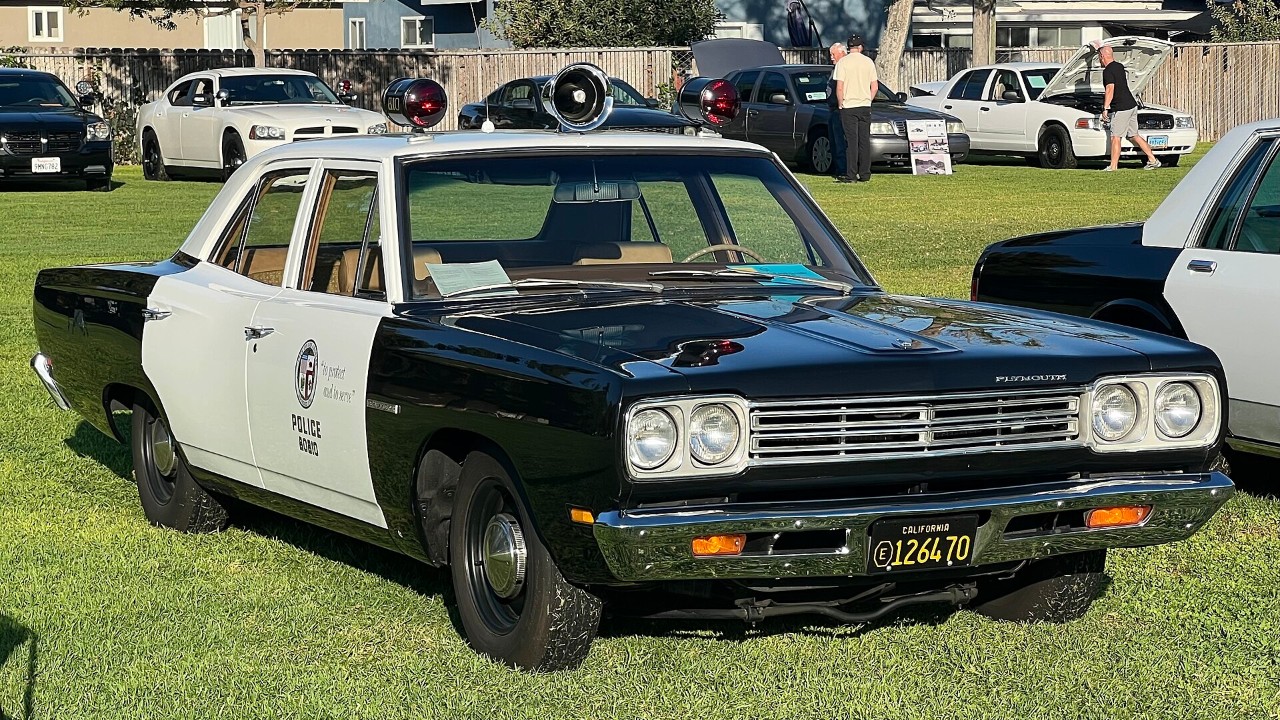
Before the Matador, the TV version of the LAPD drove Plymouths. According to Consumer Guide’s history of the Adam-12 cars, the show’s pilot used a 1967 Plymouth Belvedere police car on loan from the LAPD. Under the hood, it carried a 383-cubic-inch V8 with a four-barrel carburetor, rated at 325 horsepower.
That wasn’t just Hollywood casting. Belvederes served as police cars from the late 1960s into the early 1970s, and they were common in both the Los Angeles and New York departments. Later, Plymouth replaced them in police work with the Gran Fury. Consumer Guide adds that producer Jack Webb was strict about LAPD accuracy, right down to the cars.
Our take: the Belvedere is the cruiser that made the 1960s police car look tough. It was a plain mid-size sedan with serious big-block power, which is a winning recipe for a patrol car. Sadly, we rarely see a real one at shows today. If you want one, we’d buy a documented car and treat a “tribute” build as just that.
2. 1966 Dodge Polara police car
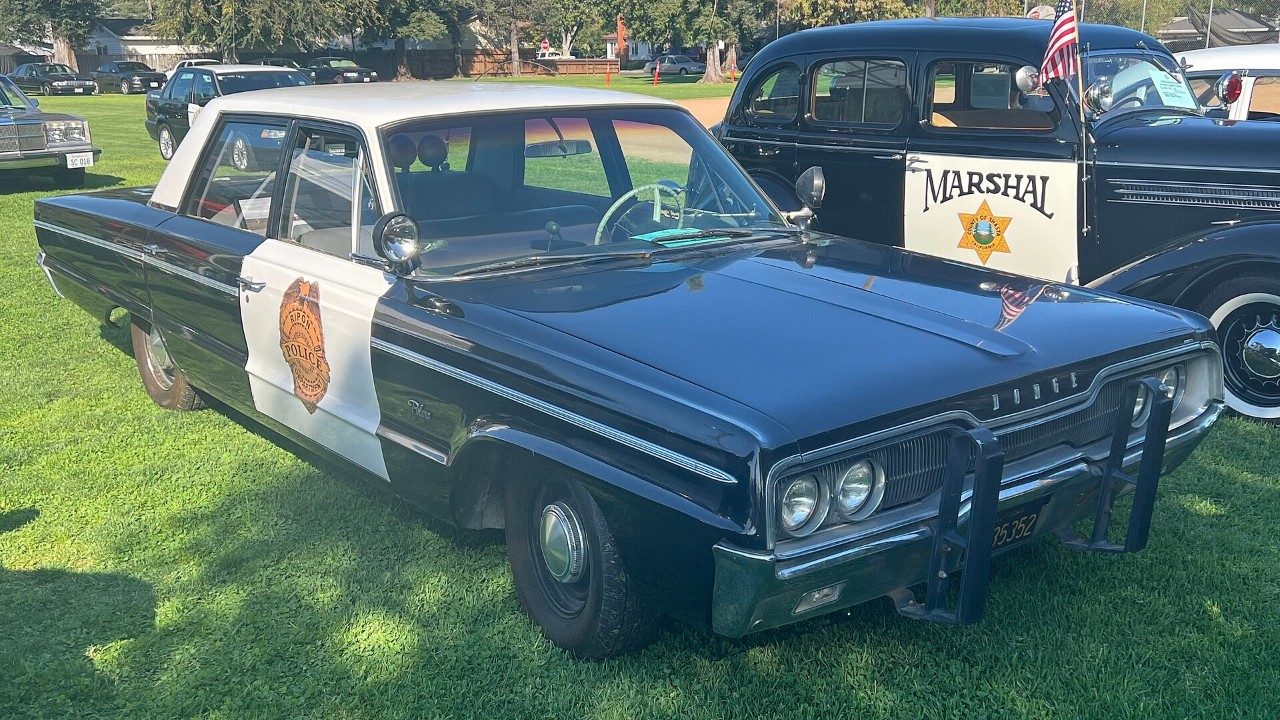
The Polara won its police job on size. Back in 1961, California officials insisted on a longer-wheelbase pursuit car rather than the shorter Dodge Dart. The Polara rode on a 122-inch wheelbase, compared with the Dart’s 118 inches, and the California Highway Patrol ordered 1,236 of them that year.
Those first CHP cars were stripped down for duty. For example, they had rubber floor mats, gray vinyl interiors and very little chrome. Power came from a high-output 383 V8 with a 413 camshaft and a four-barrel Carter carburetor. The relationship lasted through the decade, too. In 1969, a CHP Polara set a Chrysler test-track record of 149.6 mph for a factory-built four-door sedan, and that mark stood until 1994.
In our view, the mid-1960s Polara sits right in the middle of Dodge’s best police years. It looked like a family car, yet it could run with almost anything on a California freeway. Today, however, you mostly see these cars in old photos. If you find one, we’d verify its police past with paperwork before paying extra for it.
3. 1973 AMC Matador police car

The LAPD was the Matador’s biggest police buyer, mainly from 1972 to 1974. After testing rival cruisers, the department chose the AMC because it out-handled and outperformed the others. Agencies valued the 1971–1975 police cars for their durability and stability at high speed, and many stayed in service for years.
The secret was the 401 V8, a police and fleet engine in the Matador. Consumer Guide says the 1972 LAPD car made 255 horsepower and could hit 60 mph in 7.5 seconds on the way to 126 mph. Meanwhile, the Matador became an Adam-12 regular from 1972 until the show ended in 1975. We’ve also argued why the AMC Matador wasn’t as boring as you think.
Our take: the Matador is the most surprising police car on this list. It beat the big three at their own game, at least for a few years. The 1974 redesign added a longer nose and bigger bumpers, though, and the extra weight hurt performance. That’s why we’d pick a 1971 to 1973 car. Above all, a real 401 police car is the one to find.
4. 1976 Chevrolet Nova police car
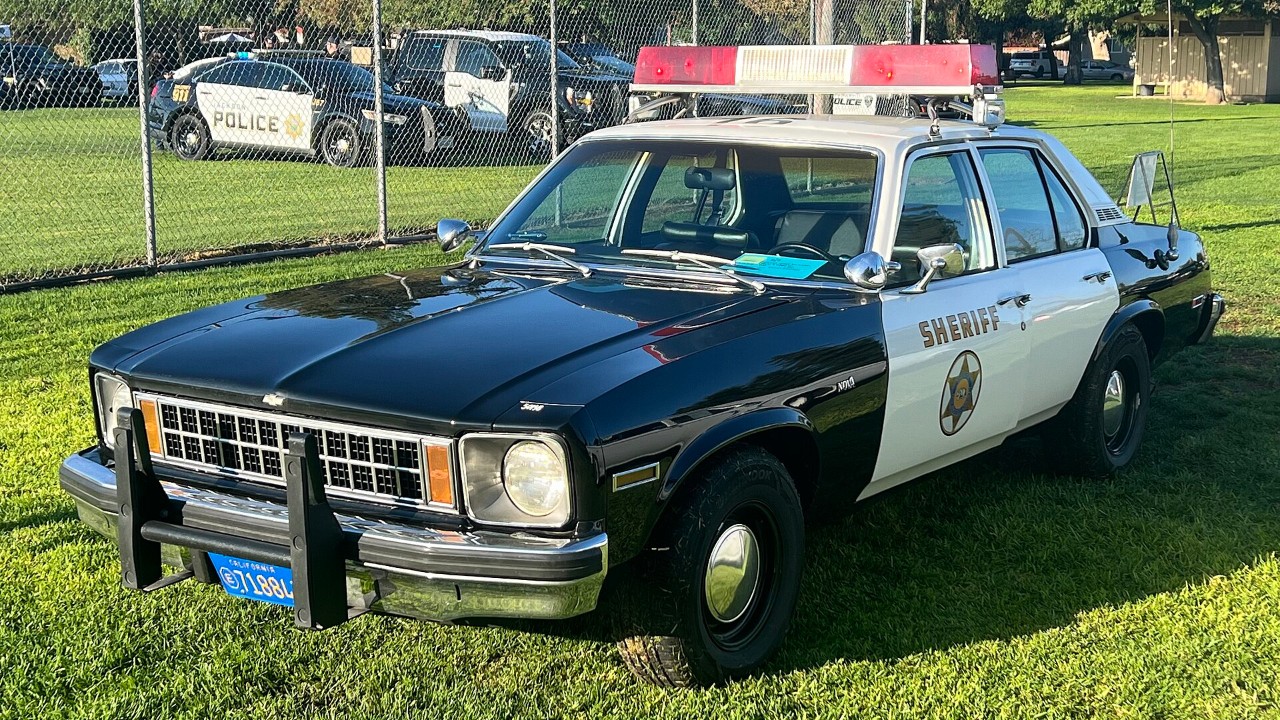
Compact cruisers were rare in the 1970s until the Nova changed minds. After testing the 1976 Nova, the Los Angeles Sheriff’s Department placed the largest order for compact police cars ever seen in the United States. The sheriff’s evaluation was exhaustive, and other agencies took notice.
The very next year, a surprising number of police departments ordered Novas with 305 or 350 V8s. Later, by 1978, Chevrolet’s sales brochure boasted that agencies in 48 states were driving Novas. For context, the 1977 Nova lineup offered a 170-horsepower 350 four-barrel as its top engine.
In our view, the police Nova is the most overlooked Chevy cruiser of the era. It was smaller and cheaper to run than a full-size patrol car, yet it carried enough V8 to do the job. Even so, we rarely see a genuine police Nova today. We’d check the paperwork closely, since a plain Nova is easy to dress up as a cop car.
5. 1978 Plymouth Volare police car
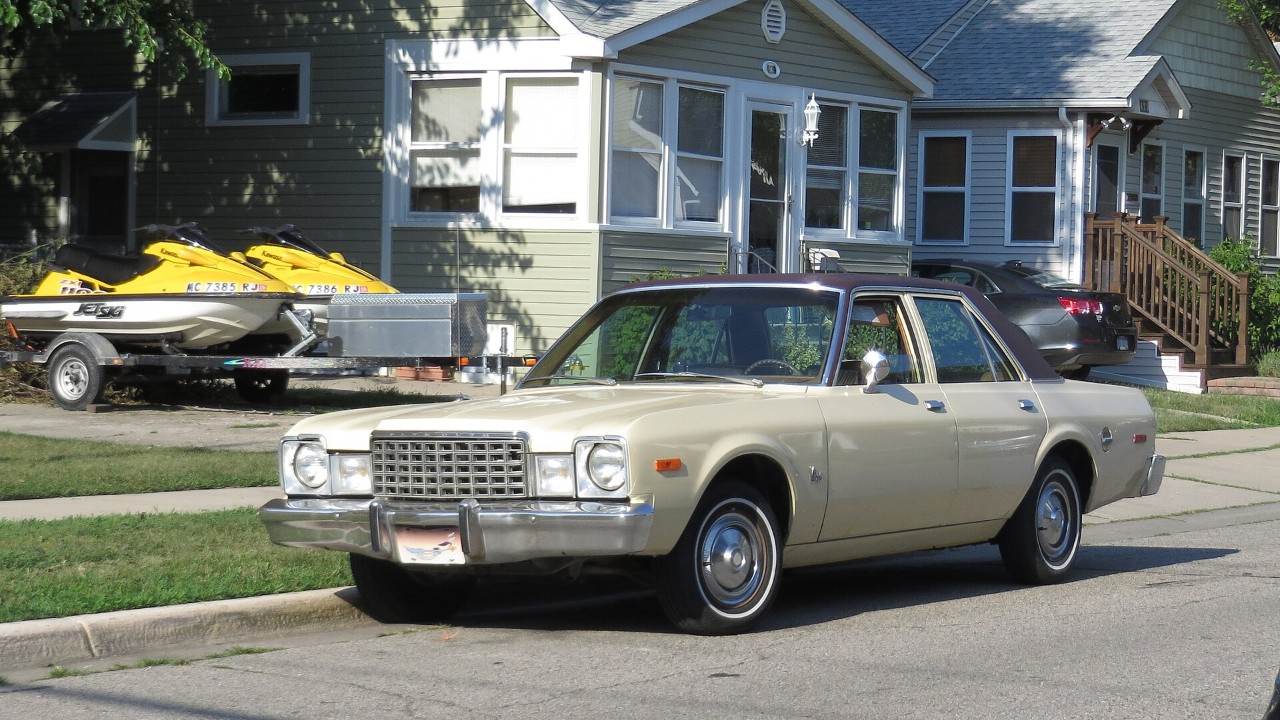
This one comes with an asterisk, and we’ll be upfront about it. The Volaré and its Dodge Aspen twin won the 1976 Motor Trend Car of the Year award together. However, the 1976 cars also faced at least eight serious recalls. Premature rust became a problem, too, partly because the front inner fender shields were left out to save money.
Even so, fleets kept buying. A significant portion of Volaré and Aspen sales went to police and taxi buyers. In total, Chrysler built 811,003 of the pair from 1976 through 1980. For 1980, though, it dropped the 360 V8 and left the 318 as the top engine.
Our take: the Volaré earns its place because it kept showing up for work despite a rough start. After all, fleet managers clearly valued a cheap, simple sedan. Even so, the history is real. If you buy one, check the front fenders and inner structure for rust, and confirm that recall work was done.
6. 1976 Ford LTD Police Interceptor
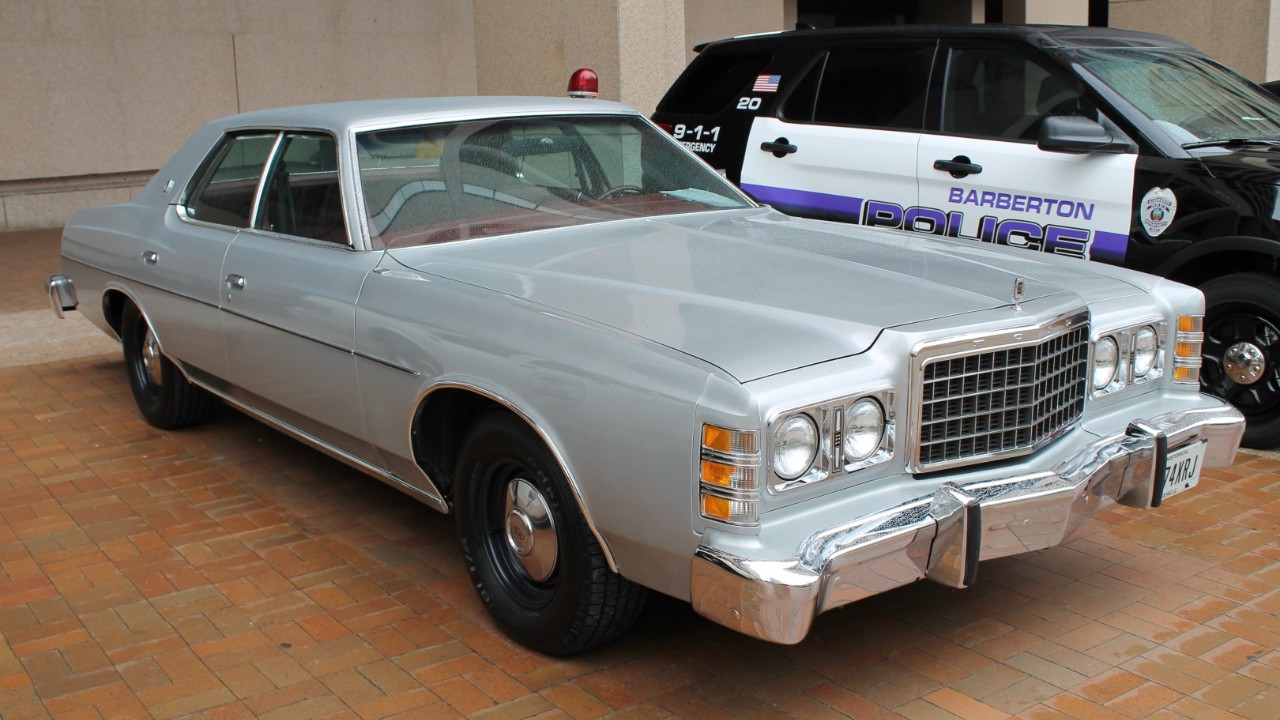
Ford gave the 1973–1978 LTD two police personalities. The regular Police Package used a 351 or 400 V8 for city patrol duty. For highway and heavy-duty work, the Police Interceptor package brought the 460 V8, rated at 260 net horsepower.
As a result, that big engine moved a big car with real speed. Published figures put the 460 Interceptor’s 0-to-60 time in the 8-second range, with quarter-mile runs in the upper 15s and top speeds above 135 mph. The name had history behind it, too. According to Ford’s own history of its police vehicles, “Interceptor” first appeared in 1952 on a 125-horsepower V8 offered with the police package.
In our view, the 1976 LTD Interceptor is the last of the true full-size pursuit barges. For 1979, Ford downsized the LTD and cut more than 700 pounds, so the giant 460 was no longer needed. A big, heavy cruiser with a 460 makes the case that size and torque can carry a patrol car a long way. If you find one, we’d make sure it’s a real Interceptor, not a civilian LTD with a light bar.
7. 1988 Plymouth Gran Fury police car

The M-body Gran Fury was never a retail hit. Instead, it was far more popular with police departments and fleet buyers. Its reasonable price and conventional rear-wheel-drive layout won them over, and its proven parts could stand up to heavy use.
Meanwhile, the police 318 V8 was the strongest engine on offer. From 1985 through 1989, it was rated at 175 horsepower at 4,000 rpm and 250 lb-ft of torque. Plymouth kept the car going to the end of the decade. The 1989 model year was the last, with 4,985 cars built, after M-body production ended in December 1988.
Our take: the late Gran Fury is the definition of a car that just kept working. It was old-fashioned even when new, which is exactly why departments liked it. Simple parts are also easy to fix. If you want an affordable 1980s police car to show, we’d look here first and pay extra for one with its original equipment and records.
8. 1991 Chevrolet Camaro B4C
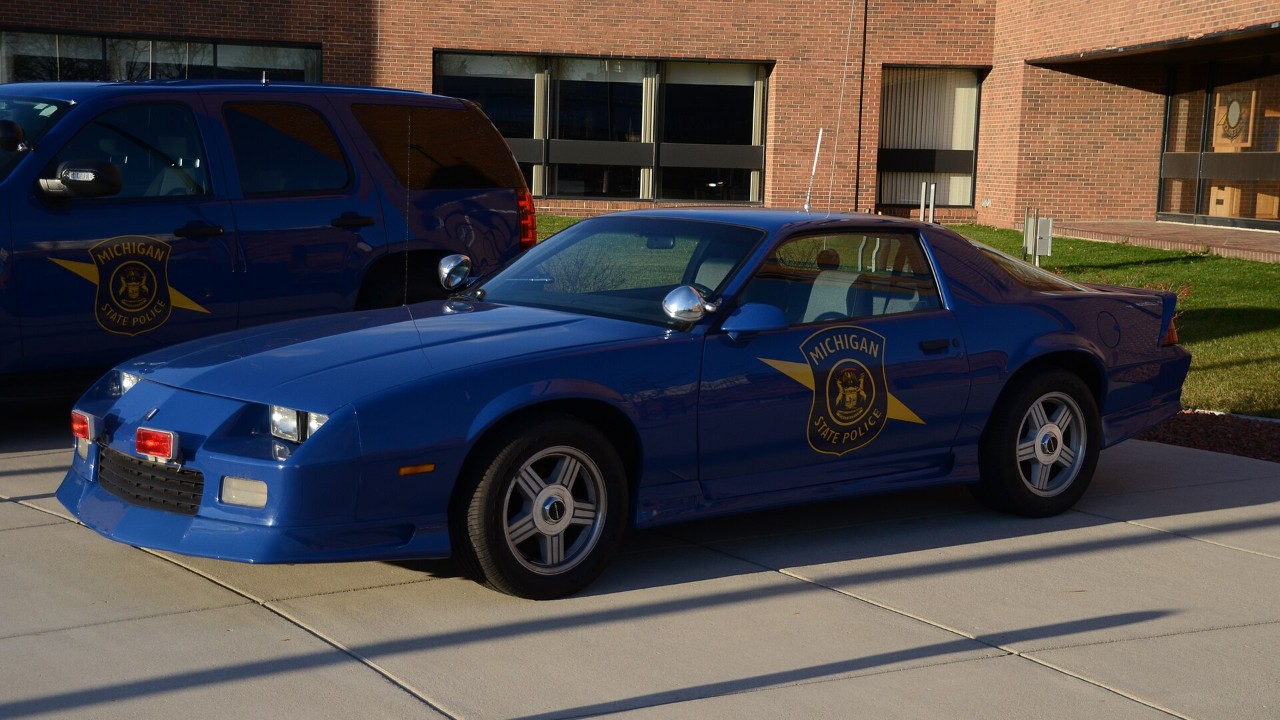
Chevy offered the B4C as a “Special Service” option for law enforcement, government and military agencies. In plain terms, it was an RS Camaro with the Z28’s powertrain and suspension. In other words, patrol units got a fast car without the Z28’s flashy looks.
Chevrolet sold just under 600 B4C Camaros for 1991. Then, for 1992, it sold 589 more, and those cars gained the 1LE brakes. Those are tiny numbers compared with ordinary police sedans, which explains why so few people remember them. If you like the idea, our story on the things police cruisers have that civilian cars never get explains the extra hardware.
In our view, the B4C is the most fun police car on this list. It turned a pony car into a patrol tool, and it stayed low-key enough to slip into traffic. Because the RS body looks like a regular Camaro, documentation is everything. We’d ask for the build sheet or a service parts label showing B4C before paying a premium.
9. 1992 Ford Crown Victoria P71
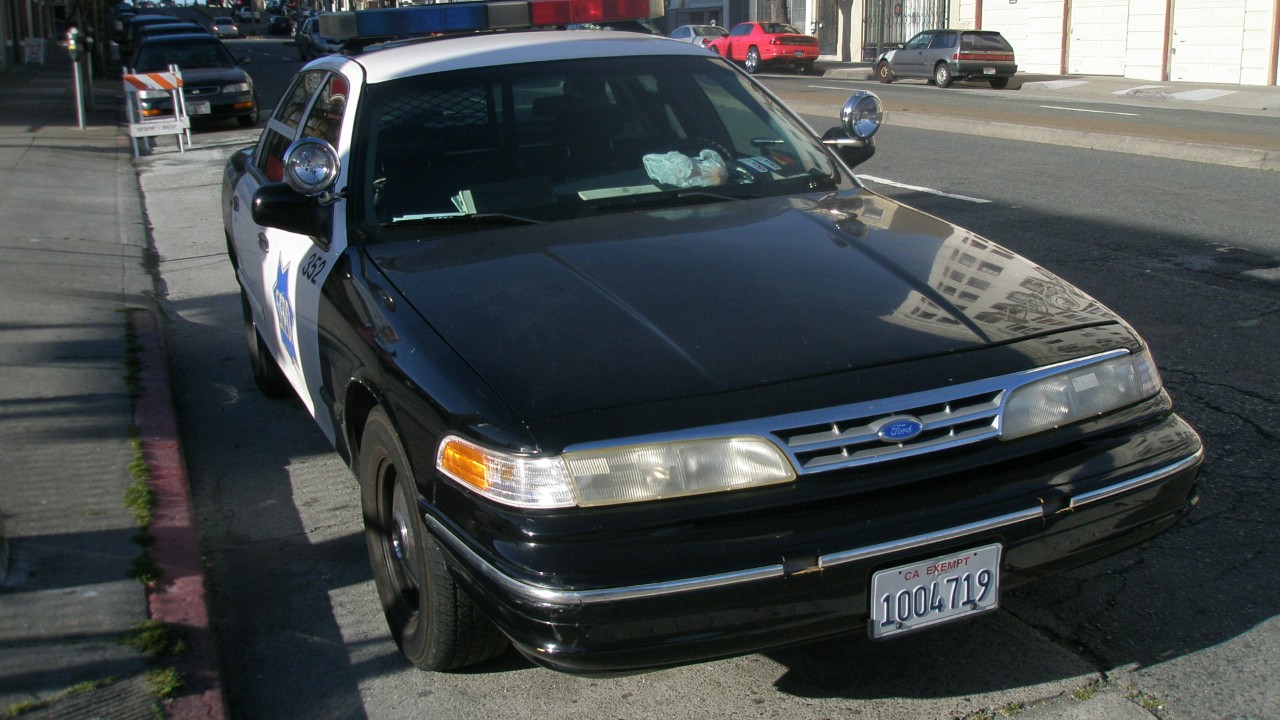
The Crown Victoria became its own model for 1992, and the police version carried the P71 designation. According to Police1’s history of the Crown Victoria Police Interceptor, the first police cars came from Ford’s St. Thomas, Ontario, plant. The first delivery went to the London Police Service in Ontario, which ordered 21 cars for February 1992.
The recipe was simple. Rear-wheel drive, V8 power and body-on-frame construction suited hard police work, and the frame kept collision repairs cheap. As a result, Ford said the Crown Victoria police package took 85% of US and Canadian police pursuit vehicle sales in 1998. We looked at why the Crown Victoria became a favorite far outside police fleets in another story.
Our take: the first-generation P71 is the forgotten start of a 20-year run. Most people picture the later cars, yet the 1992 aero body set the pattern. For a buyer, an ex-fleet car can be a bargain if you check how hard it idled. The last Police Interceptor went to the Kansas Highway Patrol in August 2011, and the final Crown Victoria left St. Thomas on September 15, 2011.
More from Fast Lane Only