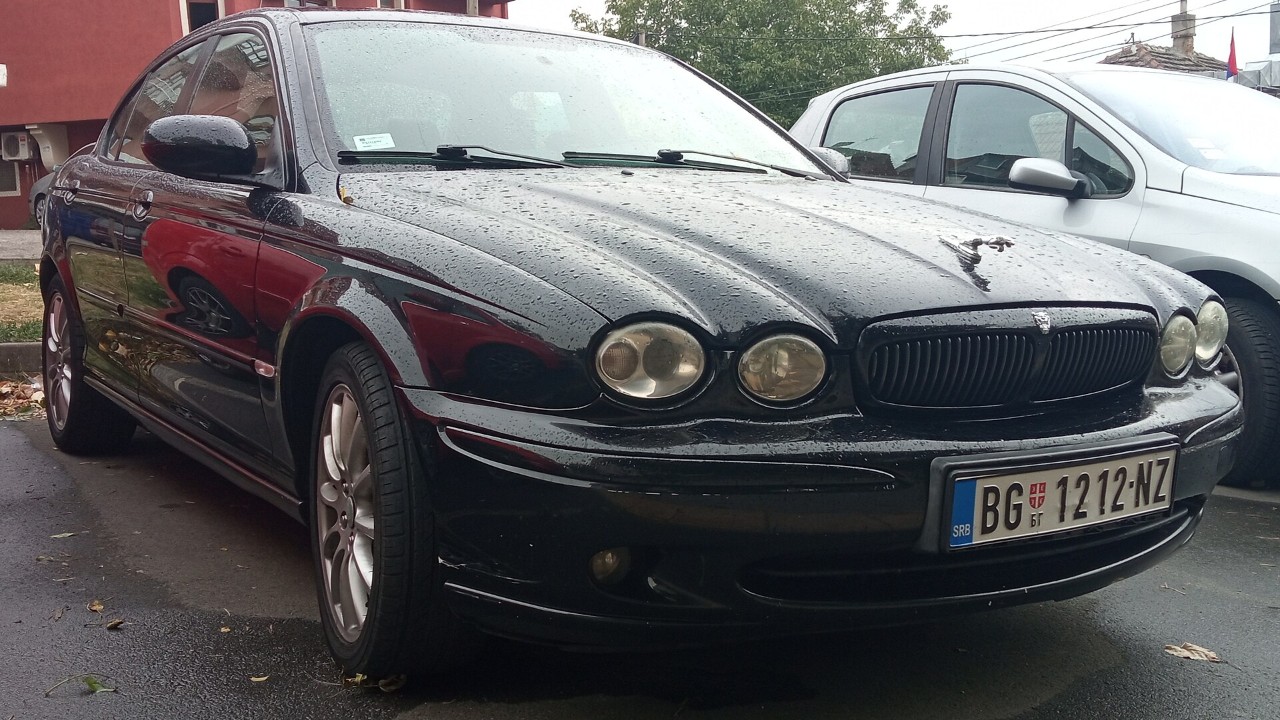
Jaguar expected to sell about 100,000 X-Types a year. Instead, the Jaguar X-Type found roughly 350,000 buyers over its whole eight-year run. That gap says a lot about the brand’s rough patches, when beautiful cars arrived with problems that owners paid to fix.
To be fair, Jaguar has built some of the best-looking cars on the road. Many of its sedans and coupes are a joy to drive when they are sorted. However, a few models and model years carry known weak spots that can turn a bargain into an expensive lesson.
These five are our picks for the Jaguars we would think twice about, and why. The faults, complaint counts and repair costs come from owner-complaint databases, buyer’s guides and the cars’ published histories. Our verdicts are opinion. Each car also gets a fair hearing, plus advice if you still want one.
1. 2002 Jaguar X-Type 2.5 AWD

The Jaguar X-Type was the brand’s entry ticket, and it shared its bones with a Ford. It rode on a modified version of Ford’s CD132 platform, the same basic layout as the Mondeo. At launch, every car came with all-wheel drive. The 2.5-litre V6 made 196 PS (193 horsepower). Because of the AWD-only setup, fuel economy was poor.
The bigger worry is the gearbox. According to CarComplaints’ page for the 2002 X-Type, the transmission is the top NHTSA complaint category for that year, with 40 complaints. Its worst-rated problem is outright transmission failure, at an average repair cost of $6,500 at around 87,000 miles. The model year also had two recalls.
In our view, a first-year Jaguar X-Type is a nice cabin attached to a risky drivetrain. That is a big bill for an entry-level car. The automatic in these early cars was a five-speed unit from Jatco. Buyer advice: if you want a Jaguar X-Type anyway, insist on records of transmission service or replacement, and budget for the fix before you sign.
2. 2000 Jaguar S-Type 3.0

The S-Type brought back a famous name in 1999. Under the retro body, it used Ford’s DEW98 platform, which it shared with the Lincoln LS and the eleventh-generation Ford Thunderbird. The 3.0-litre V6 made about 240 horsepower in early cars, and reviewers praised the interior and the ride when it launched.
The early cars, though, used a Ford 5R55N five-speed automatic from 1999 to 2002. For the 2000 model year, CarComplaints lists the transmission as the top NHTSA complaint category, with 35 complaints. One of the worst problems it records is a gear lever that will not shift out of Park, at an average cost of $5,000 around 100,000 miles. The S-Type line also shows four recalls for that year.
Window regulators failing around 70,000 miles add another bill, at about $400. Our take: the 2000 S-Type is a handsome car that asks for too much patience. Buyer advice: skip the 1999–2002 cars and look for a 2003 or later model, which switched to the ZF 6HP26 six-speed automatic.
3. 1988 Jaguar XJ6 XJ40 Sovereign

The XJ40 had a long road to market. Work on the project began in the 1970s, and British Leyland approved £80 million for it in February 1981. Then Jaguar boss John Egan delayed the launch by two more years for extra development. It finally arrived in October 1986, as the most heavily tested Jaguar up to that time.
Even so, early cars developed a reputation for weak electrics and build quality. The dashboard is the best-known culprit. Early XJ40s used a binnacle with digital readouts and a Vehicle Condition Monitor that warned of failed bulbs, worn brake pads and low coolant. Unfortunately, that system became notoriously unreliable, especially for false bulb-failure warnings. Jaguar switched to analogue gauges in 1990. For a look at how the earlier XJ6 tested owners, see our story on the 1969 Jaguar XJ6’s complexity.
The Sovereign trim added more to check, including rear self-levelling suspension and anti-lock brakes. In our view, a 1988 Sovereign is lovely to sit in and tiring to own. Buyer advice: look for a 1990 or later car with the 4.0-litre engine and analogue dash, and test every warning light before you buy.
4. 1998 Jaguar XK8 coupe
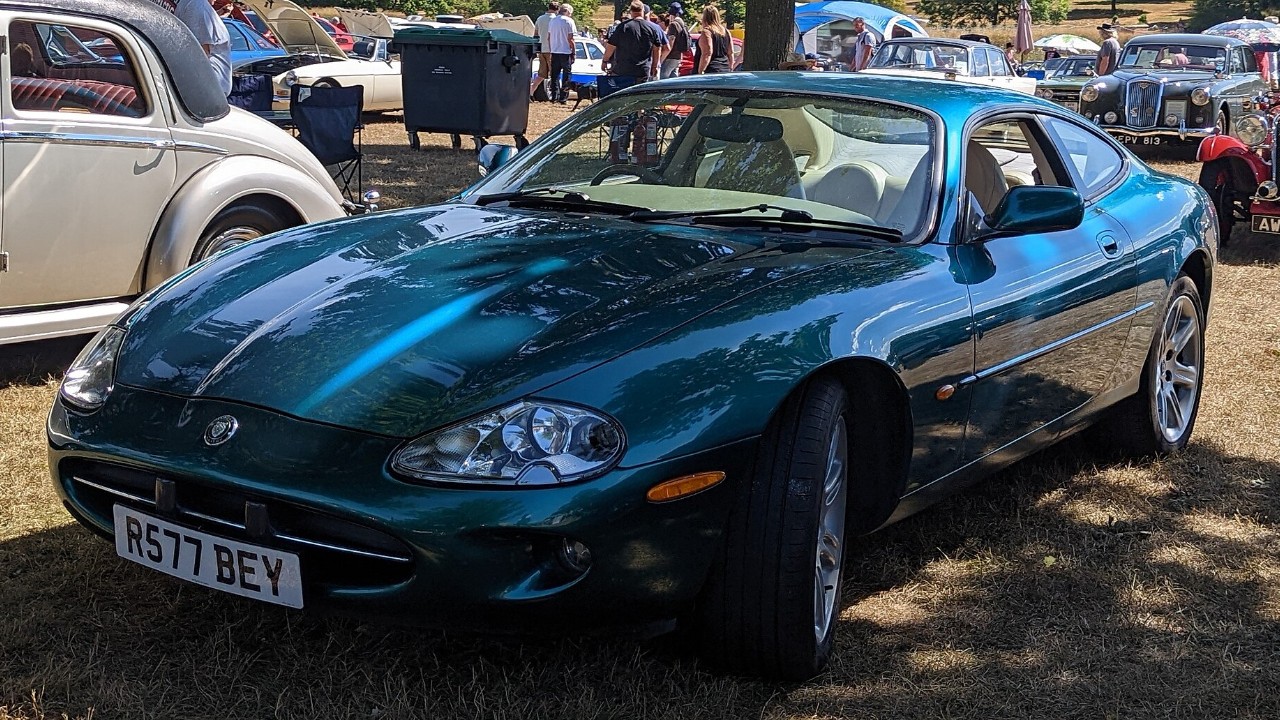
The XK8 is a gorgeous grand tourer, and it launched with the 4.0-litre AJ-V8. However, Jaguar designed that engine with Nikasil-coated cylinders instead of iron liners. Over time, high-sulphur fuel reacted with the coating and caused engine failures. Jaguar replaced affected engines, but you need paperwork to prove a car got one.
According to Classic & Sports Car’s XK8 buyer’s guide, engines up to VIN 042775 used Nikasil liners, and some corroded and lost compression. Steel liners replaced Nikasil in October 1999. In addition, the guide warns that the plastic timing-chain tensioners can break and even cause a catastrophic chain failure. Jaguar improved them in 2002 and fitted a durable metal design from 2005.
That means a 1998 coupe can carry both risks at once. Our take: we would pass on an early XK8 unless the paperwork answers both questions. Buyer advice: ask for a compression test, proof of a replacement engine or a VIN above 042775, and receipts for new tensioners. Otherwise, budget for the engine work.
5. 1983 Jaguar XJ-S H.E.
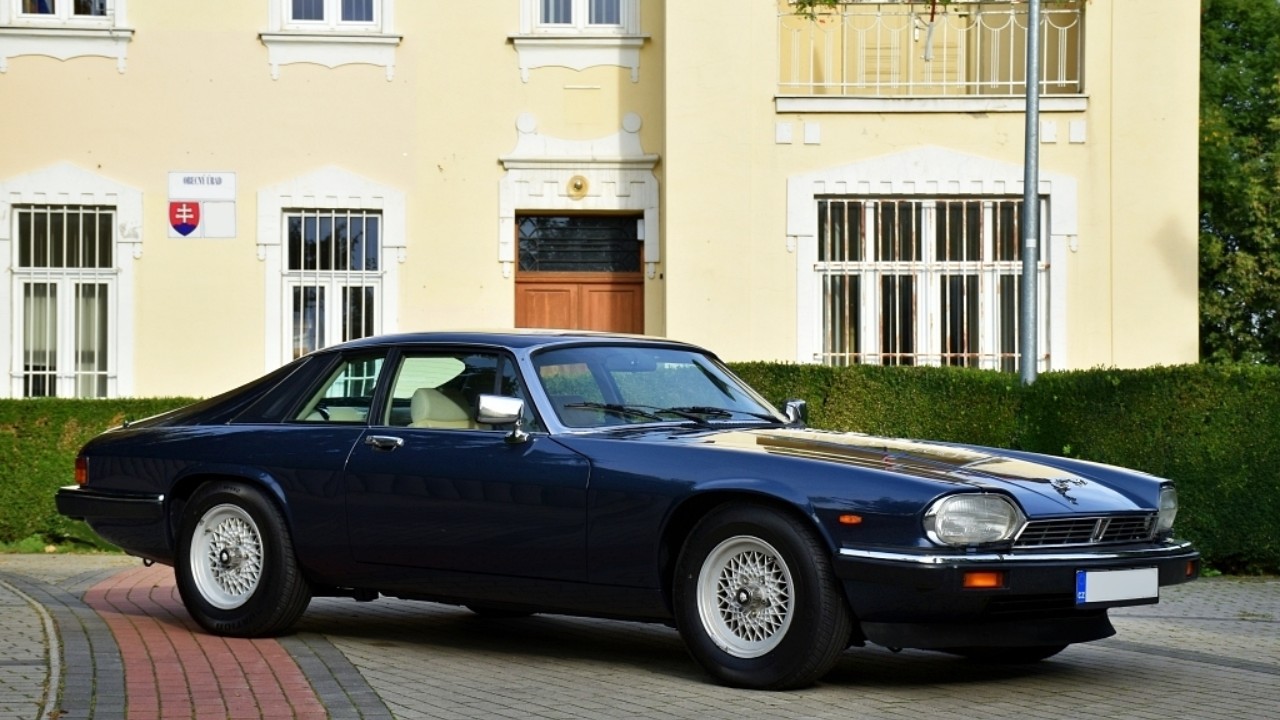
The XJ-S had bad timing from day one. Jaguar introduced it on September 10, 1975, in the wake of a fuel crisis, with a thirsty 5.3-litre V12. Sales stayed low. In fact, Jaguar halted production for half of 1981 so dealers could clear unsold stock. For 1981, the car got Michael May’s “Fire Ball” combustion chambers and a new name, H.E., for High Efficiency.
The H.E. fixed the thirst, but not the cost of keeping a V12 healthy. Hagerty’s look at why the XJ-S isn’t worth more credits the H.E. with 299 horsepower and nearly doubled highway mileage, to 22 mpg. It also notes that U.S. cars had catalytic converters below the exhaust manifolds, which created “a crematorium under the hood.” Overheating was a V12 problem too. Worse, Hagerty says repairing a V12 Jaguar can be almost as expensive as a comparable Ferrari.
That is the trap. Hagerty’s article puts prices for coupes and convertibles at $10,000 to $30,000. As a result, a big repair can quickly top the car’s value. In our view, a neglected XJ-S H.E. is one of the riskiest bargains in the classic world. Buyer advice: get a pre-purchase inspection, make sure both cylinder heads have been rebuilt, or follow Hagerty’s tip and buy a one-owner 1992–1995 six-cylinder car instead.
More from Fast Lane Only