General Motors built its aluminum 215 V8 for just three model years, 1961 through 1963, and then dropped it. Rover bought the design, reworked it and kept building versions of it until 2004. That second life lasted far longer than the first.
The engine began as a lightweight answer for GM’s new compact cars. Buick, Oldsmobile and Pontiac all used it. In Britain, though, it became the Rover V8, an engine that went into sedans, sports cars and off-roaders for decades.
Here’s how a small American V8 that GM gave up on ended up in a Land Rover Discovery in the 21st century.
What GM built: the aluminum 215 V8
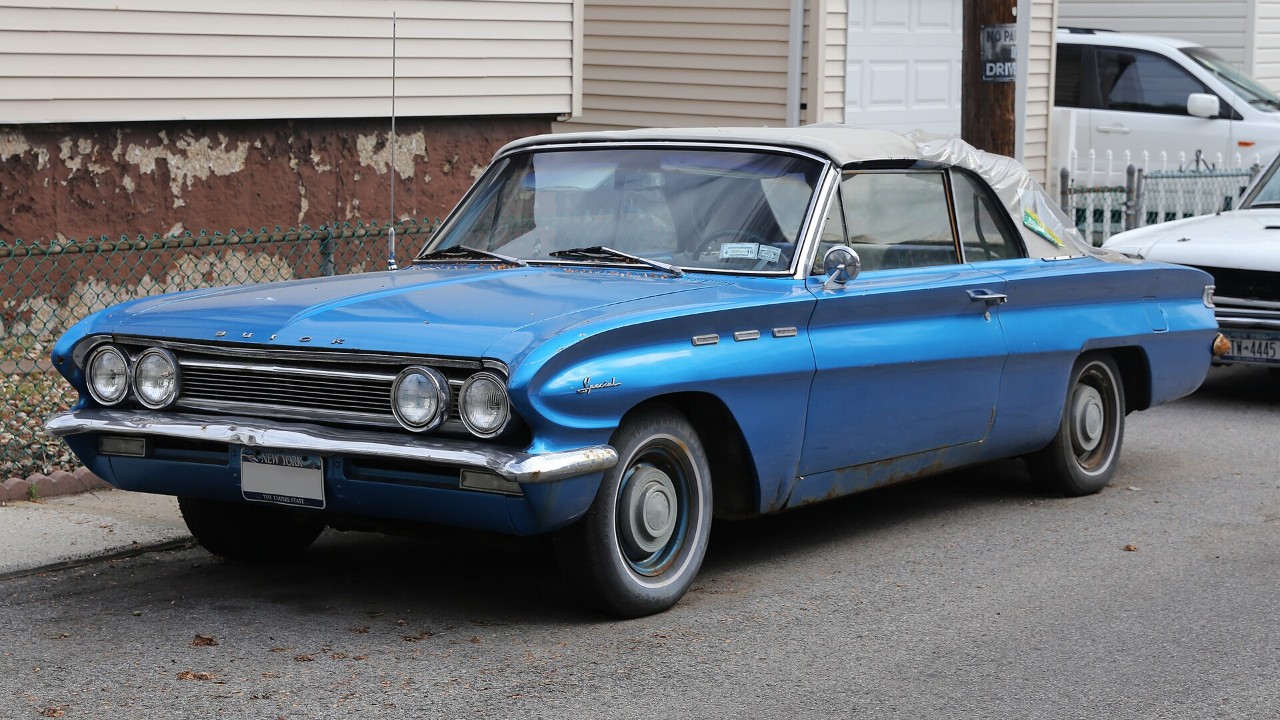
The engine displaced 215 cubic inches. According to Mac’s Motor City Garage, it used a 3.50-inch bore and a 2.80-inch stroke. The Buick version weighed 318 pounds.
That was light for a V8. By comparison, the Museum of American Speed lists the Oldsmobile version at 350 pounds. The museum says GM announced the aluminum V8 in 1960, and it first appeared in 1961 cars.
The two divisions didn’t build identical engines, either, as those different weights show. As a result, it’s fair to call this a GM engine rather than only a Buick or an Olds.
Which cars used the aluminum 215 V8
GM aimed the engine at its new 1961 “senior compacts.” Mac’s Motor City Garage names the Buick Special, Oldsmobile F-85 and Pontiac Tempest. Meanwhile, the Museum of American Speed lists the Buick Skylark, Oldsmobile Cutlass and Pontiac Tempest. Both lists point to the same family of Buick, Oldsmobile and Pontiac compacts.
Power varied by carburetor and year. According to Mac’s, the 1961 Buick two-barrel made 155 hp at 4,600 rpm and 220 lb-ft of torque at 2,400 rpm. A four-barrel version arrived in mid-1961 at 185 hp. By 1963, the museum says, the Buick four-barrel engine reached 200 hp at 5,000 rpm.
Oldsmobile then went further. Mac’s notes that the 1962–63 Oldsmobile Jetfire used an AiResearch T5 turbocharger and an alcohol-water injection system. It ran 5 pounds of boost and made 215 hp. Nearly 10,000 Jetfires were built, Mac’s says.
An aluminum V8 at Indianapolis
The engine even went racing. According to the Museum of American Speed, Mickey Thompson entered a car powered by a stock-block Buick 215 in the 1962 Indianapolis 500. Dan Gurney drove it.
The museum adds a notable detail. It was the only car in the 33-car field without an Offenhauser engine.
Why GM dropped it after 1963
The aluminum block was hard to make. The Museum of American Speed points to a high rejection rate during the casting process. In other words, too many castings came out unusable.
GM still built a lot of them. The museum says about three-quarters of a million engines came off the line before production ended in 1963. However, Mac’s notes that GM dropped the engine at the end of 1963, after only three model years.
How Rover bought the aluminum V8
The British side of the story starts with one executive. Classic & Sports Car says Rover boss William Martin-Hurst reportedly came across a 215. He reckoned the Buick engine, two cylinders bigger yet lighter overall, would be ideal.
Then Rover made its move. According to Mac’s, the Rover Company of Great Britain wrote GM a check in January 1965 and bought the engine outright. After buying the rights, Classic & Sports Car says, Rover switched from cast-in cylinder liners to sand-cast blocks with pressed-in liners.
The Rover V8’s long second life
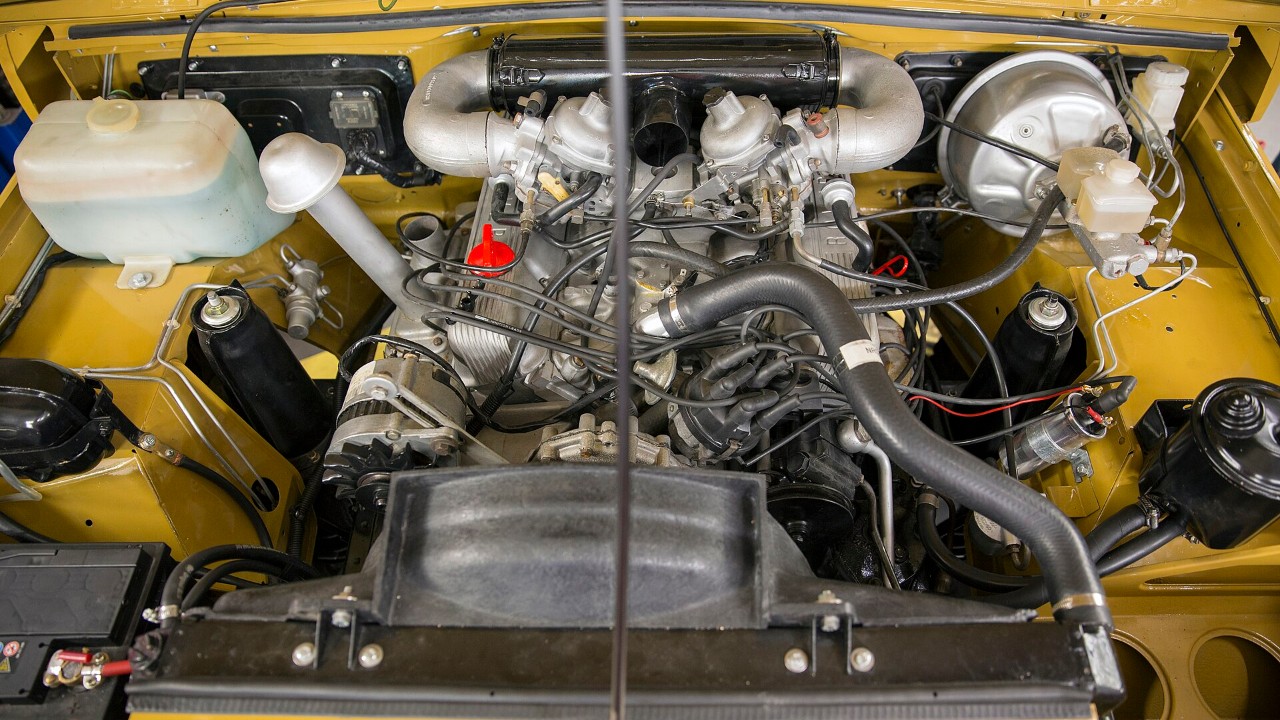
The first Rover to use the engine was the 1967 P5B, according to both the museum and Classic & Sports Car. Later, the same V8 went into the P6 as the Rover 3500.
Other cars followed. Classic & Sports Car says the original 1970 Range Rover used a low-tune, 137 hp version with a four-speed manual. Morgan fitted it to the Plus 8 from 1968 and stuck with Rover V8 power until supplies dried up in 2003. MG also used a 139 hp version in the MGB GT V8 from 1973 until 1976.
Meanwhile, the engine kept growing. Mac’s says Rover enlarged it step by step, eventually reaching 5.0 liters, or 305 cubic inches. Classic & Sports Car mentions versions from 3.5 liters up through 3.9, 4.0, 4.2, 4.4 and 4.6 liters. TVR, for example, started with a 200 hp 350i in 1983.
The end of the line in 2004
The Rover V8’s last mass-production home was the Land Rover Discovery. According to Mac’s Motor City Garage, the 4.0- and 4.6-liter versions powered the Discovery Series II into the 21st century until the engine finally went out of production in 2004. Classic & Sports Car agrees that the Discovery was the last mass-produced car to carry it.
That gave GM’s three-year engine a remarkable run. The Museum of American Speed says the Rover V8 remained in production for more than another 39 years.
More from Fast Lane Only
- Unboxing the WWII Jeep in a Crate
- 15 rare Chevys collectors are quietly buying
- 10 underrated V8s still worth hunting down
- Police notice this before you even roll window down
This article was created with the help of AI and was reviewed and edited by Fast Lane Only editors before publication.