General Motors is cutting another 1,900 factory jobs, a fresh blow to workers who have already endured a cascade of layoffs tied to the company’s electric vehicle strategy. The latest reductions deepen a restructuring that is reshaping GM’s manufacturing footprint, particularly in the Midwest, and raising pointed questions about how quickly the auto industry can pivot to battery-powered cars and trucks without leaving communities behind.
The new cuts arrive on top of earlier job losses at key plants, including GM’s flagship electric truck facility on the Detroit–Hamtramck border and its Ultium battery operations. Taken together, the moves signal a company racing to match production with softer-than-expected demand for EVs while still promising investors leaner operations and future growth.
Another 1,900 jobs vanish as GM retrenches on EVs
The latest round of layoffs removes 1,900 factory positions from GM’s U.S. operations, a stark figure even in an industry accustomed to cyclical cuts. Reporting indicates that General Motors has been trimming headcount in waves, with this new reduction arriving “after half a dozen major layoffs in as many months,” a pattern that underscores how aggressively the company is recalibrating its workforce as it reassesses its electric vehicle rollout. The affected workers are part of a broader manufacturing network that has been retooled in recent years to build high-profile EVs, only to see production targets scaled back as sales and regulatory expectations shift.
These 1,900 jobs are not an isolated adjustment but the latest entry in a ledger of cuts that has grown steadily since GM began slowing its EV expansion. Earlier reports described how General Motors planned to lay off about 1,200 workers as it reduced electric vehicle operations across key U.S. sites, citing weaker demand and an evolving regulatory outlook. Company statements have framed these decisions as a “realigning” of EV capacity, a corporate phrase that, on the factory floor, translates into pink slips and uncertain futures for thousands of families.
Factory Zero and the Midwest plants at the center of the cuts
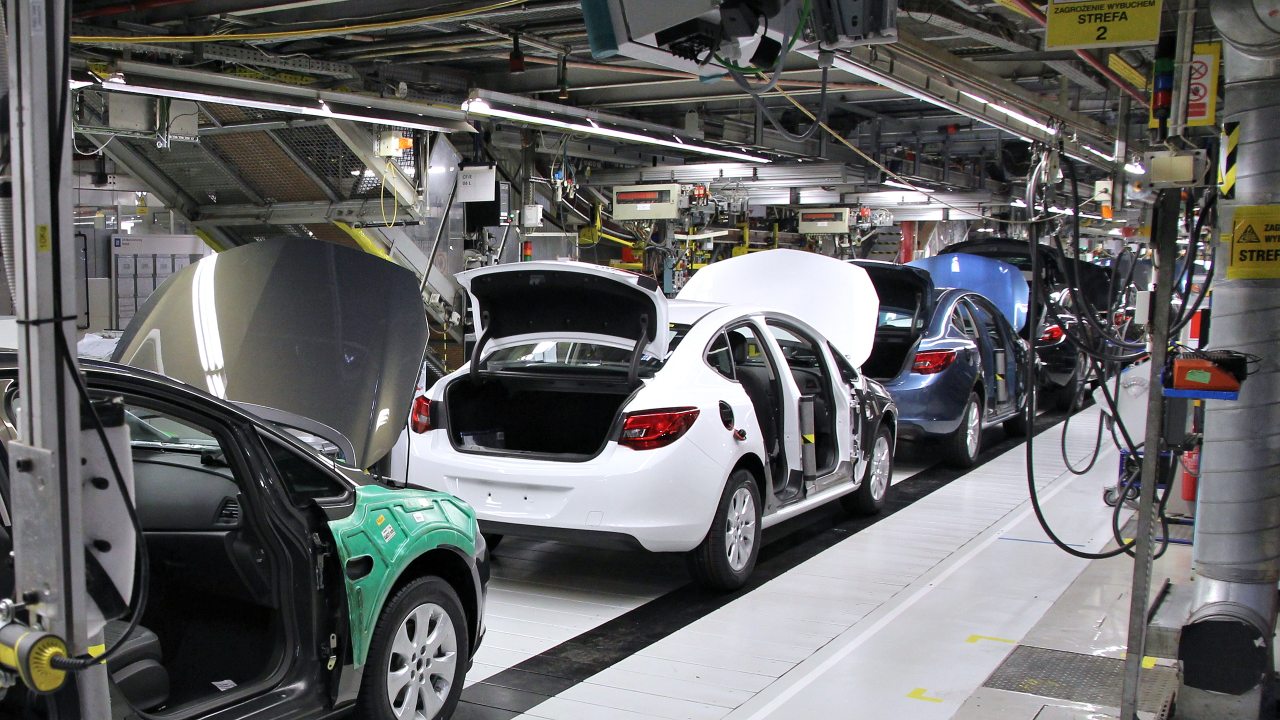
No facility illustrates the whiplash of GM’s EV strategy more vividly than Factory Zero, the rebranded Detroit–Hamtramck Assembly Center that was touted as a cornerstone of the company’s electric future. Located on the Hamtramck–Detroit border, Factory Zero builds GM’s full-size electric trucks and SUVs, including the GMC Hummer EV SUV and pickup. Yet the same plant that symbolized the company’s pivot to battery power has now become a focal point of job losses, with GM moving to permanently lay off 1,145 workers there in one recent action and then announcing that operations would be consolidated to a single shift.
Union leaders and local officials have warned that the reductions at Factory Zero will ripple across the region, where GM has long maintained a major presence. UAW Local 22, which represents workers at the plant, has described how GM’s decision to cut to one shift will eliminate more than 1,100 jobs at Factory Zero and another nearby location, a blow to neighborhoods that had banked on the EV transition to sustain middle-class employment. The company has said that some impacted employees may be eligible to receive a significant portion of their wages and benefits during the transition, but that assurance does little to ease anxiety in Detroit and Hamtramck as the plant that once promised growth now becomes a symbol of retrenchment.
Battery plants, Ultium layoffs, and a stalled EV buildout
The job cuts are not confined to assembly lines for finished vehicles. GM’s Ultium Cells battery plants, which were designed as the backbone of its electric platform, are also being throttled back. Earlier reporting detailed how the company would indefinitely lay off 550 workers at an Ultium facility in Ohio as production was “adjusted,” a corporate euphemism for a slowdown that reflects both softer demand and the need to retool equipment. GM has also outlined plans for temporary shutdowns at its Ultium Cells plants in Ohio and Tennessee in early 2026 to upgrade machinery, a move that will idle additional workers even if some are eventually recalled.
These battery plant decisions follow earlier announcements that General Motors would “slash thousands of EV jobs” and idle battery facilities until 2026, a sweeping pullback that undercuts the notion of a smooth, linear march toward electrification. Company statements have linked the changes to slower near-term EV adoption and an evolving regulatory environment, arguing that it makes more sense to pause and upgrade plants now rather than overproduce vehicles that may sit on lots. For workers in Ohio and Tennessee, however, the distinction between a temporary shutdown and a permanent layoff can feel academic when paychecks stop and the timeline for a restart remains uncertain.
Corvette, Silverado, and the broader production reshuffle
GM’s restructuring is also reaching into its iconic internal combustion lineup, a sign that the company is rebalancing production across its portfolio rather than treating EVs and gasoline models as separate worlds. Earlier this month, General Motors laid off 1,145 workers as it idled plants that build the Corvette and Silverado in extended shutdowns, citing the need to manage inventories and navigate “competing priorities.” Those cuts, combined with the 1,900 new layoffs and earlier reductions, show a company that is constantly fine-tuning output in response to demand signals, supply chain constraints, and the capital-intensive nature of both EV and traditional vehicle programs.
At the same time, GM is not abandoning investment altogether. Reporting from Mexico’s automotive sector notes that the company has pledged US$1 billion in that country even as EV demand cools, a sign that it is still betting on future growth in North American production, albeit with a sharper eye on cost structures. Executives have also warned of “rough quarters” ahead as the company cuts thousands of jobs in Michigan, Tennessee, and Ohio, while telling investors that impacted employees may receive a significant portion of their regular wages and benefits. For workers on the line, the message is clear: GM is willing to idle even marquee products like the Corvette and Silverado if that is what it takes to protect margins during a choppy transition.
Communities, workers, and the uncertain road ahead
The human impact of GM’s restructuring is most visible in the communities that have long depended on its plants for stable, unionized work. In Detroit, Hamtramck, and parts of Ohio and Tennessee, families are now recalculating budgets and career plans as layoffs at Factory Zero, Ultium Cells, and other facilities pile up. Local union leaders have urged collective action, with one warning that, “unless it is halted by collective action by workers themselves,” the permanent loss of 1,145 jobs at Factory Zero would arrive at a particularly precarious time of year. That sentiment captures a broader fear that the EV transition, marketed as a path to cleaner air and high-tech employment, is instead delivering instability for the very workers who were asked to build it.
For General Motors, the challenge is to convince both Wall Street and Washington that these cuts are a temporary correction rather than a retreat from electrification. Company statements emphasize that the layoffs are a response to slower near-term EV adoption and shifting regulations, not a rejection of long-term climate and technology goals. Yet as 1,900 more jobs disappear on top of earlier reductions of 1,200 at Factory Zero Detroit–Hamtramck Assembly Center and 550 at Ultium in Ohio, skepticism is growing among workers and local officials who see plants idled, shifts eliminated, and investments redirected abroad. The next phase of GM’s strategy will be judged not only by how many electric trucks and SUVs it sells, but by whether the communities that powered its rise are still standing when the dust settles.
More from Fast Lane Only