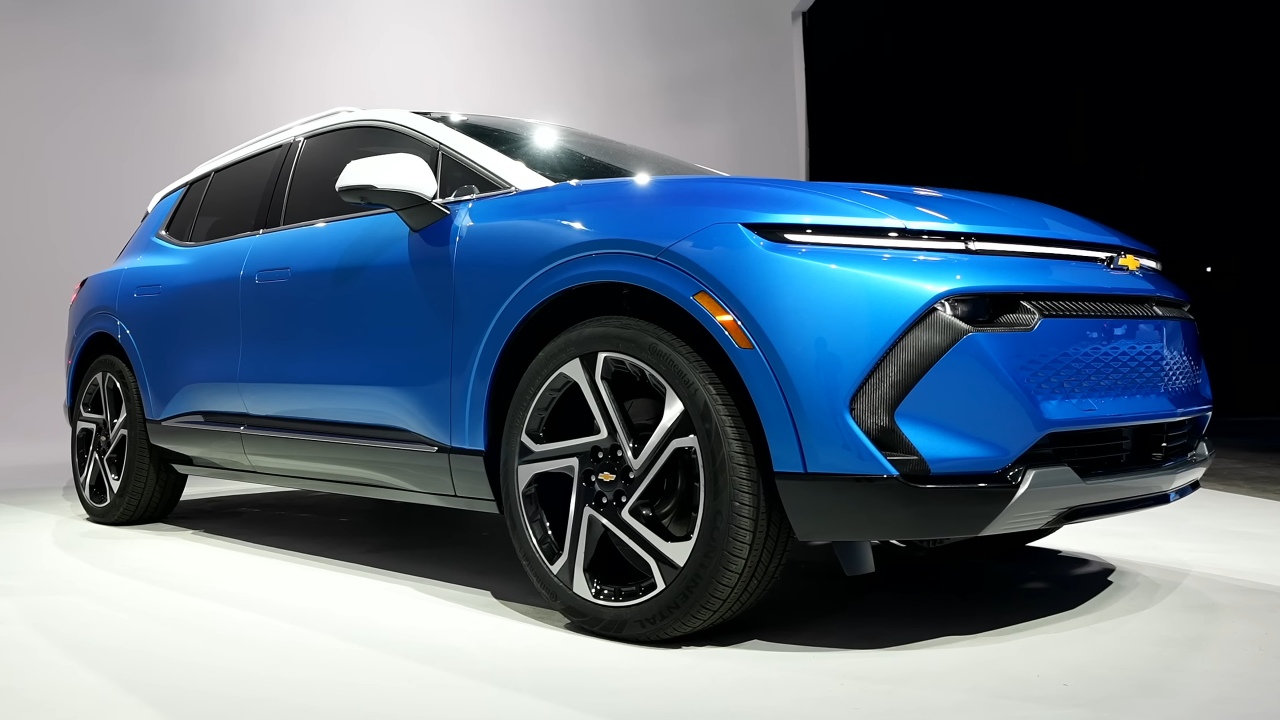
General Motors is pulling more than 80,000 of its newest electric SUVs off the road to fix a defect that strikes at the heart of urban safety: whether people on foot can hear a car coming. The recall of Chevrolet Equinox electric models, affecting exactly 81,177 vehicles, centers on a flawed pedestrian warning system that can fall silent at low speeds, creating a risk that someone crossing the street will never realize a nearly noiseless SUV is bearing down.
Regulators describe the issue as a serious pedestrian safety risk, and I agree that the scale and nature of the defect justify that language. Electric vehicles are already quieter than traditional cars, which is why federal rules require artificial sounds at low speeds. When that safeguard fails on 80,000 to 81,177 vehicles, the danger is not abstract, it is embedded in every driveway exit, parking lot maneuver, and neighborhood school run those SUVs attempt.
What GM is recalling and why the risk is so severe
At the center of the recall are Chevrolet Equinox electric sport utility vehicles, with more than 80,000, and specifically 81,177, units identified as needing repair. These are not aging models at the end of their life cycle but new Chevrolet Equinox EV entries that were meant to showcase General Motors’ latest technology. Instead, regulators and the company have acknowledged that the pedestrian alert system in these vehicles does not consistently meet federal standards at low speeds, which is precisely when people are most likely to be walking nearby.
The defect traces back to incorrect software calibration in the pedestrian alert sound system, a problem that can prevent the required warning noise from activating when the vehicle is moving slowly. Reports describe the affected SUVs as failing to emit adequate sound in that low speed range, which undermines rules designed to protect a Pedestrian from quiet hybrid and Electric vehicles. When more than 80,000 vehicles share that flaw, the risk multiplies across thousands of intersections, parking garages, and residential streets where a silent Chevrolet Equinox EV could approach someone who has no auditory cue that a two ton machine is in motion.
How the pedestrian alert system failed federal standards
The core of the problem lies in how the pedestrian alert software was tuned, not in a broken speaker or a loose wire. Regulators have pointed to incorrect calibration in the system that controls the artificial sound these Electric vehicles must emit at low speeds. In practice, that means the Chevrolet Equinox EV can move below roughly 10 km/h without producing the level of noise that federal rules require, leaving people who rely on sound, including those with limited vision, at a disadvantage when they try to judge whether it is safe to cross.
Federal standards, enforced by the National Highway Traffic Safety Administration, were written with exactly this scenario in mind. As more Electric and hybrid models entered the market, regulators concluded that quiet drivetrains needed an added layer of protection for anyone outside the vehicle. When a system that is supposed to satisfy those rules instead falls short because of a software miscalibration, the gap is not merely technical. It is a direct breach of the safety net that the National Highway Traffic Safety Administration intended to provide for every Pedestrian sharing space with a moving Chevrolet Equinox EV.
Regulators’ response and the “serious risk” label
Safety officials have not minced words in describing the implications of this defect. Notices tied to the recall state that more than 80,000 Chevy vehicles are being addressed because the pedestrian alert sound system can fail under certain conditions, creating a serious risk to people outside the vehicle. That language reflects a judgment that the issue is not a marginal compliance problem but a meaningful threat to real world safety whenever a driver pulls away from a curb or navigates a crowded parking lot in one of these SUVs.
The regulatory filings also highlight that the 2025 and 2026 model year calibrations differ from earlier versions, and that those newer settings are at the heart of the problem. In other words, this is not a long standing flaw that went unnoticed for years, it is a change in software behavior that introduced a new hazard into the latest Chevrolet Equinox EV production. When a defect is embedded in the most current models and affects more than 80,000 vehicles at once, it underscores why regulators felt compelled to characterize the situation as a serious pedestrian safety risk rather than a routine technical adjustment.
What GM says it will do for affected owners
General Motors has told regulators that it will correct the problem through a software remedy rather than a hardware replacement, which is consistent with the diagnosis of incorrect calibration in the pedestrian alert system. In many cases, that fix can be delivered as an over the air update, allowing Chevrolet Equinox EV owners to receive the new settings without visiting a service bay. Where necessary, dealers will be instructed to apply the updated software directly, bringing the vehicles back into line with the sound levels that federal rules demand at low speeds.
For owners trying to determine whether their SUV is part of the recall, GM directs drivers to use their vehicle identification number, or VIN, to check status. By entering that VIN into the company’s recall lookup tools, drivers can see whether any open campaigns apply to their Chevrolet Equinox EV and whether repairs have already been completed. Once a vehicle is flagged, dealers are expected to contact customers and arrange the update, and in some regions owners may also receive SMS notifications that their specific SUV is covered and that the pedestrian alert calibration needs to be corrected.
What this recall reveals about EV safety and regulation
I see this episode as a revealing test of how quickly the industry and regulators can respond when software driven safety systems do not behave as intended. Electric vehicles rely on code for everything from battery management to braking assistance, and the pedestrian alert flaw in more than 80,000 Chevy SUVs shows how a single calibration decision can ripple into a nationwide safety concern. The fact that the issue involves sound, something drivers cannot easily monitor from behind the wheel, makes it even more important that the underlying software be correct from the start.
At the same time, the recall illustrates that the regulatory framework around Electric vehicles is functioning as designed. The National Highway Traffic Safety Administration identified that the Chevrolet Equinox EV did not consistently meet the required sound levels at low speeds, General Motors acknowledged the defect, and a plan was put in place to update 81,177 vehicles. For pedestrians, especially those who depend on auditory cues, that chain of events is not an abstract bureaucratic process. It is the difference between hearing a quiet SUV approach and being left in dangerous silence as a nearly noiseless Chevy rolls past.
More from Fast Lane Only