The man who set a Tesla Cybertruck ablaze at a Mesa dealership has now received a five year prison sentence, closing a case that blended political anger, property destruction, and a surprisingly clumsy attempt at a message. Federal prosecutors said the arson destroyed the futuristic pickup and damaged the dealership building, turning a late night stunt into a serious federal crime. With sentencing complete, the episode offers a revealing look at how one person’s protest against Tesla and Elon Musk crossed the line into a calculated attack on private property.
The case also lands at a moment when Tesla is already under intense scrutiny, from debates over its Autopilot and Full Self Driving systems to a broader wave of hostility that has included other arson attempts. As I trace how investigators built the case and how the court weighed punishment against motive, the story becomes less about a single burned Cybertruck and more about the risks that follow when online outrage spills into real world violence.
The late night blaze that destroyed a Cybertruck
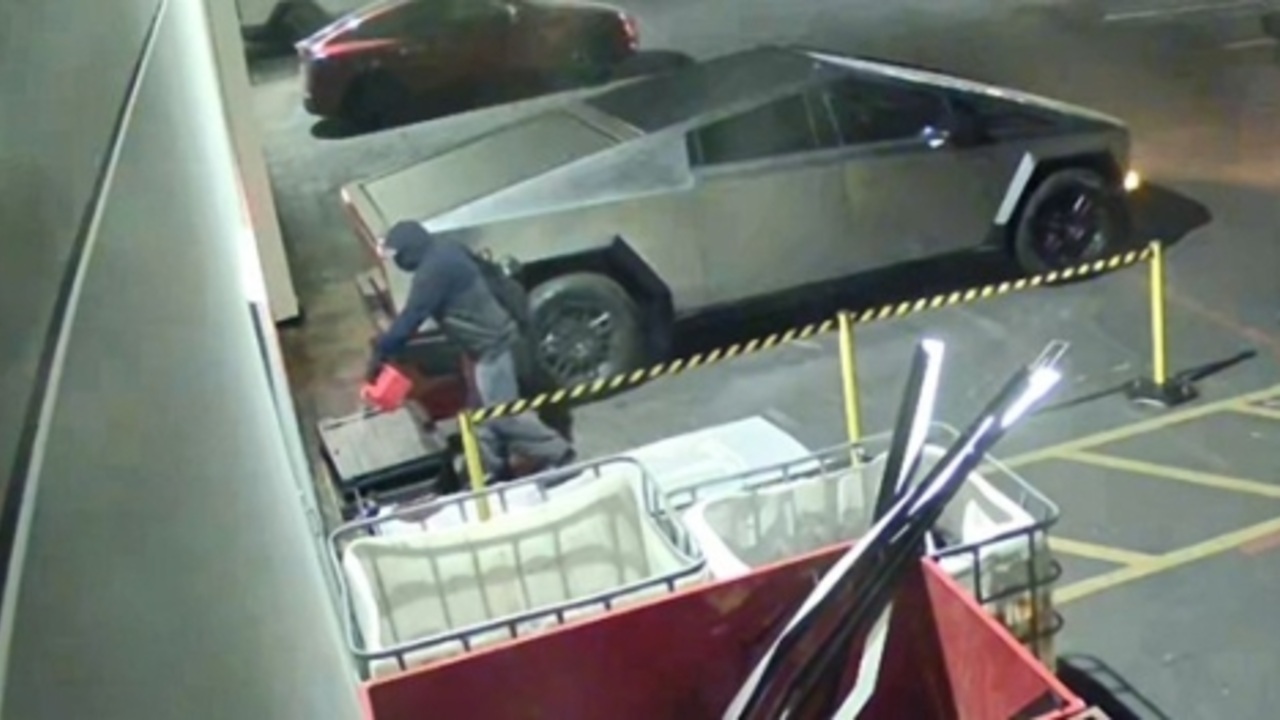
According to federal charging documents, the arsonist arrived at the Mesa Tesla dealership in the East Valley under cover of darkness and went straight for a new Cybertruck parked outside. Investigators said he doused the stainless steel pickup with gasoline, then ignited it, triggering a fire that quickly engulfed the vehicle and spread toward the dealership building. The blaze destroyed the Cybertruck and damaged at least three other Tesla vehicles parked nearby, as well as part of the structure next to the lot, turning a single act of vandalism into a significant commercial loss for Tesla.
Security camera footage from the Tesla facility captured the man moving around the lot with containers and a lighter, and aerial images taken later showed the charred remains of the Cybertruck and scorch marks on the building. Federal authorities described the fire as a deliberate attack on a business engaged in interstate commerce, a key element that allowed them to pursue an arson case in federal court. The images of the burned Cybertruck and blackened facade, circulated widely after the incident, underscored how quickly a targeted act against one vehicle can threaten an entire dealership’s operations.
From online anger to a self incriminating protest
Prosecutors said the arsonist framed his attack as a protest against Tesla and Elon Musk, casting himself as a critic of the company’s influence and the billionaire at its helm. Court filings described how he had fixated on Tesla’s role in the electric vehicle market and on Musk’s public persona, then decided to make a statement by destroying one of the company’s most recognizable products. In his own telling through counsel, he was a troubled Man who believed he was striking back at a powerful figure, but the method he chose left little room for ambiguity about the criminal nature of his actions.
In a detail that quickly became infamous, the man also spray painted the word “THIEF” on the dealership building, but misspelled it in large letters. That error, highlighted by prosecutors, undercut any image of a carefully planned political act and instead suggested a chaotic outburst that still carried very real consequences. Investigators said the graffiti, combined with the arson, helped them link the crime to earlier online posts in which he railed against Tesla and Elon Musk, turning what he may have imagined as a symbolic gesture into a self incriminating calling card.
How investigators tracked him down
Despite the late hour and the attempt to flee, the arsonist left a trail that investigators methodically followed. Security cameras at the Mesa dealership recorded his movements, including the vehicle and bicycle he used to approach and leave the scene. Federal agents later matched those images to a bike and other items recovered during a search, tying the suspect to the distinctive equipment seen in the footage. The combination of video, physical evidence, and his own admissions formed the backbone of the case that would eventually lead to a guilty plea.
Investigators also relied on photos released by the United States Department of Justice that showed the burned Cybertruck and the damaged building, reinforcing the scale of the destruction. Those images, along with aerial views of the Arizona Telsa lot after the fire, helped prosecutors argue that this was not a minor act of vandalism but a serious arson that endangered property and potentially people. By the time the case reached court, the narrative was clear: a man had targeted a Tesla Cybertruck and three Teslas parked nearby, set multiple fires, and left behind unmistakable evidence of his intent.
The guilty plea and five year sentence
Facing that evidence, the defendant, identified in multiple reports as Moses, chose to plead guilty to federal arson charges rather than contest the case at trial. In court, his attorney described him as a troubled individual who had made a catastrophic decision in the name of protest, arguing for leniency on the grounds that he had accepted responsibility. The judge ultimately imposed a five year prison term, which several accounts described as the minimum sentence available under the federal statute for this kind of arson. That outcome reflected a balance between acknowledging his guilty plea and the seriousness of torching a Cybertruck and damaging a commercial building.
The sentence also included a period of supervised release after prison and an order to pay restitution for the destroyed Tesla Cybertruck and the damage to the Mesa dealership. Federal officials framed the punishment as a clear message that politically tinged anger does not excuse attacks on private property, particularly when they involve fire and the risk of broader harm. For Tesla, the case closed one chapter in what some observers have described as a wave of arsons and threats directed at the company, even as other legal and regulatory challenges, including scrutiny of its self driving tech that Critics say is poorly named, continue to unfold on separate tracks.
What the case reveals about Tesla, protest, and risk
As I look at the arc from the first flames at the East Valley lot to the final sentencing hearing, the Cybertruck arson stands out as a cautionary tale about how grievance can curdle into criminality. The man at the center of the case appears to have convinced himself that burning a Tesla Cybertruck and scrawling an insult on a wall would somehow strike a blow against Elon Musk and Tesla. Instead, he handed federal prosecutors a straightforward arson case and guaranteed that his own life would be defined for years by a five year prison sentence and a felony record.
The episode also highlights the particular visibility of Tesla and the Cybertruck in the current cultural moment. The vehicle’s angular design and the company’s polarizing chief executive have made Tesla a magnet for both fervent fans and intense critics, a dynamic that can tempt some people to treat the brand as a proxy battlefield for broader political and social frustrations. When that impulse leads to acts like the Mesa fire, the result is not meaningful dissent but avoidable risk to workers, first responders, and bystanders who have no say in the online wars swirling around Tesla. The court’s decision to send the Cybertruck arsonist to prison for five years underscores a simple reality that cuts through the noise: whatever one thinks of Elon Musk or Tesla, setting a dealership on fire is not protest, it is a crime that carries very real consequences.
More from Fast Lane Only