For generations, the American V8 has been shorthand for power, noise, and a certain kind of mechanical honesty. Yet for buyers who want that experience in a new, American-built engine, the field has narrowed to a surprisingly small group of players. In the mainstream market, Ford and General Motors now carry most of the burden of keeping traditional, domestically produced V8s alive, even as other brands retreat to downsized or electrified powertrains.
That shift has turned the simple desire for a “good ole American made V8” into a more complicated shopping exercise. The choices are still there, but they are clustered around a handful of engines and nameplates, with Ford and GM at the center and a few niche and returning programs orbiting around them.
The shrinking club of American-built V8s
The number of automakers that still build V8 engines in the United States has fallen to a small club, and recent reporting identifies only two major companies that continue to do so at scale. Those remaining manufacturers are Ford and General Motors, which still assemble V8s in American plants for trucks, performance cars, and luxury models. Industry data on Automobile Engine & Parts Manufacturing in the United States underscores how dominant Ford Motor Co and General Motors Company have become in domestic engine production, especially as other brands consolidate or shift output abroad.
For buyers, that consolidation means the classic American V8 experience is now largely filtered through Ford F-series trucks, the Ford Mustang, Chevrolet and GMC pickups, and a shrinking roster of GM performance and luxury vehicles. Coverage of which American car companies are still selling V8s for the 2026 model year shows that while Cadillac, Chevrolet, GMC, and Ford still offer eight-cylinder options, the list is far shorter than it was even a decade ago. The V8 has not disappeared, but it has become a specialty item, and Ford and GM are the primary gatekeepers.
Ford’s Coyote and truck V8s carry the Blue Oval banner
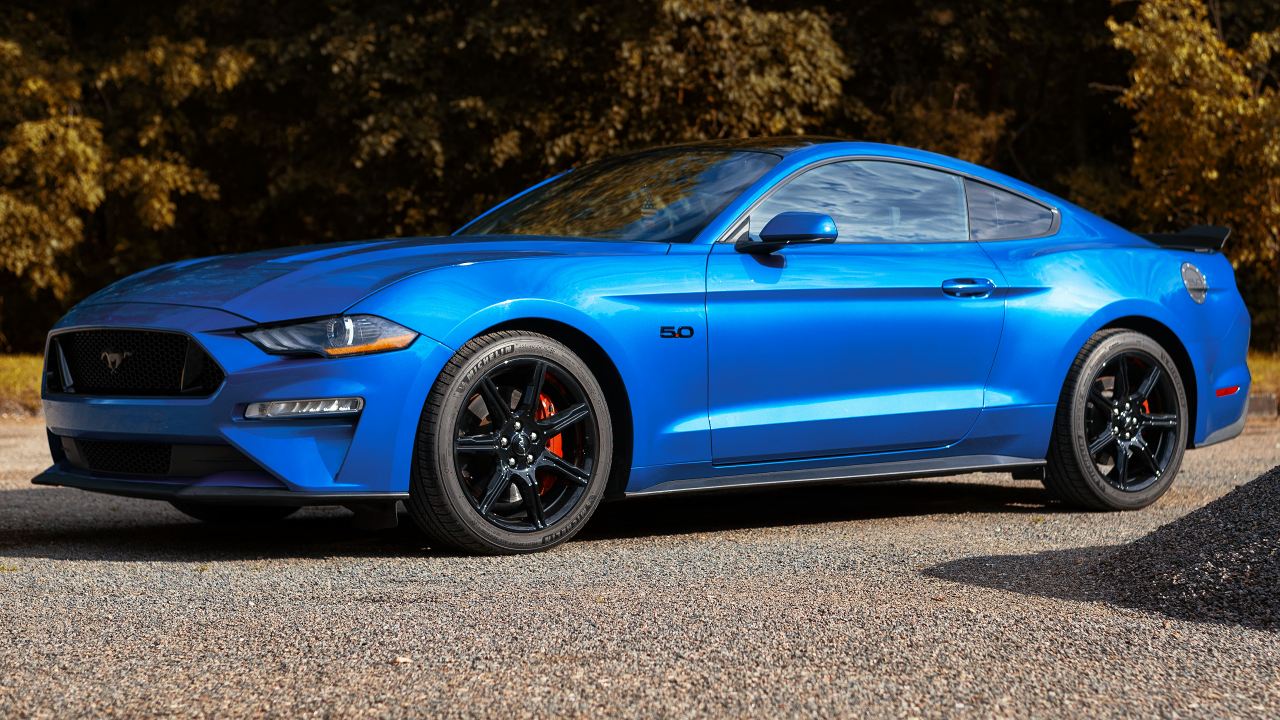
Within Ford, the modern standard-bearer for American V8 power is the Coyote engine family. Analysts have described the current Coyote as one of the last great mainstream naturally aspirated V8s, noting that it remains competitive in output and character even as turbocharged sixes and hybrid systems proliferate. A detailed look at Ford’s Coyote V8 highlights how its high-revving character and sophisticated valvetrain let it deliver strong power without forced induction, a rarity in today’s emissions constrained environment. That engine anchors the Mustang lineup and reinforces Ford’s decision to keep a naturally aspirated V8 in a mass-market sports coupe when many rivals have walked away.
Ford also continues to rely on V8s in its trucks, where customer expectations for towing, durability, and a familiar sound remain strong. The company’s own materials on Ford’s V8 engines describe these powerplants as a cornerstone of the lineup, from the Coyote in the Mustang to larger displacement units in pickups. The 5.0L Ti‑VCT V8, for example, has been offered in the Ford F‑150 and comes standard on King Ranch and Platinum trims in certain model years, with dealership information specifying that this V8 is paired with a 150 K capable automatic transmission to deliver strong performance. Enthusiast oriented variants like the F‑150 Raptor R further underline Ford’s commitment to eight cylinders in halo trucks, giving buyers a supercharged V8 option in a segment that increasingly leans on turbocharged sixes.
GM’s small blocks and Cadillac’s V8 flagships
General Motors approaches the same mission from a slightly different angle, leaning heavily on its long running small block architecture. The Chevrolet Small Block V8 remains a fixture in vehicles like the Chevy Silverado, Camaro, and Corvette, where it is praised for reliability, compact packaging, and a broad torque curve. A review of Chevrolet Small Block engines notes that these V8s have become icons in the automotive industry, with decades of incremental refinement making them both durable and easy to service. That heritage is a key reason GM continues to invest in V8s for its full size trucks and performance cars even as it expands its electric portfolio.
At the luxury end of the spectrum, Cadillac still uses V8 power to differentiate its most extreme models. The Cadillac CT5‑V Blackwing, for instance, is described as an American luxury powerhouse that pairs a high output V8 with a tech heavy cabin and the cachet of Cadillac as General Motors’ luxury division. Reporting on The Cadillac CT5‑V Blackwing underscores how GM still sees a place for a potent V8 in a flagship sedan, even as the broader Cadillac lineup moves toward electrification. Together with Chevrolet and GMC trucks, these engines ensure that GM remains one of the last major sources of American built V8s for both work and high performance driving.
Stellantis, Hemi nostalgia, and the limits of a comeback
The picture becomes more complicated when looking at Stellantis and its American brands, which have built much of their modern identity around the HEMI V8. Enthusiasts have long associated Dodge muscle cars, Ram trucks, and even special Jeep models with the sound and surge of a HEMI, and coverage of the farewell to V8 kings like the Dodge Demon 170 and Ram TRX captured how deeply traditionalists value the Hemi beyond simple power ratings. Enthusiasts waited more than four decades for Jeep to offer a V8 Wrangler, and when the Jeep Wrangler Rubicon 392 arrived, reviews emphasized how its V8 made the Wrangler feel as rowdy as fans had imagined, confirming the emotional pull of eight cylinders in off road form as well. That Jeep example, detailed in a Wrangler Rubicon 392 review, shows how rare and special V8 offerings have already become inside Stellantis portfolios.
Recent reporting indicates that Stellantis plans to restart production of several HEMI V8 engines, including 5.7, 6.2, and 6.4 liter variants, with production reportedly set to take place in the United States. Coverage of the HEMI comeback frames this as welcome news for V8 fans, suggesting that the HEMI may not be gone for good and that it will once again be made in the USA. However, the same reporting makes clear that this is a targeted revival rather than a full scale return to the V8 heavy lineups of the past. Stellantis is still pivoting toward smaller engines and electrified platforms, and the HEMI’s return appears aimed at specific performance or specialty models rather than a broad, Ford or GM style commitment across mainstream segments.
Aftermarket lifelines and the cultural weight of the V8
As factory options contract, the aftermarket has become an important refuge for those who want American made V8 power in older vehicles or custom builds. Companies that specialize in crate engines offer complete GM based V8s built and machined in the USA, such as a 400 cubic inch Crate Engine rated at 400/508HP With Roller Cam NEW that uses a new block manufactured domestically. Product descriptions for this Crate Engine emphasize that it is assembled and dyno tested in the USA, underscoring how aftermarket suppliers have stepped in to keep American built V8s available even as new car lineups evolve. Other examples, like a Mopar Magnum based 408ci V8 sourced from Blueprint Engines and installed in a classic Plymouth Barracuda, show how enthusiasts continue to rely on Blueprint Engines and similar builders to keep vintage iron on the road with modern, American built power.
More from Fast Lane Only