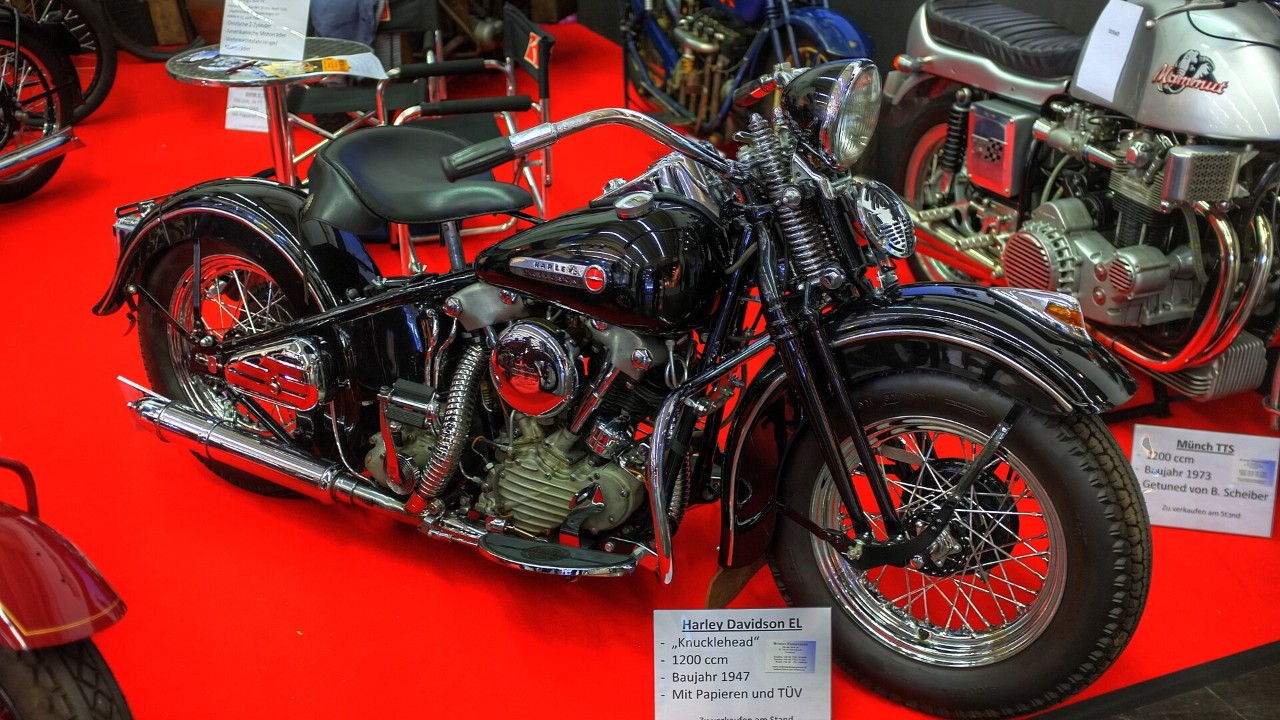
The 1936 Harley EL Knucklehead was the company’s first production overhead-valve V-twin, and it made 40 horsepower from 61 cubic inches. It arrived in the middle of the Depression, when spending money on a new motorcycle took nerve. Yet the gamble paid off, with more than 1,500 sold in the first year, according to the National Motorcycle Museum.
The museum puts it plainly: Harley-Davidson “pulled ahead of Indian in 1936” with this engine. An overhead-valve engine moves the valves above the piston, so the fuel and air take a straighter path in and out.
That is why the Harley EL Knucklehead mattered so much to the company. Here is what Harley built, what went wrong at first and how the bike earned its nickname.
The engine behind the Harley EL Knucklehead
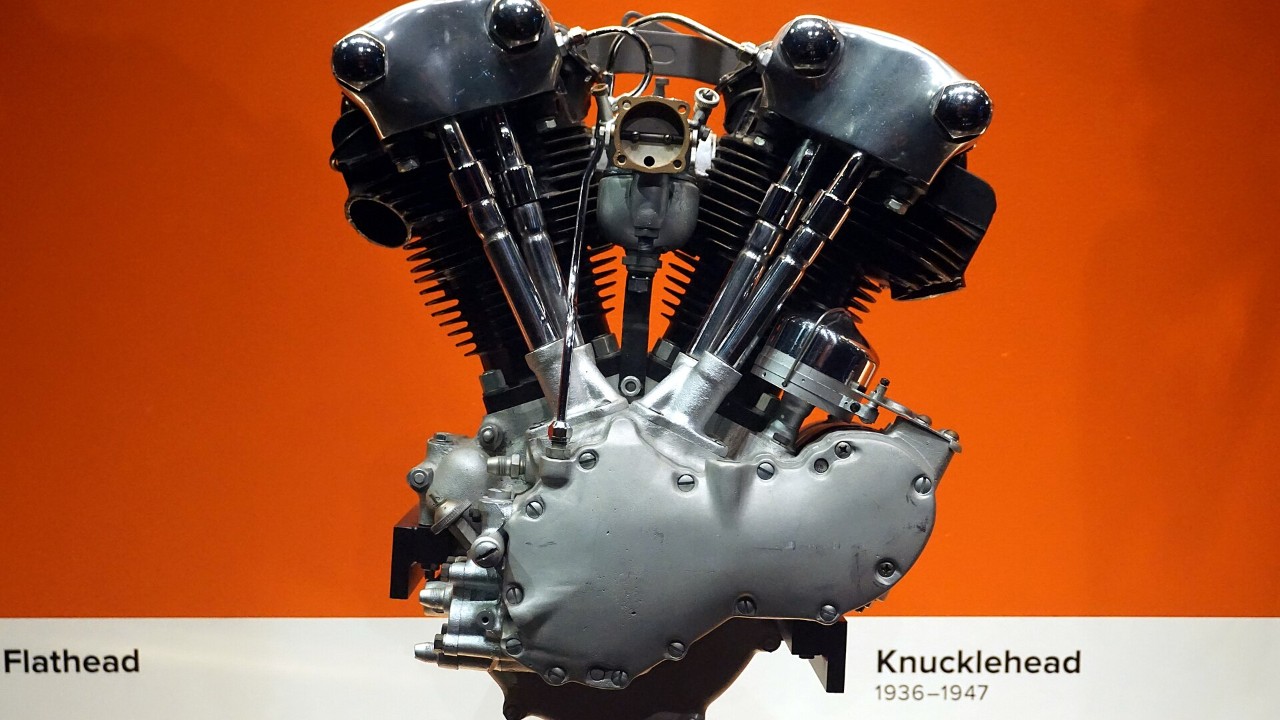
The EL used an overhead-valve, 45-degree V-twin, according to the National Motorcycle Museum. Bore and stroke measured 3.31 by 3.50 inches, for 61 cubic inches, or 988 cc. Compression was 7:1, and a 1.25-inch Linkert carburetor fed the engine. The museum lists output at 40 horsepower.
Silodrome adds some useful detail. It puts the high-compression EL at “approximately 40 bhp at 4,800 rpm,” while the standard E made about 37 bhp. In other words, the EL was the hotter of the two versions.
The oiling system was new as well. Silodrome describes a dry-sump recirculating system with a two-stage pump. Chief Engineer William S. Harley, one of the company’s four co-founders, led the project, the same article says.
A new gearbox and a lighter look
The OHV big twin also got a new four-speed constant-mesh transmission, Silodrome reports. Riders shifted it by hand and worked the clutch with a foot, according to the museum. A duplex chain handled the primary drive, and another chain turned the rear wheel.
Styling changed too. The museum points to new oval-section springer fork tubes, a more graceful muffler and a speedometer mounted on the tank. Meanwhile, the “Comet” tank emblem appeared from 1936 through 1939.
The rest of the package stayed traditional. For example, the frame was steel with double down tubes, and the rear end was rigid, with a sprung seat for comfort. Overall, the museum gives a 59.5-inch wheelbase, a weight of 565 pounds and a top speed of 95 mph. Both wheels wore 4.50 by 18-inch tires, and drum brakes sat at each end. Electrics ran on a 6-volt battery with coil and points ignition, the museum adds.
Growing pains in the first year
At first, however, the engines were far from perfect. Three engine versions appeared during the 1936 model year alone, the museum notes. Early problems included broken valve springs, poor rocker arm lubrication and oil leaking from the top end.
Harley responded with repair kits. It sent them to dealers for “over 1000 affected new bikes already on the road,” according to the museum. Even so, buyers kept coming. The museum reports “over 1500 first year sales,” and Silodrome puts first-year production at about 1,704.
Buyers could also choose from five two-tone paint schemes in 1936. The museum lists Sherwood Green with Silver, Teak Red with Black, Venetian Blue with Croydon Cream, Nile Green with Maroon, and Dusk Gray with Royal Buff.
Where the Knucklehead name came from
Harley did not call the bike a Knucklehead. Instead, the name came later. Silodrome says it “appears to have first been used in the years after World War II.” According to the same article, the polished rocker box nuts resembled the knuckles of a clenched fist. The museum similarly ties the nickname to the bulbous rocker boxes.
The engine soon proved its speed. On March 13, 1937, Joe Petrali rode a modified Knucklehead to a two-way average of 136.183 mph at Daytona Beach, Silodrome reports. That record stood for 11 years, until Rollie Free beat it at Bonneville in 1948.
Twelve model years and a museum survivor
Meanwhile, the engine family grew over time. In 1941, a 74-cubic-inch FL joined the 61-inch EL, according to Silodrome. Production ran from 1936 through 1947, and Silodrome estimates roughly 41,000 Knuckleheads across all twelve model years. Then, in 1948, Harley enclosed the valve train, and the Panhead took over.
Today, you can see an early Harley EL Knucklehead in person. The National Motorcycle Museum displays a 1936 EL in Dusk Gray with Royal Buff, on loan from Robert Hyler of Illinois. It sits among about a dozen Knuckleheads on show there.
More from Fast Lane Only