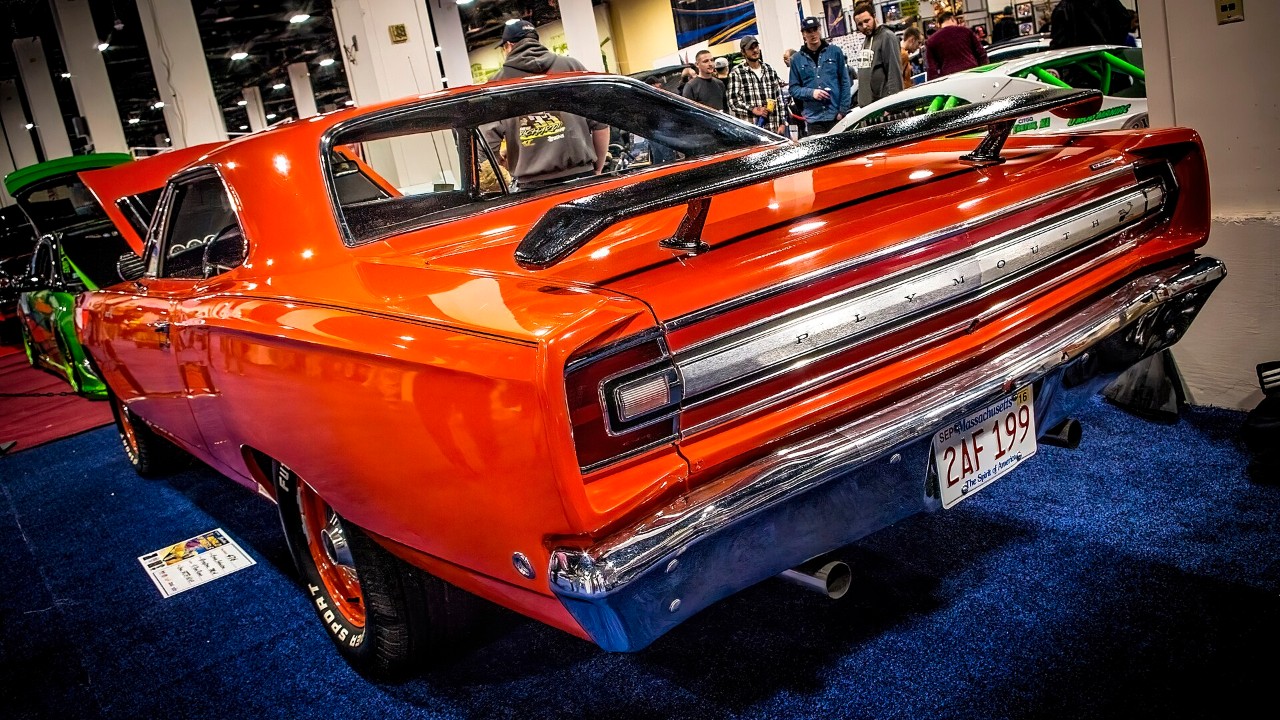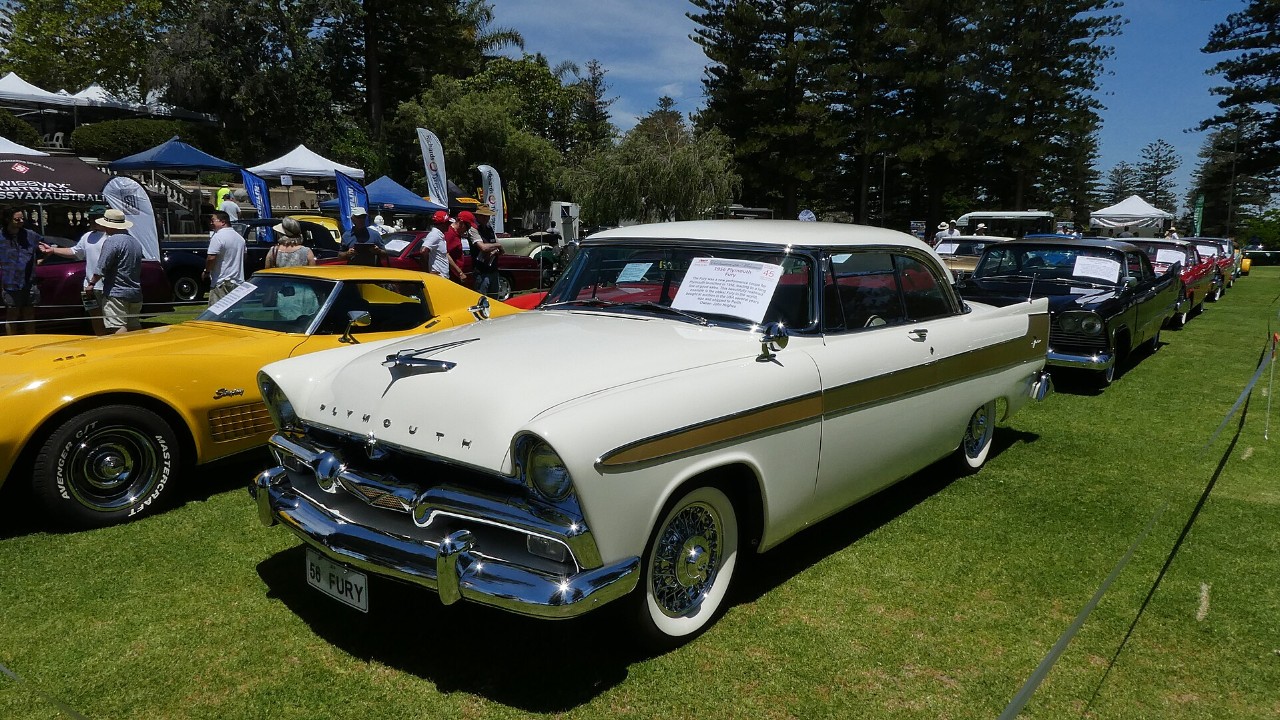
The Plymouth Fury began in 1956 as a limited-run hardtop, and the name lasted well into the 1970s. Along the way it went from a gold-trimmed showpiece to a fleet sedan to a 440-powered cruiser. Few nameplates covered that much ground in less than 20 years.
That long run is exactly why so many Furys slipped away. Some came in small numbers from the start. Others sold by the hundreds of thousands, then wore out as taxis, family cars and parts donors.
These eight are our picks for the Furys we see less often every year. Calling them rare is our opinion, not a survivor count. Still, wherever we give a production number, it comes from a source we read for this story.
1. 1956 Plymouth Fury
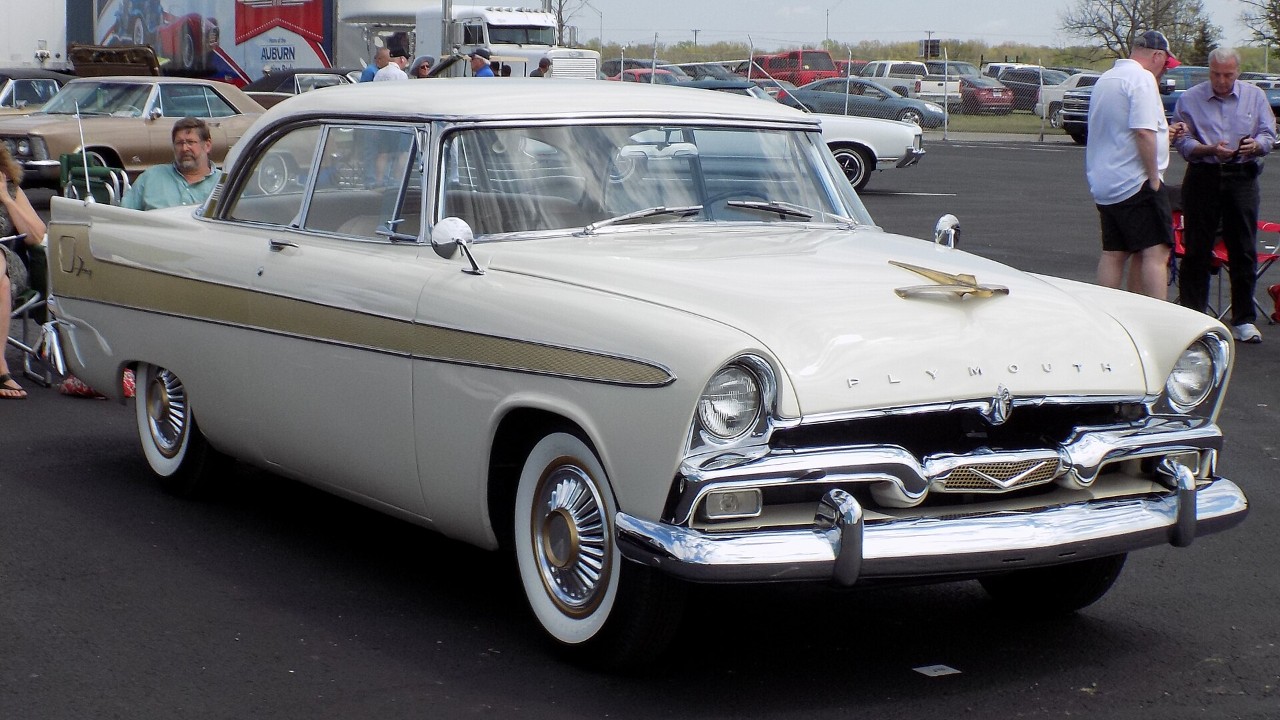
Plymouth wanted the first Fury to look fast and then prove it. Before it went on sale, a pre-production car ran 124 mph on the Flying Mile at Daytona. Later, a Fury fitted with twin four-barrel carburetors reached 143.6 mph there. Both figures come from Dan Jedlicka’s history of the 1956–58 Fury.
The same history also puts the price at $2,866, and output at 4,485 cars. Power came from a 303-cubic-inch V8 rated at 240 hp, sourced from Canadian Chrysler. Every one came dressed the same way, so there was no cheap version to dilute the run. We covered its paint and trim in our story on the 4,485 Furys Plymouth built for 1956.
Our take: a run that small leaves little room for loss. We suspect a 1956 Plymouth Fury that turns up today goes straight to a restorer, then into a collection. If so, the number you can actually buy shrinks a little every year.
2. 1958 Plymouth Fury hardtop coupe
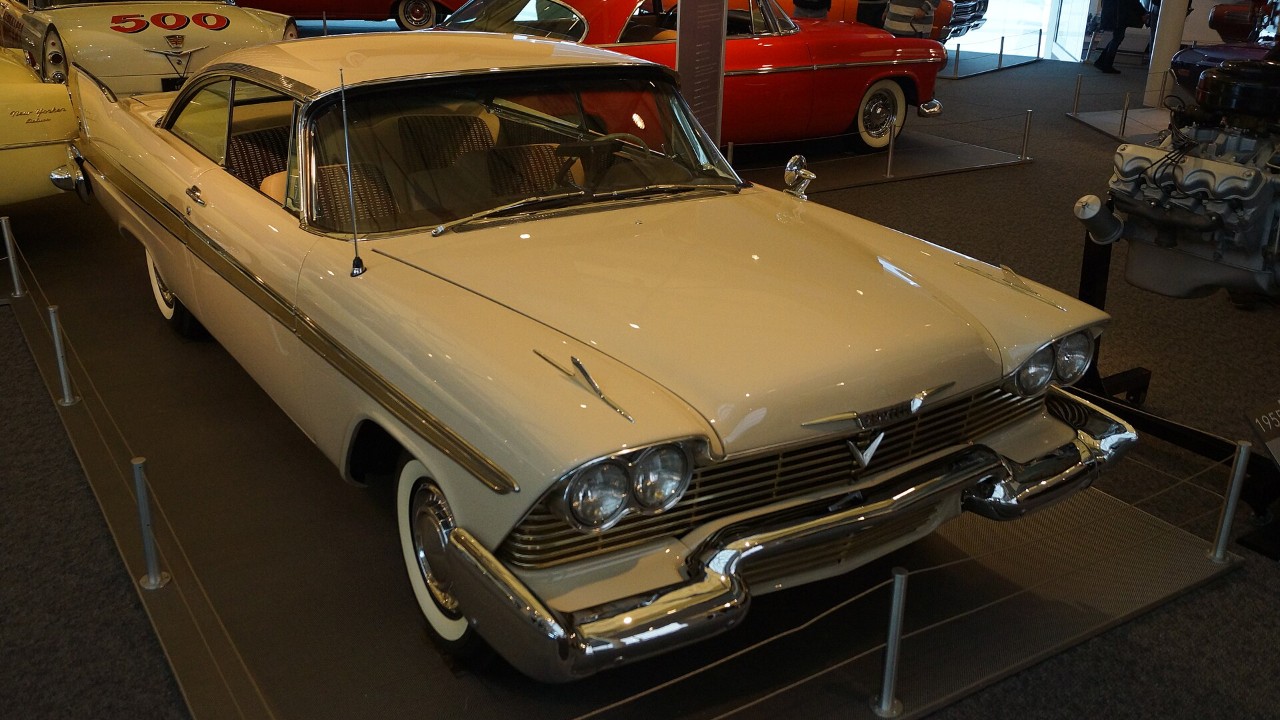
By 1958 the Fury had grown four headlights and “lollipop” taillights. However, it kept the gold anodized grille and added gold-centered wheel covers. Plymouth built 5,308 of them that year, at $3,067 apiece, according to Jedlicka’s history.
A 290-hp V8 came standard. For more, buyers could order the Golden Commando 350 V8, rated at 305 hp. Plymouth also listed an optional fuel-injected version at 315 hp. That injected setup alone makes any surviving example a talking point.
In our view, the 1958 car is the hardest early Fury to find in honest shape. We suspect its tailfin styling invited plenty of customizing over the decades. To us, a stock hardtop with its gold trim intact feels like the exception, not the rule. If you find one, we’d check the trim pieces first, because a complete set makes the car.
3. 1959 Plymouth Sport Fury
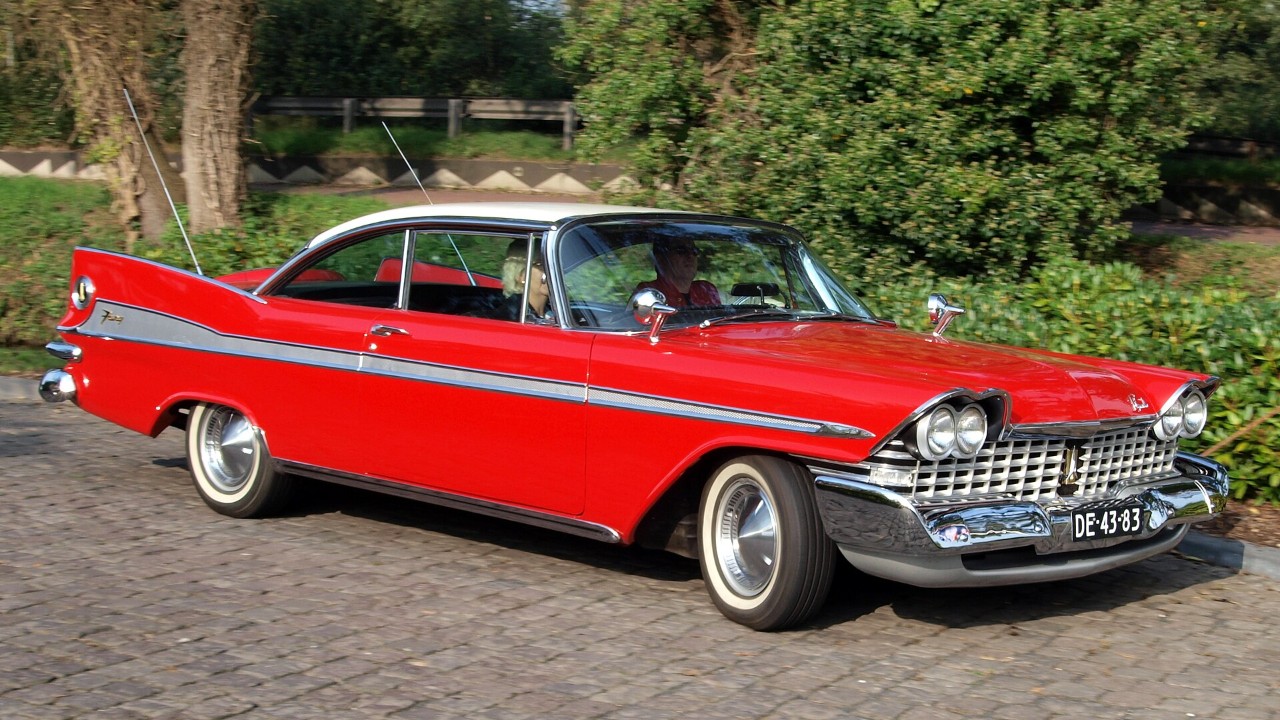
For 1959 Plymouth moved the name up a notch. The Sport Fury became the top series, and it came as a two-door hardtop or a convertible. According to a Barn Finds feature on a 1959 Sport Fury, Plymouth built 17,867 hardtops and 5,990 convertibles that year.
The engine to have was the Golden Commando. It displaced 361 cubic inches and made 395 lb-ft of torque, with a two-barrel or four-barrel carburetor. That was a lot of shove, and it suited the Space Age styling. In our view, torque like that would make a big car feel lighter than it looks.
Those totals sound healthy, but they cover two body styles and many engines. In our opinion, a Golden Commando convertible is the one to chase, since convertibles were the smaller slice. Meanwhile, rust and age have thinned the hardtops too. So we’d expect a solid 1959 Sport Fury of either style to get harder to find, not easier.
4. 1965 Plymouth Fury III convertible
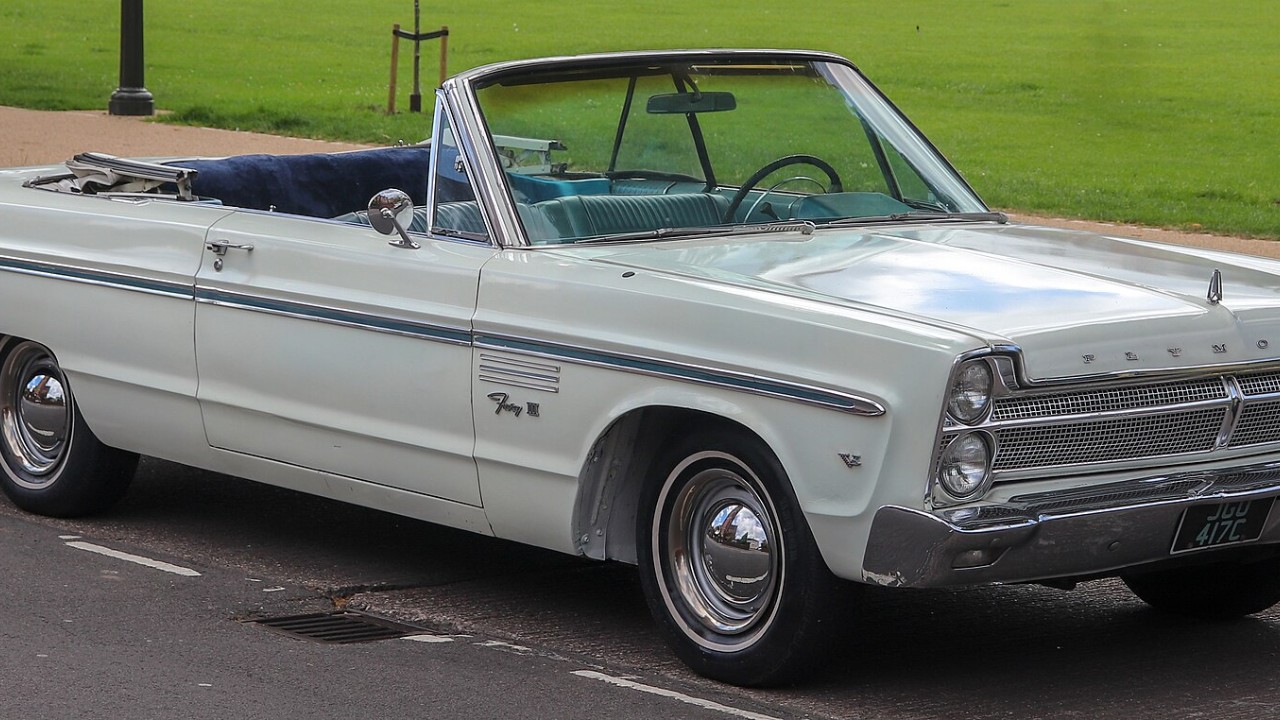
For 1965 Chrysler overhauled its big C-body, and Plymouth got its own version. Mac’s Motor City Garage lists a 119-inch wheelbase and a lineup of Fury I, Fury II, Fury III and Sport Fury. Prices ran from $2,378 to $3,209, while engines spanned the Slant Six to the 426 wedge V8.
As a result, the new size worked. Ate Up With Motor’s Fury history puts 1965 Fury and Sport Fury sales at just under 330,000. That was nearly half of Plymouth’s 721,234 cars for the model year. The standard V8 was a 318 rated at 230 hp, while the optional 383 made 270 or 325 hp.
Here’s our take. The Fury III was the upscale volume model, so the convertible was its fair-weather version. We’d guess open cars made up a small share of the mix. Big 1960s convertibles also tend to rot in the floors and rear quarters. That’s why we think clean ones get scarcer each season.
5. 1966 Plymouth Fury II
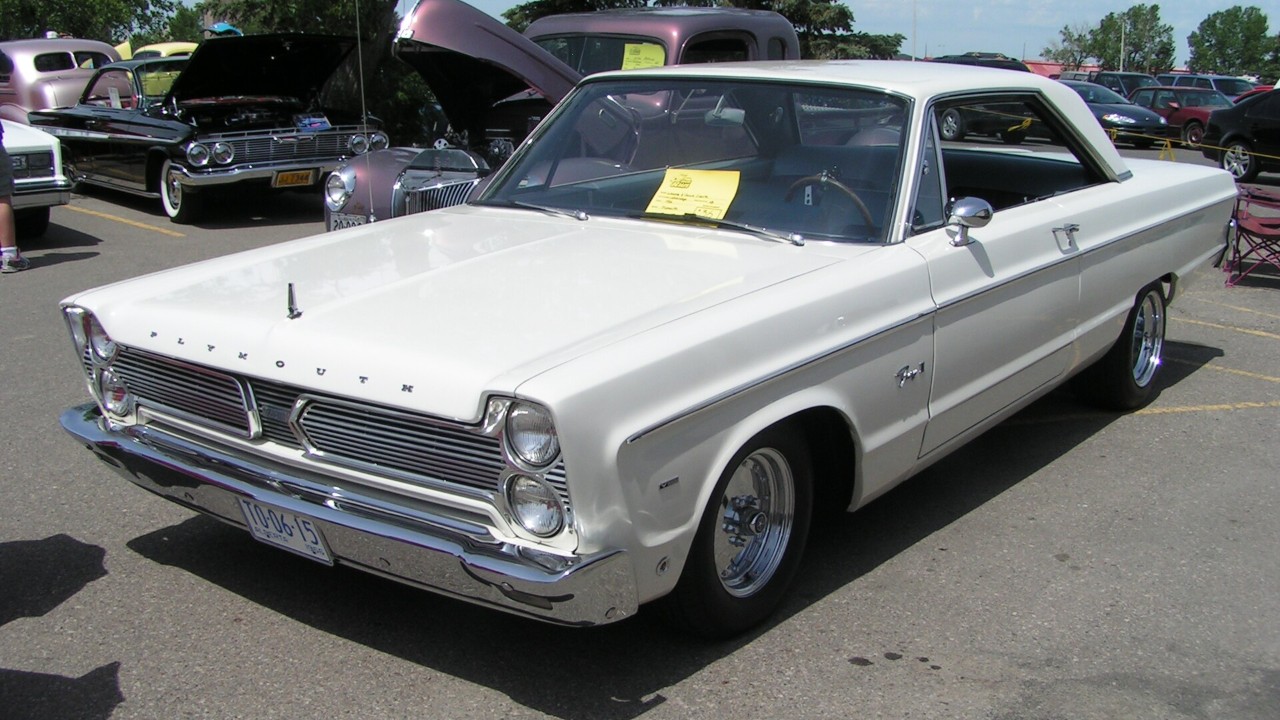
The Fury II sat in the middle of the big-Plymouth range. According to Ate Up With Motor, Plymouth spaced Fury I, II and III to match the price spread of Chevrolet’s Biscayne, Bel Air and Impala. Mac’s Motor City Garage notes that the Fury II and III added carpeting and other deluxe touches over the base car.
That middle position was a tough spot to sell from, because rivals crowded it. Chevrolet outsold the Fury by almost four to one in 1965, as Ate Up With Motor points out. Meanwhile, Plymouth added the VIP for 1966 as a plush Fury III, which pulled attention further up the ladder.
In our view, then, the Fury II is the forgotten Fury. It was never the cheapest or the fanciest, so few people saved one on purpose. Most ended up as everyday transportation until they wore out. We’d bet a clean Fury II is a rarer sight at a show than a Sport Fury, and that gap should keep growing.
6. 1967 Plymouth Fury I
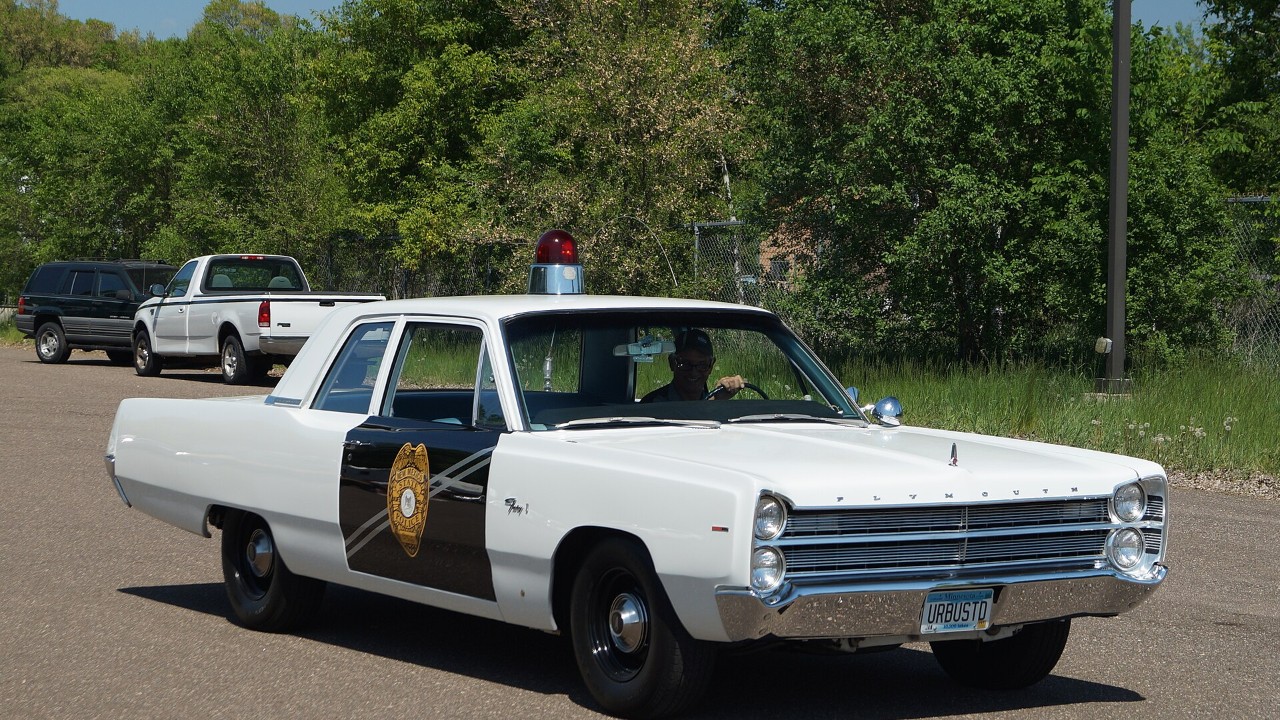
The Fury I was the bare-bones base model. Mac’s Motor City Garage describes it as the fleet trim, without the carpets and extras of the Fury II and III. Through 1967 the standard V8 was the 318 poly-head, as Ate Up With Motor confirms, with a Slant Six below it.
Fleet trim usually meant hard work. Ate Up With Motor notes that big Plymouths of the early 1970s served widely as taxis and police cars. Jobs like those wear cars out, so few owners keep a plain sedan once its working life ends. Plymouth also offered the Fury I and II as two-door sedans in 1965, a body we rarely see today.
Our take: plain cars rarely survive, because nobody thinks to save them. We’d call a well-kept 1967 Fury I one of the scarcest Furys on this list, even if it was the most common in its day. If you find a two-door, we’d grab it, since it can make a sleeper build or a time-capsule keeper.
7. 1971 Plymouth Sport Fury GT
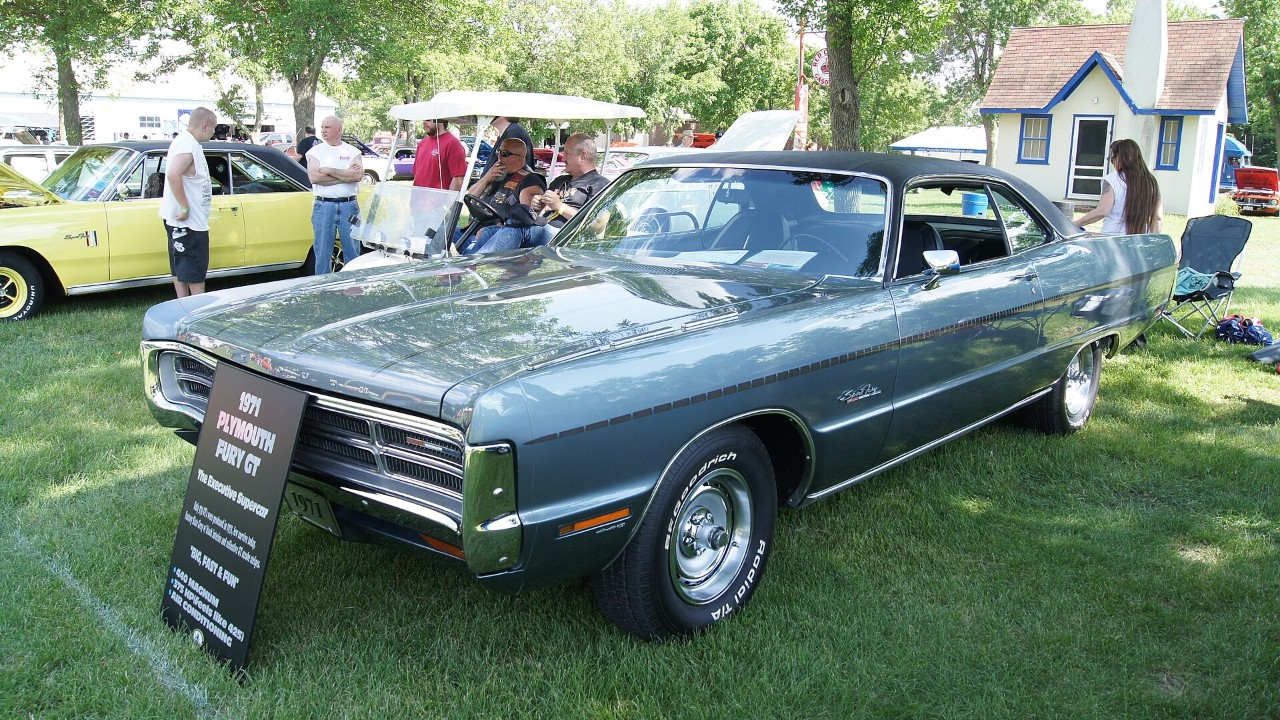
Plymouth launched the Sport Fury GT for 1970 as a big car with muscle-car hardware. According to Mac’s Motor City Garage’s look at the 1970–71 GT, the 1970 car offered a 350-hp 440 or a 390-hp 440 six-barrel. For 1971, only a 375-hp 440 Super Commando remained.
Meanwhile, the chassis got serious attention too. At launch the GT carried stiffer springs and dampers, a front anti-roll bar and heavy-duty 11-inch drum brakes. It rode on 15×6-inch Rallye wheels with Goodyear Polyglas tires. Back then, TorqueFlite automatic was the only transmission. For more big-engine Mopars, see our list of forgotten Plymouths that outran their class.
The GT lasted just two model years, and 1971 was the end. In our opinion, most fans overlook the single-engine 1971 car next to the six-barrel 1970. Even so, it packs a 440 in a full-size body that we rarely see offered. We’d snap up any 1971 GT with its original drivetrain.
8. 1972 Plymouth Fury Gran Coupe
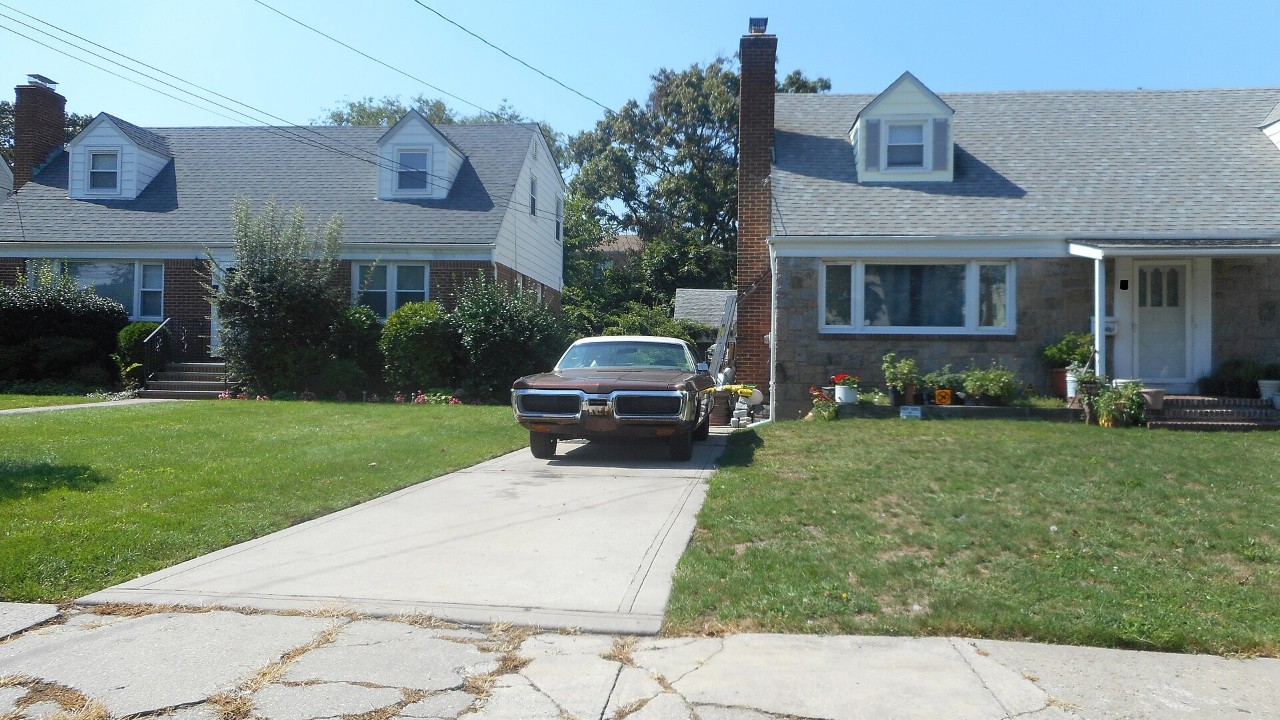
For 1972 Chrysler’s full-size cars wore “fuselage” styling, with the lamps built into the bumpers. Old Cars Weekly’s 1972 Fury Gran Coupe feature describes the car as part of Plymouth’s Fury Group. The Gran series was new that year, and it would eventually become the Plymouth Gran Fury.
The standard V8 was a 360 two-barrel rated at 175 hp, while Plymouth also listed a 100-hp Slant Six. Buyers who wanted more could order a 440 instead. That spread shows how much the big Plymouth had changed since the Sport Fury GT, just a year earlier.
Our take: few people save big 1970s coupes. We suspect many of these went to scrap or gave up their engines. So a straight 1972 Gran Coupe with its trim and interior intact is now a real find. We’d buy the best one we could afford rather than a project.
More from Fast Lane Only