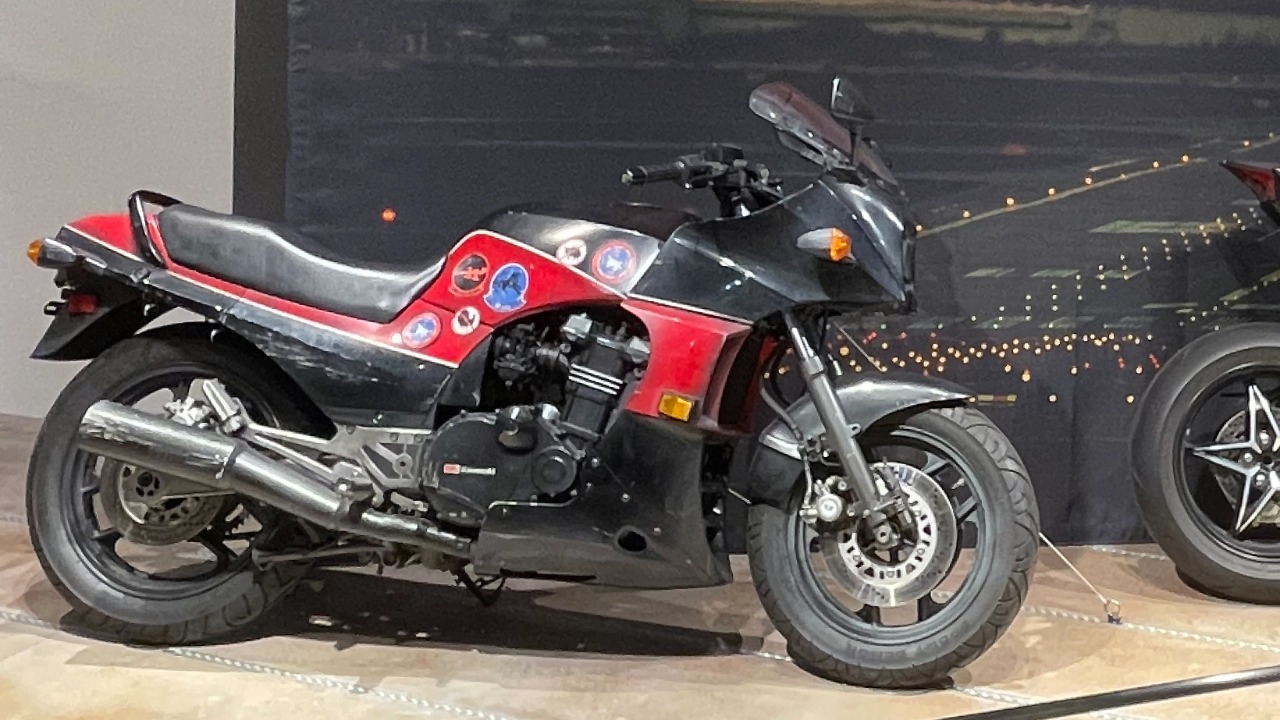
America had four-cylinder motorcycles more than a century ago. The Henderson Four arrived in 1912, with its engine laid along the frame like a small car’s. Since then, four-cylinder bikes have kept getting smoother, faster and easier to ride.
That progress makes the old ones a little scary. Early fours had weak brakes, skinny tires and frames that never imagined modern traffic. Later superbikes fixed the brakes, then piled on so much power that their tires and suspension struggled to keep up. Either way, riding one today takes a special kind of respect.
So this is our list of 12 four-cylinder motorcycles that feel too dangerous to ride today. To be clear, that verdict is our opinion about how they feel next to modern bikes, not a safety rating. Each one gets real facts from the record, our take and a tip if you ever swing a leg over one.
1. 1912 Henderson Four
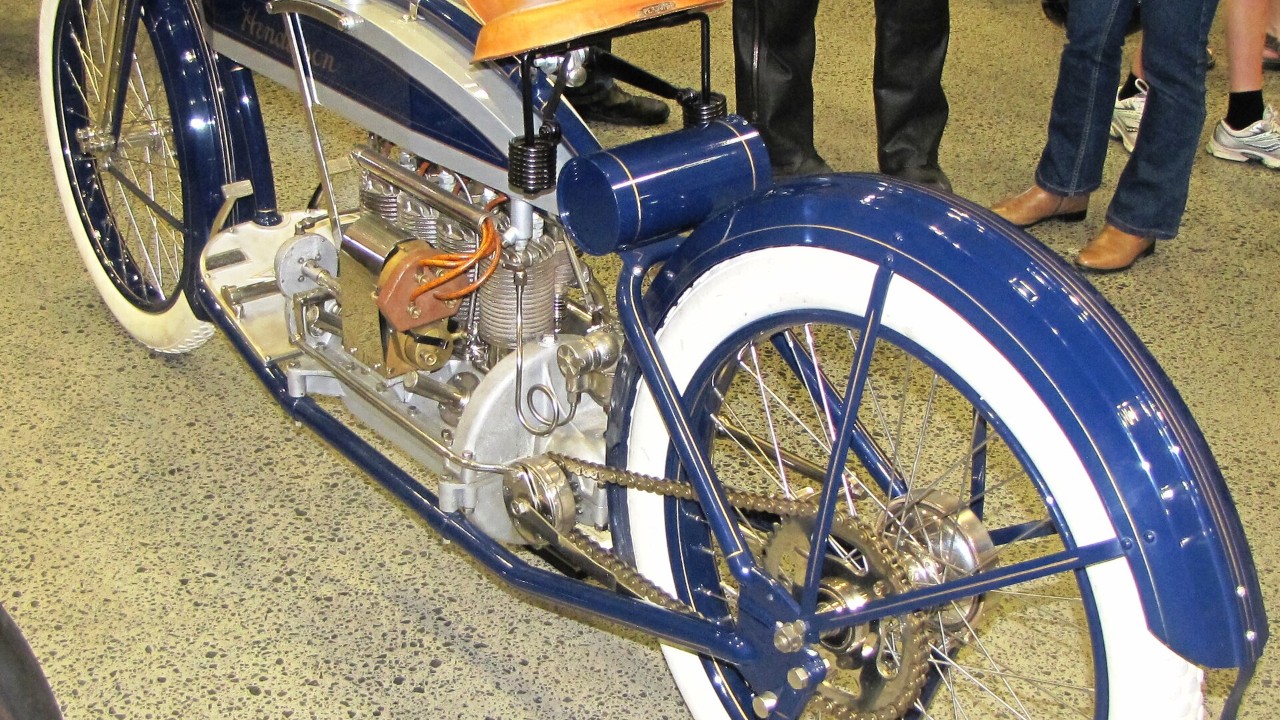
The Henderson Four is where this story starts. Brothers William and Tom Henderson founded the company, with Bill handling the design and Tom the money. The National Motorcycle Museum lists the 1912 bike at 58.9 cubic inches, or 965cc, with a 65-inch wheelbase. That long frame let the four cylinders sit in a line, front to back.
The braking setup is what makes us nervous. The museum’s spec sheet lists a single internal brake at the rear, and the 1913 Model B launched with a better brake. Even so, the Henderson was tough. Carl Stearns Clancy spent about a year riding one around the world, a trip that drew publicity in 1913, according to the National Motorcycle Museum.
Our take: we’d love to ride one, but only on an empty road. Picture stopping a heavy four-cylinder machine with one rear brake in modern traffic. Bikes like this also explain why so few early American fours turn up for sale, as we found in our list of American motorcycles so rare they rarely turn up at auction. If you get a ride, plan every stop well ahead.
2. 1923 Ace Four
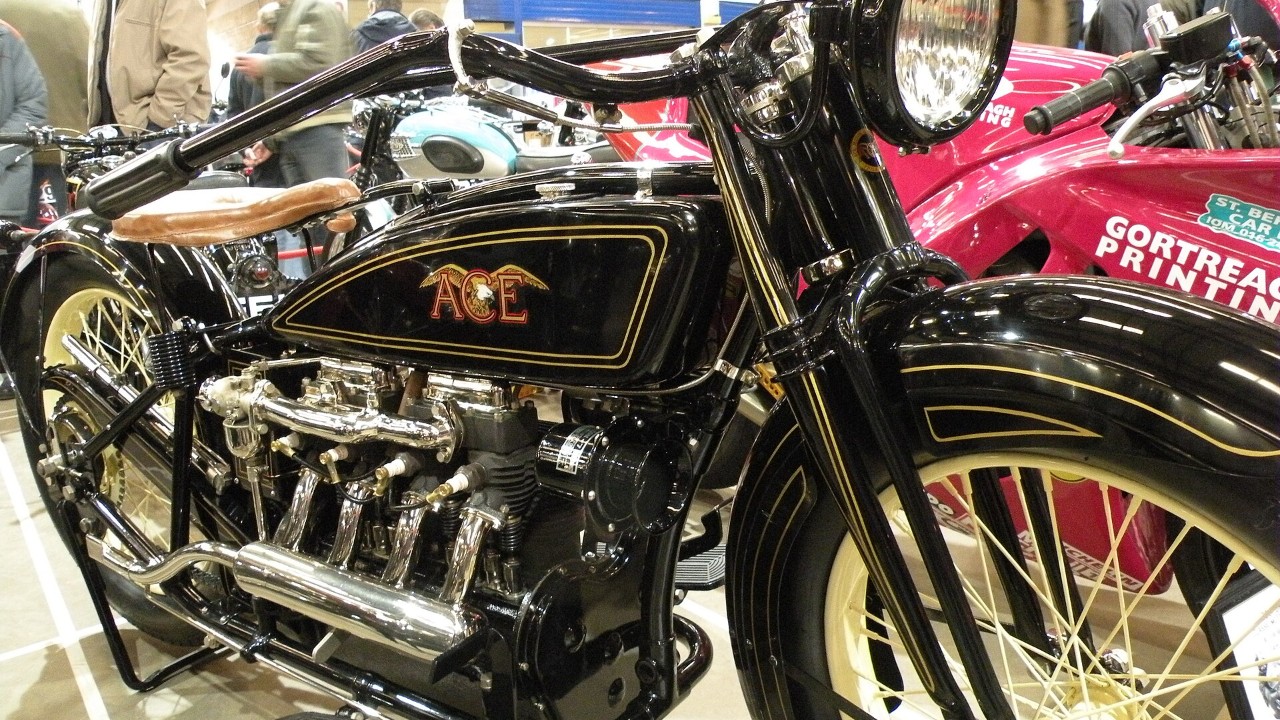
Bill Henderson didn’t stop with the Henderson Four. In the fall of 1919, he started the Ace Motor Corporation in Philadelphia, and production began in 1920. The Ace kept his favorite layout, with a four-cylinder engine running lengthwise in the frame and chain drive to the rear wheel.
The Ace also had speed on its side. In 1923, Red Wolverton rode a specially prepared Ace XP-4 to a record 129 mph. That’s a wild number for a machine of that era, especially on tires and brakes built for a much slower world. The company struggled, however, and in 1927 Indian bought Ace’s property. Indian then moved production to Springfield, Massachusetts, and sold the bike as the Indian Ace for one year.
In our view, the Ace is a beautiful machine with 1920s limits. It has the long, low stance of a luxury tourer, and it can run faster than its brakes and tires would like. Riding one in today’s traffic would take full concentration. Our tip: if you ride an Ace at a vintage rally, leave huge gaps and treat every intersection as a hazard.
3. 1937 Nimbus Type C
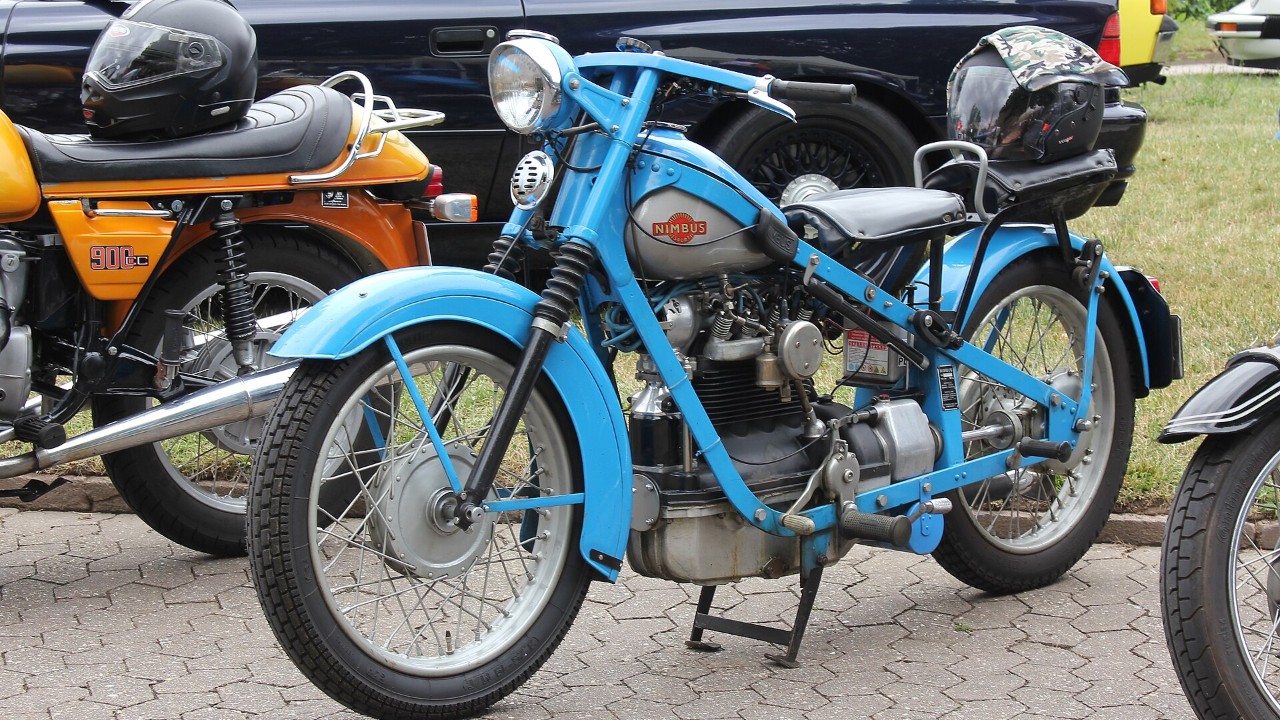
Denmark’s Nimbus is the rugged oddball of this list. The Type C arrived in 1934 with a 746cc four-cylinder engine and an overhead camshaft. Drive went to the rear wheel through a shaft, not a chain. Better yet, the frame used sections of flat steel, welded and riveted together, according to Old Bike Australasia.
The Danish police, the post office and the army all bought them. In fact, the Danish Post Office still ran Nimbus bikes as late as 1972. Series production ended in 1954, though small batches continued until 1959. That is a remarkable run for one basic design, and it’s a big part of the bike’s charm for us.
So why is it on a “too dangerous” list? The rear end was rigid, with no suspension at all. On a rough road, the rear wheel can skip and hop under braking or in a bumpy corner. We think a Nimbus is charming and nearly unbreakable, but it asks you to read the road far ahead. Our advice: keep speeds modest, check the tire pressures and ride it like the 1930s machine it is.
4. 1972 Honda CB500 Four
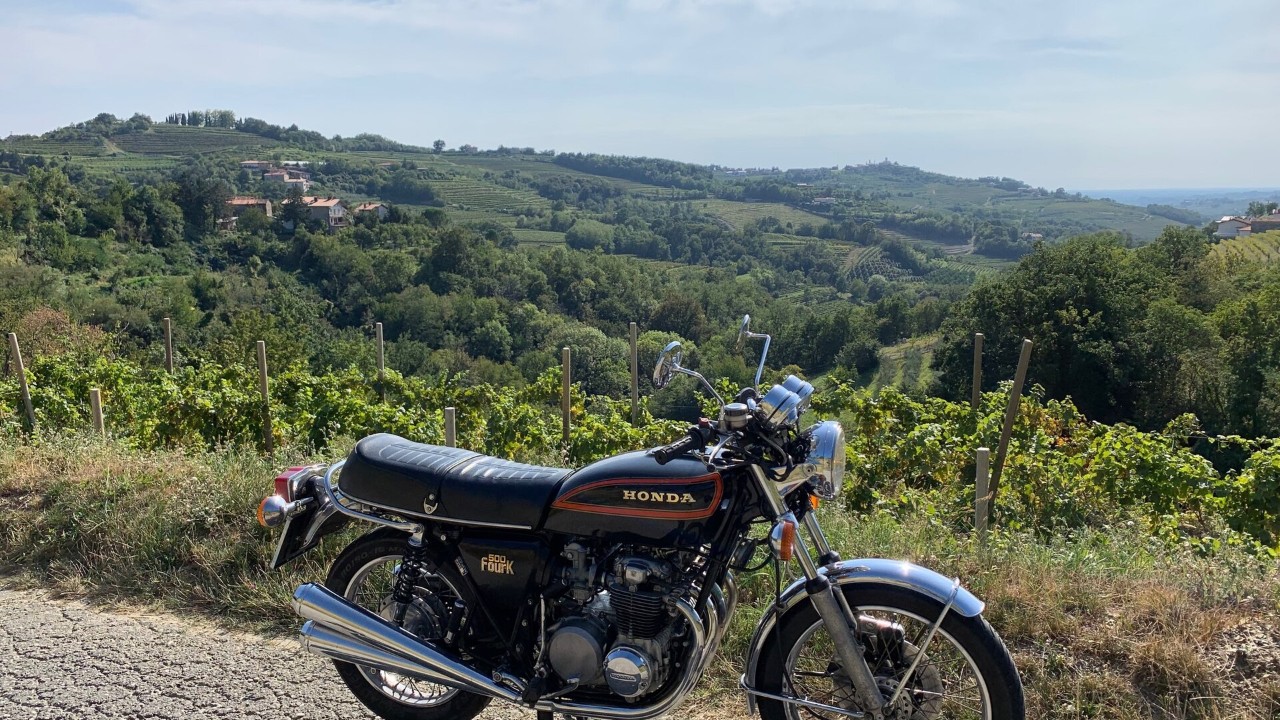
The CB500 Four took the formula of Honda’s big CB750 and shrank it. It used a 498cc overhead-cam inline four, and Honda built it from 1971 to 1978. In the US, however, the run ended after 1973, and the CB550 replaced it for 1974. The bike weighed about 185 kg dry.
Stopping came from a single 267mm front disc and a rear drum. That was decent for 1972. Next to a modern bike with twin discs and ABS, though, it feels like a big step back. The tires of that era also had far less grip than today’s rubber. Add a smooth, eager engine, and it is easy to go faster than the chassis likes.
Our take: the CB500 Four is one of the friendliest bikes on this list. It is light, smooth and easy to live with. The danger is in how easy it feels, because you can forget its brakes are half a century old. Our tip: fit fresh tires, rebuild the front caliper and replace old brake lines before you trust it in traffic.
5. 1978 Kawasaki Z1-R
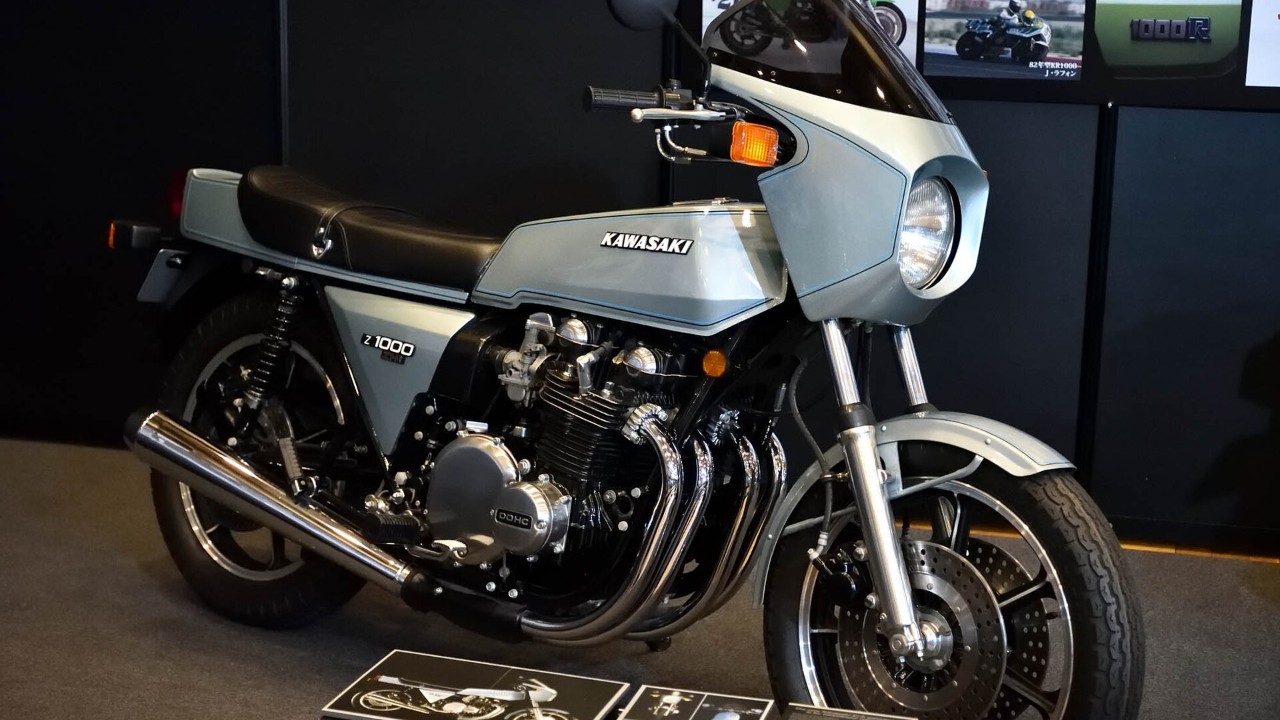
The Z1-R was Kawasaki’s café-styled big bike, and it had muscle. Its 1,015cc twin-cam four was advertised at 90 hp at the crank, while real-world output at the rear wheel was about 70 hp. A stock Z1-R ran the quarter-mile in a hair under 12 seconds at 110 mph, according to Rider Magazine’s look back.
The chassis was another story. Rider called its handling “pretty Stone Age” compared to some European bikes. Cornering took forceful input at the bars, and the Kayaba rear suspension was a weak point. Then came the Z1-R TC, a turbocharged version built by the Turbo Cycle Corporation. It had no factory warranty, and pushing boost past 10 psi risked “engine-shattering results.”
In our view, a turbo TC is the scariest bike here for its time. A stock Z1-R cost $3,695, while the TC sold for $4,995, and Turbo Cycle reportedly converted about 1,600 bikes over two years. Our tip: if you find a TC, leave the wastegate alone, and upgrade the rear shocks before any spirited ride.
6. 1975 Honda CB400F Super Sport
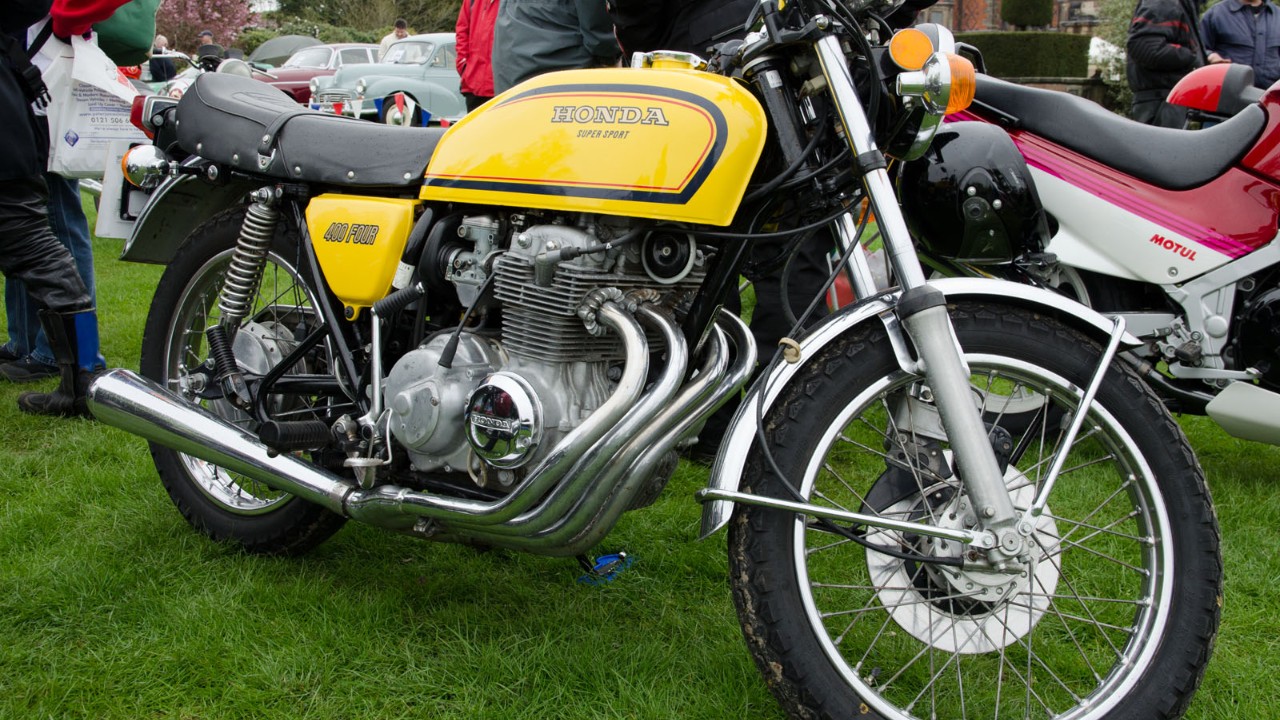
The CB400F was a small bike with a big personality. Its tiny inline four revved to a 10,000 rpm redline. It also came with a six-speed gearbox, which was rare for the time. The famous four-into-one exhaust swept across the front of the engine, and it looks great today.
The 1975 and 1976 models share the same mechanics. For 1977, Honda added taller bars and a striped tank. Next to the big 750 and 900 fours of the decade, it was the compact, nimble one of the family, built for riders who liked to work the gearbox.
Our take: this is a bike you ride hard to enjoy. To keep it singing, you have to rev it, and that means you’re working the brakes and tires near their limits. The low café-style bars also put weight on your wrists. Our advice: treat it to modern tires and fresh brake fluid, and it becomes a joy instead of a white-knuckle ride.
7. 1983 Honda CB1100F
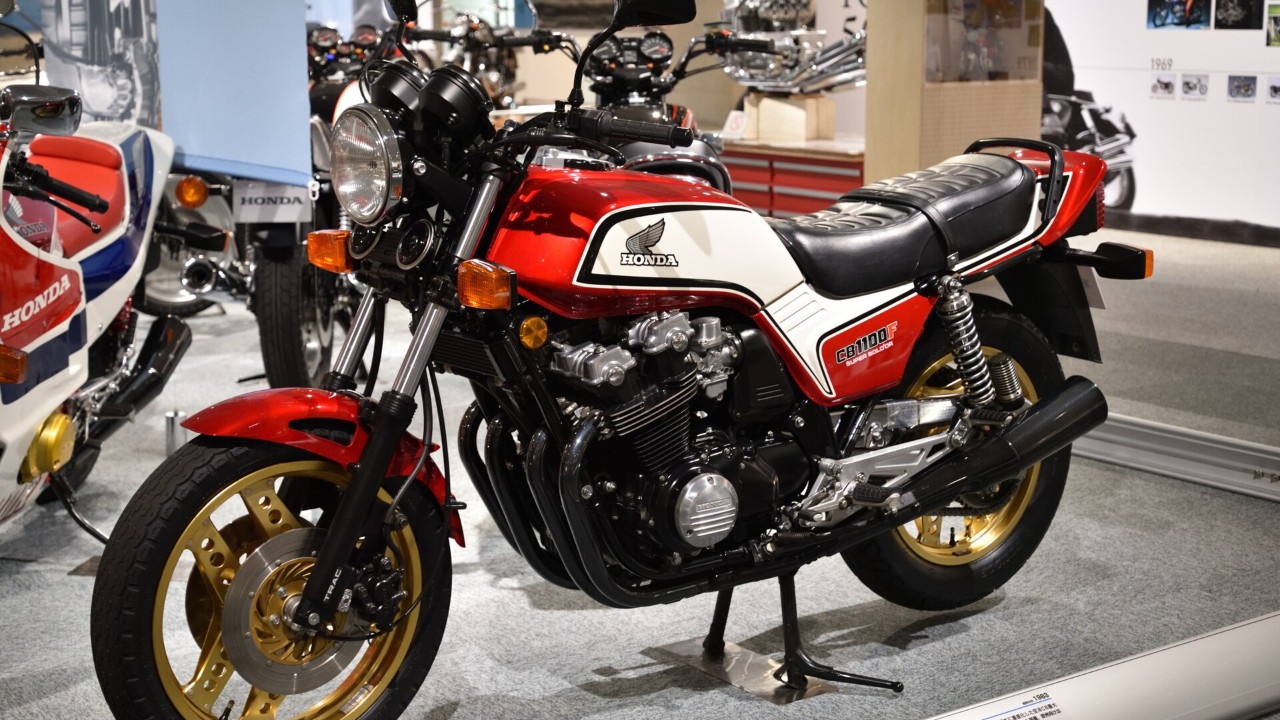
Honda built the CB1100F for 1983, based on the CB900F and the race-bred CB1100R. It used an air-cooled twin-cam inline four. Honda rated it at 108 bhp at 8,500 rpm. In Europe, however, the bike was limited to 100 hp. Honda sold it in the US, Canada, Europe and Australia, so it is not impossible to find.
The air-cooled engine gives it a raw, mechanical feel. It is also a heavy machine with early-1980s suspension. In our view, that is a recipe for a bike that feels busy and vague in fast corners on worn shocks. Our verdict here is about feel, not a test result.
In our view, the CB1100F is a fast, honest muscle bike that asks a lot from its rider. It has more than enough power to get into trouble on an old chassis. Owners love it for that character, and so do we. Our advice: check the fork seals and rear shocks first, and budget for modern rubber. We think those three jobs change how stable the bike feels more than any other work you can do.
8. 1984 Kawasaki GPz900R

The GPz900R, sold as the Ninja in many markets, changed the sport bike in 1984. Its 908cc four made 115 hp. Shannons calls it the first production inline four with liquid cooling, 16 valves and double overhead cams. It also says the bike was the first stock production motorcycle to top 150 mph off the showroom floor, according to Shannons’ GPz900R profile.
The chassis used a 16-inch front wheel and an 18-inch rear. It also had a three-way adjustable anti-dive front end. In 1990, Kawasaki switched it to 17-inch wheels at both ends, which tells you how much the industry changed in six years. In our view, that small front wheel helped quick steering, but it can make the bike feel twitchy at speed.
Our take: the GPz900R is the bike that made fast feel normal, and that’s the danger. It is so smooth that 100 mph arrives without drama. We also counted it among the motorcycles that were years ahead of their competition. Our tip: check the anti-dive units and fork oil, and fit the best tires you can find for the 16-inch front.
9. 1987 Yamaha FZR1000
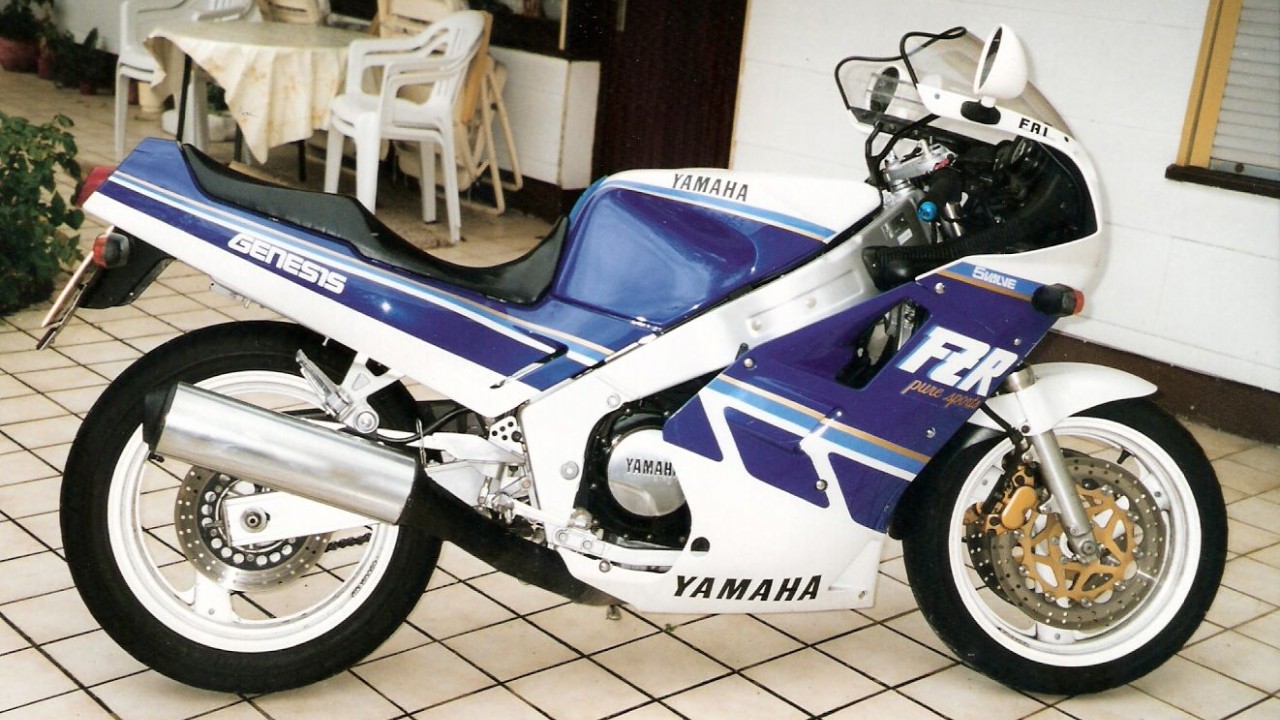
The FZR1000 was Yamaha’s big-bore answer to the race-bred superbike. Its 989cc engine was an all-new design, with five valves per cylinder: three intake and two exhaust. The cylinder block was also inclined at 45 degrees. Yamaha wrapped it in an all-aluminum Deltabox perimeter frame.
That whole package grew out of Yamaha’s Genesis design concept, first used on the FZ750. Then, for 1989, Yamaha redesigned the bike as the EXUP model, with 1,002cc and a reworked chassis. For the 1987–1988 bike, the rated output was 136 hp. That was a huge number for 1987, and the tires of the day had a lot of catching up to do.
In our view, the first FZR1000 sits right where superbikes got serious. It has the power of a modern bike, with brakes and tires from an earlier time. That gap is what makes it feel edgy now. It also appears among our vintage motorcycles that were faster than anyone admitted. Our tip: refresh the brake fluid and seals, check the steering-head bearings, then ease into the power.
10. 1988 Kawasaki ZX-10
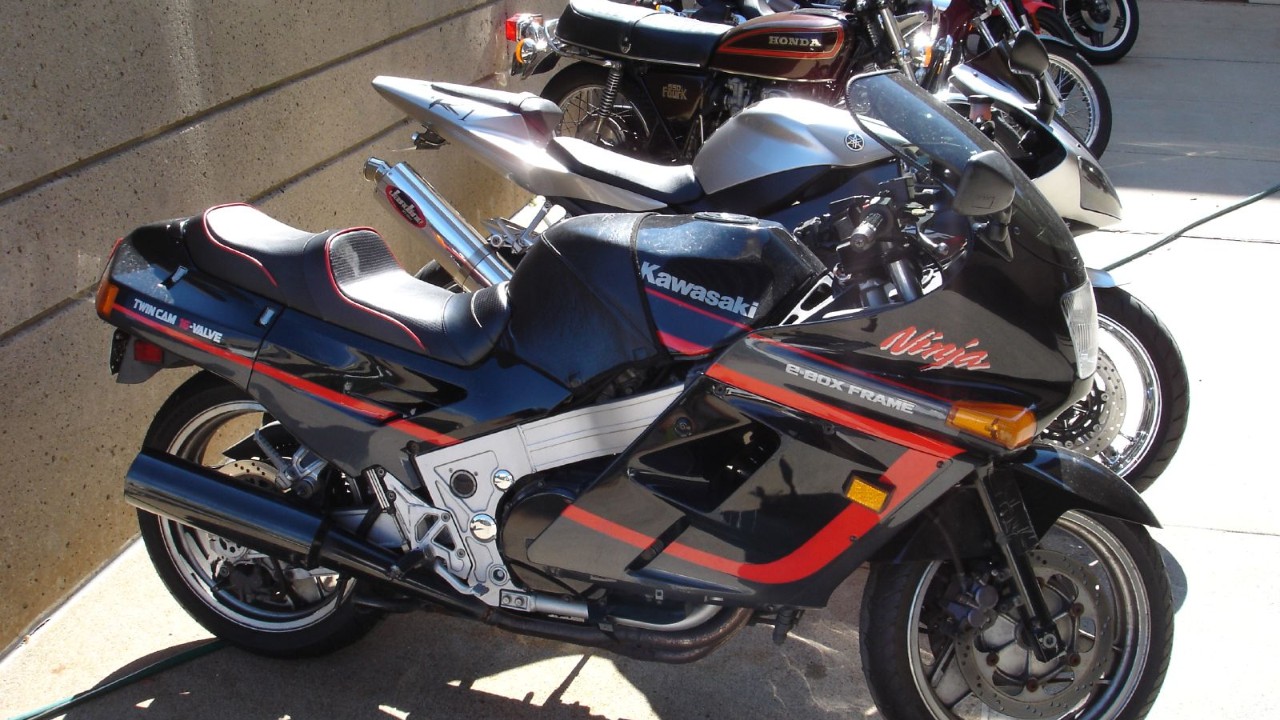
Kawasaki’s first ZX-10 arrived in 1988 with a 997cc liquid-cooled, twin-cam four. It made 137 hp at 10,000 rpm, a 12-hp gain over the bike it replaced. It also used Kawasaki’s first twin-spar aluminum frame, which the company called the e-box. Hagerty lists its dry weight at 489 pounds, 35 pounds less than the GPZ1000RX it replaced.
Those numbers made it very fast. An American magazine tested a full-power ZX-10 at 168 mph, making it the world’s fastest production bike at the time, according to Hagerty’s look at the ZX-10. Yet Hagerty also describes it as more sports-tourer than superbike, with a taller screen than the GPZ1000RX before it.
Our take: that comfort is part of the danger. A bike this relaxed at 100 mph invites you to keep going, and its 1980s brakes and tires set the real limits. We’d ride one happily on an open highway, but never in a hurry through town. Our tip: check the tires’ date codes, because old rubber on a 168-mph bike is no joke.
11. 1992 Honda CBR900RR
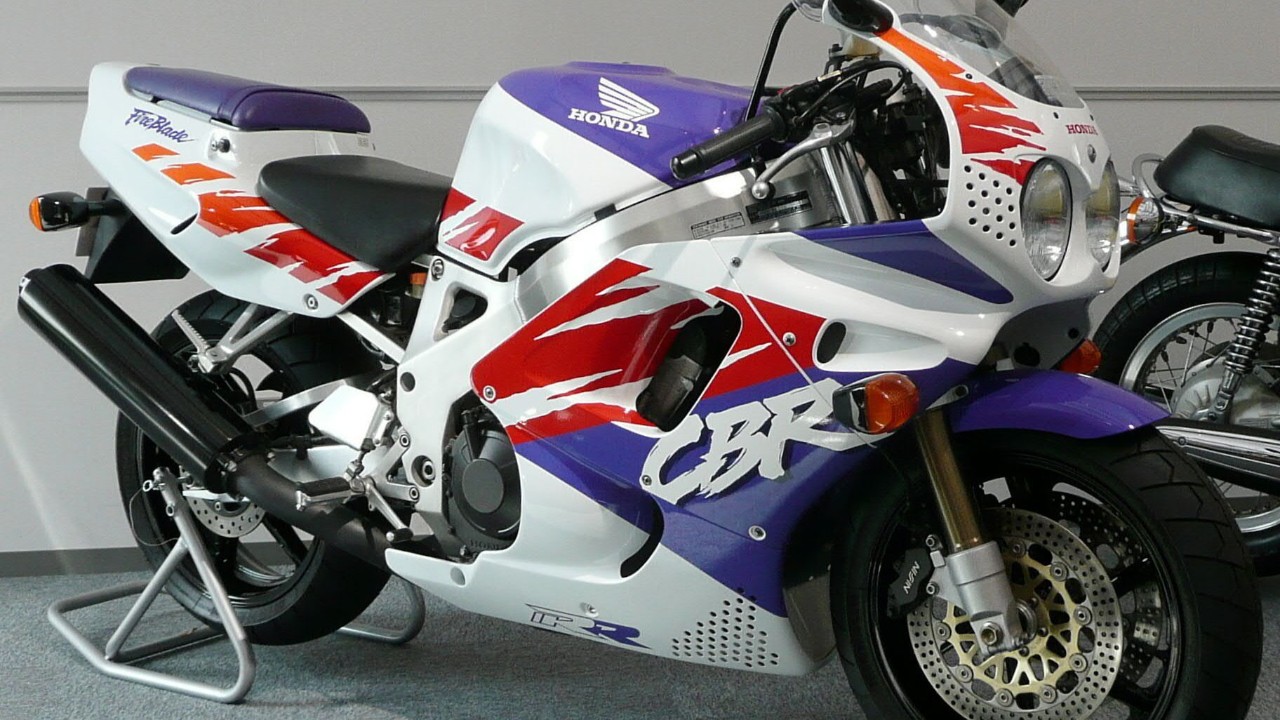
The first Fireblade rewrote the superbike rulebook. Honda engineer and former racer Tadao Baba fitted an 893cc engine into a frame meant for a 750. The result had about 120 bhp and weighed 185 kg, according to Honda UK’s history of the Fireblade. It launched in the UK in the spring of 1992 at £7,390.
Baba wanted “total control” for the rider, with strong brakes and sharp handling. To get there, he chose a 16-inch front wheel with conventional forks. That made the bike very quick to turn. However, it could also feel nervous over bumps at speed. Honda didn’t switch to a 17-inch front and upside-down forks until the 2000 model year. That means eight years of Fireblades kept the small front wheel.
In our view, the early Fireblade is thrilling and a little wild. It has the power and weight of a modern bike, but a very short, flickable front end. That combination rewards a smooth rider and punishes a clumsy one. Our tip: a quality steering damper and fresh suspension service make a huge difference on an early CBR900RR.
12. 1990 Kawasaki ZZ-R1100
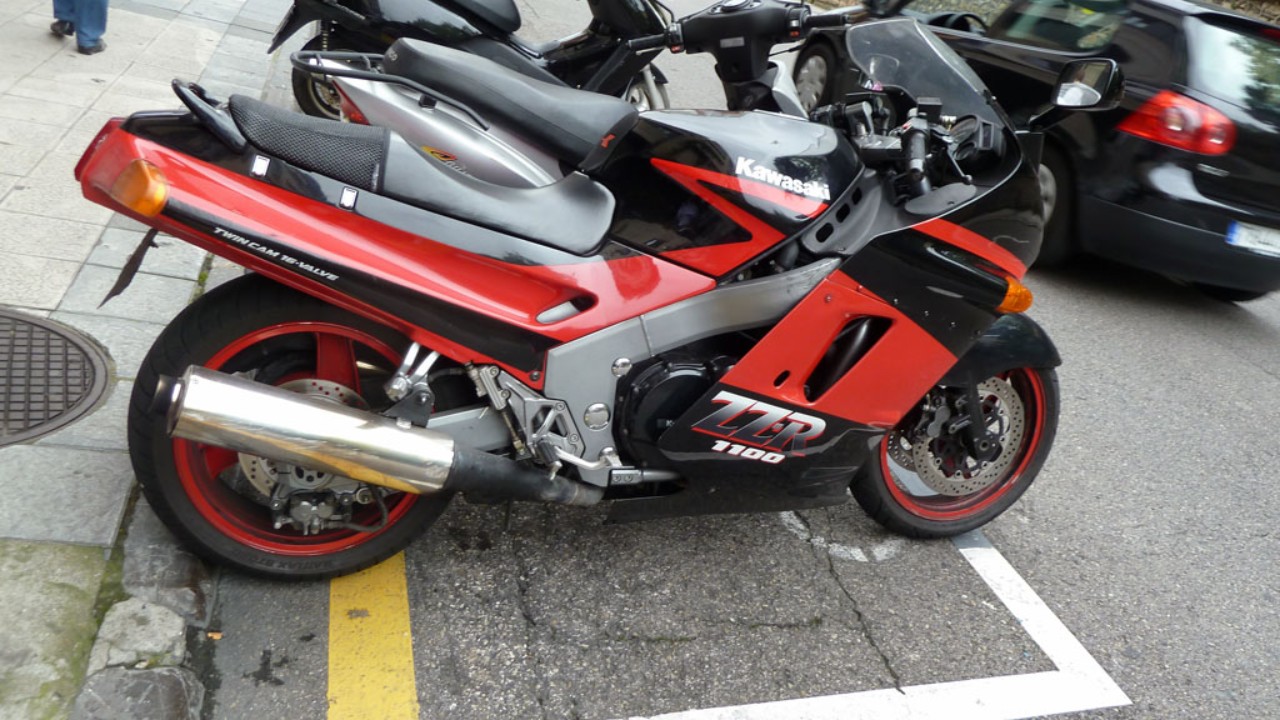
Kawasaki’s ZZ-R1100, sold as the ZX-11 in America, became the company’s flagship in 1990. Its 1,052cc four made a claimed 145 bhp at 10,500 rpm. It also used a ram-air intake to feed the engine at speed. Top speed sat in the 169 to 176 mph range. Measured at the rear wheel, output was about 134 hp, a strong result next to its 145-bhp claim.
The ZZ-R1100 was built as a big, stable sport-tourer. It was comfortable, smooth and easy to ride across a state. That’s exactly why we put it here. It reaches extraordinary speeds while feeling calm, and that calm can fool you. Its brakes and tires were good for 1990, yet they don’t match a modern superbike’s. At those speeds, every small gap in grip or stopping power matters.
Our take: the ZZ-R1100 is a wonderful long-distance machine for a careful rider. Treat the throttle with respect, and stay alert. Our tip: refresh the brakes and fit modern tires before any long trip. Kawasaki kept building it until 2001, as the successor to the 1988–1990 ZX-10.
More from Fast Lane Only