On January 12, 1904, a 40-year-old Henry Ford pointed the Ford 999 down a strip of ice on Lake St. Clair and covered one mile in 39.4 seconds. That works out to 91.37 mph, a world speed record. Ford was not a racing driver by trade. Still, he took the tiller himself, because his young company needed the headlines.
The run lasted well under a minute. However, it did more for Ford Motor Company than any advertisement it could buy at the time. In fact, the record went straight into those advertisements. Four years later, the first Model T rolled off the line in Detroit.
This is the story of the car, the cold morning on the lake and the record that lasted barely two weeks.
A racer with a borrowed name
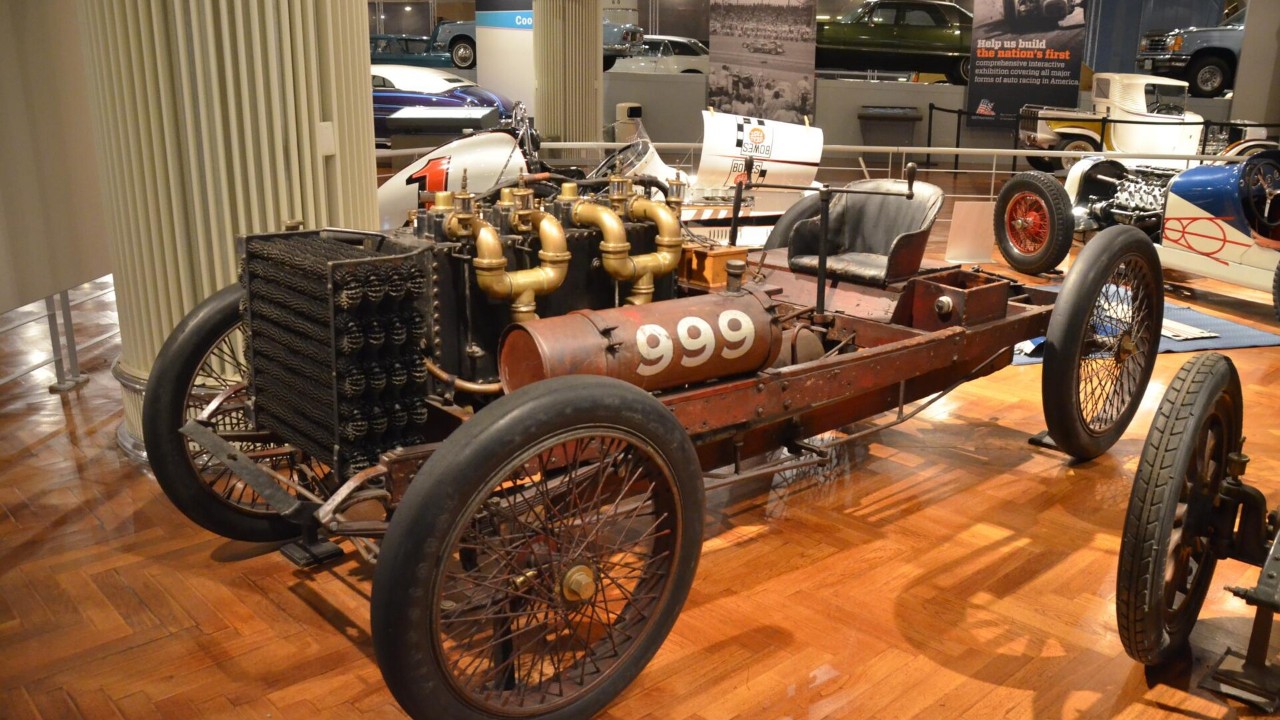
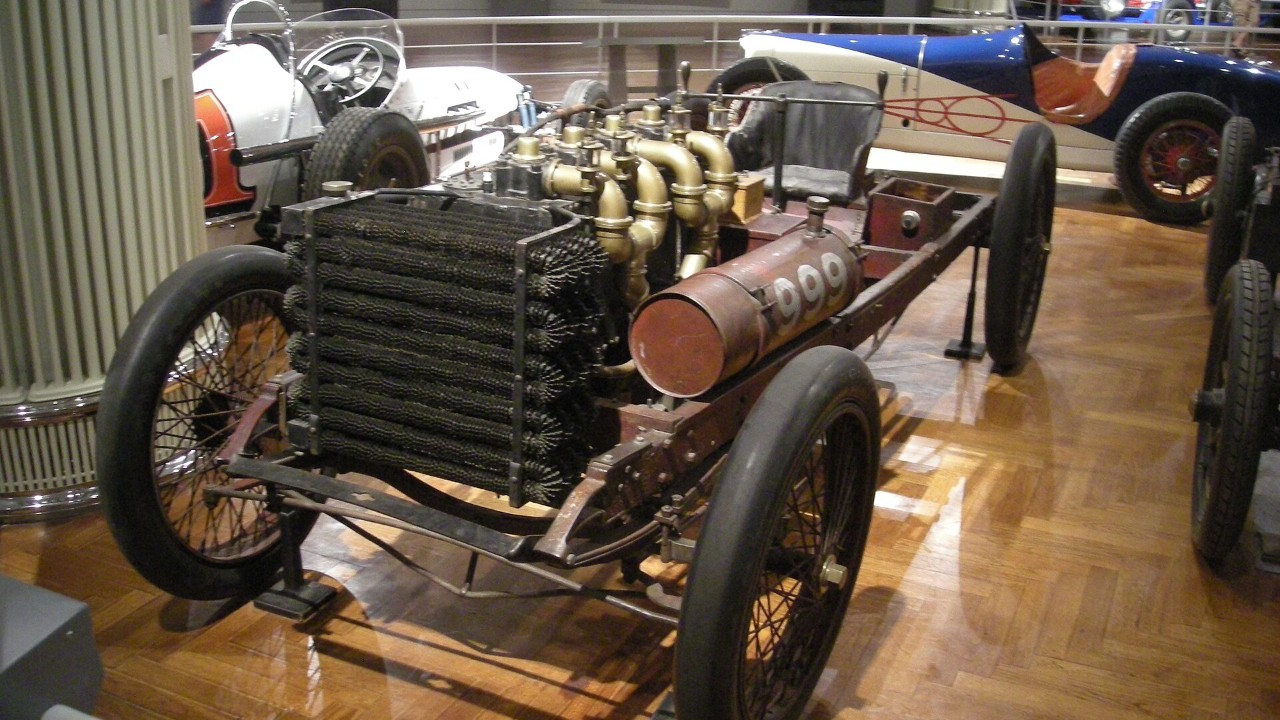
The Ford 999 was never meant to be pretty. According to Hagerty’s history of the run, it had a wooden chassis, no body, no hood and a single seat. Ford’s own account describes it as more than nine feet long, with the driver’s seat at the rear and a tiller instead of a steering wheel.
Meanwhile, the name came from a train. Ford borrowed it from the Empire State Express 999, a steam locomotive that Hagerty says had passed 112 mph. For a man selling the idea of speed, that was a smart choice. After all, newspaper readers across America knew the locomotive.
Ford built the car with Tom Cooper, a bicycle racing champion. Ford’s racing career was already moving by then. In 1901 he had beaten racing driver Alexander Winton in a head-to-head race. According to Ford’s history post, that unexpected win gave Ford the credibility to attract financial backing.
Barney Oldfield, a crash and a second 999
In fact, there were really two cars in this story. In 1902, Barney Oldfield drove the original 999 to victory in the Manufacturers’ Challenge Cup. Ford’s history says Oldfield set an American record on the five-mile course at Grosse Pointe, Michigan, that year.
A near-twin racer called the Arrow had a darker run. In 1903 it crashed during a race and killed its driver, Frank Day. Afterward, Ford rebuilt the damaged Arrow and gave it the 999 name. Hagerty notes that this “new 999,” sometimes called the “Red Devil,” became more famous than the original.
That is why records can look confusing. The Henry Ford, the museum that holds Ford’s papers, captions its photo of the run as the “Arrow” racer and also calls it the Ford “999.” Both names describe the same rebuilt car.
The Ford 999 on the ice at Lake St. Clair
Ford chose frozen Lake St. Clair, near New Baltimore and north of Detroit. The weather was cold and windy, Hagerty reports. A Ford Motor Company history post says about 100 spectators turned out. It also says the course was a three-mile cinder strip laid on the ice, with the record timed over a flying mile.
However, Ford did not ride alone. His mechanic, Ed “Spider” Huff, rode with him, according to The Henry Ford’s photo record of the day. Ford’s history adds that officials from the American Automobile Association were there to certify the result.
The run itself was rough. Ford’s account says the car hit a bulge in the ice at around 60 mph and went airborne. It skidded back down and kept accelerating. Meanwhile, the cold air hit so hard that Ford had to keep his eyes nearly closed.
The Detroit Tribune called it a “wild drive against time” the next day, Hagerty reports. The paper said Ford wore no goggles and that the car zig-zagged at speed. Even so, the clock showed 39.4 seconds for the mile. Ford’s history claims it was the first time an automobile had gone faster than 90 mph.
What powered it
The engine was huge, even by the standards of 1904. Hagerty lists an 18.9-liter inline four rated at 80 horsepower. Ford’s own history piece gives slightly different figures, an 18.5-liter four with 70 horsepower. Sources from this era often disagree, so both numbers belong in the record.
Either way, the formula was simple. Ford used enormous cylinders, very little weight and no comfort at all. In his 1922 autobiography, My Life and Work, Ford wrote about the four cylinders and their 80 horsepower. He also said the sensation of the ride was hard to describe.
Two weeks at the top
Unfortunately for Ford, the record did not last. On January 27, 1904, just 15 days later, William K. Vanderbilt ran 92.3 mph on the sand at Ormond Beach, Florida. Hagerty says he drove a 90-horsepower Mercedes and covered the flying mile in 39 seconds. As a result, Ford’s mark became a footnote in the record books almost at once.
For the company, though, the result was what mattered. The Henry Ford’s newspaper archive holds a clipping titled “World’s Record for the ‘999’” from January 13, 1904. According to the museum, the feat raised Ford Motor Company’s profile and that the 999 became a common subject in Ford advertisements.
Later, the car found new fans. Nearly 60 years after the run, racer Dan Gurney drove the 999. In the July 1963 issue of Ford Times, he praised its performance and traced the line of later Ford racers back to it, Hagerty reports.
As for the car, it did not end up in a scrapyard. According to Ford’s history post, the 999 retired to the Henry Ford Museum of American Innovation, where it remains on display. The museum’s Benson Ford Research Center also keeps the 1904 photograph of Ford and Huff on the ice, catalogued by date: January 12, 1904.
More from Fast Lane Only