You are watching Hertz reel from a $668 million quarterly loss just as its once-celebrated electric vehicle push stalls out, with thousands of cars parked and depreciating instead of generating revenue. The company is trying to convince you that cost cuts, fleet pruning, and a reset of its EV strategy can turn the story around, but the gap between promise and performance has rarely looked wider.
If you care about how bold bets on new technology can backfire when the economics shift, Hertz has become a case study in how quickly an aggressive electric strategy can turn into a drag on earnings and share price.
How a $668 million loss collides with Wall Street’s expectations
You are looking at a rental giant that just told investors its net loss for the latest quarter reached $668 million, a figure that dwarfs the progress it has made on trimming expenses. In its investor slides, Hertz Global Holdings Inc, listed on the NYSE under the ticker HTZ, framed the period as one where cost cuts delivered some operational progress, yet the headline number still reflected heavy pressure on pricing, utilization, and vehicle values, according to Hertz Global Holdings. You see the tension clearly: management talks about transformation while the income statement shows you a turnaround that remains incomplete.
Analysts had braced for a difficult quarter, yet the reported figures still came in below what the market wanted to see. Earnings per share landed at a loss of $0.72, which was $0.20 worse than consensus expectations of a $0.52 loss, even as revenue in the period reached $2.03 billion and slightly topped forecasts of about $2 billion, according to $0.72. You are left with a familiar but uncomfortable picture: top-line resilience, yet profitability still squeezed by factors that Hertz cannot fully control, including travel disruptions and the lingering effects of its earlier fleet choices.
EV dreams meet the hard math of depreciation and damage
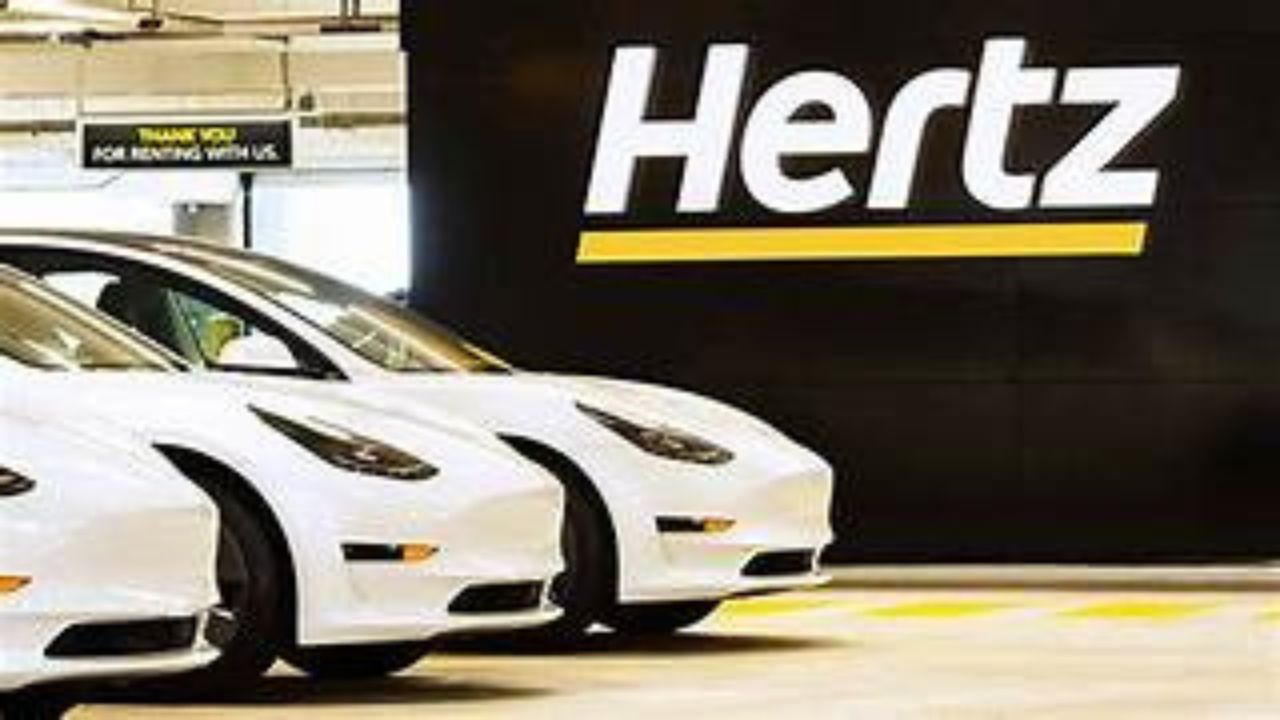
When you rewind to the early stage of Hertz’s electric push, the plan looked straightforward: load up on battery cars, lean on lower fuel and maintenance costs, and ride a wave of consumer curiosity. Instead, you now see the company unwinding that bet at scale, starting with a decision to sell about 20,000 electric vehicles from its United States fleet, including a large number of Teslas, roughly two years after it began buying them in bulk, as described in a Rental firm Hertz account. The narrative flipped quickly: what had been marketed as a forward-looking fleet suddenly became a balance-sheet problem that needed to be liquidated.
Part of the pain comes from the specific dynamics of Tesla pricing. You watched Tesla cut sticker prices for new cars, which pulled down the residual values of the used vehicles that Hertz held. Earlier, a Model 3 could hold up to 90% of its value within three years, yet more recent market shifts have erased nearly 50% of that value, according to an analysis that described how While the Model used to behave more like a rare asset than a mass-market sedan. You also have to factor in higher accident and repair rates for rented EVs, which Hertz itself has highlighted as a reason that electric units have been more expensive to operate than comparable combustion cars, a pattern echoed in coverage of how other risk factors the company now faces lower residual values and more frequent damage on pure EVs sold primarily in the United States.
Why 20,000 EVs are being dumped and what that means for you
If you track the sequence of disclosures, you see Hertz move from enthusiastic buyer to motivated seller in barely three years. In October 2021, the company announced an intention to order a large volume of EVs, then by early 2024 it had started to early terminate 20,000 electric vehicles from its United States fleet, a slice that represented about 11% of its overall cars, according to an overview of how Hertz early terminates. The company also told regulators it had begun selling some 20,000 electric vehicles from its United States rental fleet and would replace them with gas engine models, a reversal that a Dive Brief linked to higher repair costs and depreciation charges that were greater than previously expected.
For you as a traveler, this shift shows up in subtle but real ways. You were promised a future where walking up to a rental counter would mean a good chance of driving away in a Tesla or another EV, yet the company is now steering back toward gasoline models that are cheaper to run and easier to remarket. Analysts who track the sector describe how a Targeted Electric Vehicle fleet, in a post adjustment world, has become the new goal for Hertz instead of the aggressive expansion that created the financial headwinds you now see in the $668 million loss. You can still rent an EV in many markets, but you should expect that option to be more curated, with fewer units on the lot and more emphasis on models that can hold their value.
Cost cuts, liquidity, and the fight to keep investors onside
Behind the scenes, you can see management racing to convince bondholders and shareholders that the company has enough financial flexibility to absorb the EV misstep and the travel volatility that hit recent quarters. In its detailed presentation to investors, Hertz Global Holdings Inc highlighted that its balance sheet management, including Financial Position and Liquidity Hertz, remains a central focus, with a plan to keep enough cash and credit capacity to navigate 2026 even as it sells off parts of the fleet and absorbs associated charges, according to an overview of Financial Position. You are effectively being asked to trust that the worst of the EV-related write downs are behind the company and that future quarters will not bring another surprise of the same scale.
There are some signs that the broader restructuring is starting to bite in the right way. Over the full year 2025, profitability improved by more than $2 billion year over year, with the net loss narrowing to $194 million, a figure that Hertz framed as evidence that its transformation is gaining traction, according to a summary of $194 m. The company also points to a significant full-year EBITDA improvement and strong revenue performance in the fourth quarter, even amid external challenges, as described in a recap of the EBITDA trends for Hertz Global Holdings Inc HTZ. The question for you is whether these improvements are durable or whether they are being swamped by one-off hits from the EV unwind and macro shocks like government shutdowns that have already cut into travel demand.
What Hertz’s EV stumble teaches you about bold bets
If you manage capital or simply follow corporate strategy, you can read Hertz’s experience as a warning about moving too fast into a technology shift without fully pricing the operational risks. The company spent years telling you that EVs would cut fuel costs and appeal to customers, yet it underestimated how volatile residual values could become once Tesla began adjusting prices and how much more frequently rented EVs would be damaged. Analysts who track the sector have pointed out that in the United States pure EVs carry risk factors that include low residual values, volatile pricing of new cars, and a higher frequency of damage, which Hertz itself has outlined as part of the headwinds it faces, as described in a review that cited Drury and other observers. You are seeing in real time how a high-profile sustainability narrative can collide with the messy reality of insurance costs, parts availability, and secondary market pricing.
More from Fast Lane Only