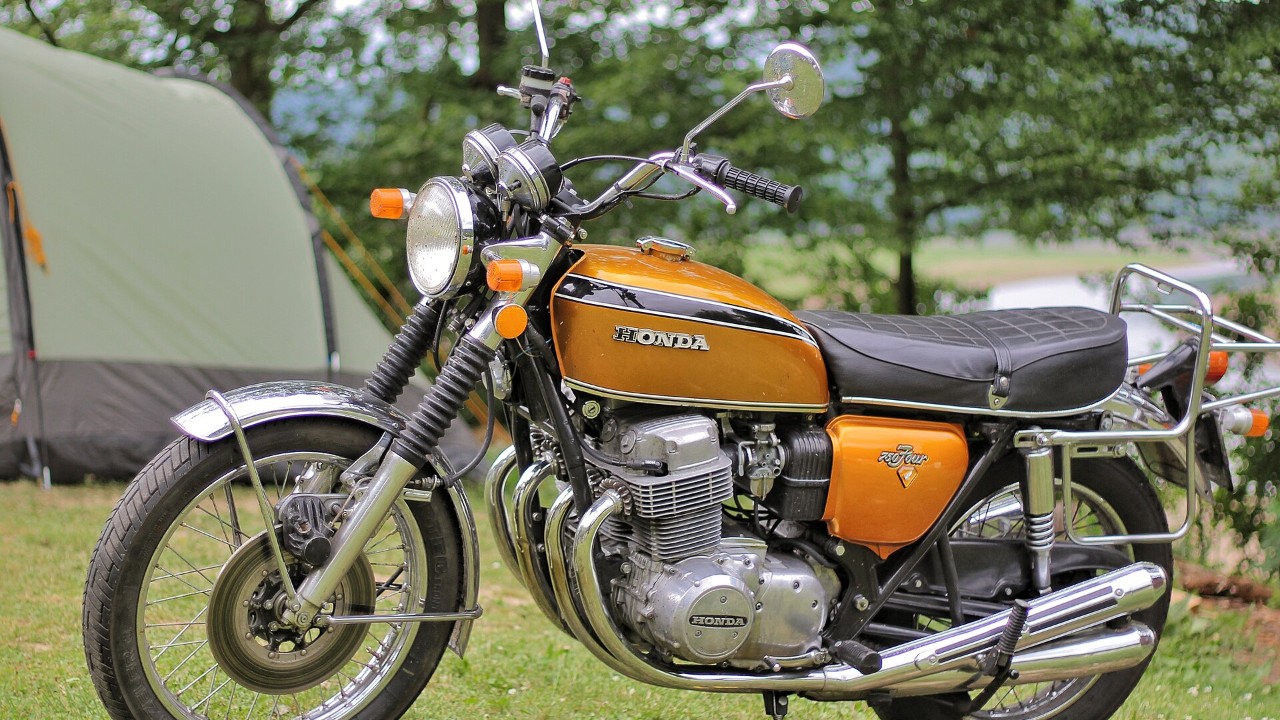
Honda began full design work on the CB750 in February 1968 and shipped the first bikes to America just 14 months later. The Honda CB750 engine, an air-cooled overhead-cam four, made 67 PS at 8,000 rpm. It changed what riders expected from a big motorcycle almost overnight.
Great motorcycle engines tend to do that. They set a new layout, or they save a company, or they simply feel unlike anything else at full throttle. Some came from giant factories in Japan, while others came from small British and Italian shops with a few clever engineers.
This is our ranking of 12 engines we would put ahead of the rest. The choices are our opinion, so feel free to disagree. However, the displacements, outputs and dates come from factory records, period road tests and model histories.
1. Honda CB750 SOHC inline-four engine
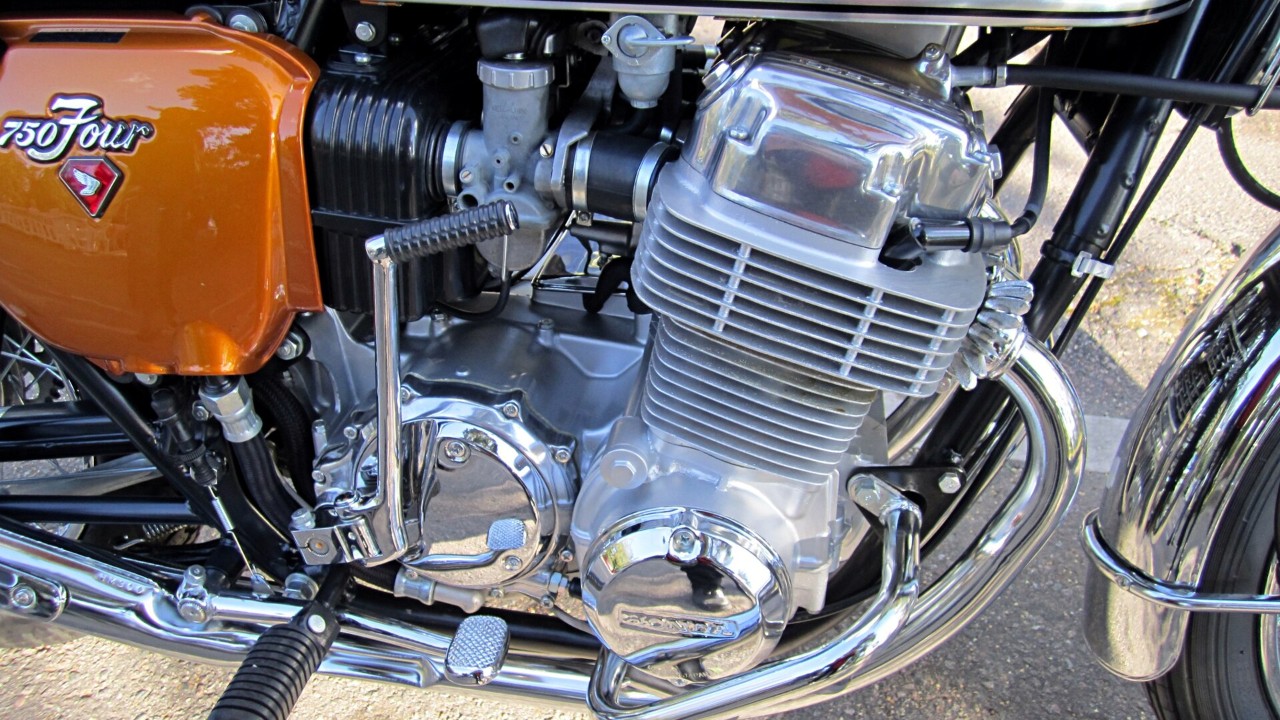
American Honda asked for a 750 cc engine with four carburetors, according to Honda’s own CB750 history. Its engineers also drew on lessons from the RC181 race bike. Then they showed the prototype at the 1968 Tokyo Motor Show.
The production Honda CB750 engine used a single overhead camshaft. Even so, Honda priced the bike at $1,495 at launch. The first production run totaled 7,414 machines, and the model eventually passed 400,000 in total.
Our take: the Honda CB750 engine created the template people later called the Universal Japanese Motorcycle. It also arrived with a front disc brake at a mainstream price. That is why the 1969 Honda CB750 belongs at the top of any list like this.
2. Honda CBX 1047 cc inline-six
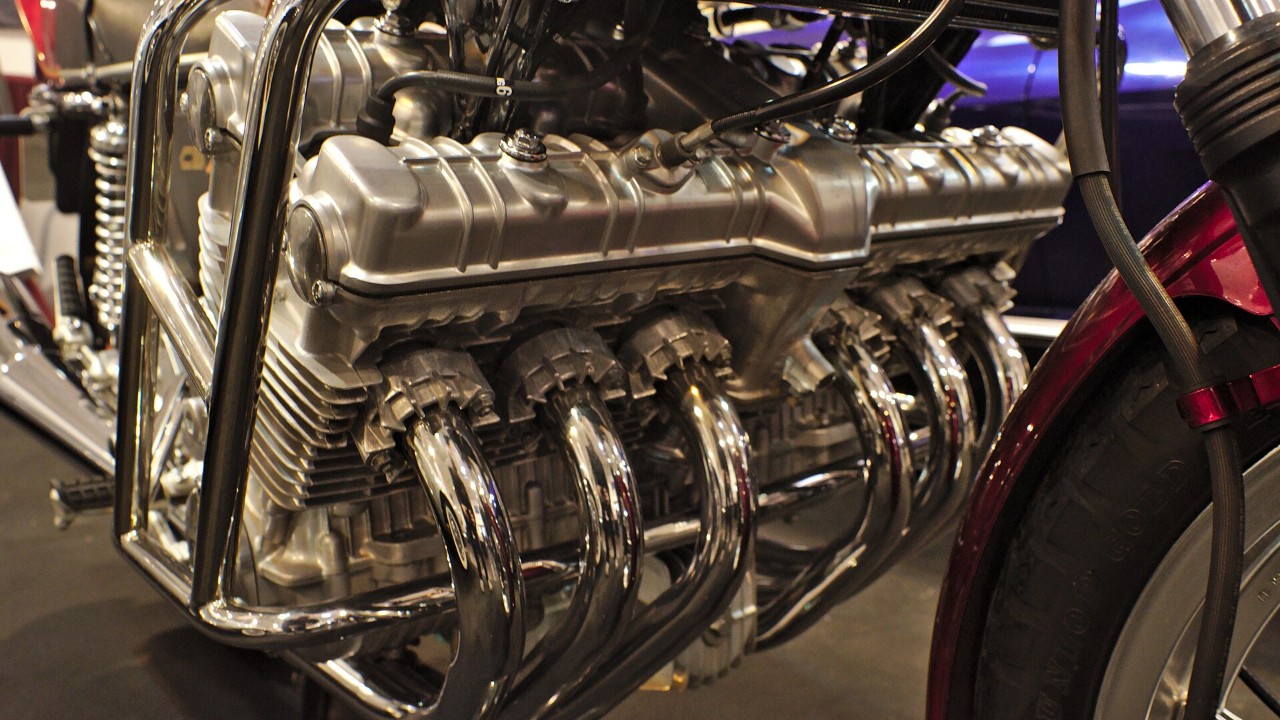
Shoichiro Irimajiri was 37 when he led the team behind the CBX. His engine had six cylinders, four overhead cams, 24 valves and six carburetors. It displaced 1,047 cc and produced a claimed output of more than 100 hp.
Width was the obvious challenge. A Motorcycle Classics profile of the CBX says the engine spans 23.4 inches, only 2 inches wider than the CB750’s four. The bike cost $3,988 when new and weighed about 600 pounds wet.
For 1981, Honda added Pro-Link rear suspension and a fairing, and it trimmed engine output. In our view, no other production six from that era looks better from the side. The fan of exhaust pipes and stacked cylinders is pure mechanical theater.
3. Vincent Black Shadow 998 cc V-twin
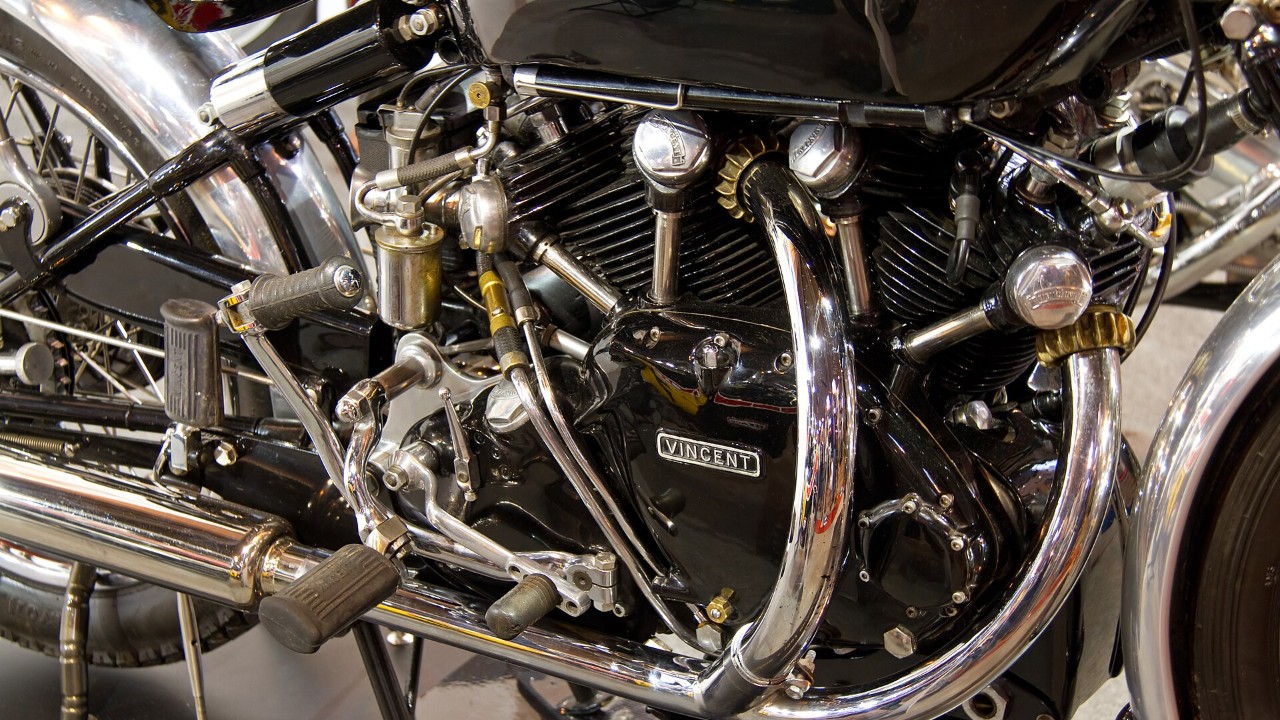
The Black Shadow’s engine was a 998 cc, 50-degree, air-cooled V-twin with overhead valves. As a result, it made 55 bhp at 5,500 rpm. More importantly, it served as a stressed member of the frame, so the bike needed no front downtube.
Vincent announced a 125 mph top speed, and a May 1948 road test recorded 122 mph. The company also fitted a 150 mph speedometer to match its ambitions. Official records list 1,774 Black Shadows built between 1948 and 1955.
That same engine family carried Rollie Free to 150.313 mph at Bonneville in September 1948, as we covered in our story on his record run in swim trunks. Our take: no British twin of its day combined speed and structure this cleverly.
4. Moto Guzzi V7 transverse V-twin
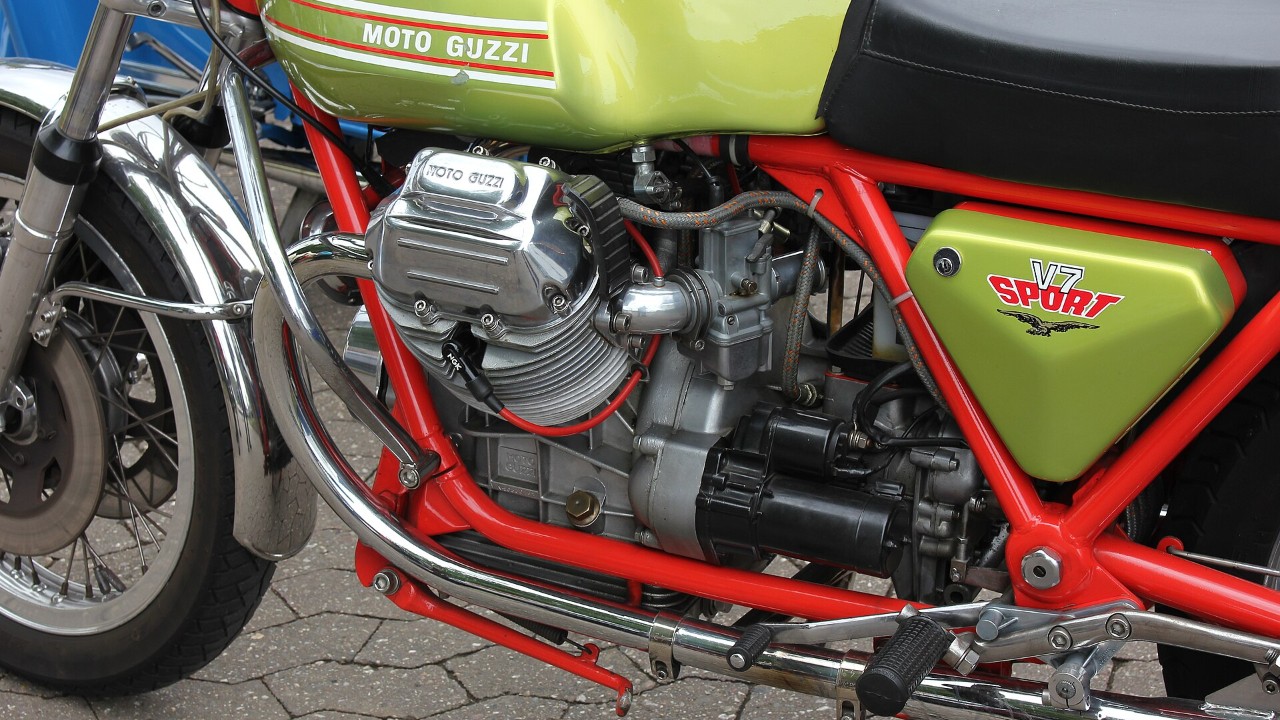
Giulio Cesare Carcano developed Guzzi’s V-twin with Umberto Todero. First he built a smaller 90-degree twin as a design exercise and fitted it to his own Fiat Topolino. Then the Italian police asked for a faster machine than the Falcone, so the engine grew.
The production V7 engine displaced 703 cc, with an 80 mm bore and 70 mm stroke. It made 50 hp at 6,500 rpm, according to Motorcycle Classics. A shaft inside the right side of the swingarm carried power to the rear wheel.
Guzzi showed the civilian V7 in Milan in November 1965, and deliveries began in early 1967. By 1971 the V7 Sport had grown the engine to 748 cc. In our view, few engine layouts on this list have aged as well.
5. Harley-Davidson Evolution V-twin
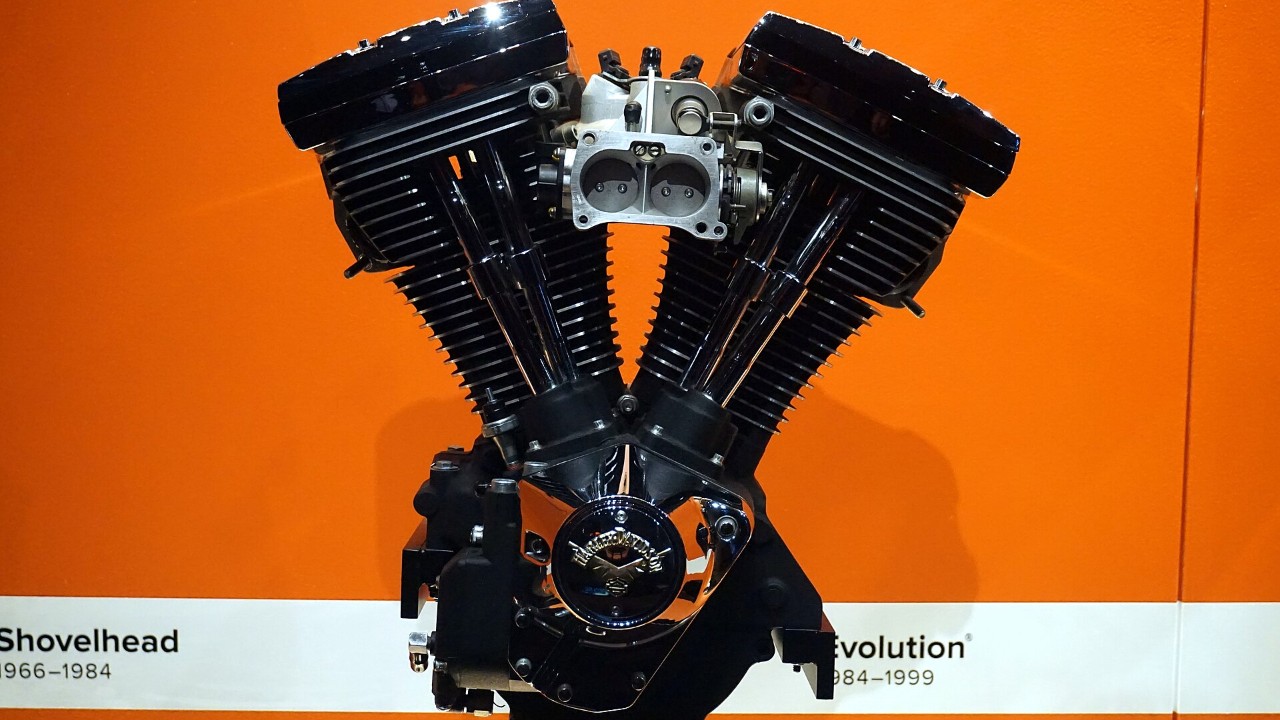
Harley first planned the Evolution in a 1976 long-term plan, and development began the next year. Then came a crisis. After a 1981 buyout from AMF, the company could afford only one engine project, and it picked the Evolution.
The Evo kept the 1,340 cc, 80-cubic-inch size of the Shovelhead. However, it switched to aluminum cylinder barrels and heads. According to Hagerty’s history of the Evolution, Harley ran more than 5,000 hours of dyno tests and 750,000 miles of road work.
Peak power rose 10% to 71.5 hp at 5,000 rpm, and the engine shed 20 pounds. Harley backed it with a 12-month, unlimited-mileage warranty. Our take: this is the engine that let Harley-Davidson survive into the modern era.
6. Indian Four inline-four
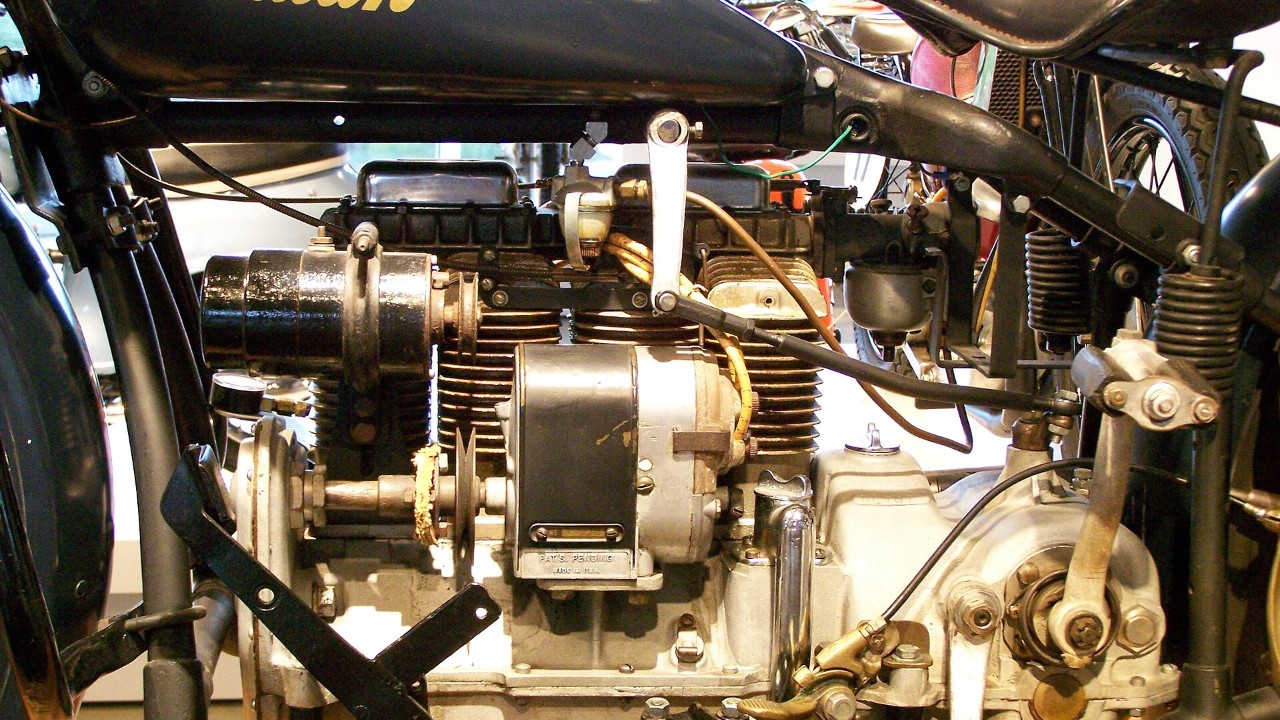
Indian bought the Ace Motor Corporation in 1927 and built its own Four from 1928 to 1942. The engine was an air-cooled inline-four with overhead inlet valves and side exhaust valves. On a 1940 model, it displaced 77.2 cubic inches, or 1,275 cc.
That 1940 engine made 40 hp and gave a 90 mph top speed, according to Motorcycle Classics. For 1936 and 1937, Indian tried flipping the valves, putting the exhaust on top. That ran very hot, and the original layout returned in 1938.
Indian ended the Four with the rest of its civilian production in 1942 and never revived it. In our view, the Four was the classiest American motorcycle engine of its day.
7. Ariel Square Four
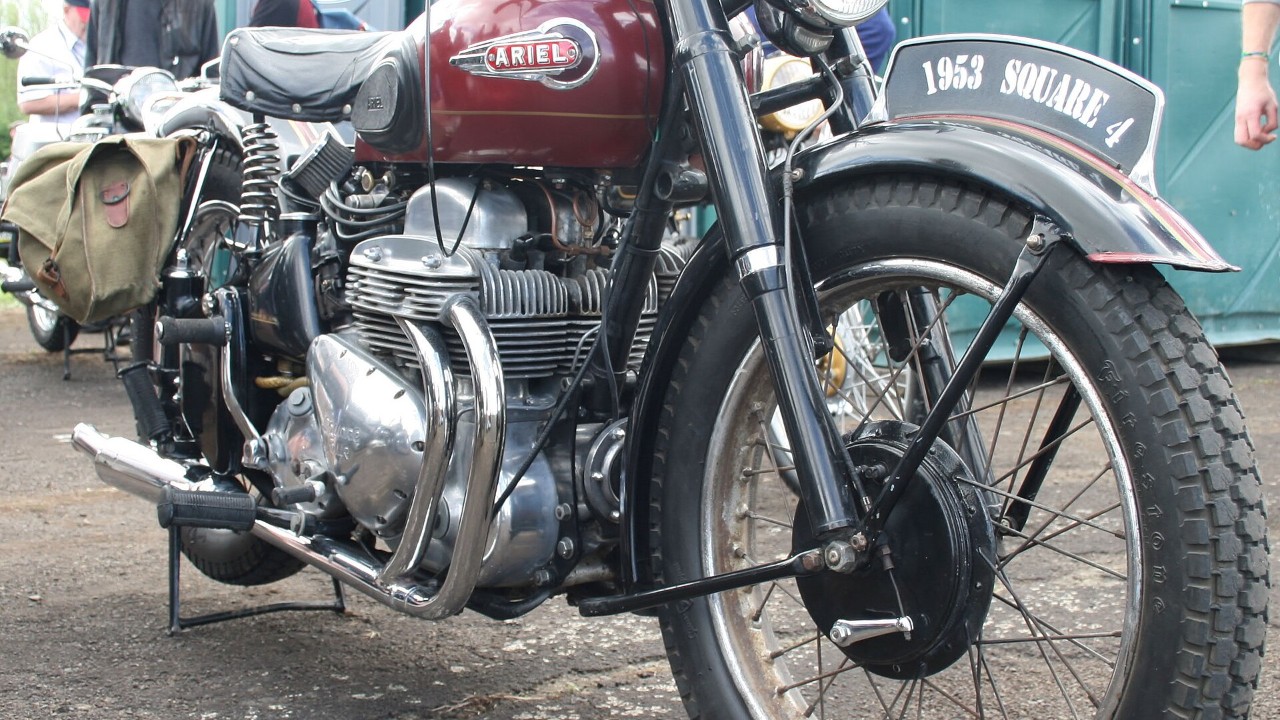
Edward Turner sketched this engine in 1928, when he joined Ariel. His idea was simple, but it was odd. Two crankshafts sat across the frame, one in front of the other, linked by helical gears. Each crank then drove two pistons, so the four cylinders formed a square.
The engine started at 500 cc and later grew to roughly a liter. In 1949, Ariel cast the block and head in light alloy instead of iron. Then the 1953 Mark II added a new head with four separate exhaust headers, which gave the bike its famous four-pipe look.
Owners have heard questions about hot rear cylinders for decades, although one owner calls the issue overstated. Our take: no other four looks quite this compact. Ariel ended production in 1959, after a run of 28 years.
8. Kawasaki H1 Mach III 500 cc two-stroke triple
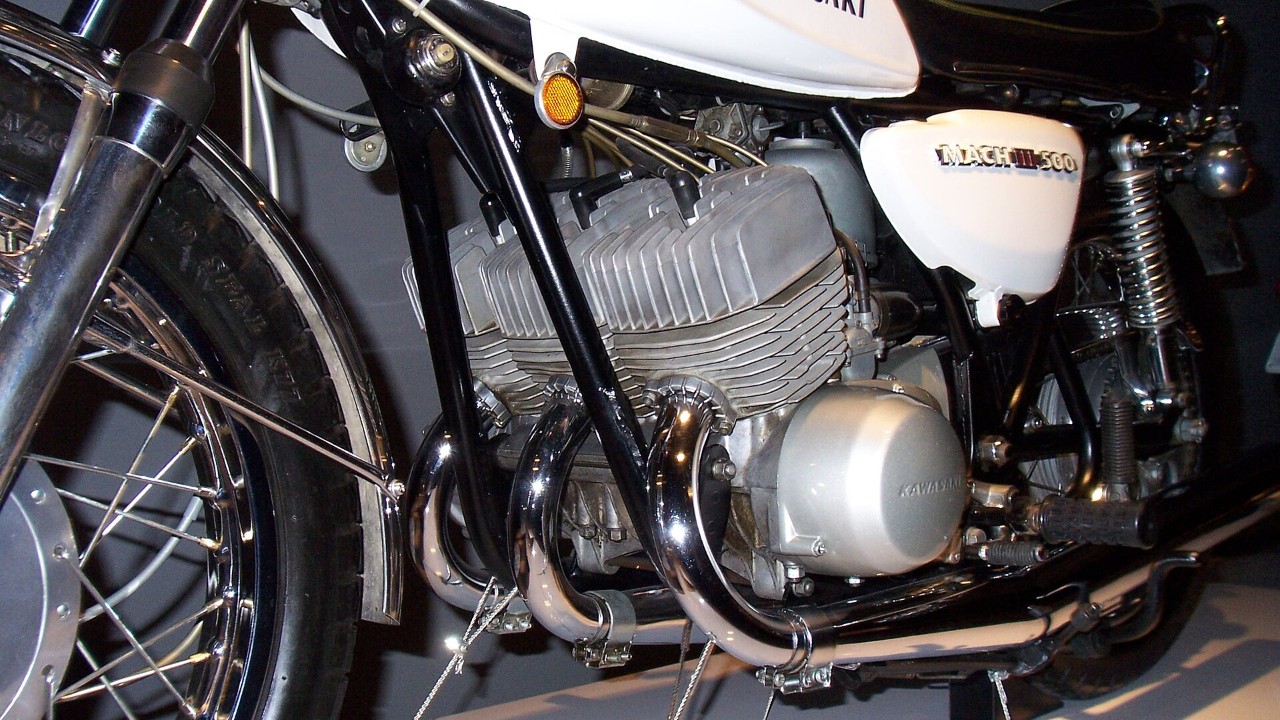
Kawasaki launched the H1 in 1969 with a 499 cc air-cooled two-stroke triple. It also used capacitor discharge ignition. As a result, the engine made 60 bhp at 7,500 rpm.
That output let the H1 match or beat many 750 cc bikes in the quarter mile, Motorcycle Classics notes. Yet it sold for just $995. The trade-offs were real, though, including heavy fuel use, a smoky exhaust and handling the magazine calls dubious.
In our view, few engines ever delivered this much drama per dollar. The triple’s rush of power is the reason people tell stories about this bike.
9. Triumph Trident T150 triple
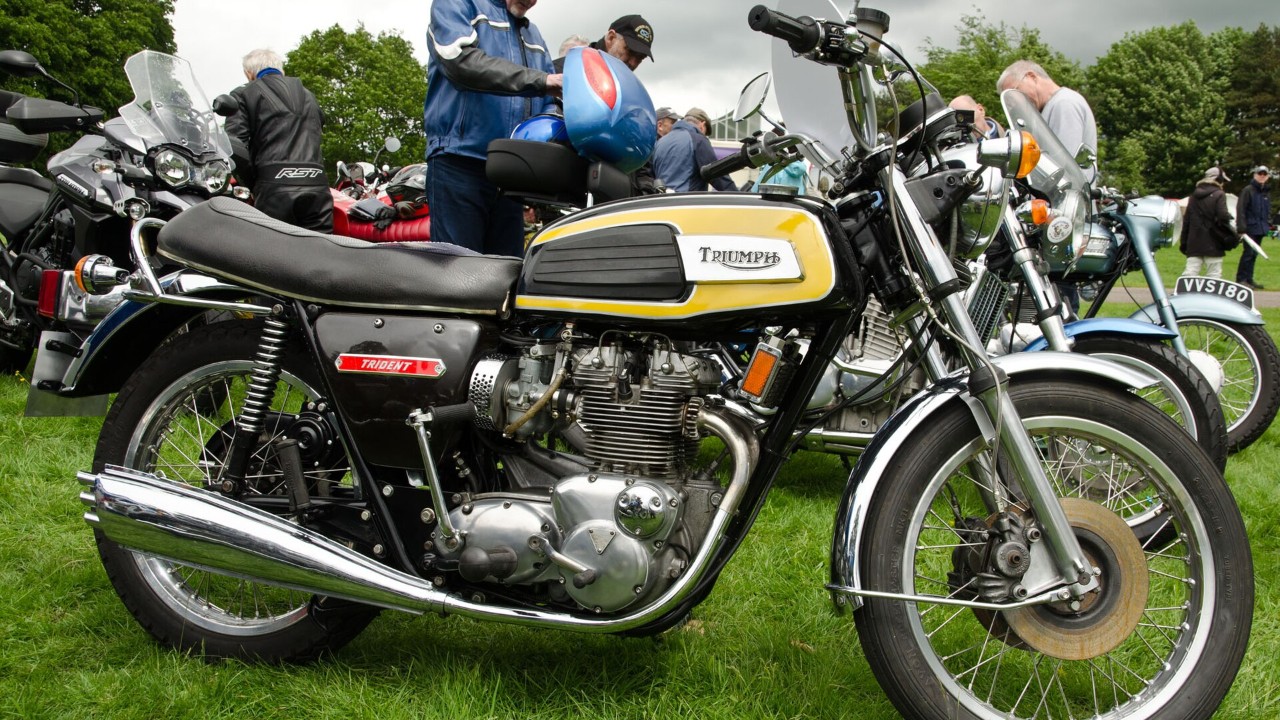
Triumph engineering chiefs Bert Hopwood and Doug Hele were talking about a three-cylinder road bike as early as 1963. Hopwood later said the first prototype, finished in 1965 in a Bonneville frame, was ready for production. Even so, the Trident did not reach U.S. dealers until the end of 1968.
Its 741 cc air-cooled overhead-valve triple made a claimed 58 hp at 7,250 rpm, according to Motorcycle Classics. BSA sold the same engine in its Rocket 3, which differed mainly in engine angle and badges. In 1970, meanwhile, a Trident cost $1,765.
Honda announced the CB750 the same year the Trident launched, which hurt sales. Our take: the Trident deserved better timing. Its triple has a sound and character the Japanese fours never copied.
10. Ducati 851 Desmoquattro
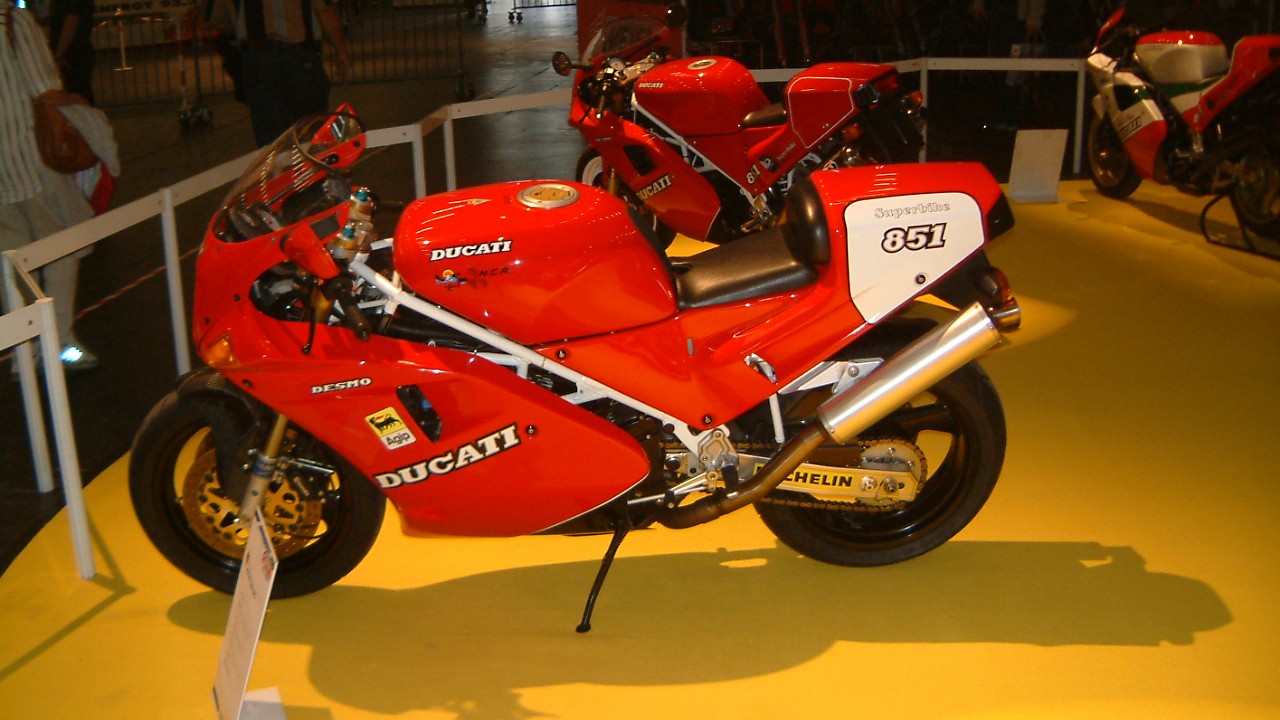
Massimo Bordi drew a four-valve desmodromic head for his university thesis in 1973. Later, as Ducati’s chief engineer, he finally built it. The 851 engine was a liquid-cooled, 90-degree V-twin with belt-driven twin overhead camshafts.
In addition, each four-valve head used eight rockers to open and close its valves. According to Motorcycle Classics, it was Ducati’s first engine with electronic fuel injection and more than two valves per cylinder. The 1987 851S cost $20,995 when new.
The design paid off fast. Raymond Roche won the 1990 World Superbike title on Ducati’s twin. In our view, every Ducati superbike since owes this engine a thank-you note, and our list of Ducatis that became icons shows how far that idea went.
11. Yamaha V-Max V4
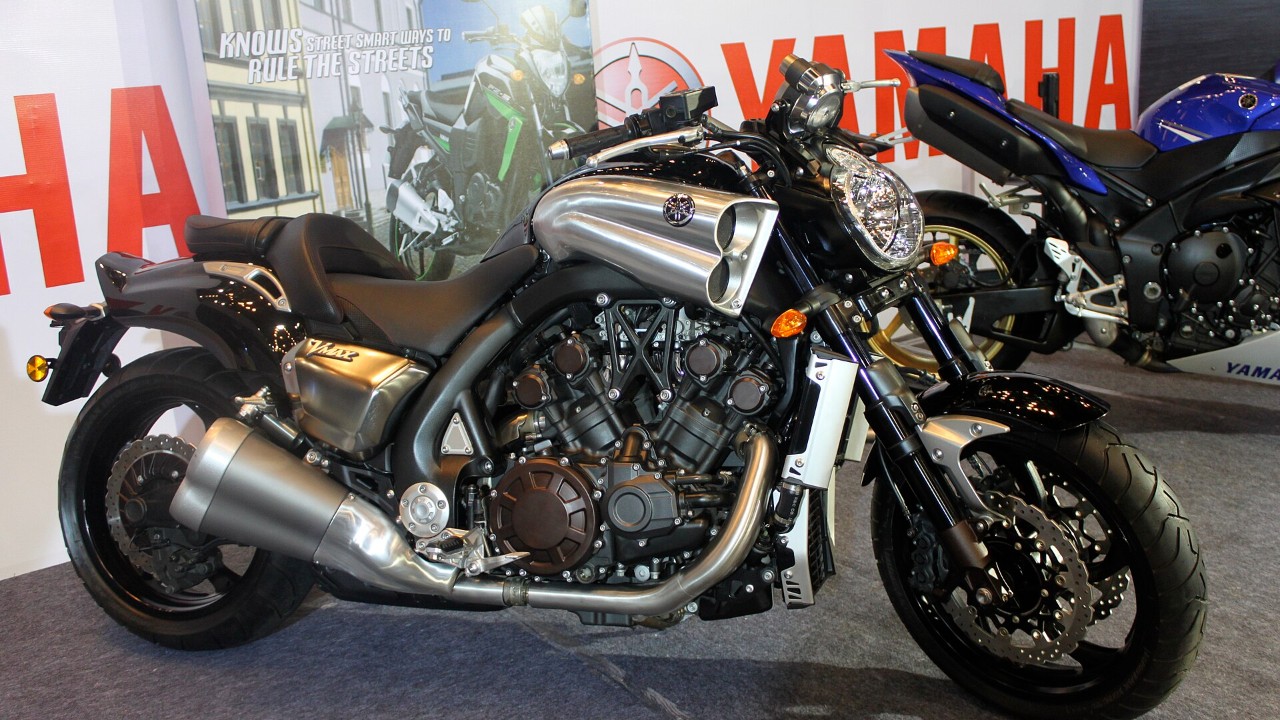
Yamaha built the V-Max engine from the V4 in its Venture touring bike, which made about 90 hp. For the V-Max, the 1,198 cc, 70-degree V4 kept liquid cooling, twin overhead cams and four valves per cylinder. After that, Yamaha tuned it hard.
The company claimed 145 hp at the crankshaft, and the rear wheel saw about 120. A system called V-Boost did the trick, Rider magazine explains. A servo opened a butterfly valve between the carbs at 6,000 rpm and finished the job by 8,000.
The result was a barely 10-second quarter-mile bike, according to Rider’s V-Max retrospective. Our take: no engine on this list hits harder in a straight line. Yamaha kept it on sale with minor changes for about 20 years.
12. Suzuki GSX-R750 oil-cooled four
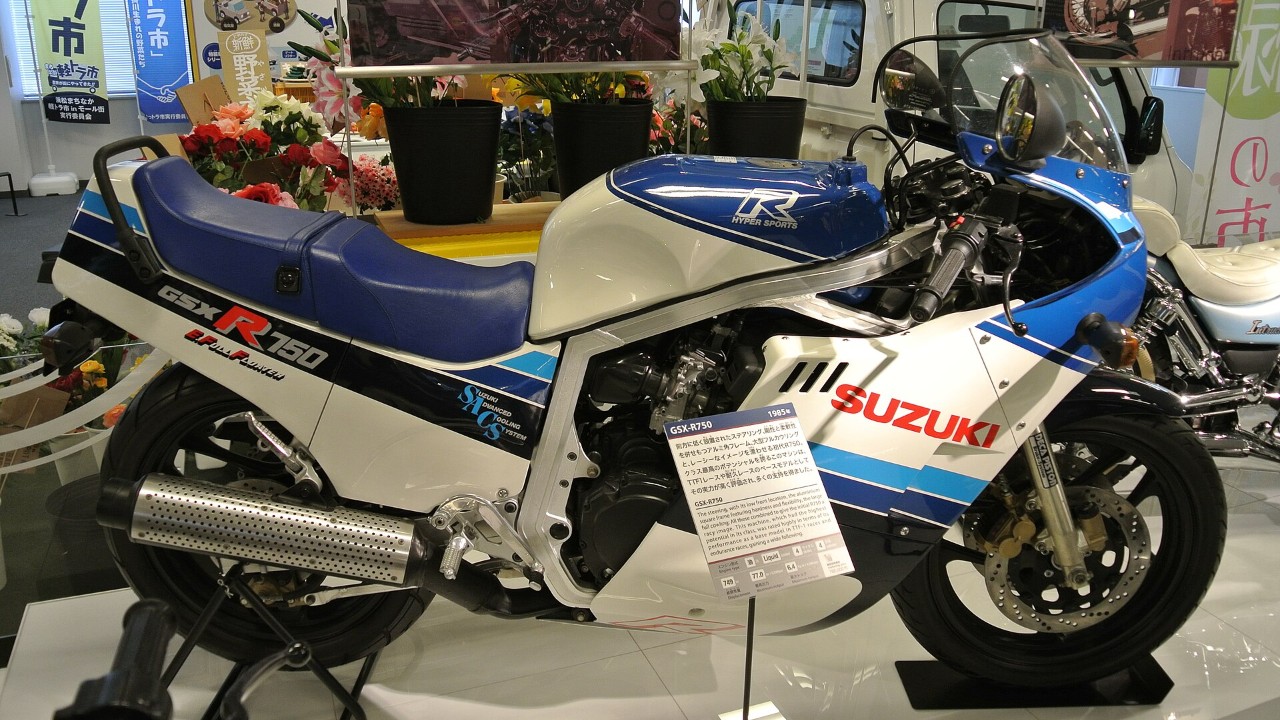
Suzuki showed the first GSX-R750 at the 1984 Cologne show. However, its 749 cc, 16-valve DOHC four used no water jacket. Instead, the Suzuki Advanced Cooling System sprayed jets of engine oil onto the cylinder heads and pistons.
That choice saved weight, as Suzuki’s own archive explains. The aluminum frame weighed just 8.1 kg, less than half a steel frame, and the bike weighed 179 kg dry. By comparison, Suzuki says other 750s of the day weighed well over 200 kg.
In our view, this engine turned the race-replica idea into a showroom reality. Suzuki kept faith with oil cooling for years. In 1992, U.S. models kept the oil-cooled engine, while every other market got the new water-cooled GSX-R750.
More from Fast Lane Only