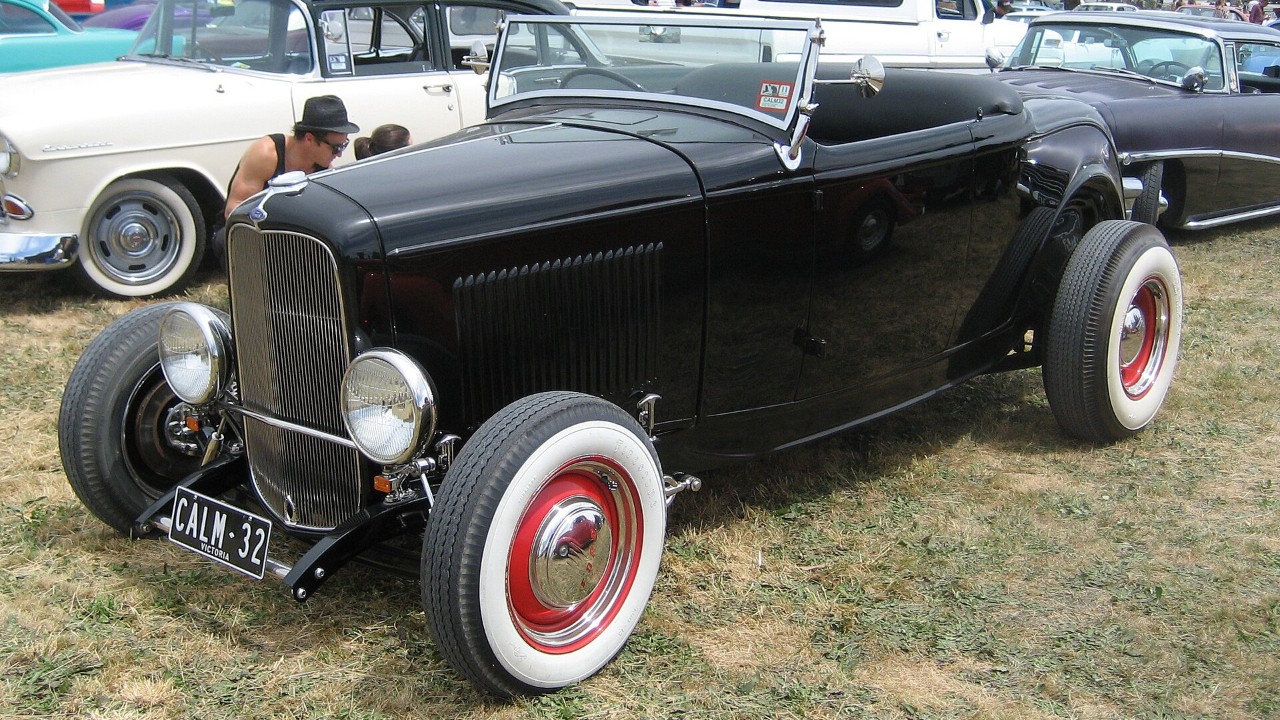
Hot Rod magazine put Bob McGee’s red 1932 Ford roadster on its cover as the first street car to make it there. That single image helped turn a backyard hot rod hobby into a national culture. Young men home from World War II stripped old Fords, swapped in hotter V8s and raced them on dry lakes like El Mirage.
The best of those cars did more than go fast. Some won trophies at the Oakland Roadster Show, and others set speed records on salt. A few later rolled into concours fields and museums. Then the show-rod builders of the 1960s pushed the idea into fiberglass bubbles and twin-engine spaceships.
Here are our 12 picks, the hot rod builds we think deserve to stay in the conversation. The choices are our opinion, so you may argue with the order. The facts behind them come from museum records, builder histories and the magazines that covered these cars.
1. Doane Spencer’s 1932 Ford roadster
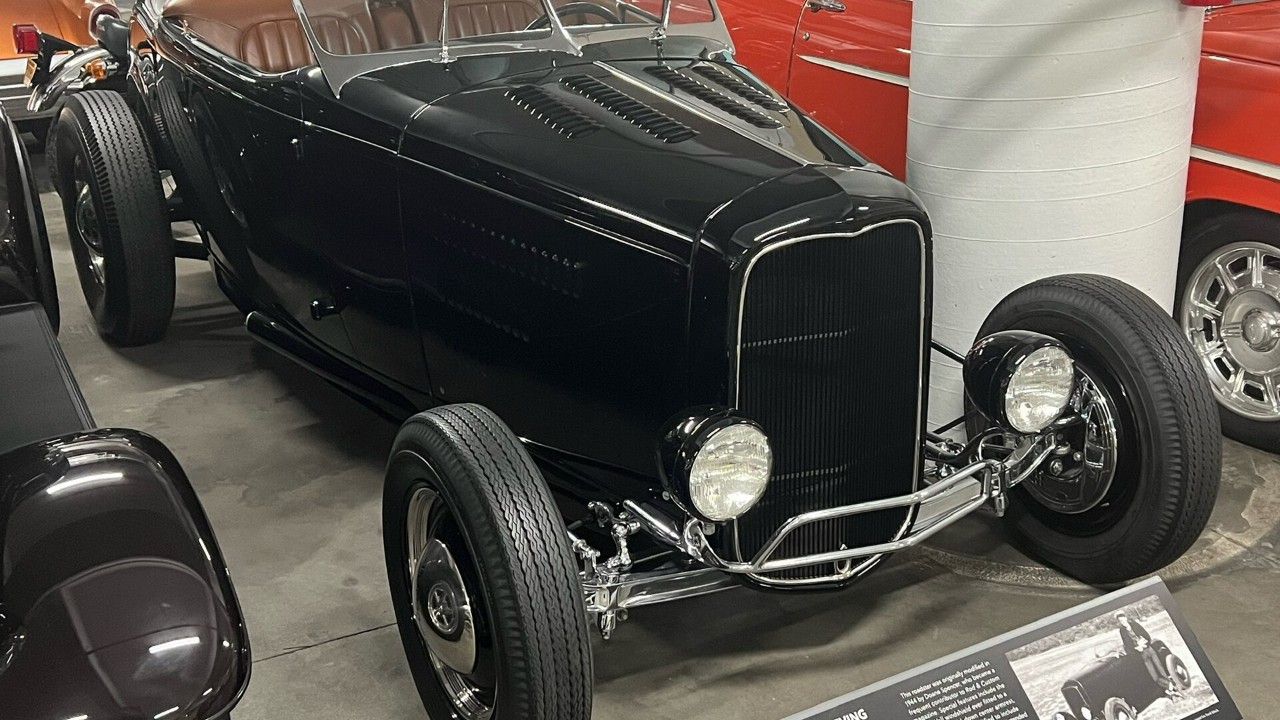
Doane Spencer paid $500 for this Deuce in 1944, according to a Street Muscle history of the Spencer roadster. He pulled off the full fenders and gave it an open suspension. He also fitted a 1946 Mercury flathead V8 with Ord heads and two carburetors. Its George DuVall split windshield was the first DuVall screen on any roadster, that history says.
Spencer raced the car at El Mirage and ran 126.76 mph there in 1950. Later he prepared it for Mexico’s Carrera Panamericana, with exhaust routed through the frame rails for ground clearance. However, the race ended after 1954, so the roadster never ran it.
Bruce Meyer bought the car in 1995, and So-Cal Speed Shop restored it. In 1997, the first year hot rods could enter Pebble Beach, it won its class. In our view, no other Deuce mixes street, racing and show history this neatly.
2. Bob McGee’s 1932 Ford roadster
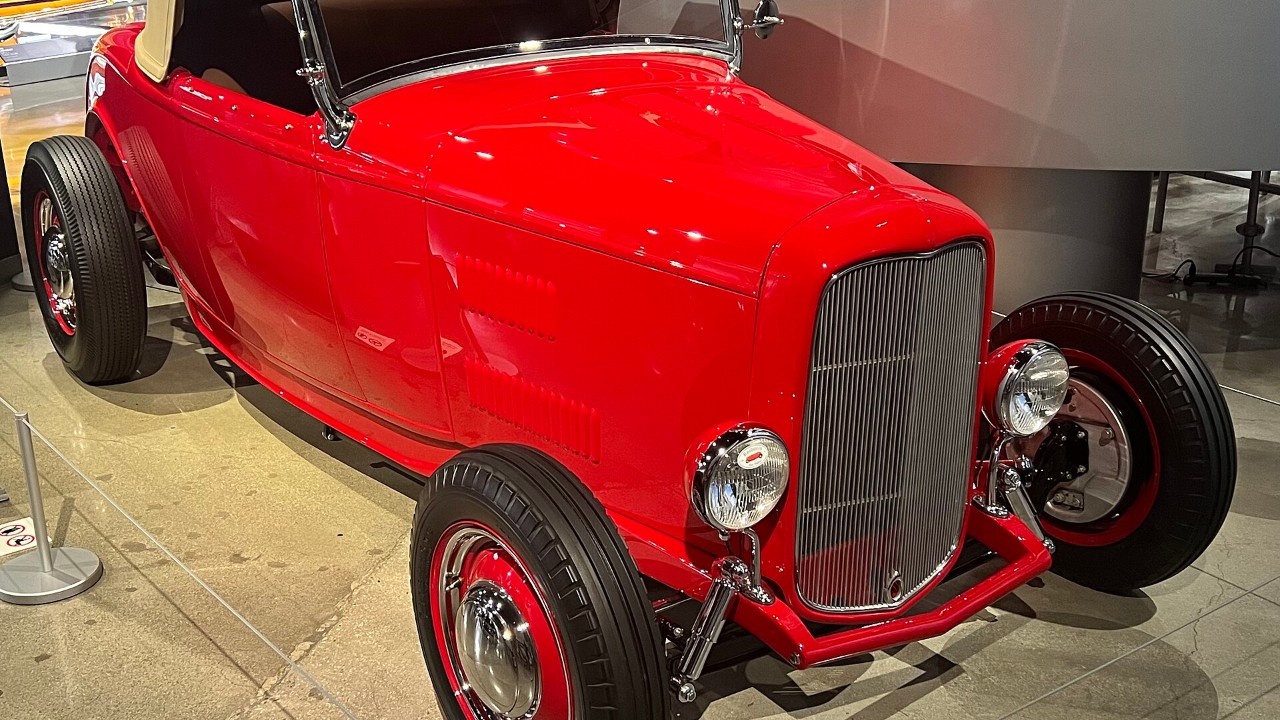
Bob McGee started on this roadster in 1947 and painted it bright red. Its fame came from that Hot Rod cover, because no street car had appeared there before. Decades later, Bruce Meyer restored it to the way it looked in 1948.
The car changed a lot in between. A friend of later owner Dick Scritchfield repainted it Candy Apple Red with silver metal flake. Meyer took it back to McGee’s original spec in the late 1990s. Since then, it has won at Pebble Beach in its current form.
On April 12, 2017, the roadster joined the National Historic Vehicle Register as the only hot rod on that list. Then, in 2023, Meyer donated it to the Petersen Automotive Museum, as Motor Authority reported. Our take: if you could see only one Deuce in person, this would be the one.
3. Bill NieKamp’s 1929 Ford roadster
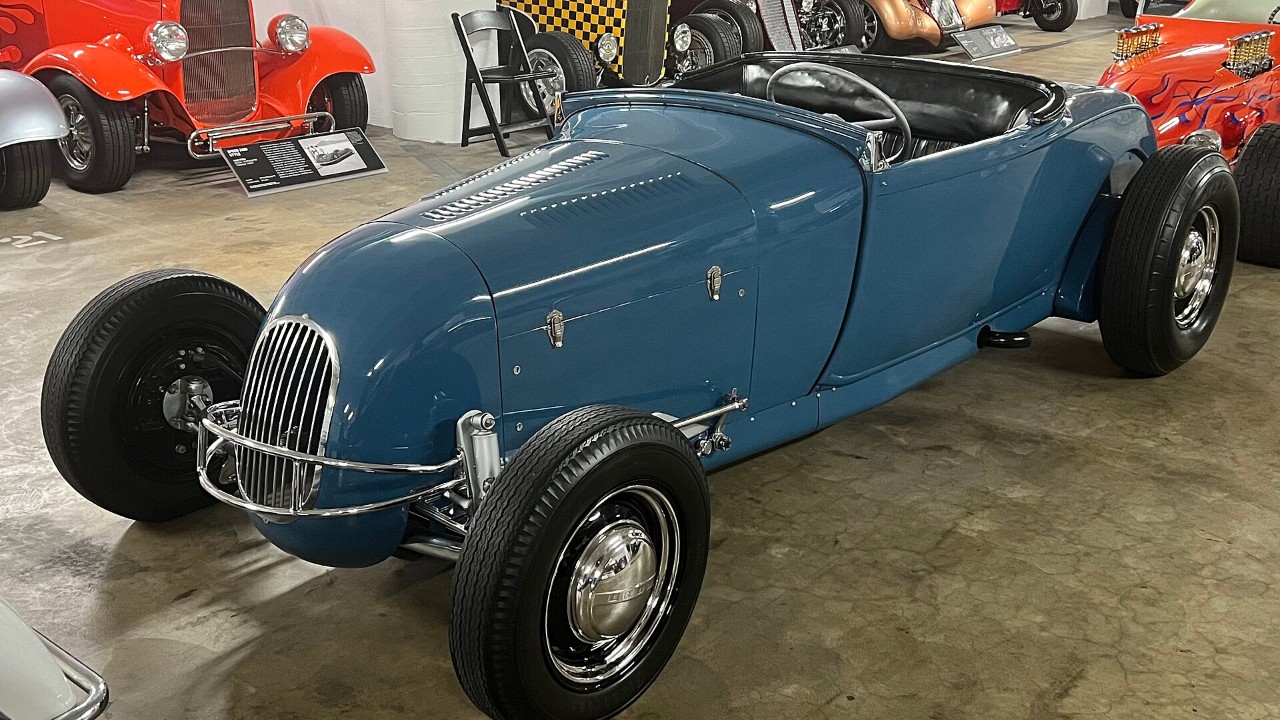
Bill NieKamp built this car in 1949, and he guessed he spent 2,200 hours on it. He did not start with a Ford frame. Instead, he used a 1927 Essex frame, a 1939 Ford rear axle and 1949 Plymouth taillights. He also shaped the aluminum belly pan, hood panels and nose by hand.
The work paid off at the 1950 Oakland Roadster Show. There, NieKamp’s car became the first winner of the America’s Most Beautiful Roadster trophy. Power came from a modified 1942 Mercury V8, which the Petersen Automotive Museum rates at 100 hp in stock form.
The best part is that NieKamp raced his show winner. In July 1952 it hit 142.40 mph at El Mirage. In our view, that double life makes it special, since later AMBR winners rarely went near a timing stand. It also makes a fine bridge to our earlier list of hot rods that make every drive feel special.
4. Ray Brown’s 1932 Ford hot rod
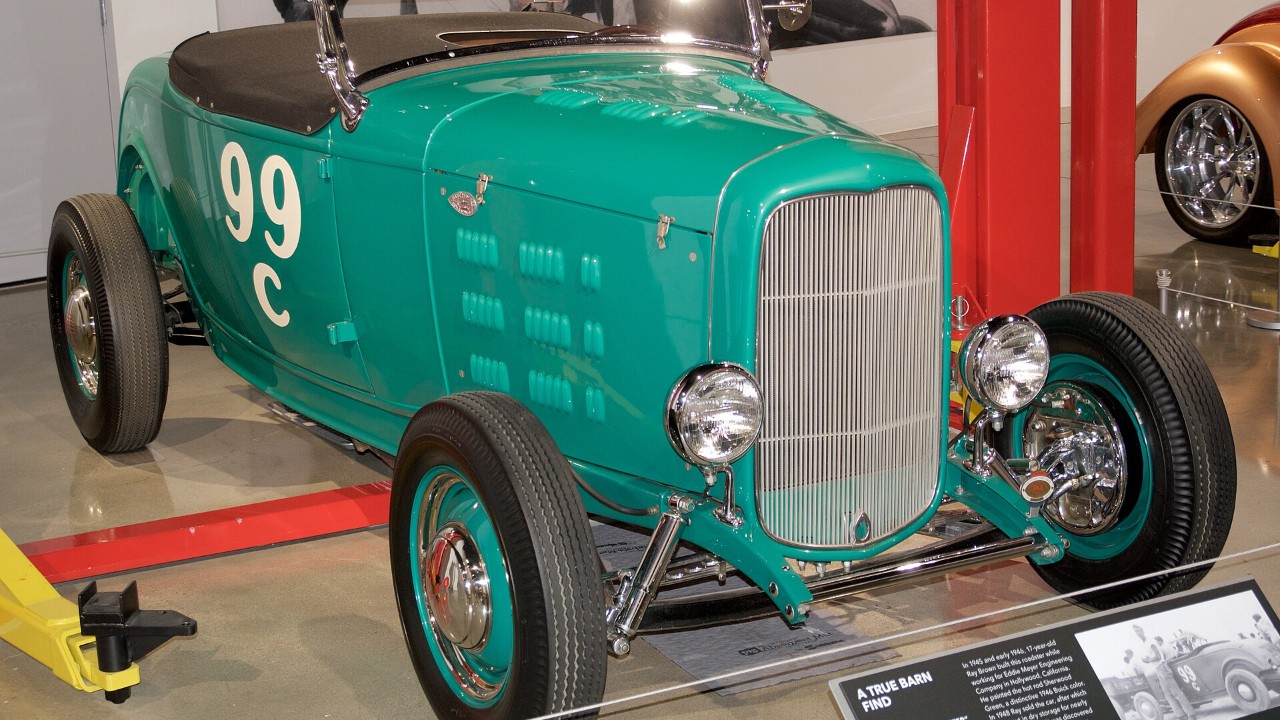
Ray Brown started building this Deuce roadster when he was just 16. He ran it as number 99C at SCTA meets on El Mirage dry lake. According to the American Hot Rod Foundation, the car earned 11 timing tags while running in the 125 mph range.
That success led straight to a business. Brown opened his own speed shop, Ray Brown Automotive, at age 21. Flathead builder Tommy Sparks worked alongside him. Later, Brown served on the foundation’s original advisory board.
Our take: this is the purest kind of hot rod on the list. It started as a teenager’s project and proved itself on a dry lake rather than on a show stand. That path from roadster to speed shop sums up the whole era.
5. 1952 So-Cal Speed Shop belly tank racer
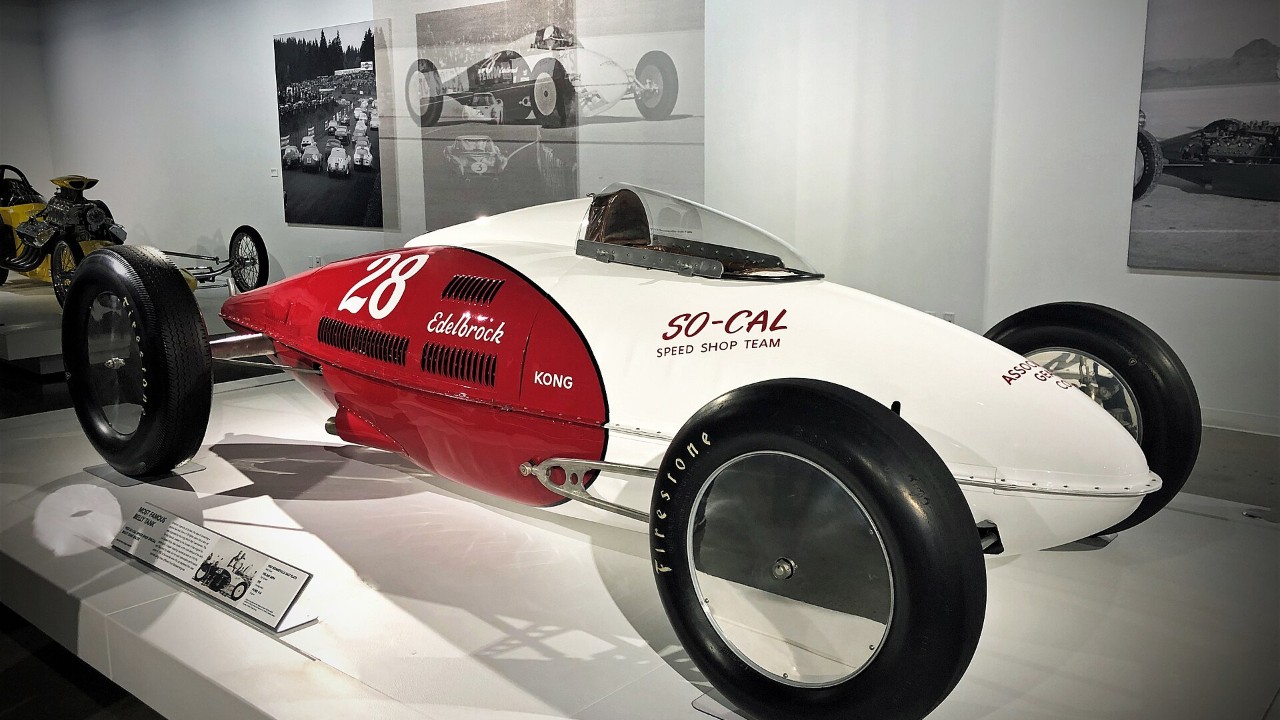
Alex Xydias opened the So-Cal Speed Shop in Burbank on March 3, 1946, the same day the Army Air Force let him go. His team then built one of the oddest race cars of the era. Teammate Bill Burke first tried a smaller P-51 Mustang drop tank, but he wanted more room. So he moved up to a much larger P-38 Lightning belly tank.
According to a Silodrome profile of the So-Cal lakester, the team swapped between three Ford flathead V8s. The car set five records, and its best combined speed was 198.340 mph in 1952. Also that year, Mechanix Illustrated named the So-Cal crew its Number One Racing Team.
The driver sat a few inches above the salt with almost no roll-over protection. Many lakesters went to the scrapyard in the 1950s and 1960s, but this one survived. In our view, it is the bravest-looking machine here.
6. Tom Beatty’s 1951 belly tank lakester
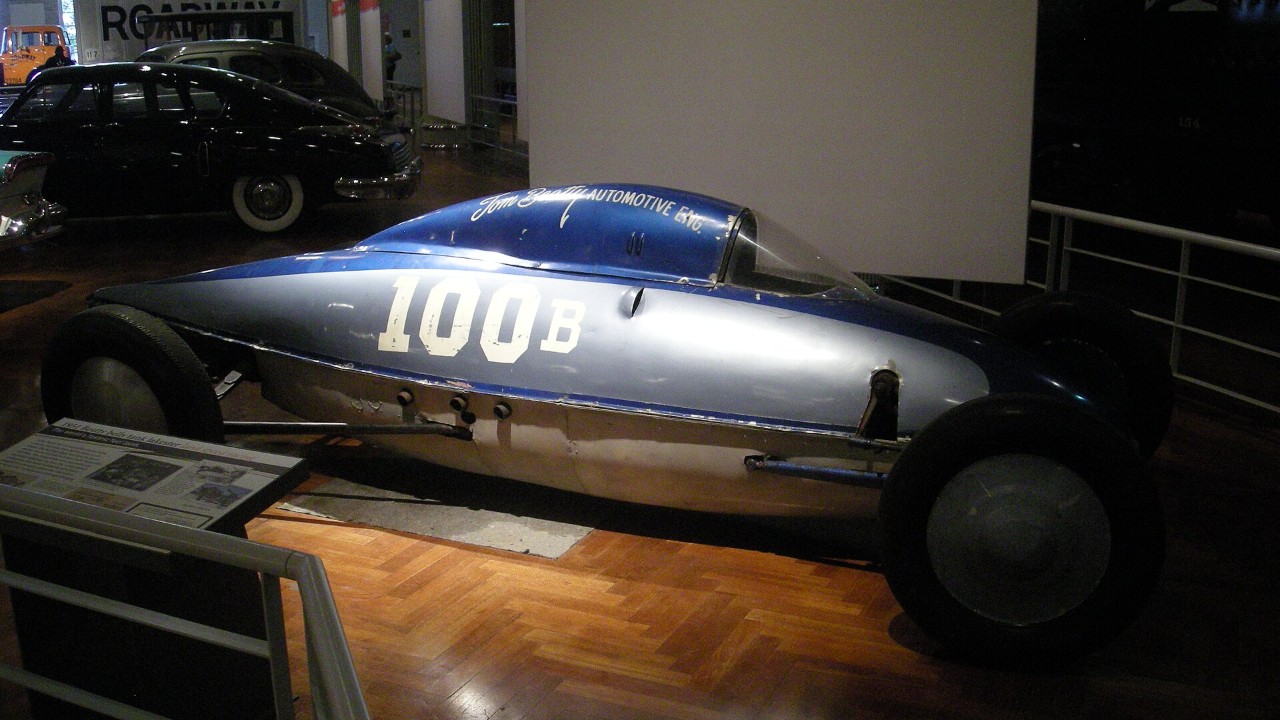
Tom Beatty of Sun Valley, California, built this lakester from a fighter plane’s external fuel tank. Plenty of racers used surplus tanks after World War II. However, few made one work this well.
The Henry Ford museum’s record lists a supercharged 260-cubic-inch overhead-valve Oldsmobile V8 rated at 400 hp. The whole car weighs 2,165 pounds, or 5.4 pounds per horsepower. It ran fastest in its class at the Bonneville National Speed Trials in 1951, 1952, 1955, 1959 and 1962.
Our take: five class wins over 11 years tells you how good the basic design was. Today it sits in the Driven to Win racing exhibit at The Henry Ford in Dearborn, Michigan.
7. Ed Roth’s Beatnik Bandit
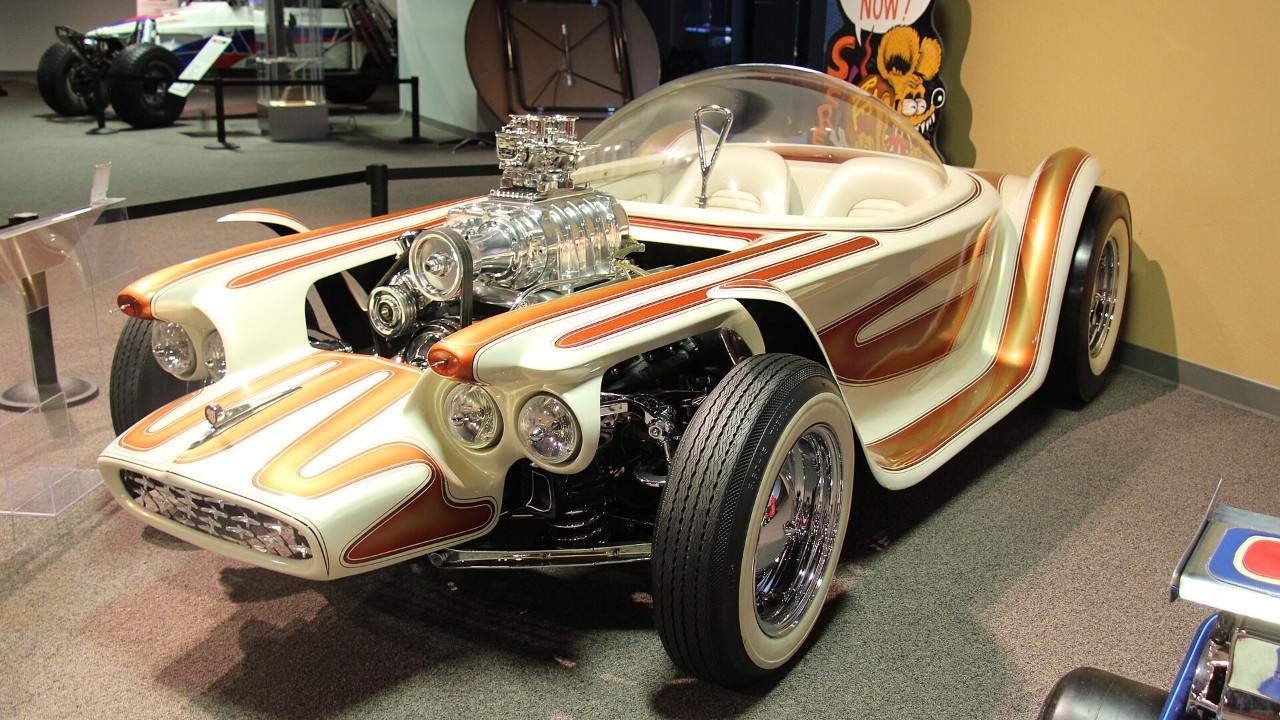
Ed “Big Daddy” Roth built the Beatnik Bandit in 1960 and 1961, working with “Dirty Doug” Kinney in a one-car garage. Illustrator Joe Henning drew the design for Rod and Custom magazine. Under the handmade fiberglass body sits a shortened 1950 Oldsmobile chassis.
The engine is a supercharged 303-cubic-inch Oldsmobile V8 with two Stromberg carburetors, according to the National Historic Vehicle Register entry. The Bandit was Roth’s first bubble-top car. Its controls ran through an airplane-style stick, although the car never really suited the road.
Mattel made the Bandit one of the first Hot Wheels cars, and Revell sold it as a model kit. Casino owner William Harrah later restored it. In our view, it is Roth’s signature car, and it now lives at the National Automobile Museum in Reno.
8. Ed Roth’s Mysterion
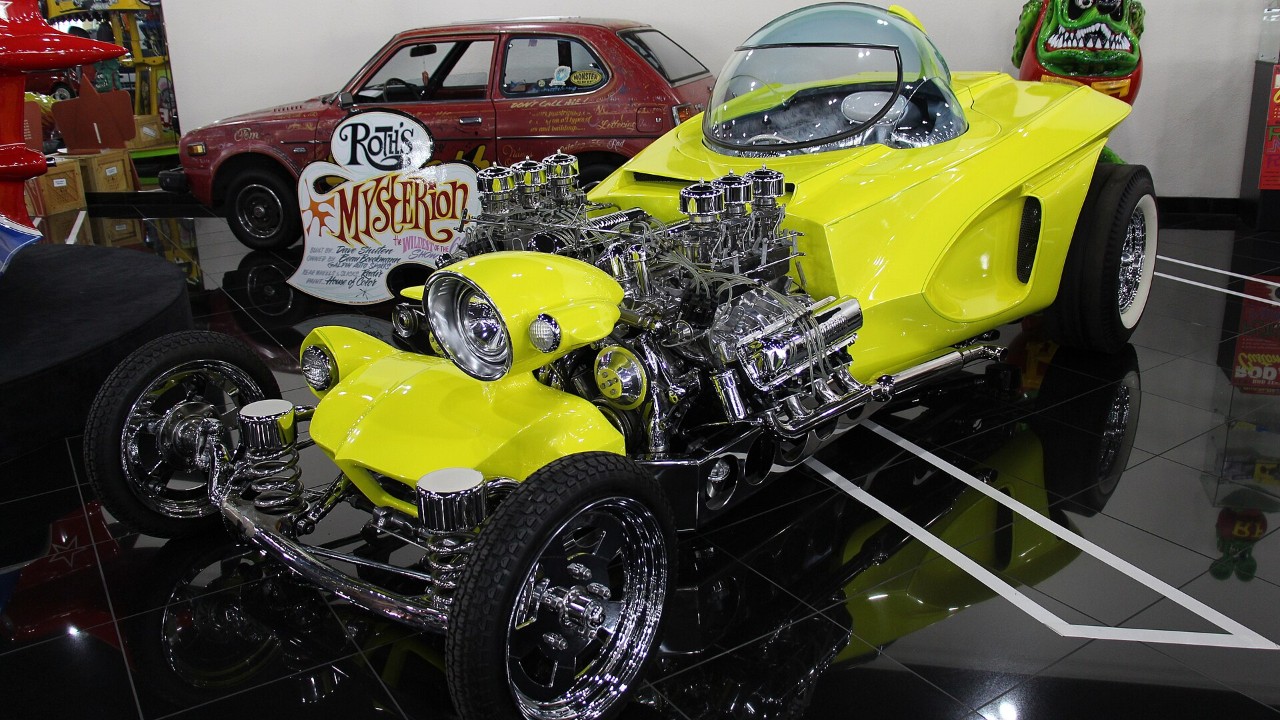
Roth fitted the Mysterion with two Ford FE-series V8s. A Hagerty story on the Mysterion describes twin 390-cubic-inch big-blocks, but only one of them ran. The other engine was hollow, and a cross belt made both appear to turn.
The styling was just as strange. One big pod headlight sat on the left side, while a smaller light sat on the right. A hydraulic bubble top covered the cabin. Sadly, the frame could not handle all that weight, and the car ended up parted out.
That loss is why the Mysterion you see at shows today is a recreation. Jeffrey Jones built one, and Dave Shuten of Galpin Auto Sports built another by scaling up old Revell models. Our take: few lost cars inspired this much devotion from fans.
9. Ed Roth’s Orbitron
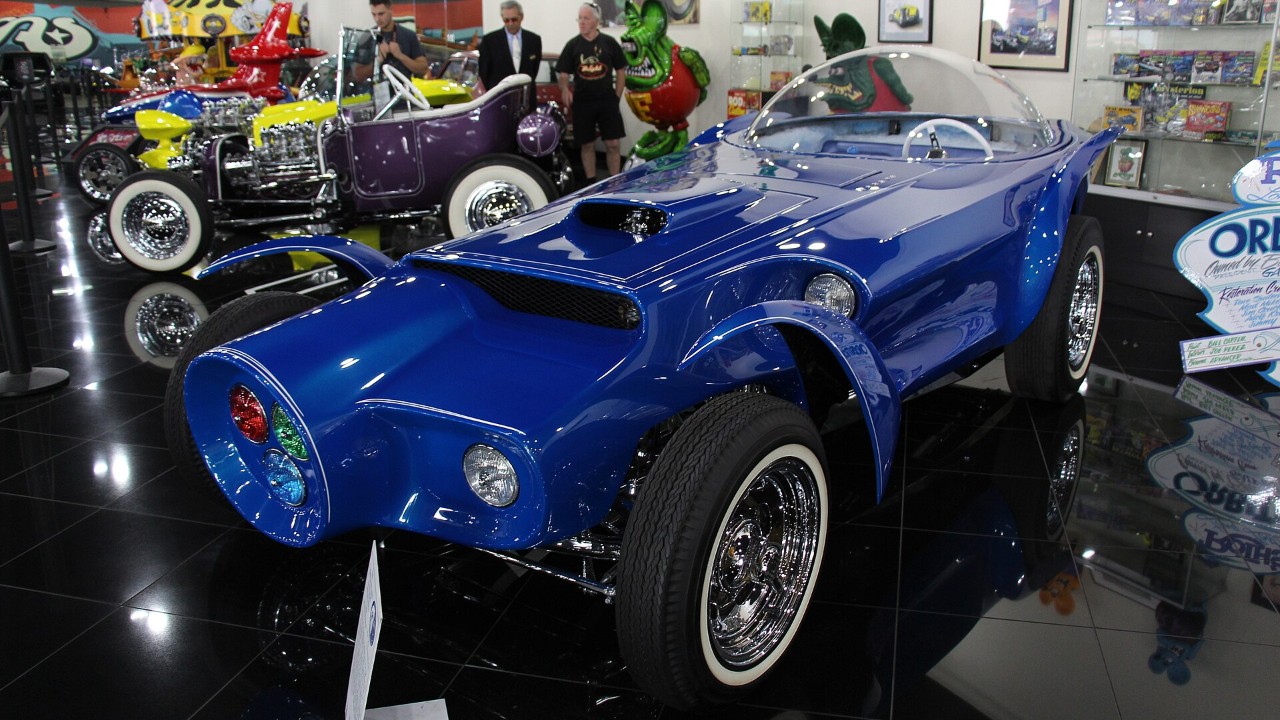
The 1964 Orbitron carried three headlights, red, green and blue, on one side of its nose. Roth and co-designer Ed “Newt” Newton took the idea from television technology. Even so, Roth later called it his one mistake, because so much chrome sat hidden under fiberglass.
The car passed through several owners and then vanished. Years later it turned up in Ciudad Juárez, Mexico, parked outside an adult bookstore with no nose or bubble top. Beau Boeckmann of Galpin Auto Sports bought it and restored it, as Hooniverse reported from Amelia Island. Newton supervised the work, and Larry Watson matched the candy blue paint to traces found on the body.
In our view, the rescue story is half the reason to remember this car. Few show rods ever came back from that far gone, and it sits comfortably beside the hot rods so radical they pushed the limits of the rules.
10. Ed Roth’s Outlaw
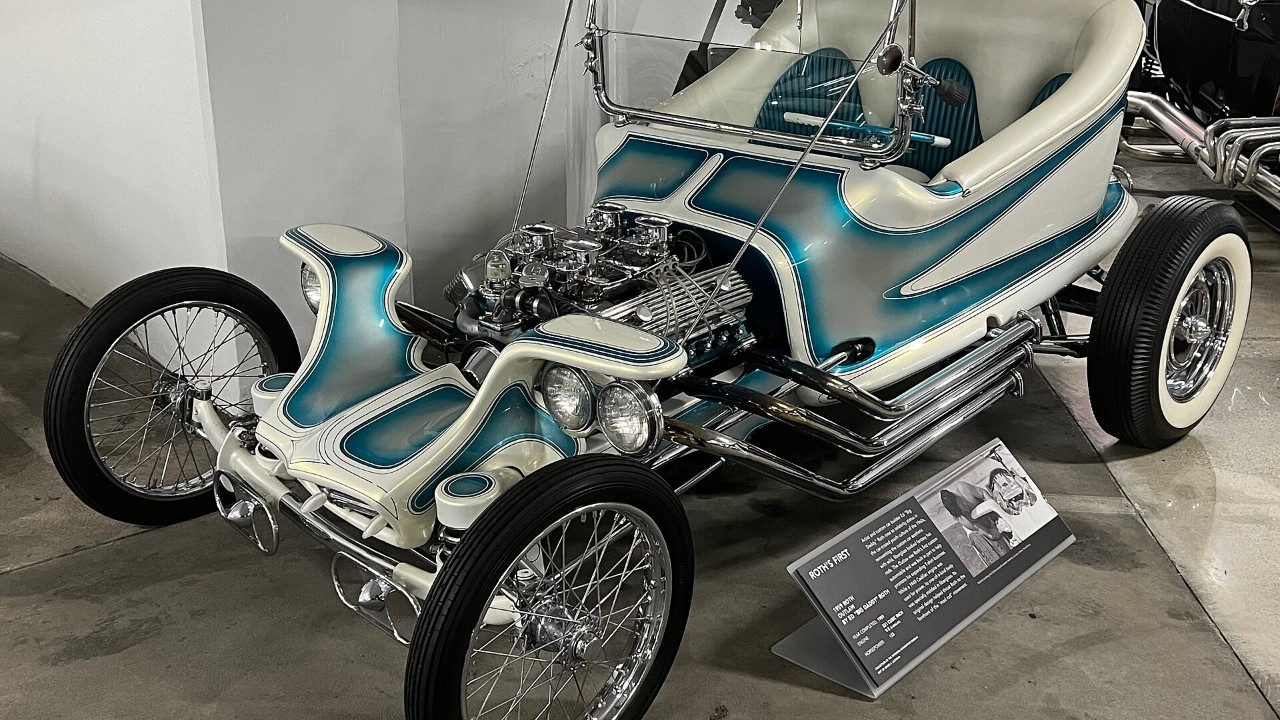
The Outlaw started life as “Excalibur,” because its shifter was a sword from Roth’s in-laws. Roth soon renamed it, since people struggled to say the first name. It rode on a 1929 Ford Model A frame and used a 1950 Cadillac engine.
More importantly, the Outlaw was Roth’s first show rod with fiberglass bodywork pulled from plaster molds. In our view, that method set the pattern for his later fiberglass show rods. The car appeared in Car Craft’s January 1960 issue, and Roth took the “Big Daddy” nickname around then to help sell the Revell model.
Our take: the Beatnik Bandit gets more attention, but the Outlaw came first. It shows Roth learning a new craft in real time.
11. Ala Kart
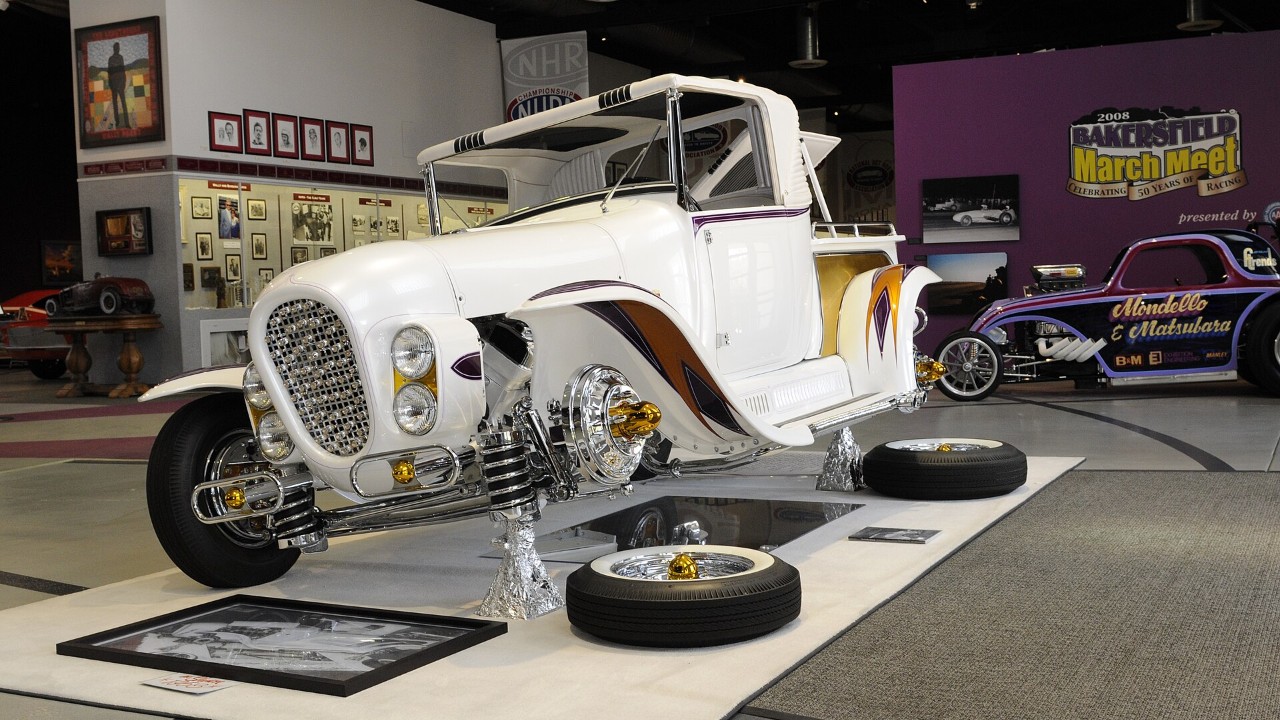
The Ala Kart began as a 1929 Ford Model A roadster pickup, with the back section of a 1927 Ford roadster added. George Barris handled the body and styling. Meanwhile, Richard Peters and Mike “Blackie” Gejeian built the chassis in their Fresno shop.
Peters pulled the engine from his wrecked racing boat. It was a 1954 Dodge Red Ram Hemi with Hilborn fuel injection and an Isky cam. The finish was Swedish White Pearl with purple and gold scallops, striped by a young Dean Jeffries.
The truck won America’s Most Beautiful Roadster in 1958 and again in 1959, along with more than 200 trophies. AMT’s 1961 model kit of it became one of the best-selling kits in history. In our view, few customs reached that many garages and bedrooms at once.
12. The Munster Koach
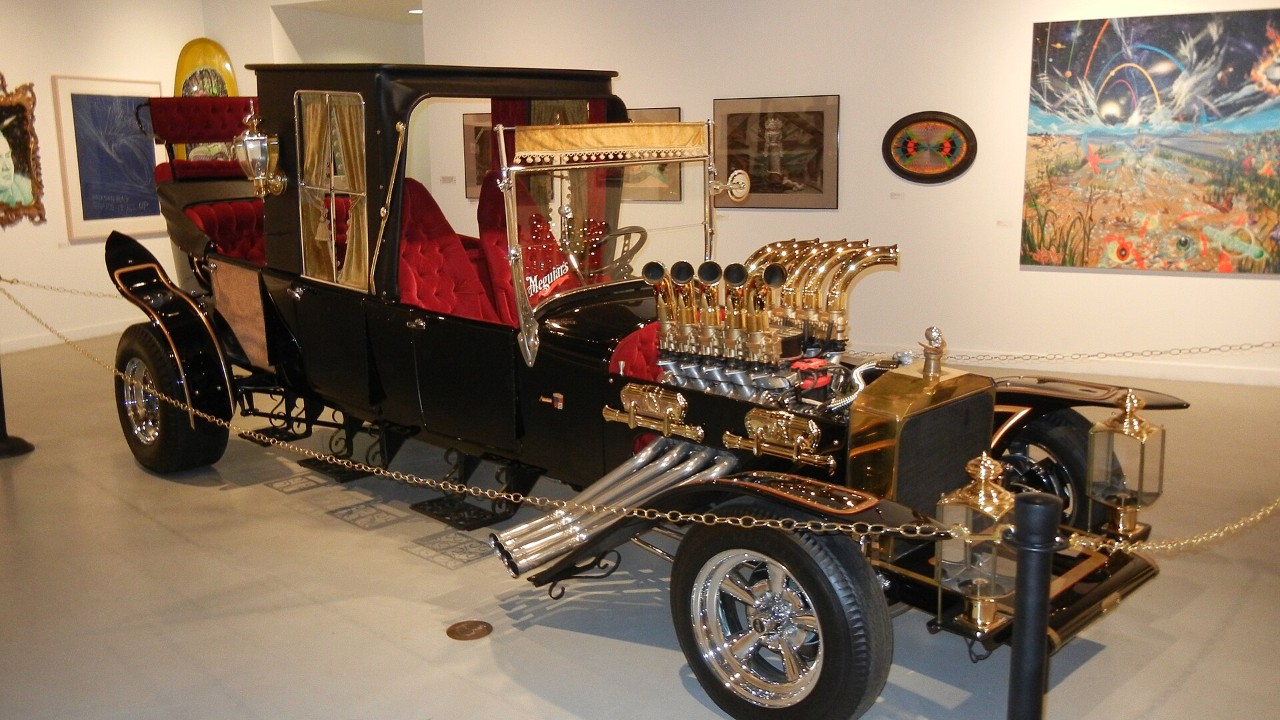
Barris Kustoms built the Munster Koach as the family car for The Munsters. Designer Tom Daniel earned $200 for the drawing. The crew used three Ford Model T bodies on a hand-made 133-inch frame, and the finished car stretched 18 feet.
Its 289-cubic-inch Ford V8 was originally meant for a 1964½ Mustang. Builders added 10 chrome-plated Carter carburetors, an Isky cam and a three-speed manual gearbox. Hand-forming the rolled steel scrollwork alone took 500 hours.
The Koach appeared in more than 20 episodes and in the film Munster, Go Home! Our take: no TV car looks more like a hot rod in a tuxedo. Barris had Dick Dean build a second, authorized Koach in 1984, and that car received a restoration in summer 2011.
More from Fast Lane Only