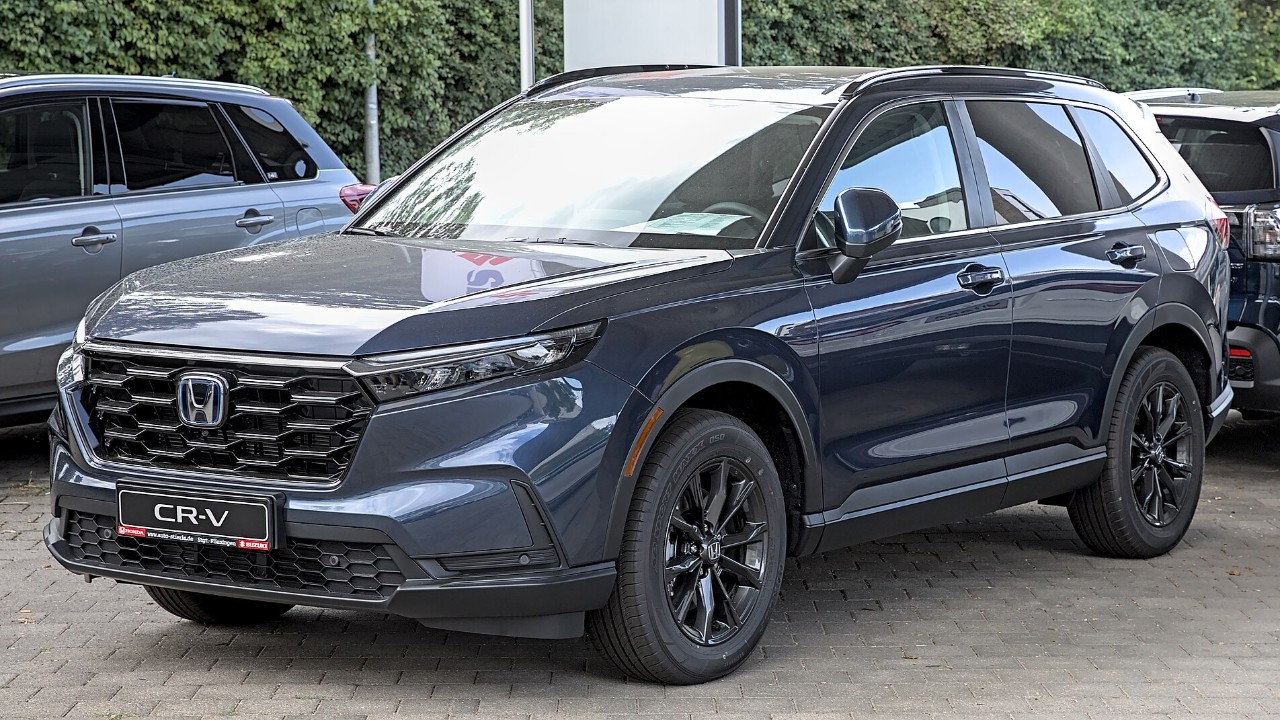
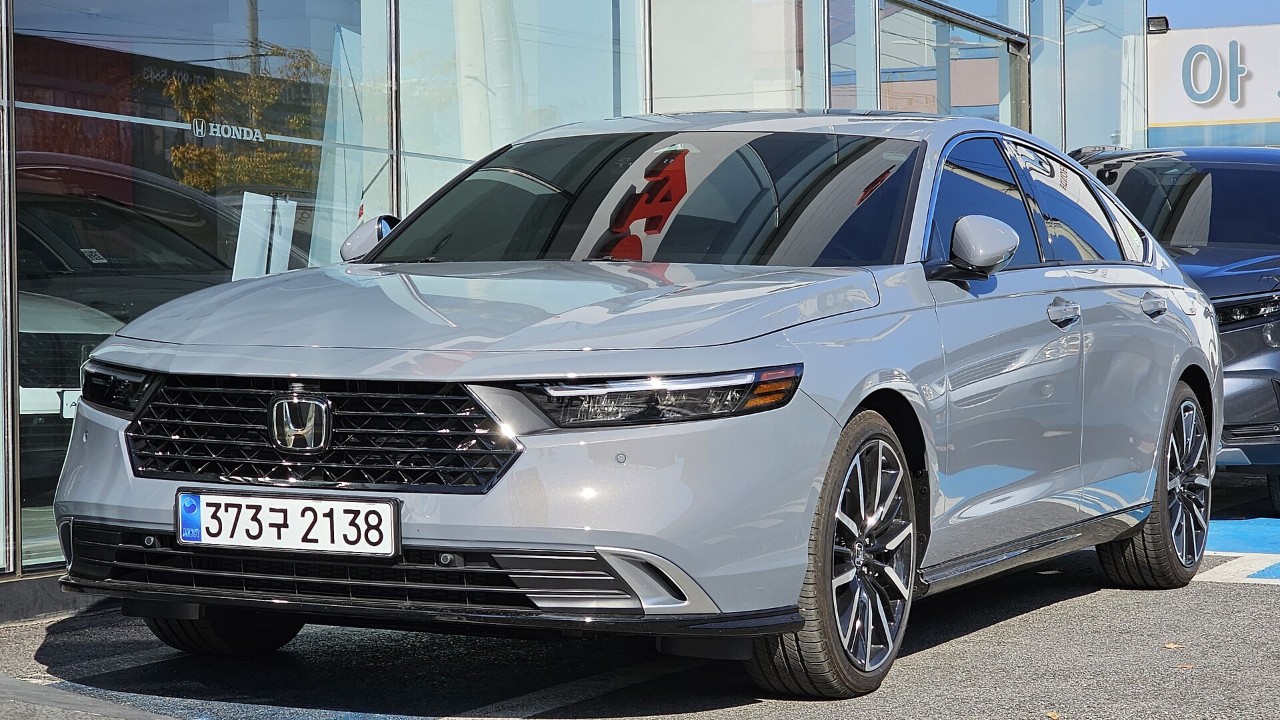
Honda has opened a second tire repair kit recall for 4,804 CR-V Hybrid and Accord Hybrid owners who already had their kits fixed once. The problem is the fix itself. Some of the replacement parts sent to dealers were the same old parts the first recall was meant to remove.
The new campaign covers 2,745 CR-V Hybrids, 2,058 Accord Hybrids and a single 2025 CR-V fuel cell model, from the 2023 to 2026 model years. In fact, every one of them went through a dealer for the earlier tire-kit campaign. Now each needs a second visit, and the repair is free.
That is a small number next to the first tire repair kit recall, which reached more than a million vehicles. Still, for the owners involved, the risk is the same one Honda set out to fix in June: a sealant bottle that can build up pressure and shoot its cap off while someone is fixing a flat.
Why the tire repair kit recall came back
According to NHTSA’s record for campaign 26V663, the recall covers vehicles “previously remedied” under recall 26V366. In those cars, pressure can build inside the tire repair kit’s sealant bottle. As a result, the bottle cap can come off and act as a projectile, which could injure the user or people standing nearby.
The mix-up happened at the supplier. Autoevolution’s report on the filing names TEK Corporation of Troy, Michigan, which built both the original kits and the remedy kits. In the filing’s words, “the supplier failed to separate old nozzles from the new ones.” In other words, some old nozzles went out in the same shipments as the corrected ones.
However, the first warning came from the field. On July 3, 2026, a Honda dealership reported that it had received the wrong countermeasure parts, Autoevolution reports. After that, Honda and TEK ran a joint inventory review to work out which cars had received an incorrect kit. That review produced the 4,804-vehicle list.
What went wrong in the first tire repair kit recall
Today, many new cars no longer carry a spare tire. Instead, they come with a small compressor and a bottle of sealant that you connect to the tire’s valve stem. Honda’s version had a flaw in how it handled pressure.
Honda’s Part 573 safety recall report for 26V366, submitted to NHTSA on June 4, 2026, lays it out. If the kit runs with the nozzle not properly connected to the tire valve, pressure can build in the sealant bottle. Then, if the relief valve fails to release that pressure as designed, the cap can detach.
The report traces the cause to two things. First, a design oversight added a fluid leak prevention valve that the kit did not need. Second, relief valves were improperly adjusted during manufacturing at the supplier. For that reason, the corrected part has no one-way valve, and Honda says it fixed the problem in production on May 20, 2026.
In fact, that first campaign was huge. The June report listed 744,769 CR-V Hybrids, 303,504 Accord Hybrids and 340 CR-V fuel cell vehicles, for 1,048,613 in all. Honda estimated that about 1% of them had the defect. Autoevolution puts the revised population at 1,049,883 after later updates.
A slow road to the first recall
The chronology in the June report shows how long the problem took to pin down. Honda received its first report on April 3, 2023, but no parts were available to study. It began investigating with the supplier in August 2024.
In April 2025, the supplier blamed the incidents on customer misuse of the kit. Then, on October 31, 2025, Honda learned of an injury incident. By February 2026, Honda saw a trend in complaints, and on March 31 it identified a possible relief valve problem.
Honda decided on May 28, 2026, that a safety defect existed. At that point, the report counted 53 warranty claims and eight injury reports in the U.S., with no deaths. By comparison, the new campaign starts with a cleaner record. According to Kelley Blue Book’s report, Honda’s filing says the company knows of no warranty claims or injuries tied to the replacement parts.
What CR-V Hybrid and Accord Hybrid owners should do
First, check your VIN. NHTSA’s record says affected VINs became searchable on NHTSA.gov from October 17, 2026. Autoevolution adds that Honda’s own recall site lists them too. If you had the June recall work done on a 2023 to 2026 CR-V Hybrid or Accord Hybrid, that check takes a minute and is worth it.
Next, plan a dealer visit. NHTSA’s summary says dealers will inspect the kit and replace the nozzle as needed, at no cost. Kelley Blue Book describes the fix as an inspection with a new sealant bottle if necessary. Honda expects only a small share of cars to need new parts.
Also, take care if you have to use the kit before the inspection. The danger comes from a nozzle that isn’t properly seated on the tire valve, so make sure it is firmly connected before you run the compressor. Keep other people back while it works.
The one fuel cell CR-V on the list
Meanwhile, the odd car out is a single 2025 CR-V fuel cell model. Autoevolution describes the CR-V e:FCEV as a lease-only plug-in hydrogen crossover sold only in California. Honda hand-builds it in Marysville, Ohio, with two high-pressure hydrogen tanks and a 17.7-kWh battery.
As a result, its count shows how precise the inventory review was. In June, 340 fuel cell CR-Vs were part of the first campaign. This time, only one of them received a bad replacement part.
Finally, Honda’s internal number for the new tire repair kit recall is PPW, and owners can reach Honda customer service at 1-866-784-1870. According to NHTSA, owner notification letters are expected to go out on November 16, 2026.
More from Fast Lane Only