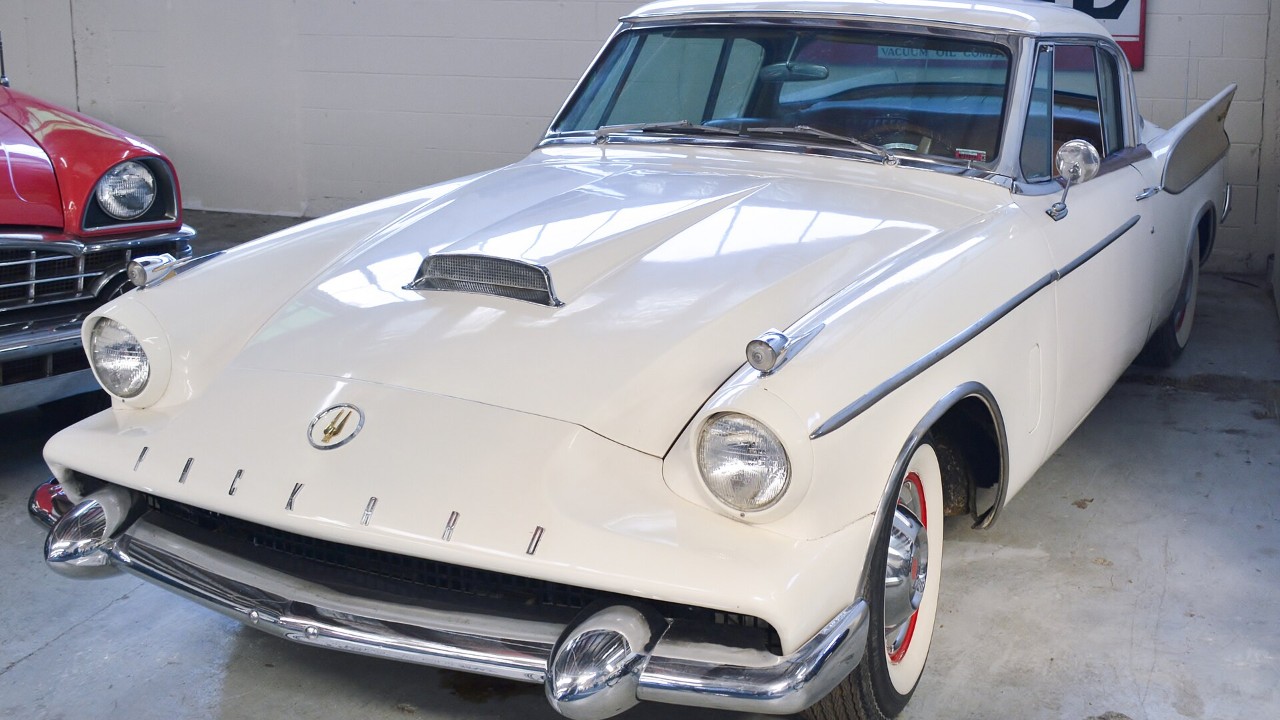
Two carmakers on opposite sides of the Atlantic sold a Hawk in the 1950s. Humber, part of Britain’s Rootes Group, built its Hawk sedan from 1945 to 1967. Meanwhile, the Studebaker Hawk arrived for 1956 as a whole family of long, low coupes.
The two cars could hardly be more different. The Humber was a sensible four-cylinder family sedan for doctors, managers and country towns. By contrast, the Studebaker ended up with a supercharged V8. Yet both wore the name with real pride, and both look sharp parked at a show today.
These eight are our picks, and the verdicts are our opinion. We mixed the British and American cars on purpose, because each one shows a different side of what a Hawk could be. The years, engines and production counts come from model histories and period sources. Picking the eight was our call.
1. 1950 Humber Hawk Mk III

The Mk III is the Hawk that grew up. Humber showed it at the London Motor Show in October 1948, and it looked nothing like the upright prewar shape it replaced. The new body came from the Loewy Studio, the same American design firm that shaped Studebakers. Under the skin, it gained coil-sprung independent front suspension and a hypoid rear axle.
However, Humber kept the old engine. According to Grace’s Guide, the Mk III retained the earlier engine and transmission, a 1,944 cc side-valve four that dated back to the first postwar Hawk. Grace’s Guide also puts production at 10,403 cars before the larger-engined Mk IV took over.
Our take: the Mk III is the most interesting Hawk to look at, because it links two worlds. You get an American-styled body over a modest British chassis. That’s why we love it. It isn’t fast, and it never pretended to be. Instead, it gave postwar families a modern face and a softer front suspension. In our view, a tidy Mk III says more about postwar Britain than most sports cars of the same era. If you want one, look for solid sills and an honest interior, since trim parts take patience to find.
2. 1954 Humber Hawk Mk VI
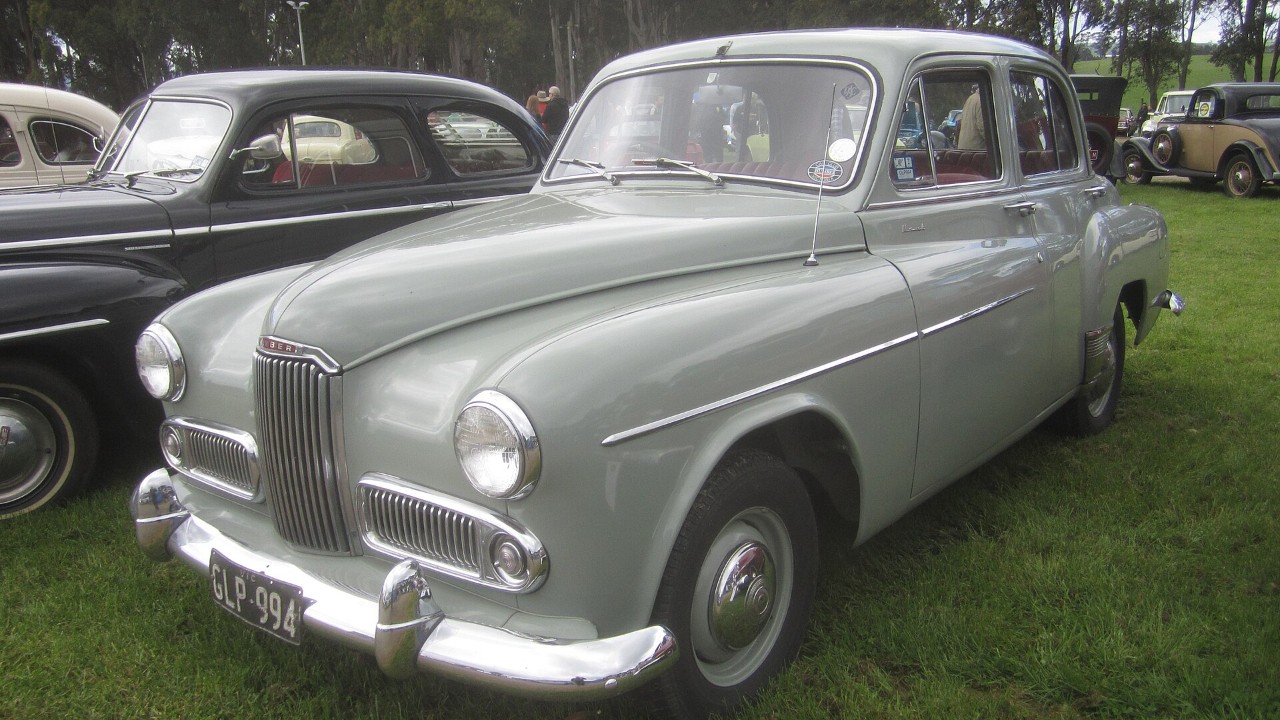
The Mk VI arrived in June 1954, and its big news sat on top of the engine. Humber finally fitted an overhead-valve cylinder head to the 2,267 cc four, after years of side valves. It also lengthened the body slightly, and in 1955 it added an estate with a fold-down tailgate.
The Motor magazine tested a Mk VI estate with overdrive in 1956. Grace’s Guide records the results: a top speed of 79.7 mph, 0-60 mph in 25.2 seconds and 22.8 mpg. That car cost £1,405. Those numbers sound slow today. Still, they put a loaded family wagon close to 80 mph on the open road, which was a solid result for a four-cylinder car at the time.
Our take: the Mk VI is the sweet spot of the early Hawks. It keeps the rounded Loewy-era shape, yet the overhead-valve engine makes it far more relaxed to drive. Humber built 18,836 of them, so it’s also one of the easier early Hawks to find. In our view, a Mk VI with overdrive is the one to buy if you plan to drive it often. We’d look for documented overdrive, since it changes how the car cruises.
3. 1957–1959 Humber Hawk Series I estate
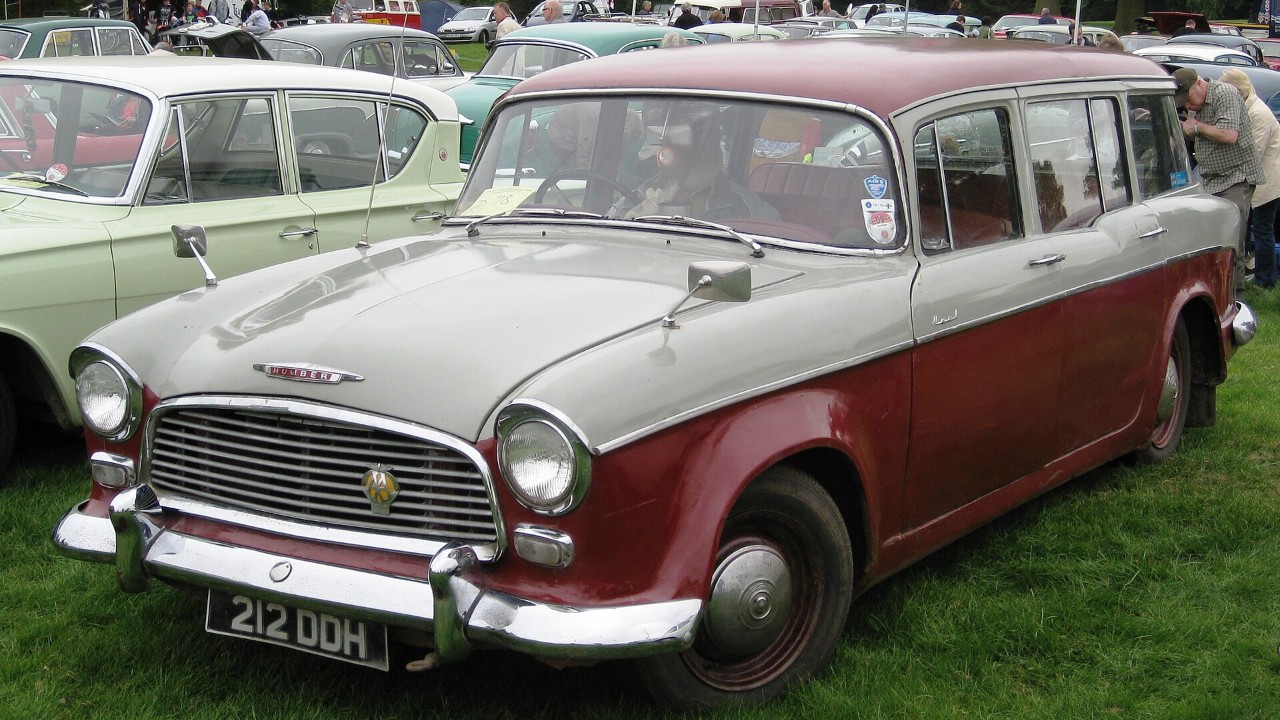
For 1957, Humber started over. The Series I Hawk got a completely new unitary body, which it shared with the 1958 Super Snipe. As a result, the Hawk and its six-cylinder big brother now looked like twins. Buyers could also order a Borg Warner automatic.
The estate version is the one we’d hunt for. It used a horizontally split tailgate, according to Grace’s Guide. The 2,267 cc four carried over with changes. In a 1957 test without overdrive, The Motor saw 83.9 mph and 0-60 mph in 19.7 seconds, as the same source reports. That was a clear step up from the earlier figures. Humber built 15,539 Series I Hawks across all body styles before the Series IA arrived in 1959.
Our take: the Series I estate is the most useful Hawk ever made, and it might be the most charming. It carries a family, a dog and a weekend’s luggage, yet it wears enough chrome to feel special. Even so, we’d expect most working wagons to have lived harder lives than the saloons. In our view, a solid Series I estate is a smarter long-term buy than a saloon. Check the tailgate hinges and rear floor first.
4. 1964–1965 Humber Hawk Series IV
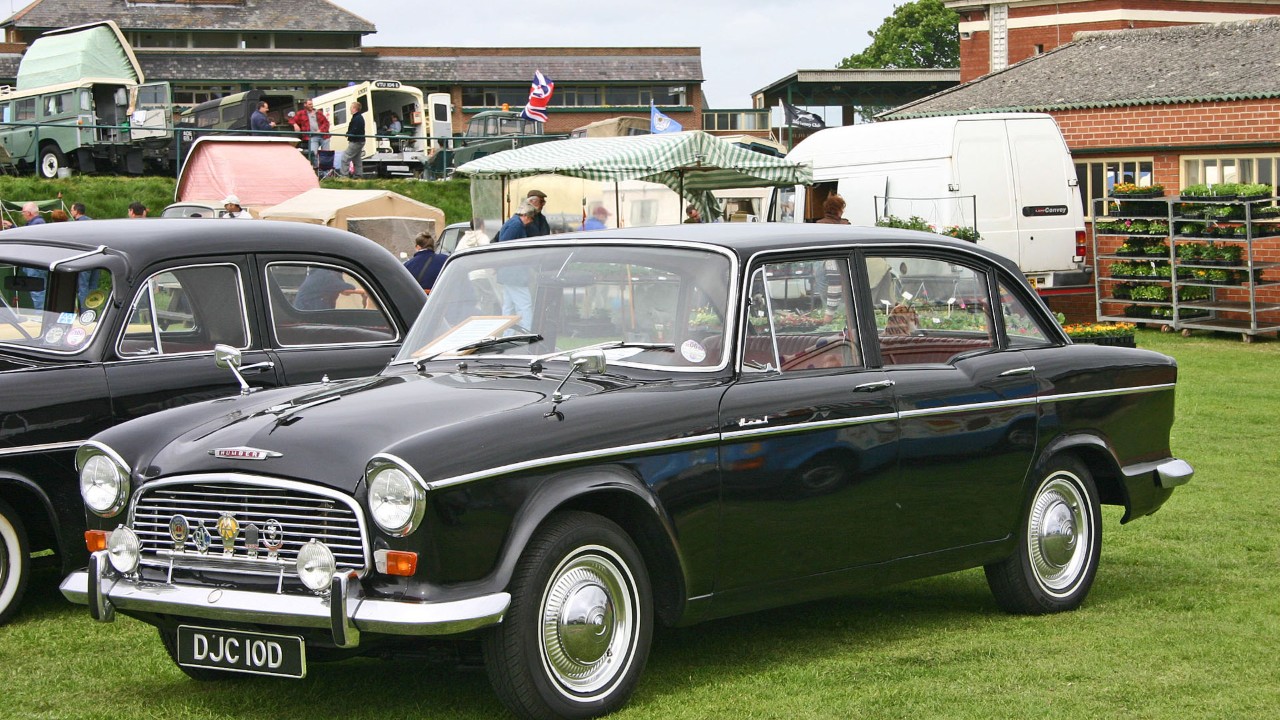
The Series IV appeared in October 1964, and it changed the car’s profile more than its engine. Humber gave it a flatter roof and a smaller rear window. It also added an extra side window behind the rear doors, which made the cabin feel lighter. Underneath, first gear gained synchromesh, and a rear anti-roll bar sharpened the handling.
This was close to the end of the line. Rootes built only 1,746 Series IV cars, then followed with the Series IVA in 1965. That last version brought back the automatic option, this time the Borg Warner Model 35. Grace’s Guide counts 3,754 of the IVA. After that, Humber retired the Hawk name for good in 1967.
Our take: the Series IV is the Hawk for drivers who want a big British saloon that feels modern. The extra side glass and synchromesh first gear make it easy to live with in traffic. Meanwhile, its small production run makes it the scarcest Humber on our list. In our view, it’s a quiet, dignified car with real presence. If you’re buying, budget for rust repair under the doors and check that the rear anti-roll bar is in place.
5. 1956 Studebaker Flight Hawk
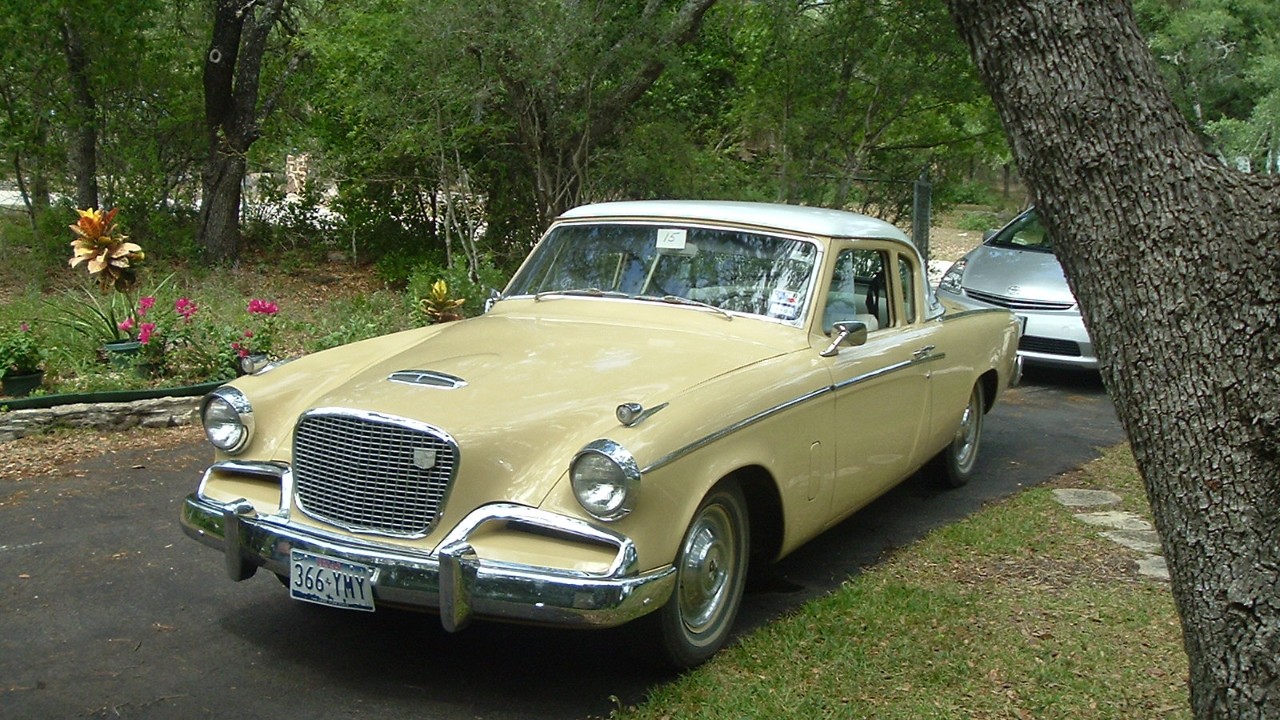
Studebaker’s 1956 Hawk family had four members, and the Flight Hawk sat at the bottom. It used the 185-cubic-inch Champion six, rated at 101 hp, according to the Studebaker National Museum. The museum lists a base price of $1,986 and production of 4,949 cars.
That price matters. For under $2,000, a buyer got the same long hood and low roofline that the V8 Hawks wore. The design team, led by Robert Bourke from Raymond Loewy Associates, had built the Hawks on the 1953 coupe body. So the cheapest Flight Hawk looked like a European grand tourer, even if a six did the work. The museum’s records also note that the hardtop body went to export markets only.
Our take: we think the Flight Hawk is one of the best-looking bargains of 1956. It shows that great design doesn’t need a big engine to work. Of course, it won’t win a drag race against the Golden Hawk. But the six suits relaxed cruising, which is how we’d drive one anyway. In our view, the Flight Hawk suits anyone who wants the shape for less money. Look for original trim and paperwork, so you know exactly which Hawk you’re buying.
6. 1957 Studebaker Golden Hawk supercharged
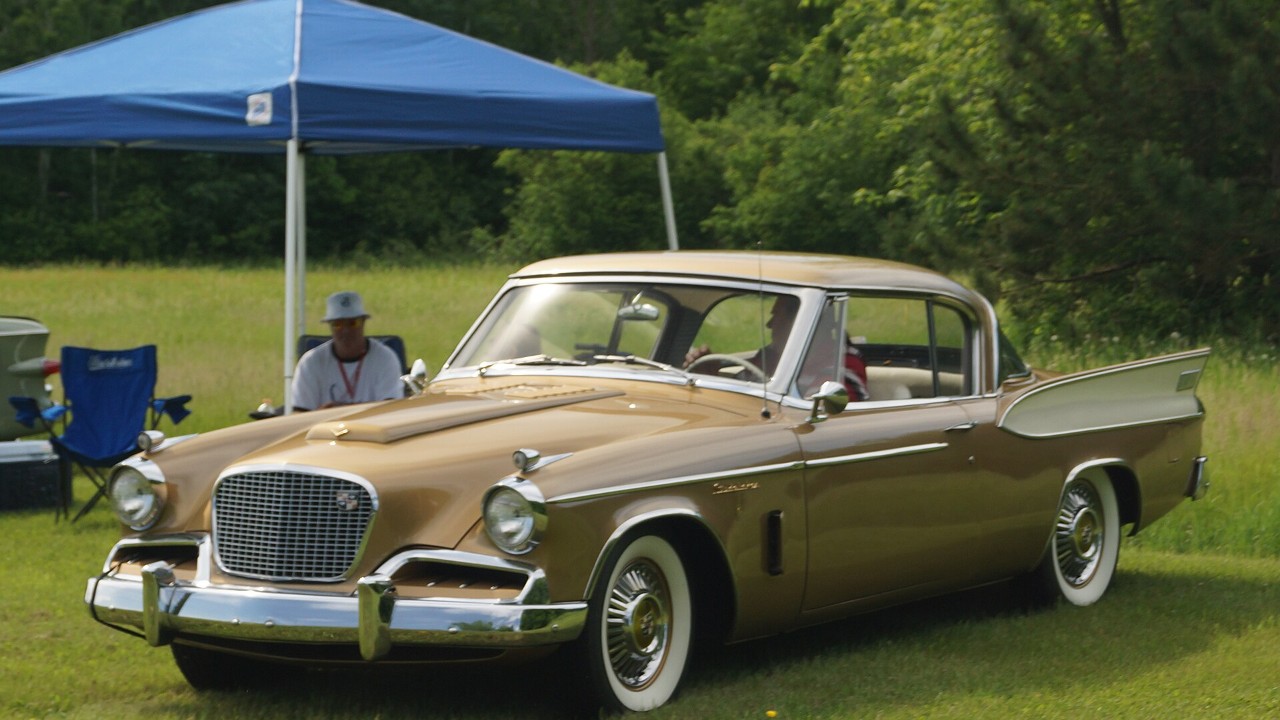
For 1957, Studebaker dropped the 352 Packard V8 from its top Hawk and fitted its own 289 instead. Then it bolted on a McCulloch VS57 centrifugal supercharger as standard equipment. According to Mac’s Motor City Garage, boost stayed limited to 5 psi, and the engine made 275 hp at 4,800 rpm with 333 lb-ft of torque. The blower also needed a fiberglass hood blister, and the fins grew taller and changed to steel.
The Savoy Automobile Museum lists 4,356 built and an original price of $3,182. Mac’s adds a rare twist. Studebaker built just 51 Golden Hawk 400 models, with special leather and two-tone paint. We covered more of this car’s story in what made the ’57 Golden Hawk so unexpected.
Our take: the supercharged Golden Hawk is the Hawk that earned its name. Mac’s says many praised its balance over the 1956 car. Even so, period road tests grumbled about too much understeer. In our view, this is the one to own if you want both style and real pace. Before you buy, have the blower inspected by someone who knows McCulloch units.
7. 1958 Packard Hawk supercharged
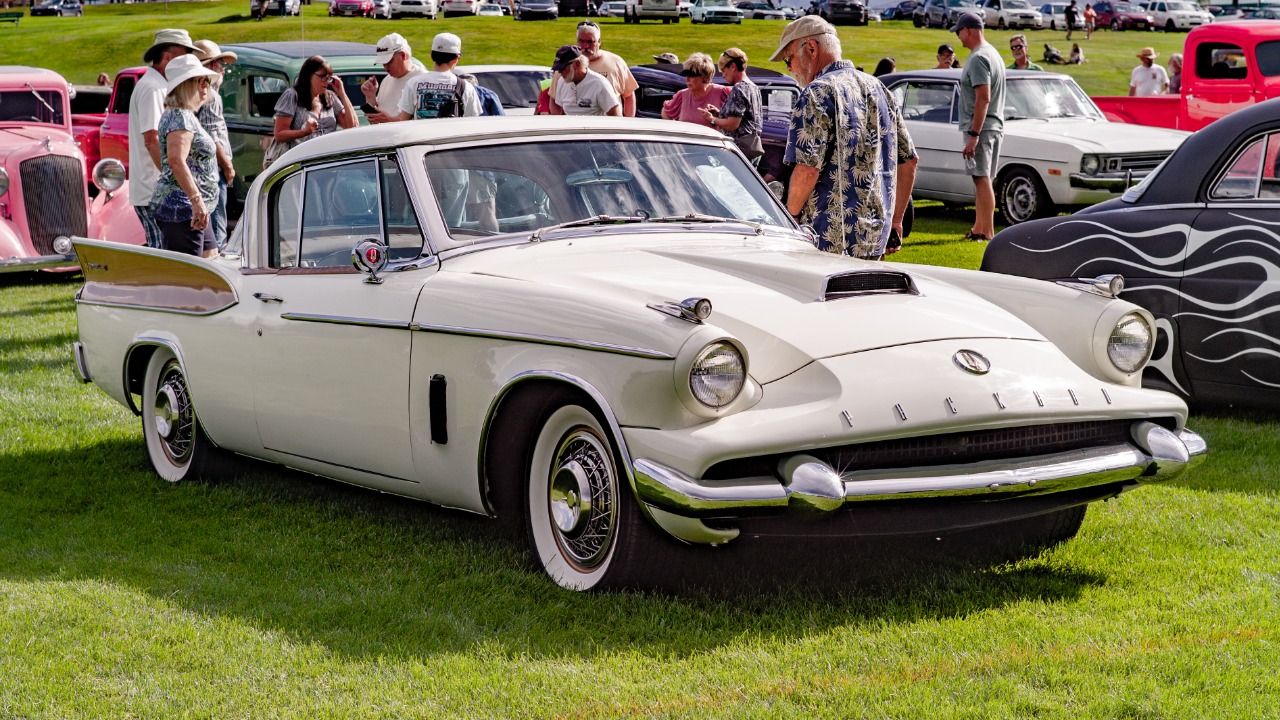
The Packard Hawk was a Golden Hawk in a tuxedo. For 1958, the last year of Packard, the company dressed the Studebaker coupe in a fiberglass front end with a wide, low grille. It kept the supercharged 289 V8, and it added a full leather interior. It also had padded armrests mounted outside the windows.
Hagerty lists a $3,995 price, a weight of 3,470 pounds and production of only 588. Hagerty also notes that the 1958 Golden Hawk started at $3,282 and sold 878 units, so the Packard cost about $700 more. Other details included gold Mylar inserts in the fins, a simulated spare tire on the trunk lid and an engine-turned dash full of gauges. Detractors called the nose a “catfish.”
Our take: we love this car because it refused to blend in. Packard was on its way out, and yet it built something bold. Our earlier piece, 10 facts about the 1958 Packard Hawk, digs into its odd details. If you find one, check the fiberglass nose for cracks, because a replacement is very hard to source.
8. 1956 Studebaker Sky Hawk
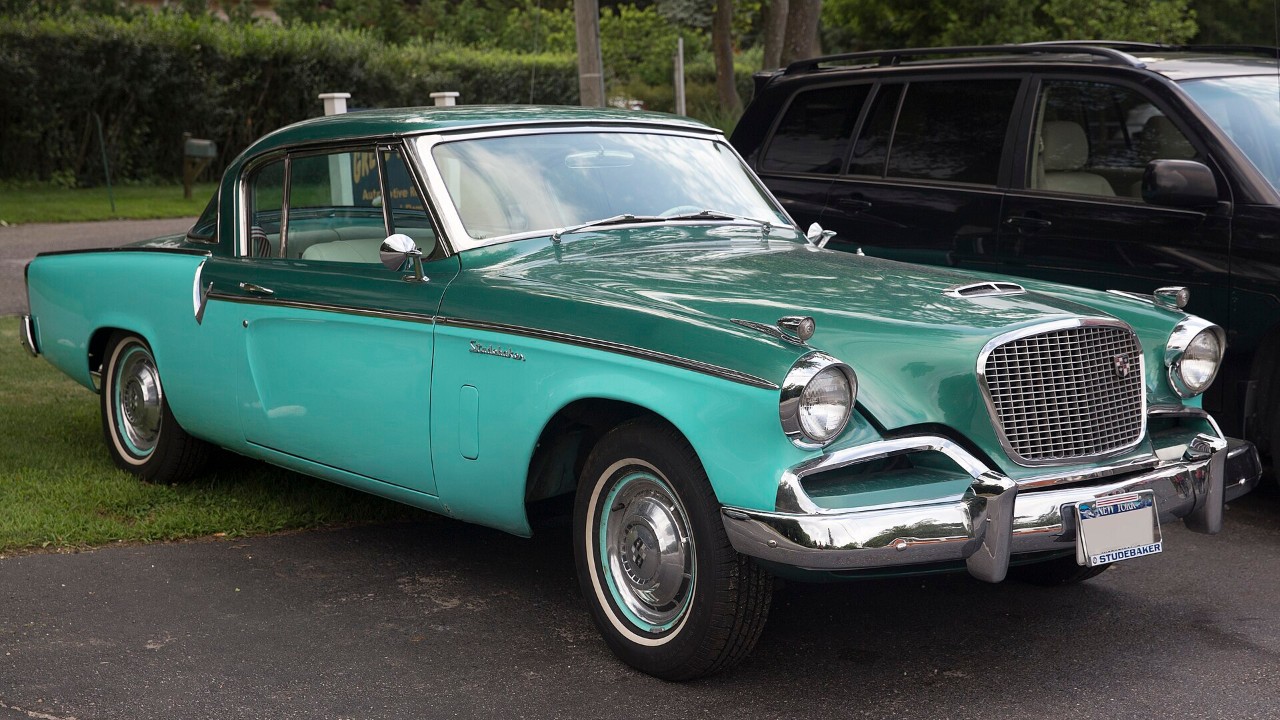
The Sky Hawk was the hardtop Hawk without the flash. It shared the pillarless roof of the Golden Hawk, yet it skipped the fiberglass tail fins. In fact, the Golden Hawk was the only 1956 Hawk with fins at all. Power came from Studebaker’s own 289 V8, rated at 210 hp. The Studebaker National Museum notes that a four-barrel carburetor and dual exhaust added another 15 hp.
The museum lists a base price of $2,477, which was nearly $600 less than the Golden Hawk. Studebaker built 3,050 Sky Hawks, the smallest run of the four 1956 models. Then the company dropped the name after a single year, so the Sky Hawk became a one-season car.
Our take: the Sky Hawk is our favorite way into the 1956 line. It has the clean hardtop shape, a strong Studebaker V8 and a tidier tail. That makes it, in our view, the best-value V8 Hawk of 1956. Plus, the one-year run gives it a story that collectors enjoy. When you look at one, confirm that the car is a real Sky Hawk by its serial and body tags before you pay a premium.
More from Fast Lane Only