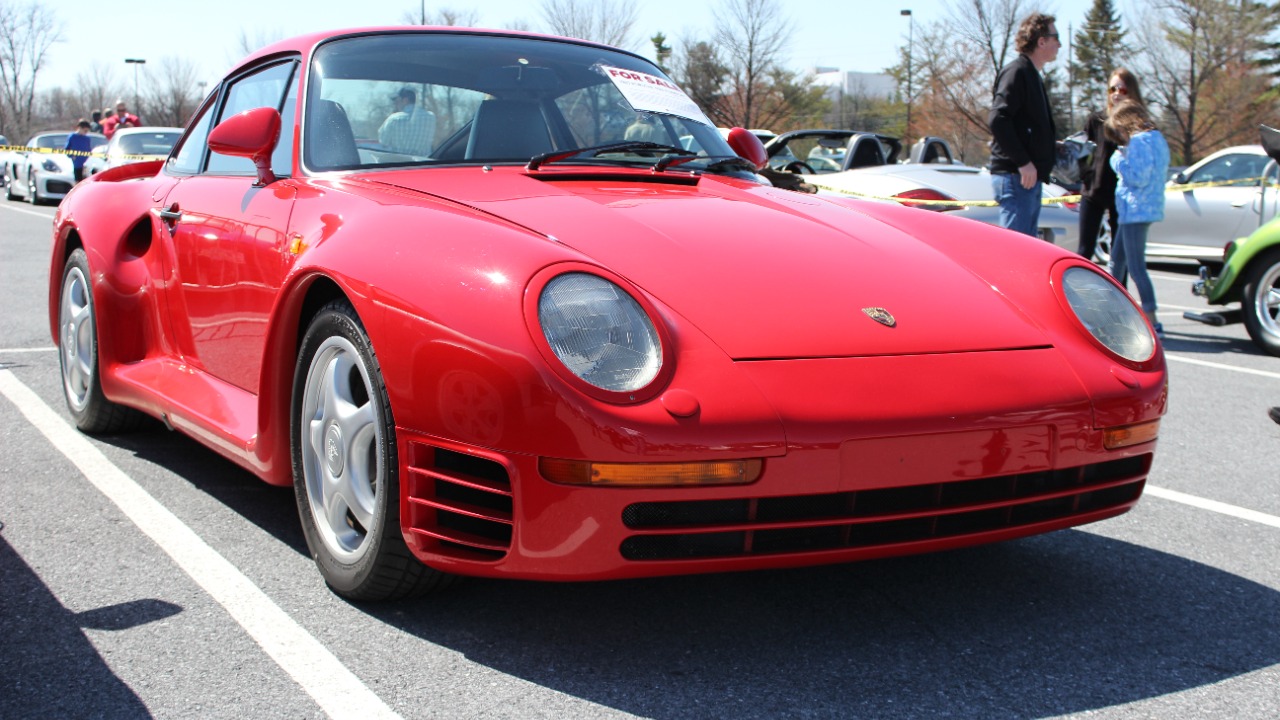
Bill Gates’s Porsche 959 is one of the strangest ownership stories in the car world. Gates ordered Porsche’s technology flagship of the 1980s, yet U.S. customs would not let it onto American roads. Several accounts put the car’s wait in storage at about 13 years. It finally came home because the law changed.
That change became known as the “Show or Display” rule. It shapes how some rare foreign cars reach American garages. To see why it mattered so much, you have to start with the car itself.
Porsche never meant the 959 to be an ordinary car. It began as a homologation study for Group B racing, and it became a showcase for technology that later influenced Porsche’s series cars. That ambition is exactly what made it so hard to bring into the United States.
The supercar Porsche built as a rolling laboratory
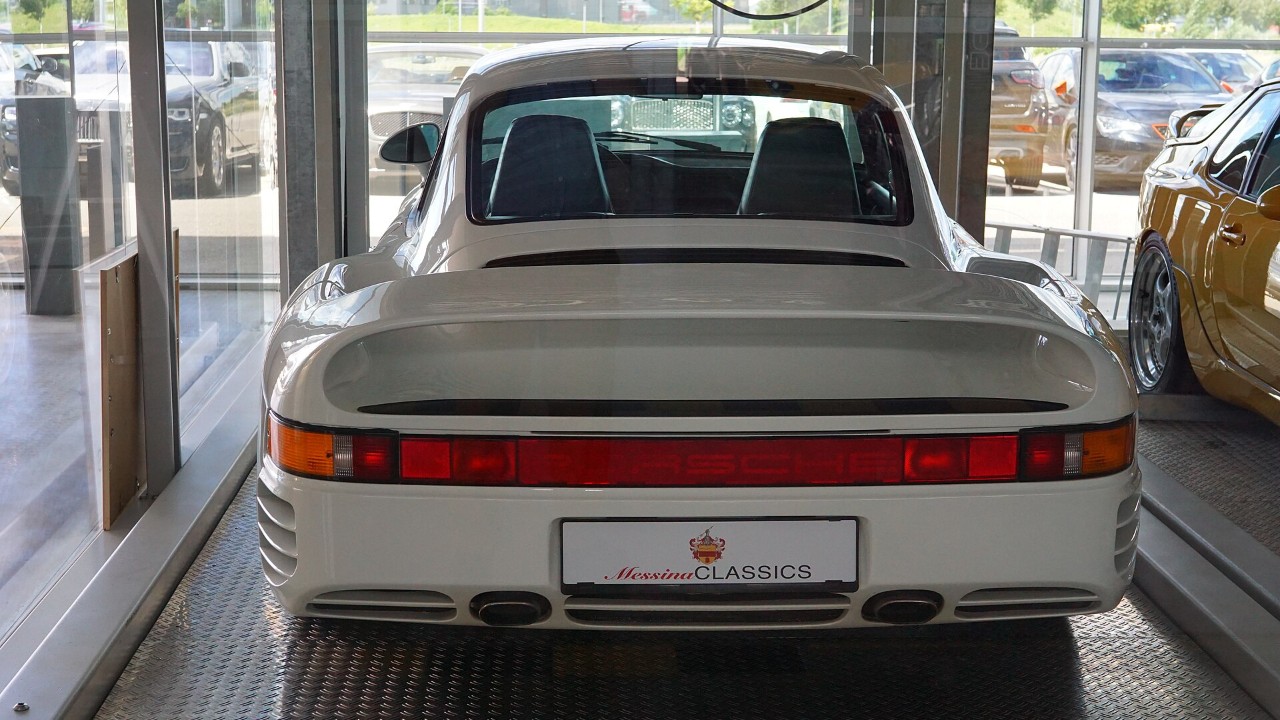
According to the Porsche Newsroom, the story began with a study called “Group B,” shown at the Frankfurt motor show in the autumn of 1983. Porsche presented the finished 959 at the same show in 1985, and the first customer cars reached buyers in 1987.
The specification was remarkable for its time. Porsche lists a 2.85-liter flat-six with twin turbochargers and 450 PS, which is about 444 horsepower. The car used electronically controlled all-wheel drive, a newly developed six-speed gearbox and a ride height that changed with speed. Porsche quotes a top speed of 315 km/h, roughly 196 mph.
The 959 also proved itself in the desert. In 1986, two of them took the first two places in the Paris-Dakar Rally. However, Porsche built only 292 production cars in 1987 and 1988, in Comfort and Sport versions. In fact, Porsche’s Helmuth Bott called the car “the most expensive promotional gift Porsche has ever given its customers.” The newsroom adds that 959s soon traded for more than double their list price. Car writer Lawrence Ulrich puts the new price at roughly $225,000.
Why Bill Gates’s Porsche 959 never reached the road
Gates had a long-running fondness for the 959, according to Ulrich. So he ordered one. Yet Porsche had engineered and tested the car for Europe. As SlashGear explains, the 959 never failed the U.S. safety tests. It simply never took them. Without federal certification, the car could not legally enter the country for road use.
As a result, U.S. customs impounded Gates’s car. It then sat in storage, unable to move. SlashGear says it took 13 years for Gates to get the car through, and a Forbes report counted the wait at 4,745 days. Other accounts are more cautious. Ulrich says customs held the car at a California port “for more than a decade,” while the duPont Registry says it sat idle for over a decade.
Gates was hardly the only enthusiast who wanted cars like this. Meanwhile, a small group of collectors and specialists had started working on a way out.
How the 1999 Show or Display rule came about
The fix came from Congress and then from the regulators. According to a final rule in the Federal Register, Congress amended federal law on June 9, 1998, in the Transportation Equity Act for the 21st Century. That amendment added “show or display” to the reasons a vehicle that doesn’t meet U.S. safety standards could be imported. Interestingly, the rule explains that Congress dropped this authority by accident when it recodified the law in 1988.
Then the National Highway Traffic Safety Administration wrote the details. It published its final rule on July 14, 1999, and the rule took effect on August 13, 1999. Importers had to show that a car carried historical or technological significance. The agency named the McLaren F1 and “certain types of Porsches or Ferraris” never sold in the United States as examples.
The rule also set a limit on use. NHTSA first proposed 500 miles a year. However, after a comment from the Special Vehicle Coalition, it raised the cap to 2,500 miles in any 12-month period. Owners must also carry an insurance policy or contract that limits annual mileage, and they must let NHTSA inspect the car.
Who pushed for the change
The people behind the new law were collectors and specialists, not the automaker. Ulrich’s account credits Bruce Canepa with years of lobbying and legal work. In the early 1990s, Canepa hired a Washington, D.C., attorney to lobby the EPA, NHTSA and automakers. “We formulated a law,” Canepa told Ulrich. Ulrich also writes that President Bill Clinton signed the measure in 1998, as part of a Senate transportation bill.
Gates was part of that effort too. The duPont Registry says he worked with others to get the “Show and Display” law passed. That spelling difference turns up often. Federal documents use “show or display,” while many car writers call it “Show and Display.”
What the rule means for collectors today
For Gates, the rule meant he could finally use his 959. The duPont Registry reports that he drives it occasionally while staying under the 2,500-mile annual limit. Ulrich adds that the change opened the door to dozens of European and Asian models that the old rules had kept out.
The rule is not a free pass, though. NHTSA’s own guide, How to Import a Motor Vehicle for Show or Display, says an approved car must still meet EPA requirements. It also asks applicants whether the maker built more than 500 examples. If so, the applicant must prove exceptional technological or historical significance. With only 292 production cars, the 959 sat well under that line.
The 959 itself is a fitting poster car for the law. It was a technology showcase that Porsche never certified for America, and it waited years for a rule to catch up. If you want more on the car’s engineering, read how the 1986 Porsche 959 rewrote supercar engineering.
When NHTSA’s rule took effect on August 13, 1999, it capped show-or-display cars like Gates’s 959 at 2,500 miles in any 12-month period.
More from Fast Lane Only