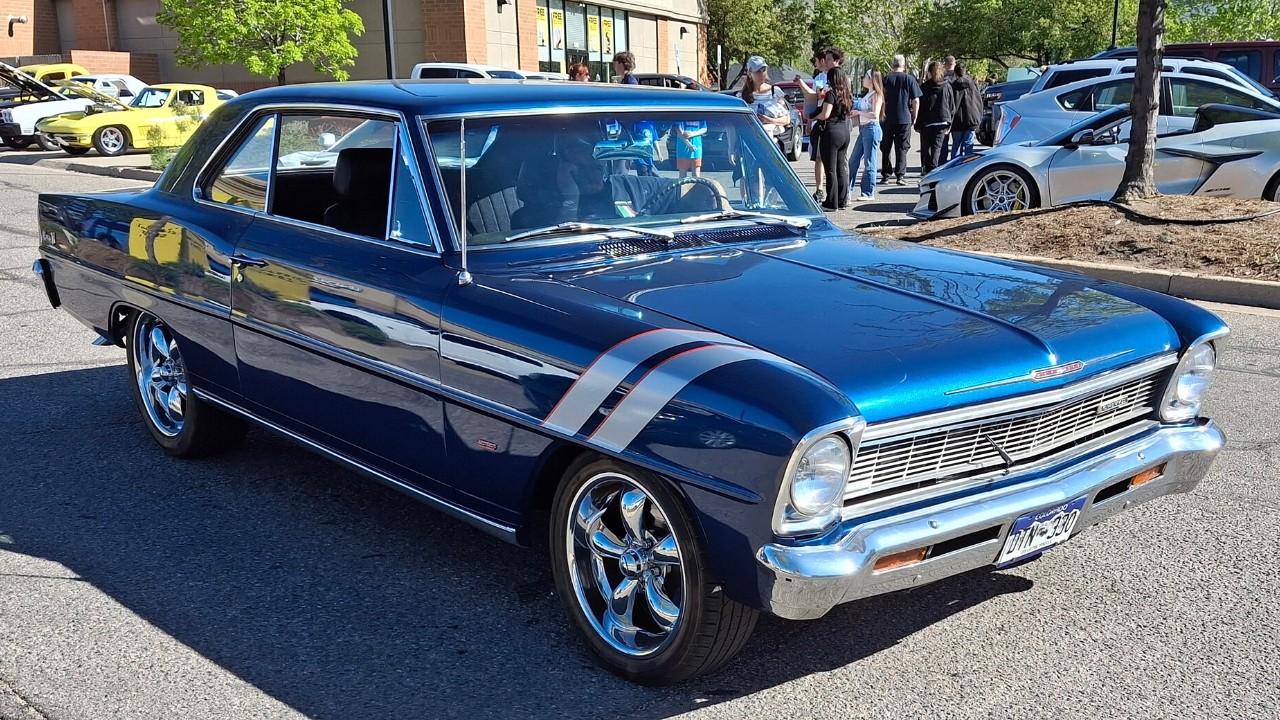
The 1966 Chevy II Nova SS came standard with a six-cylinder engine, which tells you how loosely the muscle era handed out its badges. In fact, many of the best stories from that time sit in cars like it: plainer, smaller or rarer models that never got the poster treatment.
Most fans can name the GTO, the Hemi Charger and the Boss Mustang. However, Detroit built far more performance cars than those headliners, and plenty of them disappeared into daily use, drag strips and scrapyards. Some were trim levels and some were option codes, while a few were short-run specials.
These are our picks for 12 muscle cars you are unlikely to spot at a typical car show. Whether a fan has seen one is our opinion, of course. However, the engines, dates and production figures come from the record.
1. 1966 Chevy II Nova SS
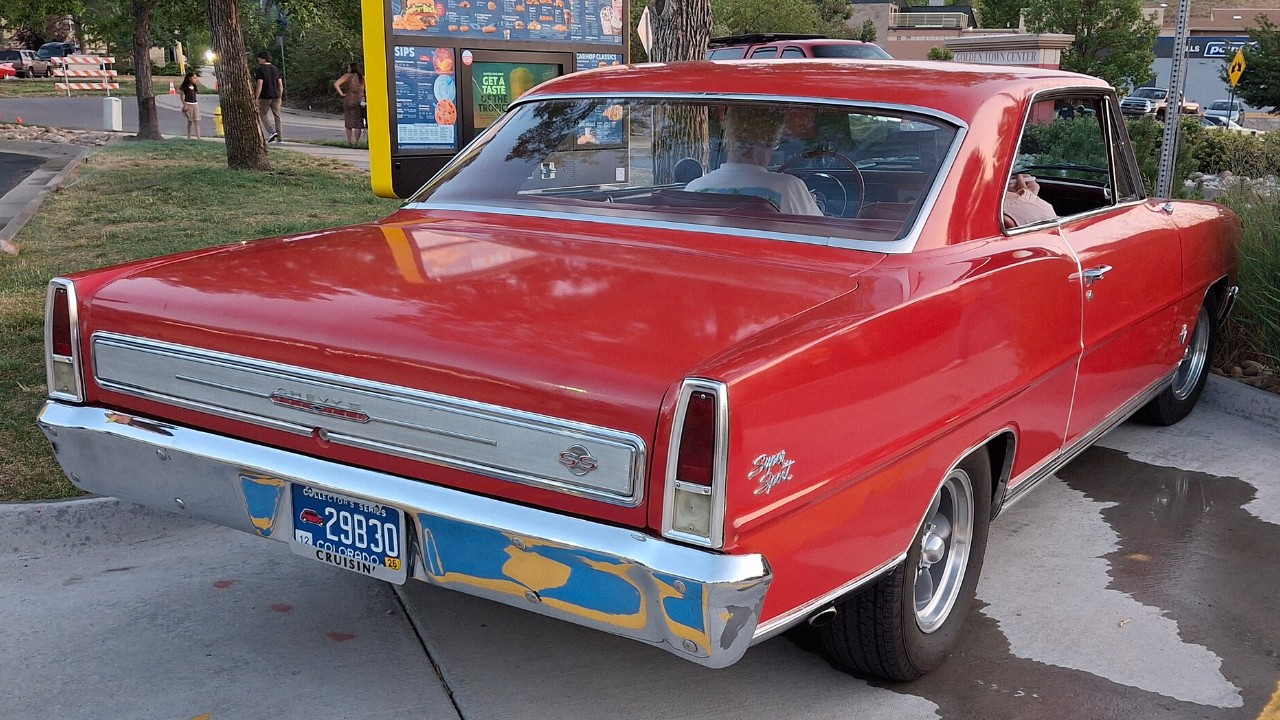
For 1966, the Chevy II got an extensive, sharp-edged restyle partly based on the Super Nova concept car. It also wore a bold grille and a semi-fastback roofline. The Super Sport package cost $159 more than a Nova 400, and Chevrolet offered it only as a Sport Coupe.
Here is the surprise. The SS came standard with a 194-cubic-inch six, and V8s sat on the options list. Strato-bucket seats were standard, yet a tachometer cost extra. Brochures called the car the “Chevrolet Chevy II Nova Super Sport.” Even so, the cars themselves wore “Chevy II SS” badges rather than “Nova.”
Our take: the 1966 Chevy II Nova SS is the compact muscle car that gets lost between the 1960s Chevelles and the later Nova SS cars. Still, its crisp body is the main reason to want one. If you shop for an SS, check the trim details first, since the badge and the drivetrain do not always tell the same story. We ranked other years in our list of the best Novas.
2. 1969 Plymouth Sport Satellite
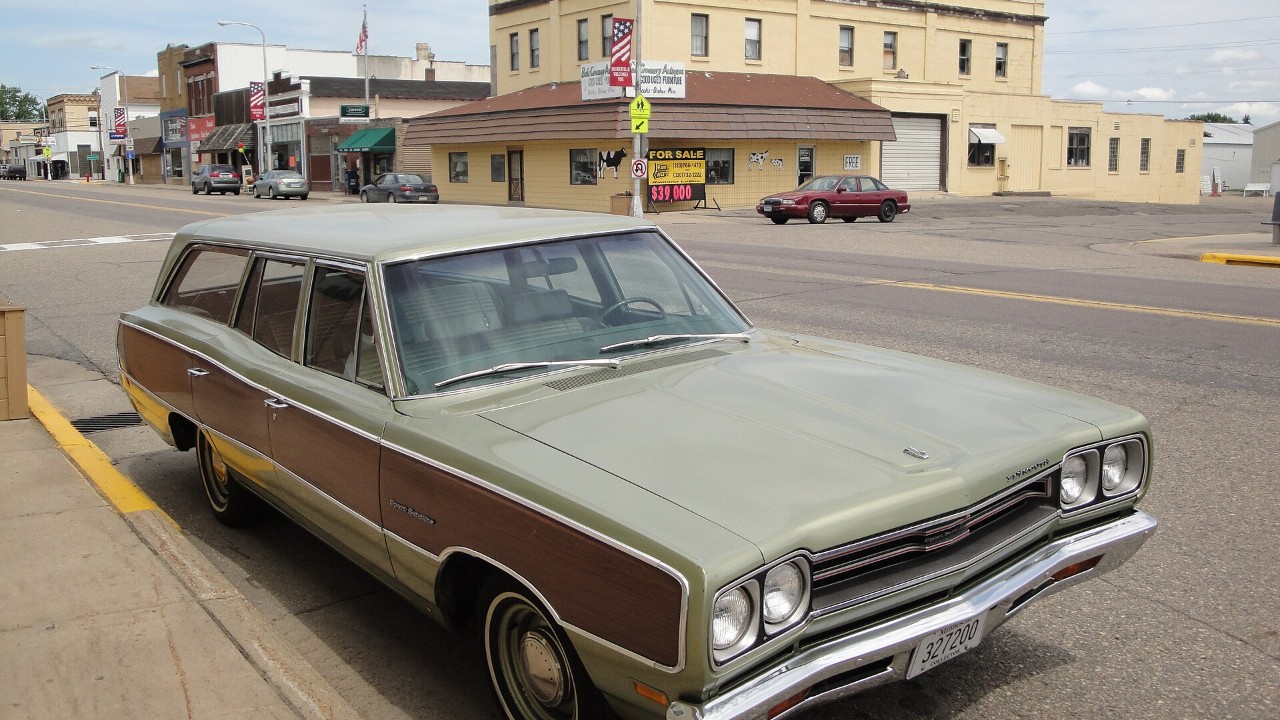
Plymouth introduced the Sport Satellite for 1968 as a restyled, higher-trimmed version of its mid-size Satellite. At first, it came with a standard 318 V8. It also borrowed the blacked-out grille with horizontal blades from the Road Runner, while the plain Satellite shared its grille with the Belvedere.
For 1969, Plymouth widened the line. A Sport Satellite four-door sedan joined the range, and the wagons became part of the Sport Satellite series too. Meanwhile, the same body also carried the Road Runner, which Plymouth introduced in 1968.
In our view, the Sport Satellite is the muscle car for people who wanted Road Runner looks with nicer trim and a calmer engine. That makes it easy to overlook today. Still, in our opinion, a clean, original example is worth a second look at any show.
3. 1969 Ford Torino 428 Cobra Jet
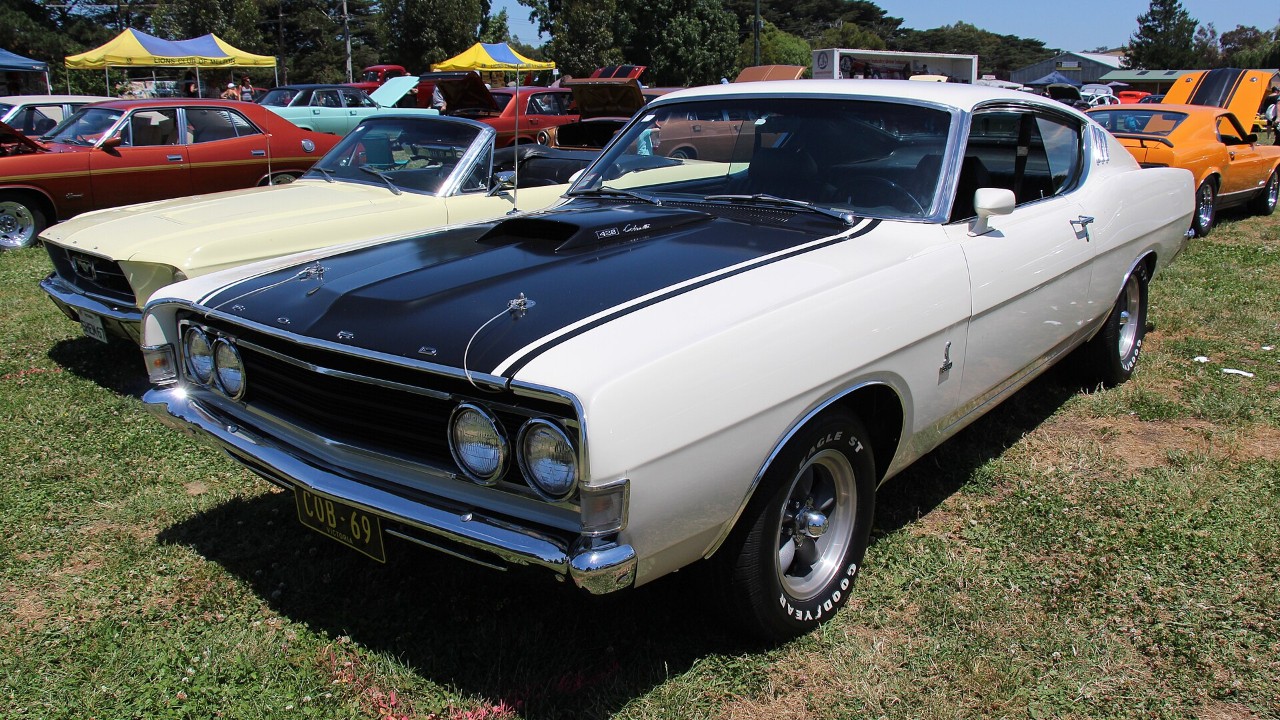
Ford built 129,054 Torinos for 1969, and the 428 Cobra Jet was the engine that made a handful of them serious. It carried an advertised rating of 335 horsepower and breathed through a 735 cfm Holley four-barrel. Buyers could order it with or without Ram Air, and the rating stayed the same either way.
Ram Air cars got a functional hood scoop with “428 Cobra Jet” emblems. By comparison, cars without it wore “428” emblems on the fenders instead. The engine was standard in the Cobra model, which also had competition suspension, a four-speed manual and hood lock pins. In the upscale Torino GT, by comparison, the 428 CJ was an option.
Our take: a 428-powered Torino is one of the more overlooked ways to own Ford big-block muscle. Find the paperwork, though, since the scoop and emblems tell you whether a car left the factory with Ram Air. Ford also built only 743 of the related Torino Talladega, a NASCAR-oriented SportsRoof.
4. 1970 Plymouth Valiant Duster 340
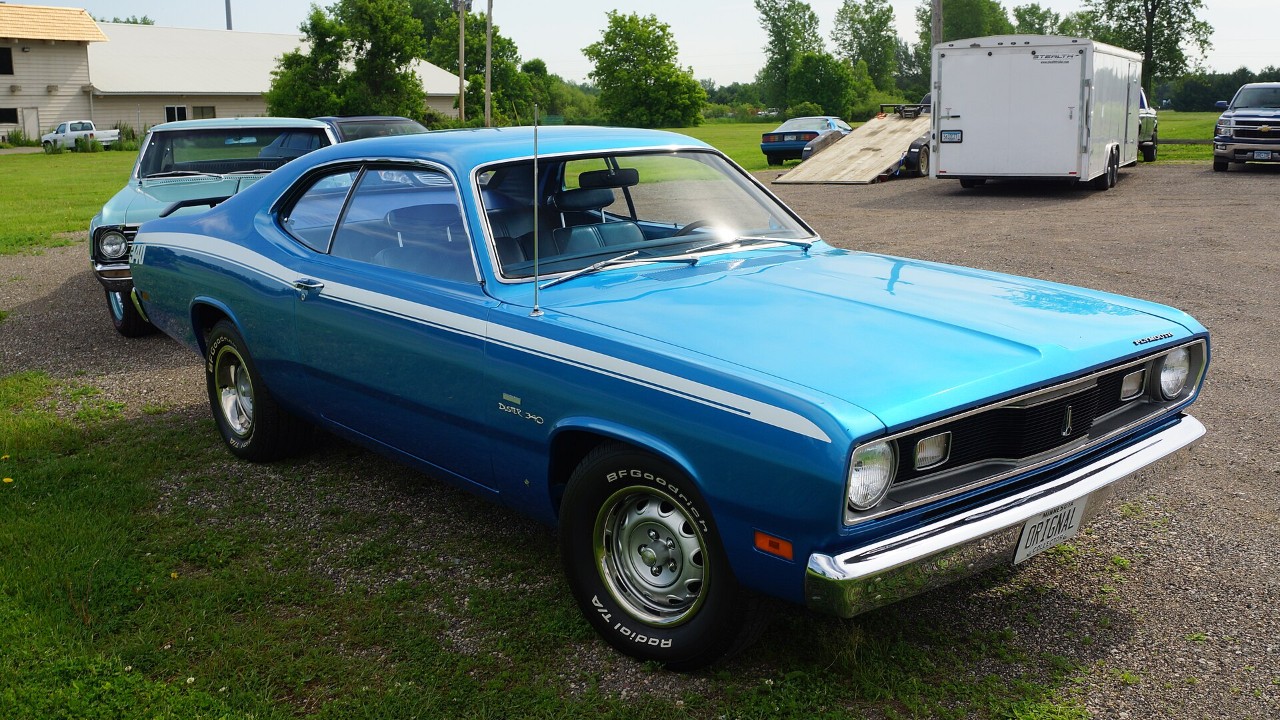
Plymouth introduced the Duster in late 1969 for the 1970 model year. Plymouth also took the compact Valiant and gave it a semi-fastback coupe body. The performance version used the 340-cubic-inch LA-series V8, rated at 275 horsepower gross for 1970 and 1971.
In our view, that V8 in a compact body made the Duster 340 a lot of car. Buyers could pick a three-speed manual, a four-speed manual or the TorqueFlite automatic across the Duster line. In 1971, Plymouth built 186,478 Dusters, and 12,886 of them had the 340.
We think the early Duster 340 is the smart-money Mopar of its era. It lacks the big-block glamour of a Hemi car. Still, the car around the 340 was simple, and the first-year 1970 version is the one we would want.
5. 1966 Chevrolet Chevelle SS396 Sports Coupe
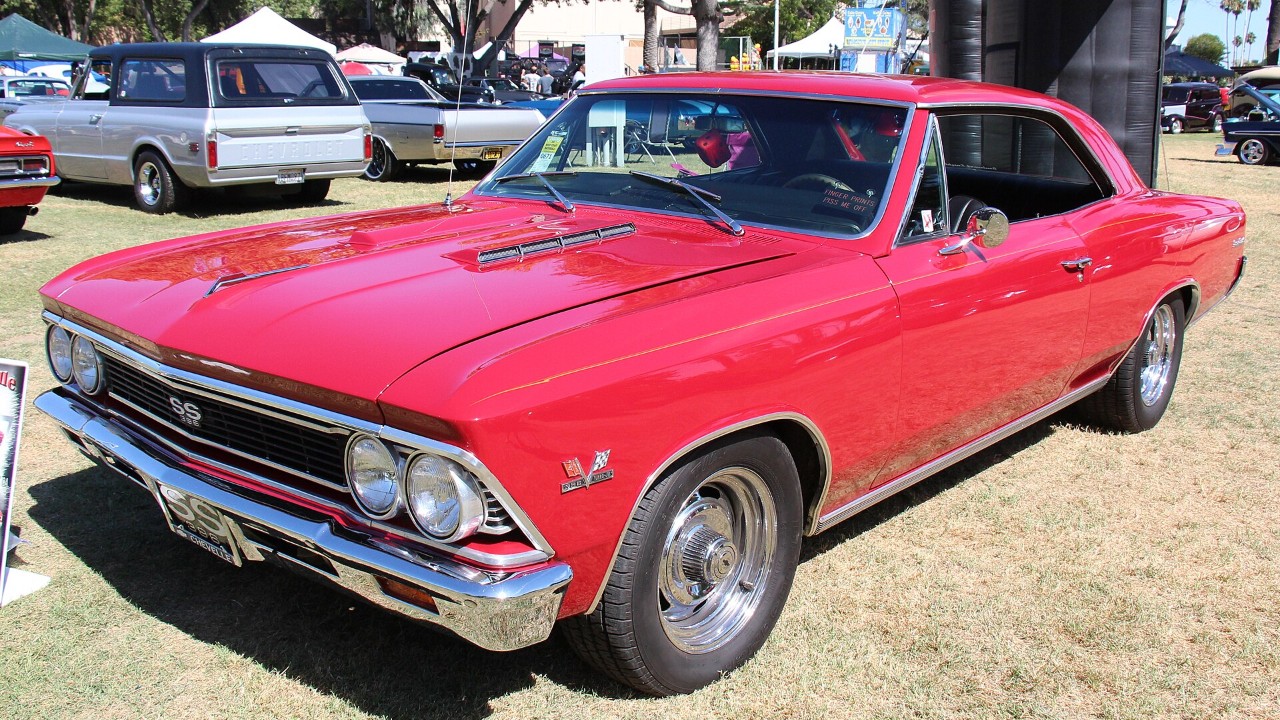
The SS396 became its own Chevelle series in 1966. Chevrolet built it on Malibu bodies with reinforced frames and offered it as a sport coupe or a convertible. That same year, the Chevelle got a complete restyle with the Coke-bottle shape that was popular at the time.
At the time, the standard 396 V8 was rated at 325 horsepower. Buyers who wanted more could choose optional 360-horsepower and 375-horsepower versions. In other words, the first full year of the SS396 series already offered a spread of big-block tunes from the dealer.
The Chevelle name is famous, so why is this car on our list? In our view, the 1966 Sports Coupe is the one most people picture wrongly, because later 1970 cars dominate the posters and the shows. A clean 1966 car with its original 396 is the version we would hunt.
6. 1962 Chevrolet Biscayne 409
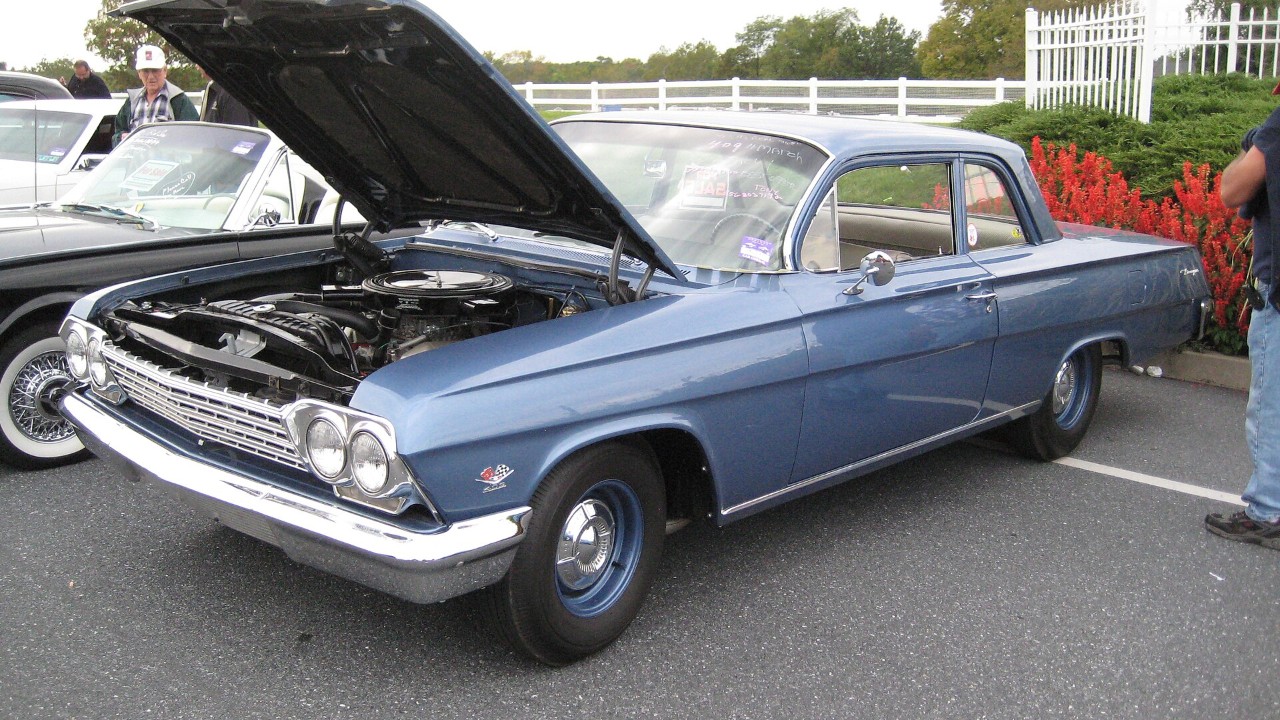
The Biscayne was the least expensive full-size Chevrolet, apart from the 1958-only Delray. As a result, it made the plainest home for the 409 V8. In 1961, Chevrolet built only 142 of the 409 engines, and a very few went into the bargain Fleetmaster for drag racing.
By 1962, the formula was clear. Chevy Hardcore’s look at a 1962 409 Biscayne lists the 409-horsepower 409 with two four-barrel carburetors, a four-speed and 4.56 rear gears. The profiled car itself ran in Stock Eliminator. Meanwhile, the Beach Boys’ song “409” helped turn the engine into pop culture.
Today, real ones bring real money. Sports Car Market reports that an original 1962 Biscayne 409 drag car sold for $95,400, including buyer’s premium, at Mecum’s Dallas auction on September 7, 2012. Our take: this is the purest early-1960s factory sleeper, and the one to verify most carefully.
7. 1967 Plymouth Belvedere GTX
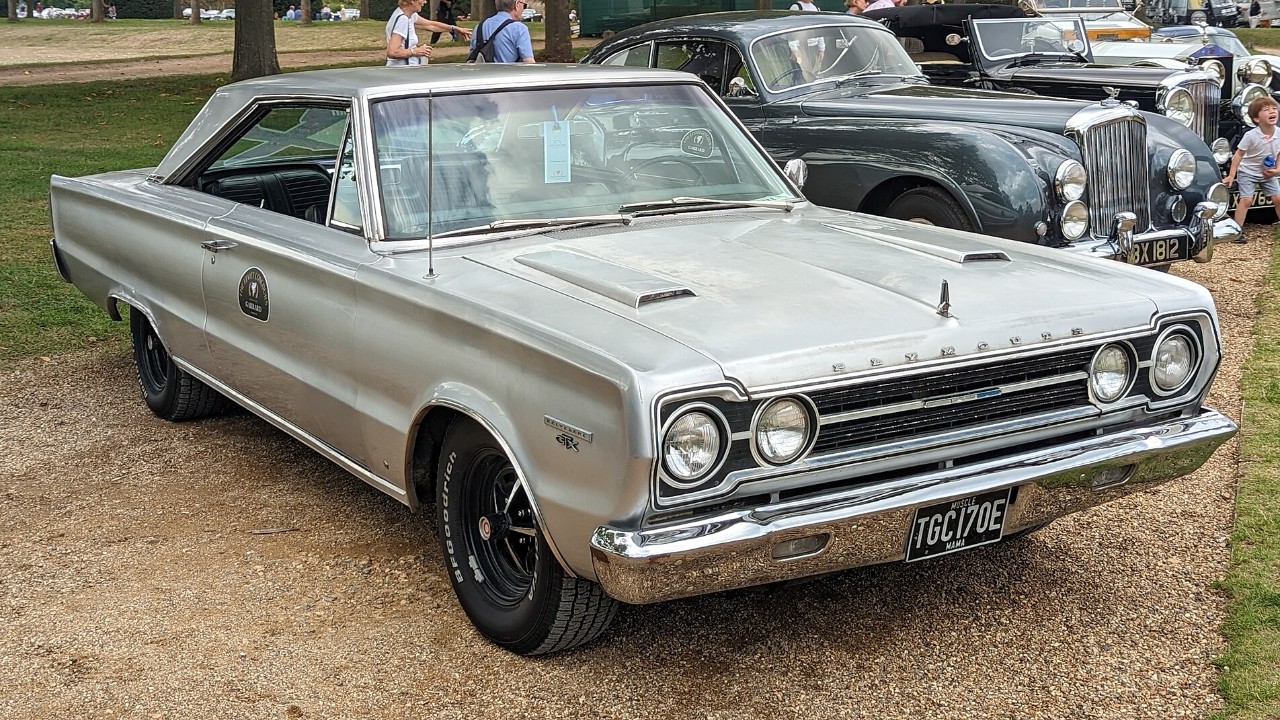
Plymouth introduced the GTX as the Belvedere GTX, an upscale performance version of its mid-size car. It wore a blacked-out grille, a special rear fascia and a tachometer on the center console. Plymouth positioned it as a “gentleman’s muscle car,” and it came as a two-door hardtop or convertible.
The standard engine was the 440-cubic-inch Super Commando 440, rated at 375 horsepower. For buyers who wanted the most, Chrysler’s 426 Hemi was optional at 425 horsepower. Across 1967 to 1971, Plymouth built 44,178 GTXs in all, so the first-year Belvedere-badged cars are only a slice of that total.
In our opinion, the 1967 car is the GTX that gets forgotten, because the later Road Runner-era cars took the spotlight. That is a shame, since the 1967 car launched the formula.
8. 1968 Mercury Montego MX Convertible
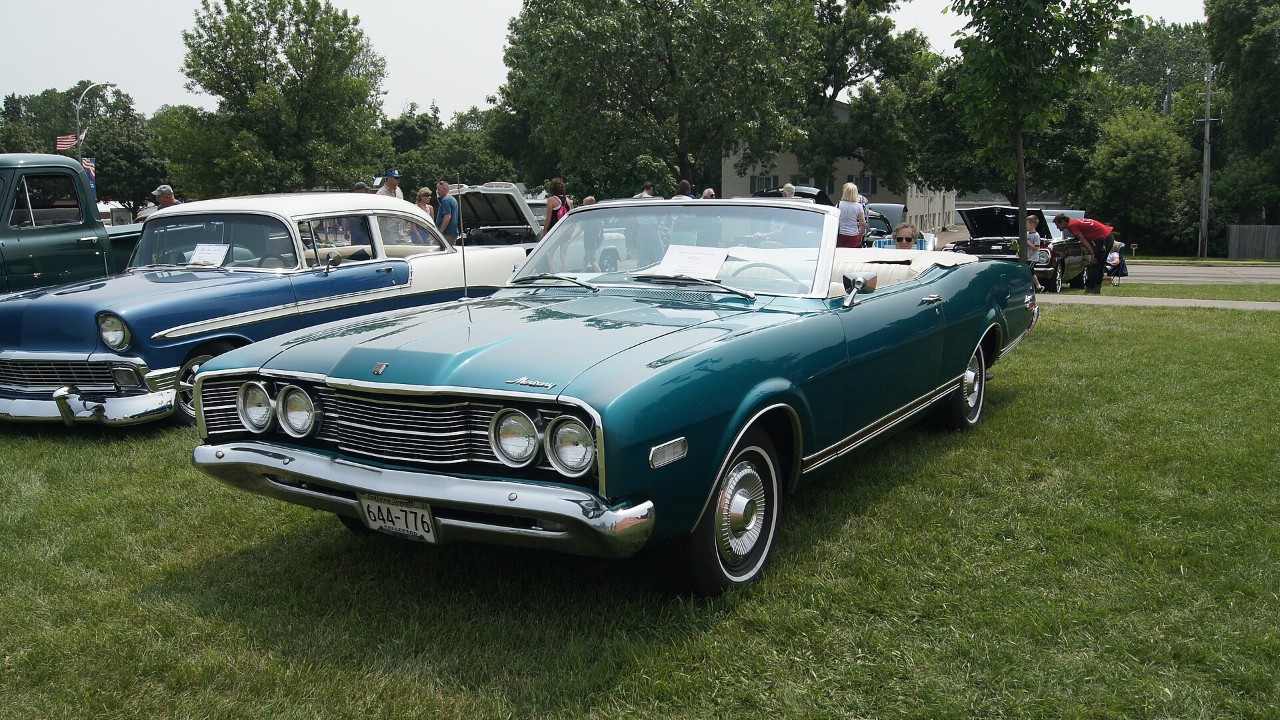
The Montego debuted for 1968 as Mercury’s new intermediate. It replaced the Comet Capri and Comet Caliente under one nameplate. Mercury offered three trims, Montego, Montego MX and Montego MX Brougham, with the MX taking over from the Caliente.
At launch, buyers could choose a two-door convertible, a two-door hardtop, a four-door sedan or a wagon. Underneath, the car was essentially a twin to Ford’s Torino. Its first generation listed big 390 and 428 V8s among its engines, although the high-performance Comet Cyclone became its own model line in 1968.
The convertible did not last long. Mercury dropped it for 1970, so the open Montego had a very short run. Our take: this is the soft-top cousin of Mercury’s muscle cars rather than a dedicated muscle model. That is exactly why so few fans have seen one, and why a big-engine MX convertible is worth a close look.
9. 1969 Mercury Cyclone Cobra Jet
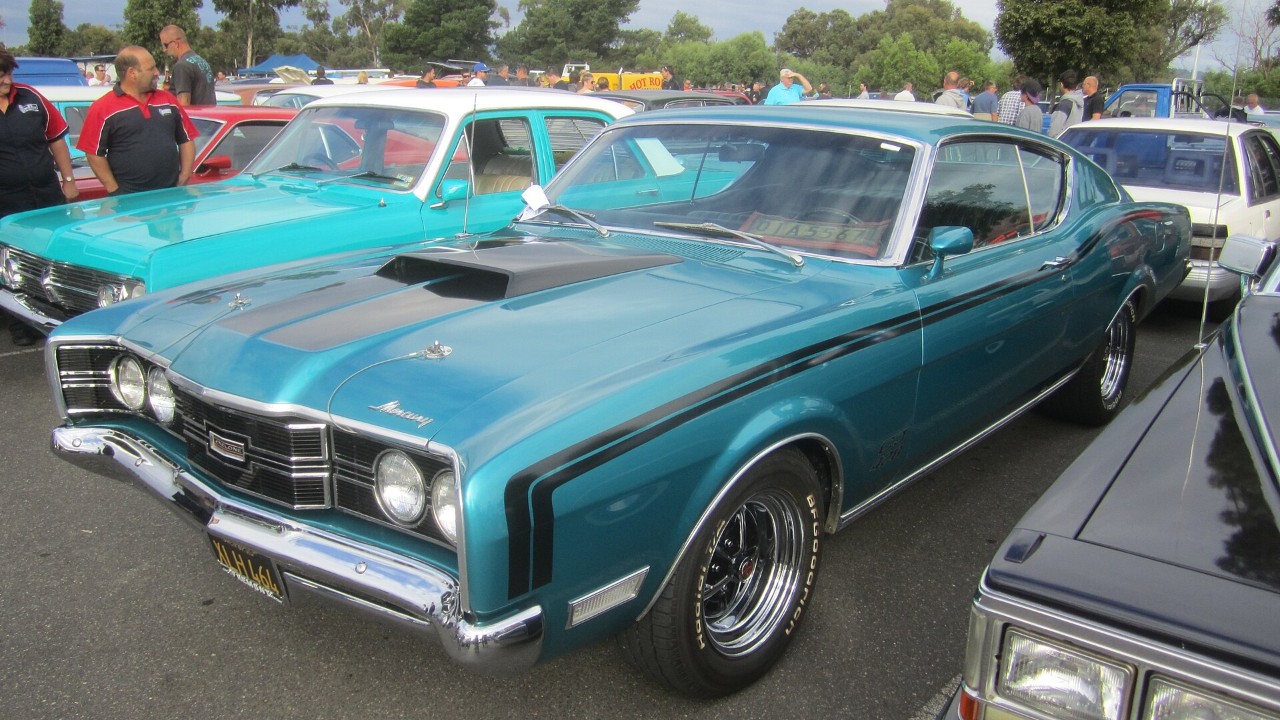
Mercury’s 1969 Cyclone CJ packed the same 428 Cobra Jet as the Torino, rated at 335 horsepower. A Ram Air option came with a 735 CFM Holley four-barrel. The CJ package also included a blacked-out grille, dual exhausts, a 3.50:1 axle, chromed engine dress-up parts, hood stripes and a competition handling package.
Production numbers show how scarce the CJ is. Mercury built 9,143 Cyclone-line cars for 1969. Of those, only 3,261 were Cyclone CJs, while 5,882 were standard Cyclones.
In our view, the Cyclone CJ is the Mercury side of the Torino’s Cobra Jet story, and it gets far less attention. If you find one, check for the CJ details listed above, because they separate a real one from a dressed-up base car. We rounded up the wider family in our list of Mercury muscle cars.
10. 1966 Dodge Coronet 500 convertible
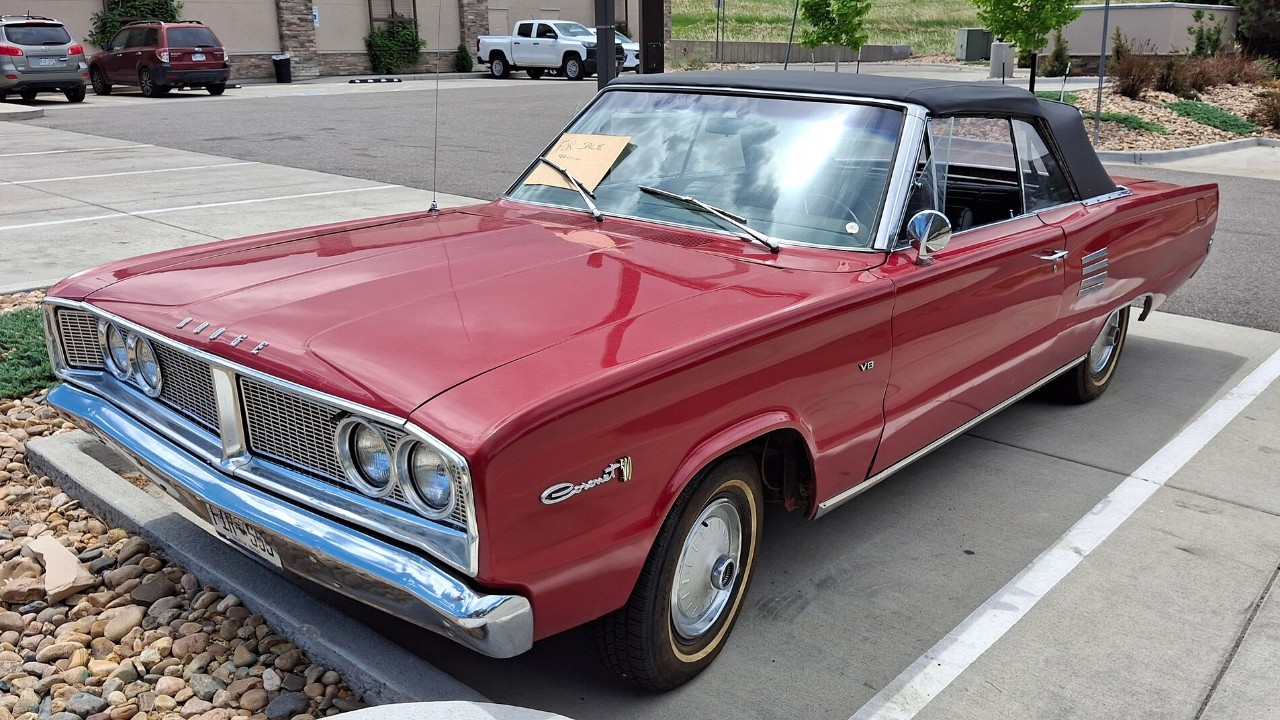
Dodge redesigned the Coronet for 1966, and that year it opened the door to the 426 Hemi. The Street Hemi became available to the general public for 1966. In fact, buyers could order it in any Coronet model or trim level.
The Coronet 500 sat at the top of that range. Dodge built 136 Coronet 500 Street Hemis for 1966.
Our take: the 1966 Coronet 500 convertible is the overlooked open Dodge of the Hemi’s first street year. True, it lacks the Charger’s fastback drama. Even so, a Coronet 500 convertible with a big engine is the kind of car most fans have only read about. We covered more of the family in our list of forgotten Coronets.
11. 1965 Buick Skylark Gran Sport coupe
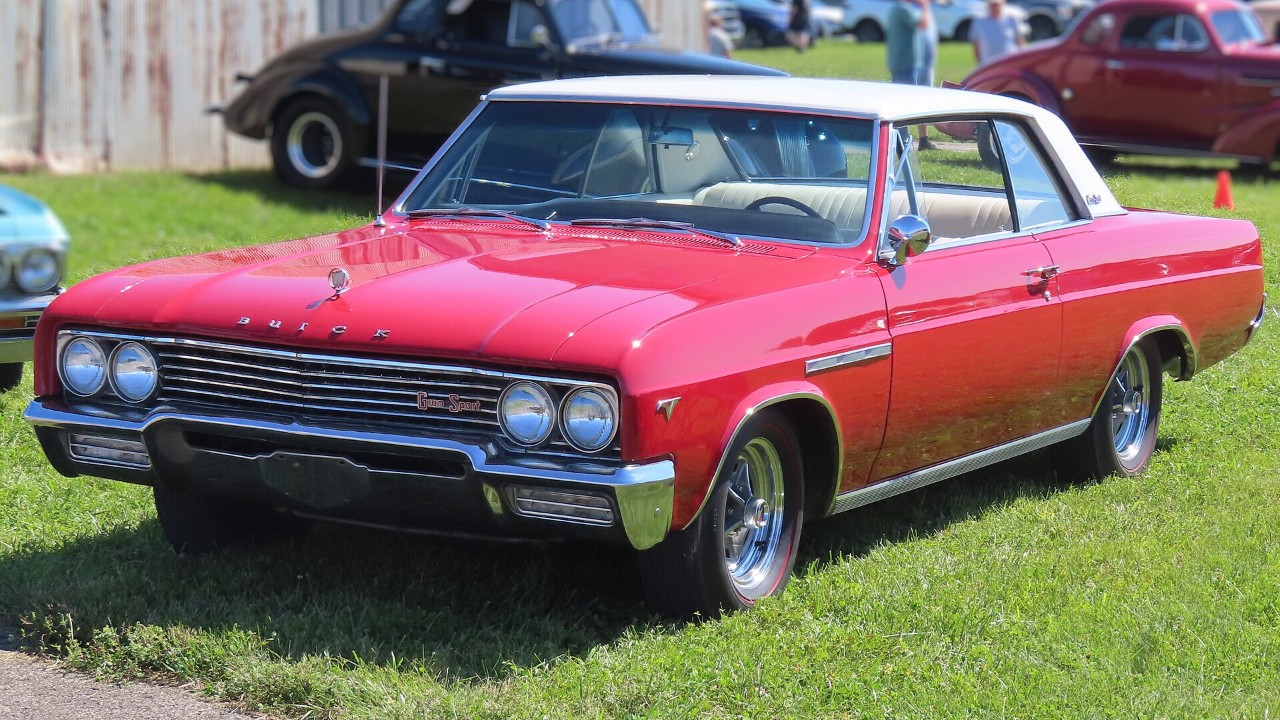
Buick introduced the Gran Sport in mid-1965 as an option on the Skylark. It came as a coupe, hardtop or convertible. Power came from a 401-cubic-inch Nailhead V8 with a Carter four-barrel, rated at 325 horsepower at 4,400 rpm.
The size of that engine caused a small problem. That’s because GM had a limit on engine size in its intermediate cars. So Buick listed it as 400 cubic inches in its sales literature. RM Sotheby’s described the option the same way, as a 400-cid, 325-hp V8.
In our view, the first Gran Sport is one of the most refined muscle cars of 1965, and one that few fans recognize. It also shows Buick’s quieter style of performance. At RM Sotheby’s Auburn Fall sale in 2015, a 1965 Gran Sport carried a $30,000–$35,000 estimate and did not sell.
12. 1970 Mercury Cyclone Spoiler 429
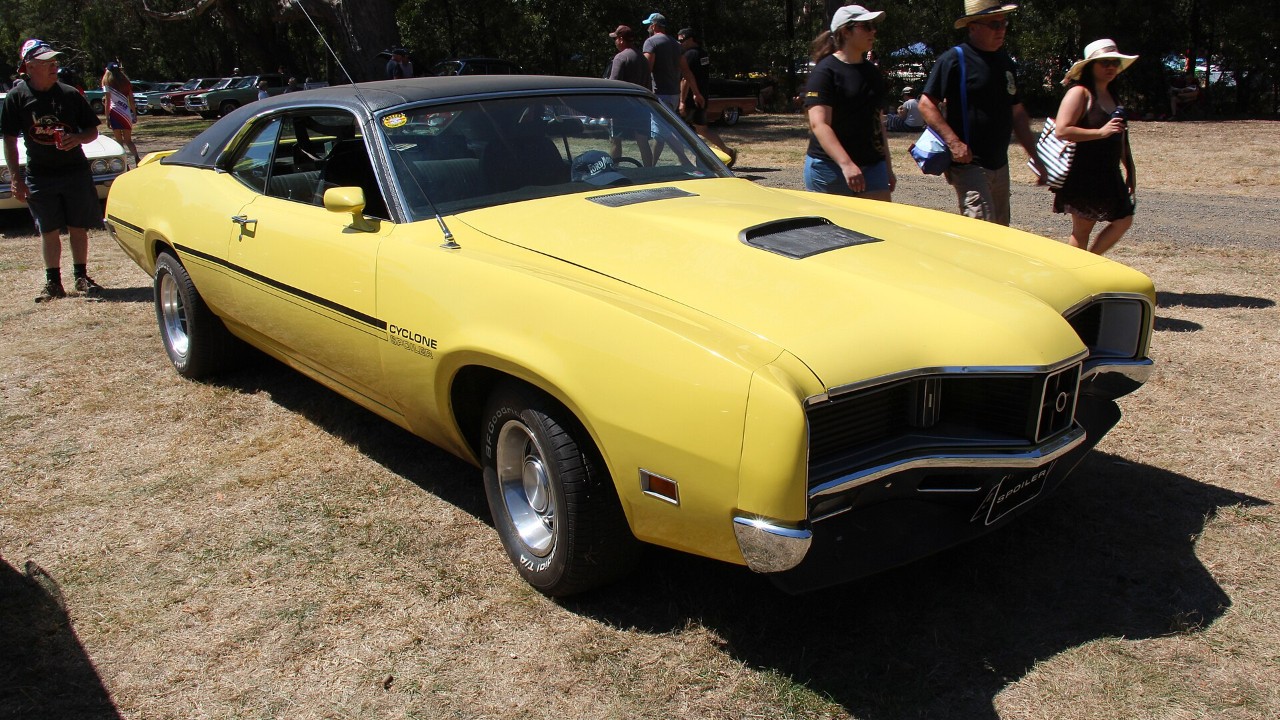
For 1970, Mercury’s Cyclone Spoiler came loaded. Its standard engine was the 429 Cobra Jet with Ram Air, fed through an integrated hood scoop. Meanwhile, front and rear spoilers, racing stripes and dual racing mirrors made it look the part.
Inside, the Spoiler got a 140-mph speedometer and a four-gauge cluster with an 8,000-rpm tachometer. It also had vinyl bucket seats and competition suspension. Mercury had planned to carry the earlier Spoiler II idea into 1970 with a more aggressive nose, but only one prototype was built.
Our take: the Spoiler is Mercury’s most complete muscle car, and very few people have seen one in person. Mercury built 1,631 Cyclone Spoilers for 1970.
More from Fast Lane Only