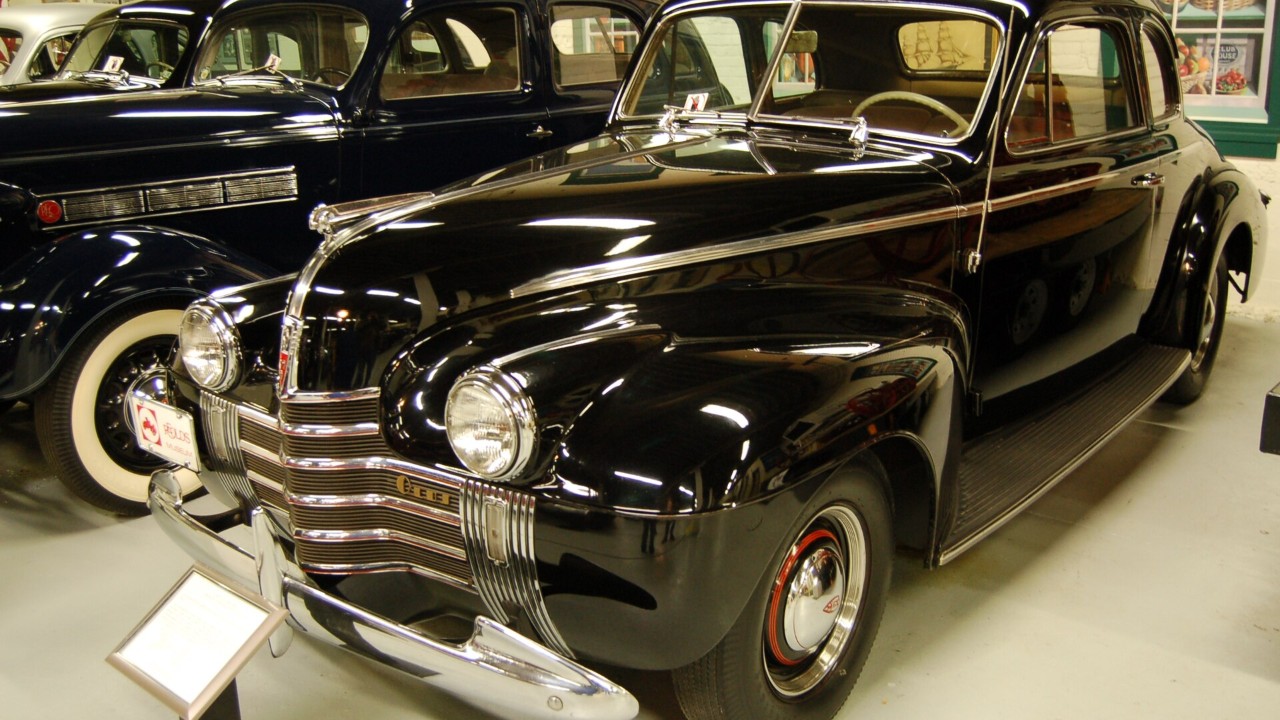
For the 1940 model year, an Oldsmobile buyer could pay $57 extra and skip the clutch pedal for good. That option was GM’s Hydra-Matic Drive, and it went on to become the first truly automatic transmission in volume production. Within two decades, GM had built millions of them, and the name had become shorthand for any automatic.
The Hydra-Matic did not appear overnight. Instead, it grew out of a program that started at Cadillac in 1932 and passed through a semi-automatic first try.
Here is how it worked, why it needed four speeds and how it spread from Oldsmobile to tanks, Lincolns and Rolls-Royces.
Before the Hydra-Matic
Cars had used planetary gears before. The Model T Ford, for example, had a two-speed planetary transmission. However, Mac’s Motor City Garage notes that it was not a true automatic as we know it. Preselector gearboxes from Hudson, Cord, Wilson and Cotal came closer, yet the driver still chose each gear.
GM’s own path began in 1932, when a team led by Earl Thompson started work at Cadillac. Thompson had already created Synchromesh. The program then moved to GM Central Research in 1936, according to Mac’s.
A halfway step came first. For 1937 and 1938, Oldsmobile and Buick offered the Automatic Safety Transmission. It used a similar planetary gear unit, but a friction-plate clutch took the place of a fluid coupling.
How the Hydra-Matic worked
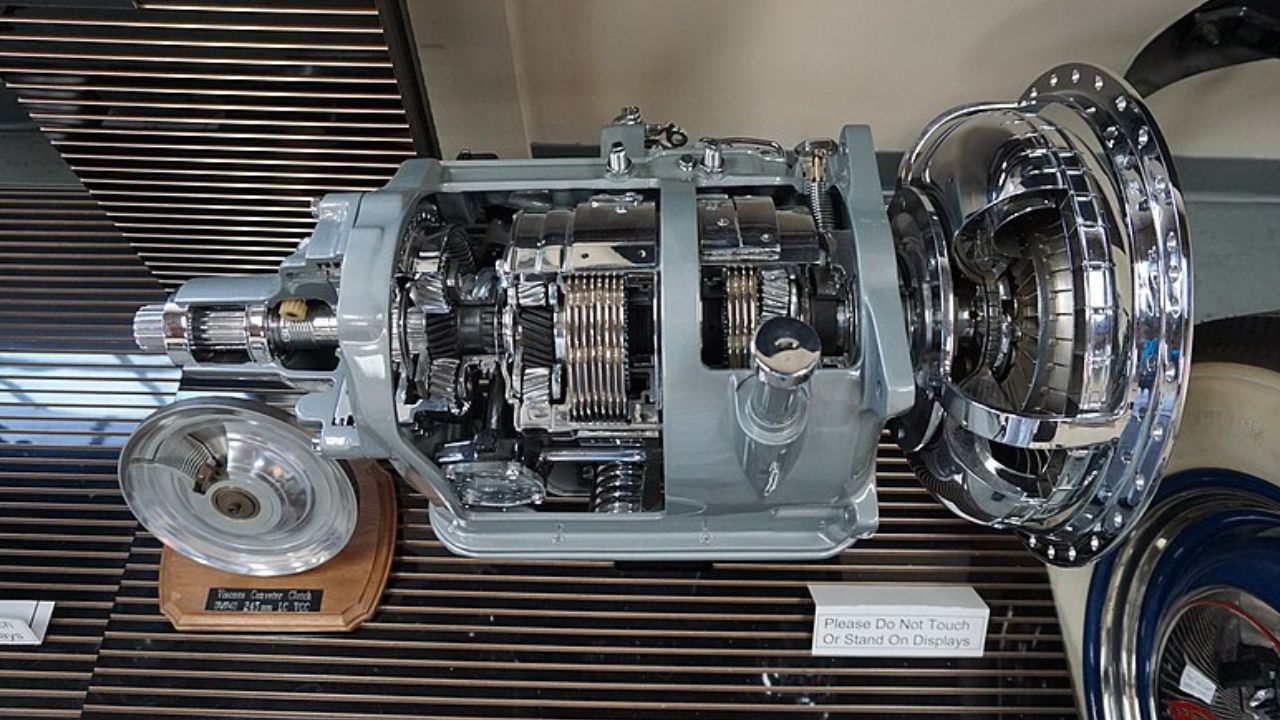
The finished design used three planetary gearsets to give four forward speeds and reverse. Clutches, bands and hydraulic pressure made the changes, so the driver never shifted once the car was moving. Mac’s lists the original ratios as 3.66:1, 2.53:1, 1.44:1 and 1.00:1.
Between the engine and the gears sat a straight fluid coupling. Unlike a torque converter, a coupling multiplies no torque, and its ratio is effectively 1:1. That is why the Hydra-Matic needed four forward gears rather than two or three, Mac’s explains.
The controls were simple. The original column indicator read “N-Hi-Lo-R” or similar, and there was no Park position. There was also no clutch pedal, which is what the $57 bought.
The $57 Oldsmobile option
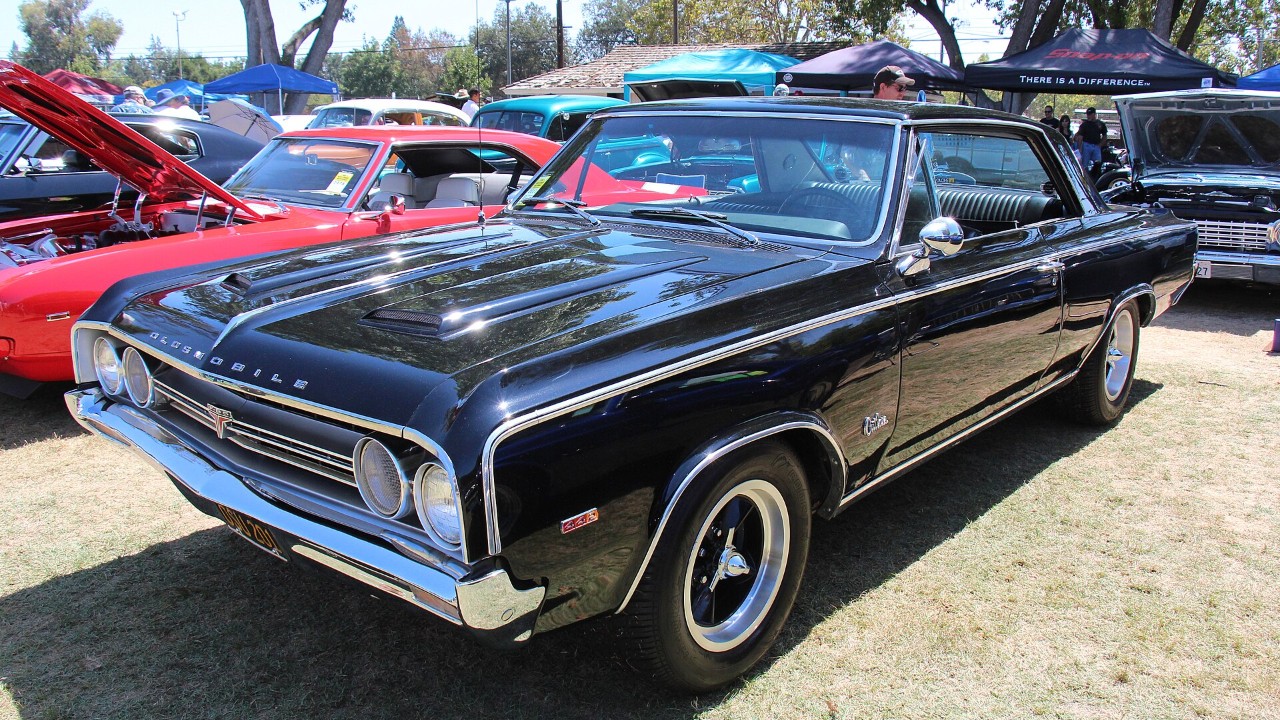
Oldsmobile received the first production units in October 1939 and offered the transmission for 1940, according to Curbside Classic. The site adds that Olds general manager Charles McCuen and chief engineer Harold Youngren gave the project engineering and testing support. Oldsmobile had no transmission plant of its own, so GM formed the Detroit Transmission Division in spring 1939 to build the units.
The price was modest. The Old Classic Car guide to the 1940 Oldsmobile lists the “Hydra-matic” two-pedal transmission as a $57 extra over the standard manual gearbox. Oldsmobile also kept it to itself for one year, which Curbside Classic calls a way to recognize Olds’ role in the project.
GM’s marketing aimed high. It called the transmission “the most important automotive advancement since the self-starter,” Mac’s reports.
From Cadillac to tanks
Cadillac became the second customer for 1941, with internal changes and greater torque capacity. Then the war intervened. Civilian production stopped in February 1942, according to Curbside Classic.
By 1943, GM had adapted the Cadillac version as the Hydra-Matic 250-T. It worked with Cadillac V8s in wartime light tanks and other military vehicles. Mac’s names the M5 Stuart and M24 Chaffee among the fighting vehicles that used versions of it.
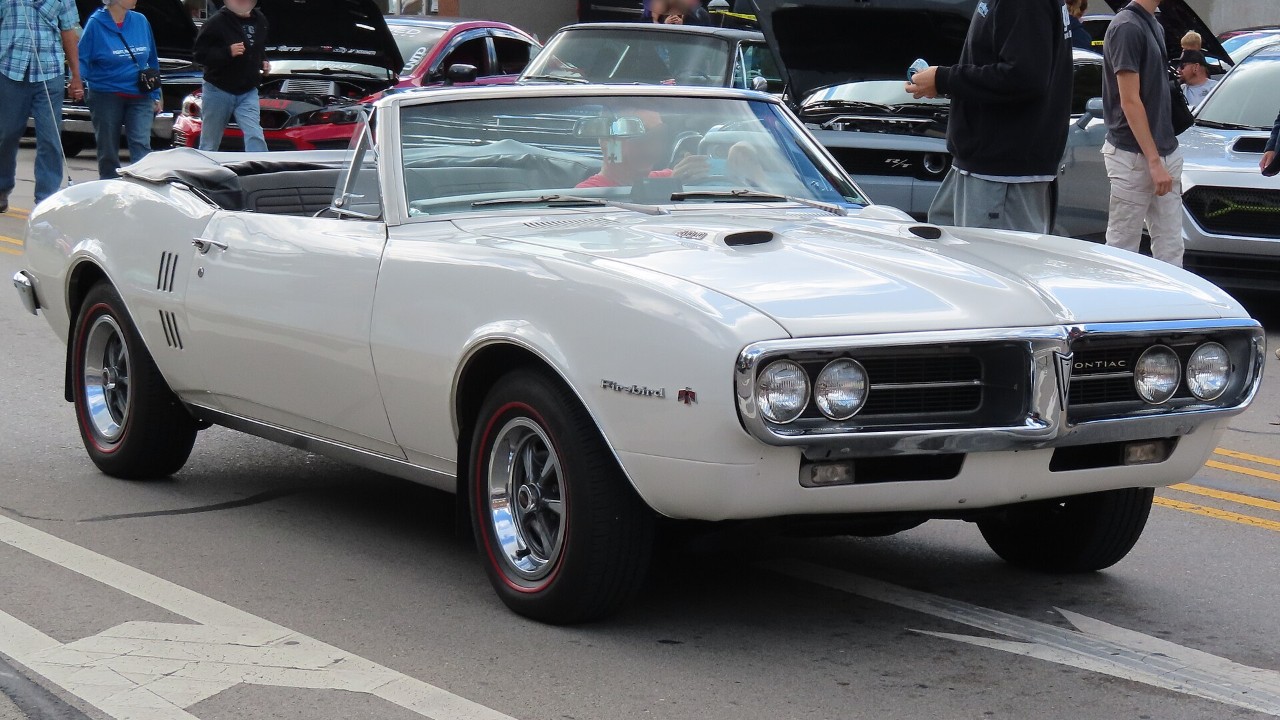
After the war, Pontiac decided in 1947 to offer the Hydra-Matic, and it became optional for 1948. Buick and Chevrolet, by contrast, chose to develop their own automatics, Dynaflow and Powerglide.
Rivals bought it too
Detroit Transmission also sold complete units to other makers. Curbside Classic lists Lincoln from 1949 to 1954, Nash from 1950 to 1957, Kaiser-Frazer from 1951, Hudson from 1951 to 1954 and Willys from 1953. Lincoln alone took 185,473 units, the site says.
The buyers reached Britain as well. Rolls-Royce bought 633 complete units, 305 in 1952 and 328 in 1953, before building its own version at Crewe. In a December 1955 Senate hearing, GM president Harlow Curtice said that “anyone in the industry who desired to purchase that transmission was given the opportunity to do so.”
What the Hydra-Matic left behind
The design had drawbacks. Mac’s says it was expensive to build, heavy because of its cast-iron case, and lacked a torque converter. Later, a major internal redesign for 1956 softened its harsh 1-2 and 2-3 upshifts.
Even so, the original line lasted 24 years, ending in 1964, according to Mac’s. GM renamed the Detroit Transmission Division the Hydra-Matic Division on October 1, 1963. By November 9, 1957, Curbside Classic reports, GM had built its 9 millionth passenger-car Hydra-Matic, and about 800,000 had gone to non-GM users.
More from Fast Lane Only
- Unboxing the WWII Jeep in a Crate
- 15 rare Chevys collectors are quietly buying
- 10 underrated V8s still worth hunting down
- Police notice this before you even roll window down
This article was created with the help of AI and was reviewed and edited by Fast Lane Only editors before publication.