Ken Miles was not just a skilled race car driver; he was a pivotal figure in the development of Ford’s performance legacy during the 1960s. His innovative approaches and relentless pursuit of excellence helped the Ford GT40 secure its place in racing history, particularly at the prestigious Le Mans.
Early Life and Career of Ken Miles
Born on April 1, 1918, in Sutton Coldfield, England, Ken Miles grew up in a family that had a profound appreciation for engineering and mechanics. His father, a successful engineer, encouraged Miles’ fascination with cars from a young age. By the time he was a teenager, Miles was already immersed in the world of motorsport, participating in local races with a strong passion for speed and performance. His early experiences behind the wheel instilled a deep understanding of vehicle dynamics and mechanics that would later serve him well in his career.
In the early 1950s, Miles made a significant career move by relocating to the United States. This transition proved to be a turning point in his racing journey. The burgeoning American motorsport scene presented him with new opportunities to showcase his talents. In America, he quickly gained recognition for his skills, racing in various formats, including sports car events and endurance races. His early achievements included notable performances in the SCCA and even winning the 1956 California Sports Car Club championship, which further solidified his reputation in the competitive racing landscape.
The Birth of the Ford GT40
The creation of the Ford GT40 was a monumental undertaking that aimed to challenge the dominance of Ferrari in endurance racing, particularly at Le Mans. In the early 1960s, Ford faced considerable pressure from automotive executives to develop a race car that could compete on the world stage. The challenge was not just technical; it was about creating a vehicle that embodied the spirit of American engineering and performance. This led Ford to seek the expertise of seasoned drivers and engineers, including Ken Miles, to help realize this ambitious dream.
Ken Miles’ involvement with the GT40 was integral to its development. His unique combination of racing expertise and engineering insight allowed him to provide invaluable feedback to Ford’s engineering team. Miles was not merely a driver; he was deeply engaged in the engineering aspects of the car’s design. He worked closely with the team to refine the aerodynamics and suspension systems, ensuring the car would not only be fast but also capable of handling the grueling demands of endurance racing. His input helped shape the GT40 into a formidable competitor, leading to a series of successful prototype tests and refinements.
Success at Le Mans
The 1966 Le Mans race marked a pivotal moment in motorsport history. Ford’s fierce rivalry with Ferrari had reached a climax, as the two automotive giants competed for supremacy on the world stage. Ken Miles was selected to drive one of the three Ford GT40s, and his deep understanding of the car’s capabilities was crucial. The race commenced with high stakes, and the pressure was palpable as both teams pushed their vehicles to the limits.
Miles employed a strategic approach during the race, balancing speed with tire management and fuel efficiency. His ability to navigate the complexities of the race allowed him to maintain a lead, and at one point, he was so far ahead that he was able to slow down and conserve fuel. However, a controversial decision by the Ford team resulted in a staged finish where Miles was asked to slow down to allow another GT40 to cross the finish line alongside him, creating a photo finish that showcased Ford’s dominance. While Miles crossed the finish line first, he was officially classified in second place. This moment, however, would not overshadow his significant contribution to Ford’s historic victory that day.
Legacy and Influence on Ford Performance
Ken Miles’ role in shaping Ford’s racing philosophy extended far beyond the 1966 Le Mans victory. His approach to racing emphasized the importance of engineering excellence, teamwork, and innovation. Miles believed that a successful race car should be a collaborative effort between drivers and engineers, a philosophy that Ford would carry forward in future performance vehicles. His relentless pursuit of perfection encouraged Ford to invest heavily in research and development for their race cars, setting a standard for performance that resonated throughout the company.
The GT40’s legacy is evident in Ford’s performance models that followed. Cars like the Ford Mustang and the Ford GT have roots in the design and engineering principles established during the GT40 era. The spirit of competition and innovation that Miles embodied continues to influence Ford’s approach to performance engineering, ensuring that every vehicle produced carries a piece of that legacy. Additionally, posthumous tributes to Miles, including his induction into the Motorsports Hall of Fame, reflect the lasting impact he had on the world of racing and automotive engineering.
The Cultural Impact of Ken Miles and the GT40
Ken Miles’ story has captured the imagination of many, and his legacy reached a new audience through the film “Ford v Ferrari.” The film dramatizes the intense rivalry between Ford and Ferrari, highlighting Miles’ crucial role in the development and success of the GT40. While some artistic liberties were taken, the film successfully showcased Miles as a dedicated and innovative driver whose contributions were instrumental in Ford’s racing history. This portrayal has contributed to a renewed interest in both his story and the remarkable achievements of the GT40.
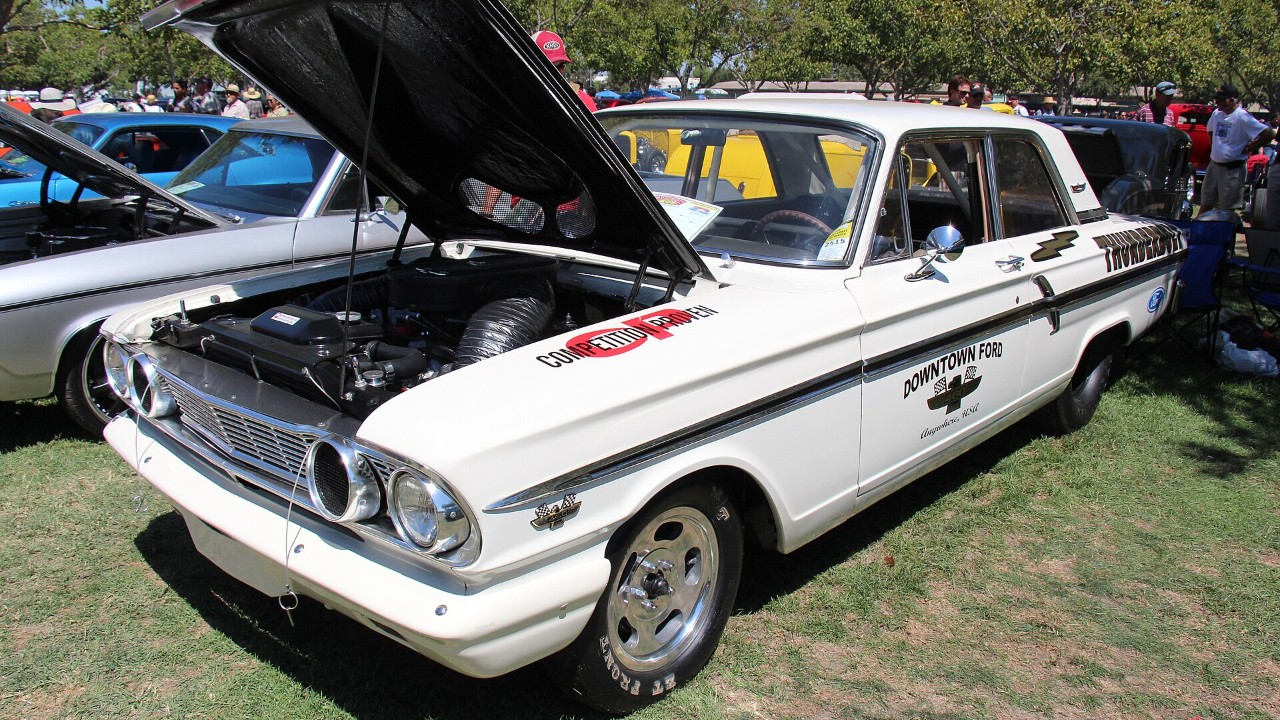
Beyond cinema, Ken Miles’ influence in motorsport culture remains profound. His commitment to excellence and his technical acumen have inspired a new generation of racers and automotive enthusiasts. Events celebrating Ford’s racing history, such as the Carlisle Ford Nationals, honor the legacy of the GT40 and the men who made it remarkable. These gatherings not only pay tribute to the vehicles but also to the spirit of competition and innovation that Miles epitomized.
The Enduring Legacy of Ken Miles
Ken Miles stands as a symbol of Ford’s racing spirit, embodying the dedication and innovation that continue to inspire future generations of racers. His approach to performance and engineering remains relevant in Ford’s current lineup, as seen in vehicles like the modern Ford GT, which pays homage to its predecessor while incorporating cutting-edge technology and design. The principles Miles championed during his career—teamwork, relentless pursuit of excellence, and the importance of engineering—remain integral to Ford’s philosophy today.
As we look at the evolution of performance vehicles over the decades, it becomes evident that Ken Miles’ influence extends beyond just one race or one car. His legacy is woven into the very fabric of Ford’s history and continues to inspire automotive innovation. Whether through the roar of an engine on the racetrack or the sleek lines of a modern sports car, Miles’ spirit lives on, reminding us of the incredible feats that can be accomplished when passion and engineering come together.
More from Fast Lane Only
- Unboxing the WWII Jeep in a Crate
- 15 rare Chevys collectors are quietly buying
- 10 underrated V8s still worth hunting down
- Police notice this before you even roll window down
*Research for this article included AI assistance, with all final content reviewed by human editors.