The 1953 Hudson Super Jet arrived at a moment when American buyers were just starting to flirt with compact cars, yet it never quite caught the wave it was supposed to ride. Instead of rescuing an independent automaker under pressure from Detroit’s giants, it became a case study in how good intentions, muddled design choices, and boardroom stubbornness can sink a promising idea. Looking back, I see a car that was mechanically sound and even overbuilt, but strategically out of step with the market it needed to win.
Hudson’s shrinking window for a small-car gamble
By the early fifties, Hudson was already living on borrowed time, and that context shaped everything about the Super Jet. The company’s famous “step-down” sedans had been revolutionary in 1948, with low centers of gravity and great handling, but by the time the Jet was on the drawing board those big cars were aging fast. Several facelifts and trim tweaks could not hide that the basic design was nearly six years old, and Hudson’s financial situation was becoming grim as sales slipped.
That pressure pushed executives toward a compact, which they hoped would open a new segment and bring in buyers who found the big “step-down” cars too bulky. There really was, as one modern commentator puts it, a moment in American automotive history when a small car could have rewritten the script for an independent brand, and the Super Jet was supposed to be that moment. A detailed video on why the 1953 Jet did not connect with American buyers underscores how narrow that window was, and how badly Hudson needed the car to hit the bull’s-eye rather than just land on the target.
When boardroom tastes overruled the designers

On paper, Hudson had the right idea: a compact sedan with solid engineering and a reputation for toughness. In practice, the project was hamstrung from the start by internal politics and the tastes of one man at the top. From the beginning, Hudson president A. E. Barit, who was 63 years old in 1953, interfered heavily with the Jet’s development. Accounts of the program describe how Barit overruled stylists and engineers, insisting on a tall roofline so passengers could wear hats in the car and pushing for conservative, upright proportions that made the compact look stubby rather than sleek.
That kind of top-down meddling might have been survivable if the rest of the package had dazzled shoppers, but it left the Super Jet looking oddly formal at a time when buyers were gravitating toward lower, longer shapes. A retrospective on the car’s short, sad story notes that when the Jet finally arrived, it did not light the fires of traditional Hudson customers, and its pricing missed the mark as well. In other words, Barit’s conservative instincts produced a compact that looked old-fashioned yet cost too much to lure budget-minded buyers away from the Big Three.
Outgunned in a changing performance race
Even if the styling had been sharper, the Super Jet was fighting a powertrain war that Hudson was poorly equipped to win. The company had built its reputation on strong inline sixes, especially in the big Hornet, but by the early fifties the market’s attention was shifting to V8 engines. A thoughtful analysis of the 1953 Hudson Hornet points out that Another common argument among historians is that Hudson’s refusal to invest in a V8 left it at a serious disadvantage, even as the Hornet itself reached a kind of engineering peak.
That gap was not just theoretical. Commentators like Jay Leno have been blunt, saying that Hudson’s big problem was that they never developed a V8, and that this reluctance contributed directly to the company’s eventual failure. The Super Jet inherited that strategic blind spot. It relied on a sturdy but conventional six at a time when even family sedans from rivals were starting to tout eight-cylinder power, and that made the compact feel like a compromise rather than a bold new direction.
A compact that was tough, but not tempting
Ironically, the Super Jet’s greatest strength was one most buyers never got to appreciate: it was built like a little tank. Taxi operators who did take a chance on the car discovered that it could soak up abuse that would have killed flimsier compacts, and some cabs reportedly racked up extraordinary mileage. A modern video on the 1954 Jet describes how, even at 104 HP and in hard Nov taxi duty, the car shocked drivers with its durability, to the point that some called it indestructible after logging half a million miles.
Yet that toughness did not translate into showroom buzz. The Jet was not dramatically cheaper than larger rivals, and it lacked the styling flair that might have made buyers overlook its modest size. One detailed history of the compact notes that, Despite the launch of the Jet, total compact sales for 1953 were almost unchanged from the previous year, suggesting that the car did little to expand the market. With its late introduction and conservative looks, it was already long in the tooth by Detroit standards almost as soon as it arrived.
Styled for yesterday in the middle of a price war
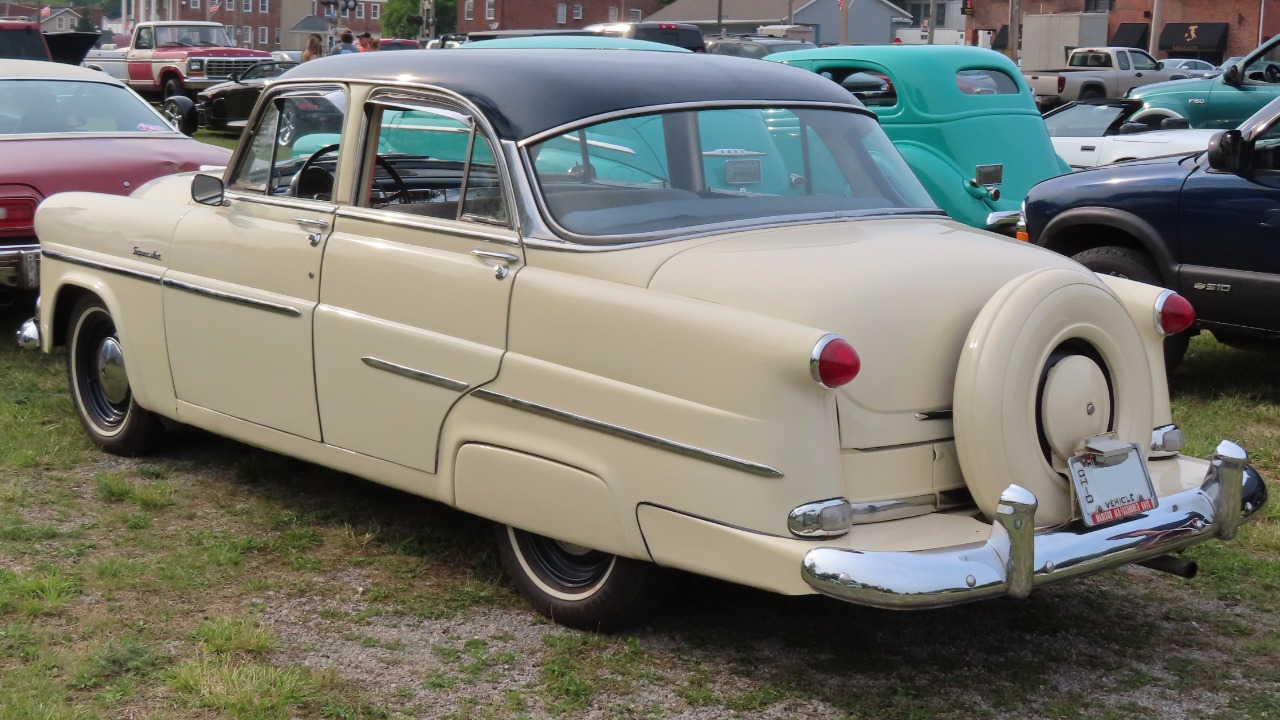
When I look at period photos of the Super Jet, what jumps out is how ordinary it appears next to contemporary Fords and Chevrolets. The car was shorter than a full-size Ford, but it did not project the kind of modern, aspirational image that might have made downsizing feel like an upgrade. One close reading of the 1954 model points out that, aside from being about a foot shorter than the Ford, the Hudson had the misfortune to debut in the middle of a brutal price war and has since been cited as one of the more disastrous executive decisions in automotive history.
That timing mattered. The Big Three were slashing prices and piling on incentives, which meant a buyer could often step into a larger, more powerful car for not much more money than a Jet. A retrospective on the model’s flameout notes that when the Apr compact finally hit showrooms, its price positioning missed the mark and it failed to ignite interest among traditional Hudson shoppers. In a market where style and perceived value were everything, the Super Jet ended up looking like a plain, slightly expensive answer to a question most buyers were not asking.
The moment that slipped away
In hindsight, the Super Jet feels less like a bad car and more like a misdirected effort at exactly the wrong time. There really was a brief opening for a well executed compact to carve out a niche, and the Dec analysis of why the Jet did not connect makes clear how close Hudson came to seizing it. Instead, the company poured scarce resources into a small sedan whose styling was dictated by a 63 year old executive, whose powertrain strategy ignored the rising V8 tide, and whose pricing left it squeezed between economy buyers and mainstream shoppers.
By the time the dust settled, the Super Jet had not saved Hudson, and the company soon disappeared into merger and memory. Looking back, I see the car as a symbol of an independent automaker that understood engineering but misread the emotional and economic currents of its era. The Super Jet was tough, honest, and in some ways ahead of its time as a compact, yet it missed its moment because the people guiding Hudson could not, or would not, align design, performance, and price with what American drivers actually wanted.
More from Fast Lane Only: