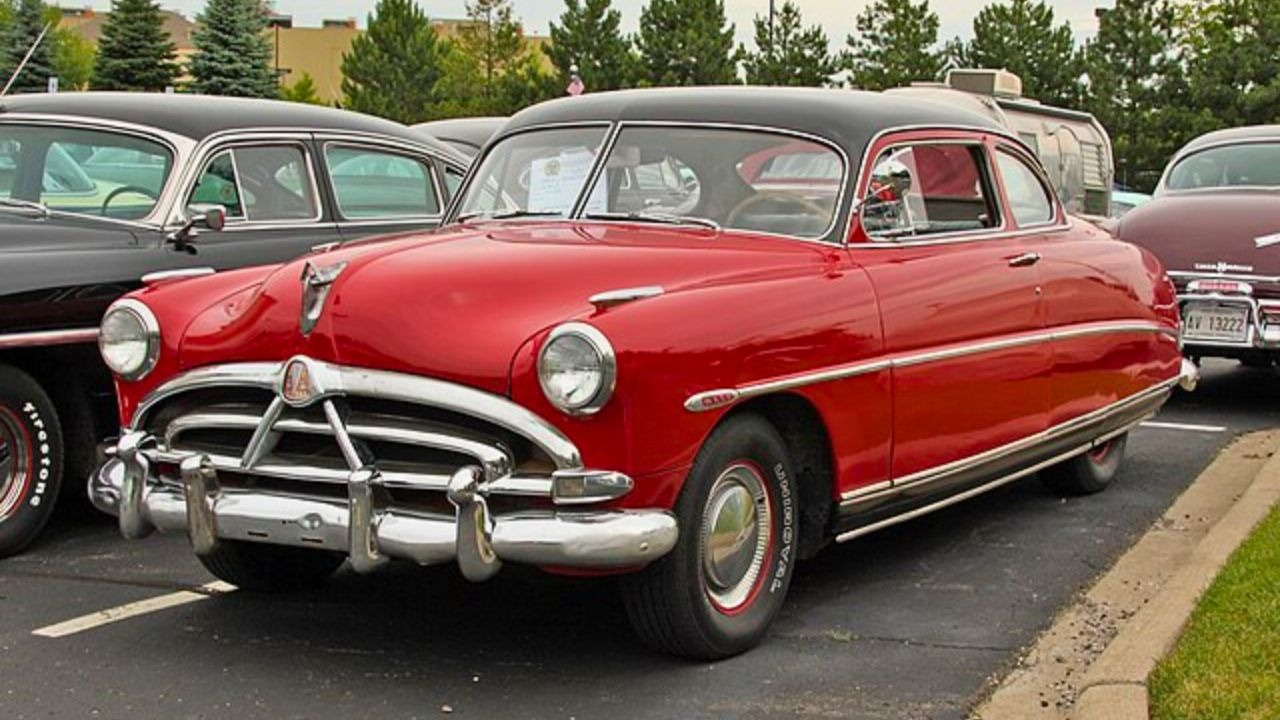
The 1952 Hudson Wasp arrived at a moment when American buyers were being pulled in two directions, toward big-engine bravado and toward sensible family transport. Rather than pick a side, Hudson tried something bolder, using the Wasp to blend the brand’s racing-bred engineering with a body and price that aimed squarely at the middle of the market. In that mix of performance and practicality, I see one of the more quietly important cars of the early 1950s.
From Pacemaker to “junior Hornet”
Hudson did not create the Wasp out of thin air. The company took the existing Hudson Pacemaker and turned it into a more ambitious model, introducing The Wasp as the Series 58 for the 1952 model year to sit just below the flagship Hornet. By reworking the Pacemaker’s formula rather than starting over, Hudson for the could offer a car that shared the low, road-hugging “step-down” chassis and much of the big car’s presence, while keeping weight and cost in check, a balance that already hinted at the Wasp’s dual mission as both performer and sensible buy. That positioning as a kind of junior companion to the Hornet is clear in period descriptions that cast the Wasp as a natural “mate” to the larger car, rather than a stripped-down budget special.
The strategy made sense given where Hudson stood at the time. When the Hudson Motor Car Company launched the Hornet in September of 1950, the response was immediate and intense, with More sales and racing success than the company had seen in years, and that momentum shaped everything that followed. As one account of When the Hudson Motor Car Company mapped out its lineup in the early 1950s, the Hornet’s popularity was so strong that it effectively pulled the rest of the range upmarket, leaving room for a slightly smaller, slightly cheaper car that still felt like part of the same family. The Wasp stepped into that space, using the same basic architecture but with a more modest engine and trim, which allowed Hudson to chase volume without abandoning the engineering that had made the Hornet famous.
Racing halo, real-world restraint
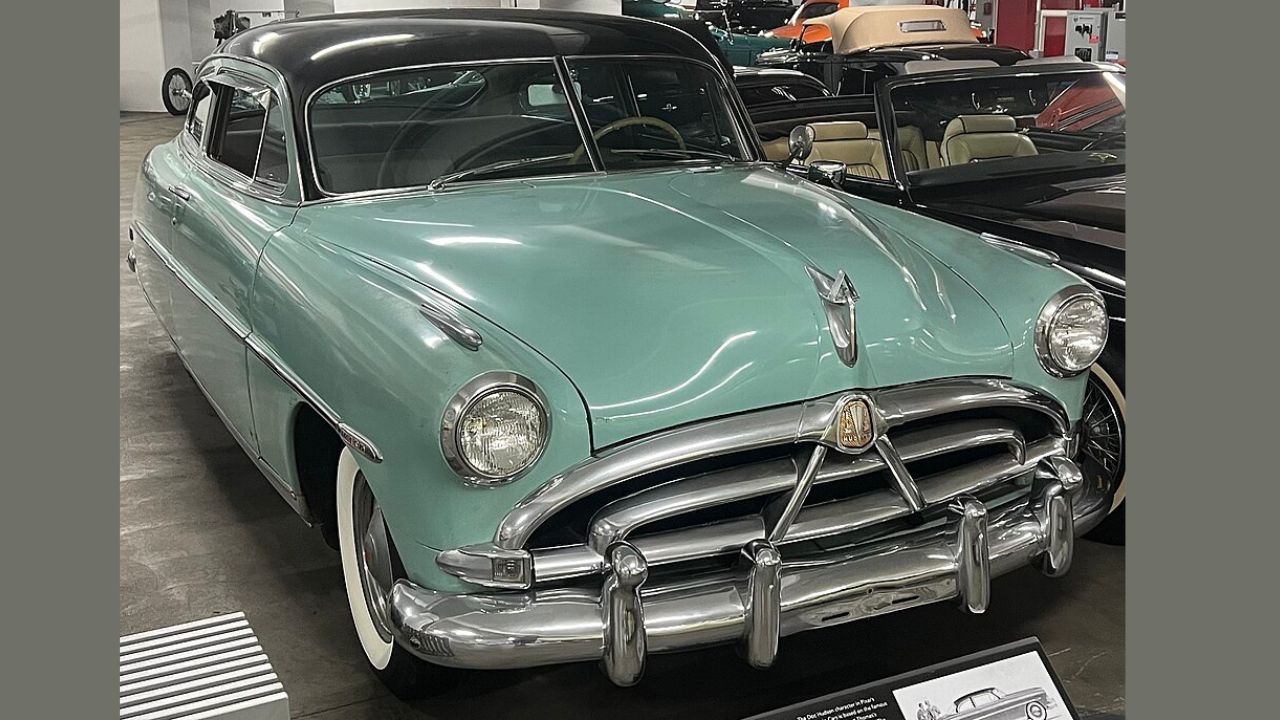
Hudson’s performance reputation in 1952 was not theoretical. That year, the company’s step-down Hornets dominated stock car racing, winning 27 of 34 NASCAR events and turning the brand into a fixture at American tracks. I see that record as crucial context for understanding the Wasp, because it meant buyers walking into a Hudson showroom were already primed to associate the low-slung chassis and big-fendered styling with on-track success. Even if the Wasp itself was not the car taking checkered flags, it traded on the same silhouette and engineering philosophy, giving everyday drivers a taste of the same stability and cornering that made the Hornets such formidable competitors.
Under the skin, though, the Wasp was tuned for a different kind of life. Under the big round hood sat a 262ci L-headed inline 6-cylinder engine making 127 horses, a specification that put it well below the Hornet’s full racing tune but still comfortably ahead of many family sedans of the day. That output, combined with the step-down floor and relatively low center of gravity, gave the Wasp enough punch to feel lively on the highway without demanding the fuel or maintenance of a full-bore performance car. In my view, that is where the car really bridged the gap: it borrowed the chassis and attitude of a racer, then paired them with an engine and gearing that made sense for commuting, road trips, and the occasional spirited run rather than for living at the ragged edge.
Design that looked fast and rode soft
Even standing still, the Wasp carried itself like a car that wanted to be driven. The long, low proportions of Hudson’s step-down body gave the roofline a sleek, almost custom look, and the fenders flowed into the doors in a way that made the whole car seem to sit closer to the pavement than its rivals. When I watch period footage, including a Jun walkaround of a similar 1952 Hudson Hornet Twin H model that shares the same basic body, I am struck by how modern the stance still feels, with the beltline low enough to give excellent visibility and the cabin tucked neatly between the wheels. That design did more than flatter the eye; it reduced aerodynamic drag and helped the car feel planted at speed, both of which mattered to buyers who had heard about Hudson’s exploits on the track.
Yet the Wasp was not some stripped-out hot rod. Inside, the car offered wide bench seats, generous legroom, and a ride tuned to soak up the broken pavement of postwar America. Contemporary descriptions of the Wasp’s role in the lineup emphasize that Customers were meant to like to ride in the glamorous new Hudson Wasp, a car that could serve as a taxi or police vehicle precisely because it combined durability with comfort. In a period catalog that pitched the WASP for Taxi and Police duty, the company highlighted how Here was a car that could run all day, carry a full load of passengers, and still project a bit of style at the curb. That dual personality, looking fast while riding soft, helped the Wasp appeal to families and fleet buyers who wanted something more interesting than a bare-bones workhorse.
From family sedan to Hollywood cool
Over time, the Wasp’s blend of usability and flair caught the eye of more than just commuters and cab companies. One of the most vivid examples is a Hudson Wasp Two that belonged to actor Steve McQueen, a Door Brougham that has drawn attention as it heads to auction with Sotheby in Hershey, Pennsylvania. The car’s connection to McQueen, a figure so closely associated with automotive cool, underscores how the Wasp’s understated lines and low-slung stance could resonate with enthusiasts who had their pick of more overtly glamorous machinery. I read that as a kind of retroactive validation of Hudson’s original bet: build a car that feels special to drive and live with, and it may age into something more desirable than its sales numbers ever suggested.
The collector market has taken notice. Guides that answer Common Questions such as How much a 1952 Hudson Wasp is worth today point out that value depends heavily on condition, originality, and whether the car carries rare options like the higher-performance intake setups. Auction listings for a 1952 Hudson Wasp Twin H-Power Two Door Brougham in Hershey show how a well-presented example with the right mechanical specification can command serious attention from bidders. Meanwhile, Wasp enthusiasts have highlighted how the car provided buyers with Hudson engineering in a more accessible package, with one account noting that Meanwhile the Wasp gave buyers much of what made the Hornet special while broadening Hudson’s market appeal during its most successful years. When I look at those trajectories together, from family sedan to Hollywood-owned collectible, I see a car that quietly accumulated cultural capital by being good at everything rather than spectacular at just one thing.
Why the Wasp still matters to drivers today
For modern enthusiasts, the Wasp’s appeal goes beyond nostalgia. The car represents a particular philosophy of engineering that feels surprisingly contemporary: use a rigid, low-slung platform to improve handling and safety, then pair it with an engine that is strong enough to be fun but not so thirsty or temperamental that it becomes a burden. That is the same balance many of us look for now when we weigh a hot hatch against a full-on sports car, and it is striking to see how clearly Hudson was already working that equation in 1952. The fact that the Wasp grew out of the Pacemaker and sat just below the Hornet in the Series 58 range shows how carefully the company tried to cover the spectrum from economy to performance without losing its identity.
When I picture a 1952 Wasp today, I do not just see a museum piece. I imagine it in mixed traffic, its low roofline and broad fenders still standing out among crossovers, its 127 horsepower inline-six humming along at a relaxed cruise, and its cabin full of people who appreciate that a car can be both interesting and sensible. The stories that tie the Wasp to NASCAR glory, to taxi ranks, to Steve McQueen’s garage, and to present-day auction blocks all point in the same direction. This was a car that refused to choose between speed and thrift, glamour and work, and in doing so it carved out a place in automotive history that feels more relevant, not less, as we keep trying to reconcile performance with everyday life.
More from Fast Lane Only: