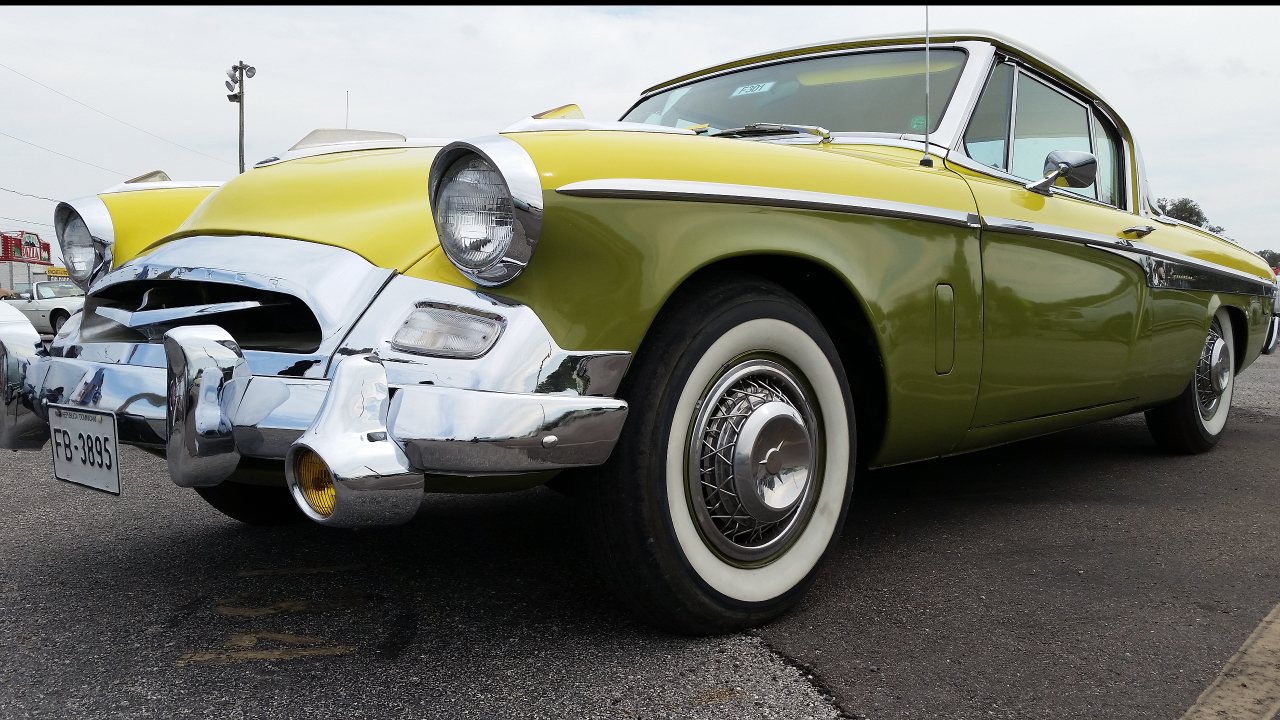
The 1955 Studebaker President Speedster was not just another mid‑century hardtop, it was a calculated attempt to buy glamour at a moment when the company’s survival depended on standing out. In a market dominated by General Motors and Ford, Studebaker tried to turn a single, highly trimmed model into a rolling billboard that said the brand could still be stylish, fast and aspirational. The Speedster’s story is really about how far a smaller automaker could push image when the underlying business realities were already tilting against it.
Studebaker’s shrinking space in Detroit’s spotlight
By the mid‑1950s, Studebaker was fighting for attention in a marketplace that increasingly revolved around the annual spectacle staged by General Motors and Ford. Those giants constantly unveiled models that captured the public’s imagination, using lavish styling cycles and big‑budget marketing to keep buyers focused on their showrooms. Studebaker, with far fewer resources and a smaller dealer network, could not match that cadence, so it leaned on distinctive design and niche variants to stay visible while the volume leaders set the tone for the rest of the industry.
In that context, the President Speedster was conceived as a halo car, a way to inject excitement into the Studebaker name without the cost of a full model line overhaul. Rather than trying to out‑produce the big two, the company tried to out‑flair them with a single, eye‑catching hardtop that would sit at the top of the President range. The Speedster’s mission was to suggest that Studebaker still belonged in the same aspirational conversation as the flashiest offerings from General Motors and Ford, even if the sales numbers told a more modest story, a tension that would define the car’s short life.
From Loewy’s clean coupe to chrome‑heavy statement
The Speedster’s visual drama only makes sense when set against the cleaner, earlier Studebaker coupes that had made the brand a design leader. Although the Speedster had more chrome than the first 1953 for which Raymond Loewy has been given the credit, it still relied on the same basic proportions that had made those earlier cars look low and wide compared to other Detroit iron. Where the 1953 design emphasized smooth, almost European restraint, the 1955 Speedster layered brightwork and color contrasts on top of that shape to meet a mid‑decade appetite for flashier, more extroverted cars.
I see the Speedster as Studebaker’s attempt to reconcile its design‑forward heritage with the louder visual language that was sweeping showrooms. The company did not have the luxury of a clean‑sheet body, so it turned to trim, paint and detailing to create a new personality on a familiar shell. The result was a car that looked more ornate than Loewy’s original vision but still carried its low roofline and sleek stance, a compromise that tried to keep existing fans while courting buyers who were being dazzled by the chrome‑laden offerings from larger rivals.
Luxury cues and performance promises in one package
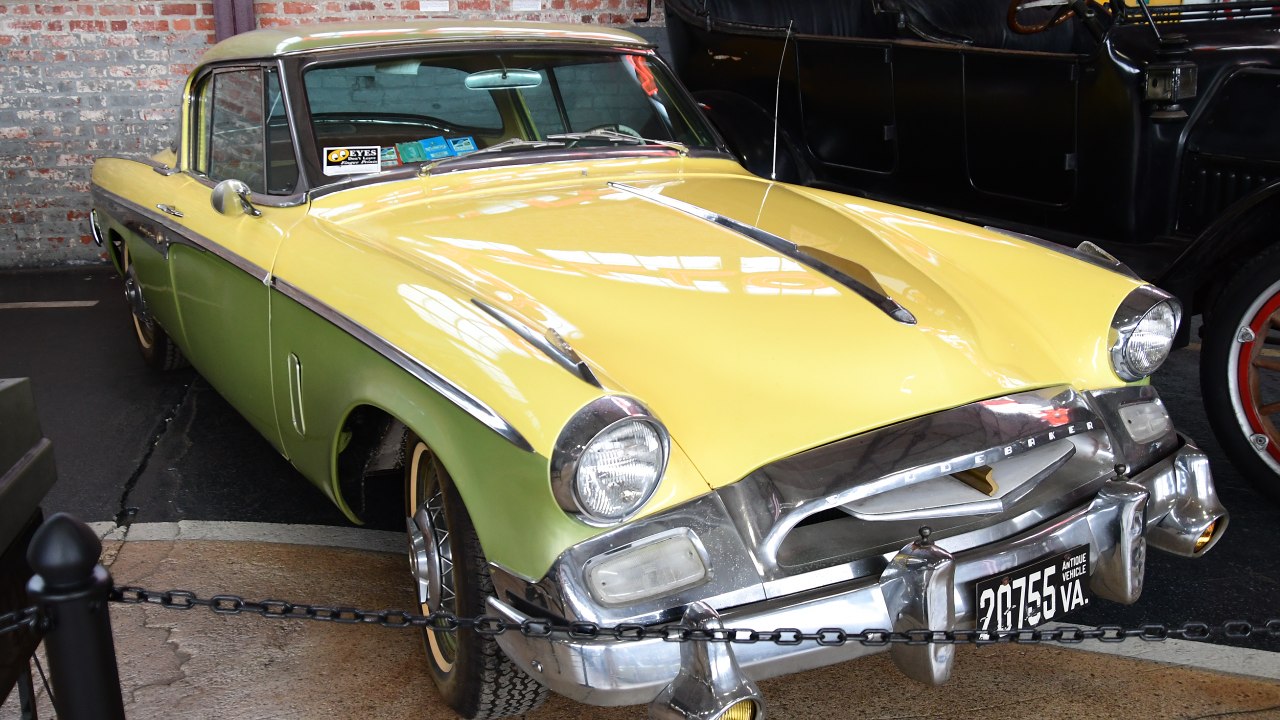
Studebaker loaded the President Speedster with visual and tactile cues that signaled luxury in the mid‑1950s, because the car’s job was to project status the moment it rolled into a driveway. Two‑tone and even tri‑tone paint schemes, heavy side moldings and a distinctive grille treatment turned the body into a moving piece of advertising. Inside, the company leaned on rich upholstery, elaborate dashboards and prominent badging to make sure occupants felt they were in something more special than a standard President, even though the underlying structure was shared.
Performance was just as important to the image the Speedster was supposed to sell. By pairing its upscale trim with a strong V‑8 and highway‑friendly gearing, Studebaker tried to position the car as both a luxury cruiser and a credible high‑speed machine. I read that combination as a deliberate attempt to echo the dual‑purpose appeal that the big manufacturers were cultivating in their own premium models, where comfort and speed were marketed as inseparable virtues. The Speedster’s specification sheet was meant to reassure buyers that they were not sacrificing capability for style, even if the car’s real task was to draw people into showrooms rather than dominate sales charts.
Why the Speedster’s image play was short‑lived
For all its visual flair, the President Speedster arrived in the middle of a competitive storm that a single halo model could not calm. General Motors and Ford were not only refreshing styling at a rapid pace, they were also expanding their lineups and using aggressive pricing to lock in brand loyalty. In that environment, Studebaker’s strategy of concentrating its boldest ideas into one high‑trim hardtop left the rest of its range looking comparatively ordinary, which limited the broader impact of the Speedster’s presence on the showroom floor.
I also see a structural problem in how the car’s image ambitions outpaced the company’s ability to sustain them. A halo model works best when it is part of a clear, multi‑year plan to evolve both design and engineering, but Studebaker was already under financial pressure and could not guarantee that kind of continuity. The Speedster’s heavy use of chrome and special trim made it expensive to build relative to its likely volume, and once the initial novelty faded, it was hard to justify the extra complexity when the core business needed simpler, more profitable cars. The model’s short run reflects that mismatch between what it symbolized and what the company could realistically support.
The Speedster’s legacy in hindsight
Looking back, I view the 1955 Studebaker President Speedster as a vivid snapshot of a company trying to style its way out of a structural disadvantage. The car distilled Studebaker’s strengths, a willingness to take design risks and to build low, sleek bodies, while also revealing its vulnerabilities in the face of the relentless product cycles driven by General Motors and Ford. Its chrome‑laden reinterpretation of a Raymond Loewy era shape shows how even a design‑savvy independent felt compelled to chase the louder visual trends of the mid‑1950s to stay relevant.
That tension is what gives the Speedster its enduring fascination. It did not rescue Studebaker’s market share, and its production numbers remained modest, but it captured the company’s determination to project confidence at a time when the odds were stacked against it. When I look at the car today, I see less a failed product and more a bold, if ultimately unsustainable, attempt to use one glamorous hardtop to keep an entire brand in the public imagination. Its brief life underscores how difficult it was for smaller automakers to compete in an era defined by the marketing muscle and constant novelty of Detroit’s largest players, even when they built something as striking as the President Speedster.
More from Fast Lane Only: