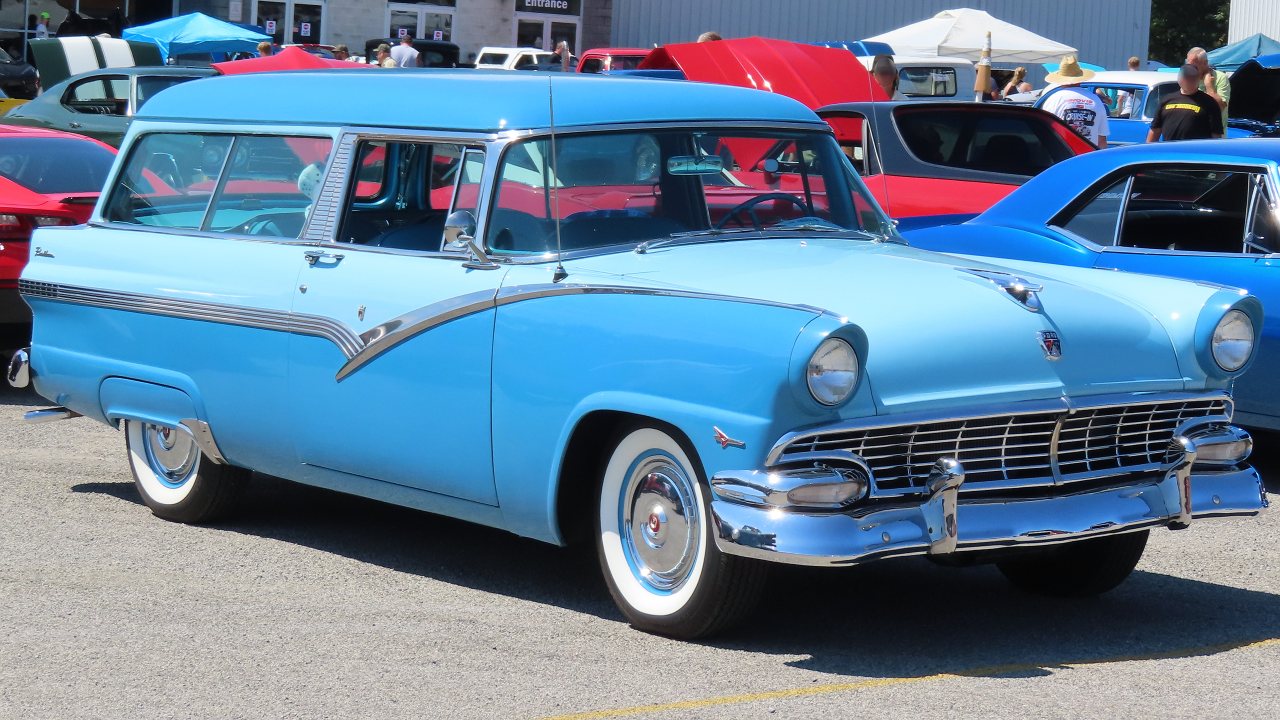
In 1956, Ford tried something audacious with a station wagon. The company took the practical two-door Ford Ranch Wagon and dressed it with Fairlane-level trim, turning a family hauler into a near-luxury style statement that blurred the line between utility and prestige. The result, the 1956 Ford Parklane, lasted only a single model year, yet it captured a moment when Detroit was testing how far glamour could stretch into everyday transportation.
By pairing upscale details with a workhorse body, the Parklane anticipated later crossovers that promise both comfort and capability. It was marketed as a wagon for buyers who wanted the flash of a top-line Fairlane without giving up the cargo space and versatility of a traditional longroof. That tension between practicality and polish is what makes the Parklane such a revealing artifact of mid‑1950s automotive culture.
Ford’s one-year experiment in premium practicality
From the start, the Parklane was conceived as a short, sharp experiment rather than a long-running nameplate. The Model overview describes The Parklane as a two-door station wagon that shared its bodyshell with the Ford Ranch Wagon, which meant Ford did not need to engineer an all-new platform to test the idea of a premium wagon. Instead, the company could bolt luxury cues onto a familiar shell and see whether buyers would pay extra for style in a segment usually defined by function. That decision kept costs in check while letting Ford move quickly in response to rivals.
Under the skin, the Parklane remained closely tied to the Ford Ranch Wagon, but its mission was very different. Reporting on the car notes that The Parklane was based on the omnipresent Ford Ranch Wagon, yet it was equipped with Ford’s top-end Fairlane goodie list, from bright trim to upgraded interior materials that mainstream wagons did not receive. By combining the Ranch Wagon’s basic structure with Fairlane-level equipment, Ford created a hybrid that sat above its workaday wagons without quite becoming a separate luxury brand. The Parklane’s single-year run underscores how experimental that positioning was, a test of whether American families were ready to treat the family wagon as a status symbol.
Chevy Nomad rivalry and the push upmarket
The Parklane did not emerge in a vacuum. It was Ford’s direct answer to Chevrolet’s stylish Nomad, a car that had shown there was a market for wagons that looked as good at the country club as they did at the supermarket. Analysis of Ford’s strategy notes that the company was aggressive in pitching the Parklane as a fashionable alternative, even showcasing it in a two-page spread in Life magazine in June of that year to underline its aspirational appeal. By stepping into the same two-door, premium-wagon niche, Ford signaled that it would not cede the emerging “sport wagon” image to Chevrolet.
Where the Nomad leaned heavily on its hardtop-inspired roofline and dramatic rear styling, Ford’s counterpunch was subtler but no less intentional. The Parklane’s body was still that of a Ford Ranch Wagon, yet the addition of Fairlane-level trim, distinctive side moldings, and upscale interior touches pushed it into the same visual conversation as Chevrolet’s halo wagon. Contemporary accounts of Ford’s marketing show how the company framed the Parklane as a wagon that could stand alongside the Nomad in style while offering Ford’s own brand identity and mechanical familiarity. In that sense, the Parklane was less a copy and more a parallel attempt to redefine what a family wagon could represent.
Fairlane luxury in a working wagon shell
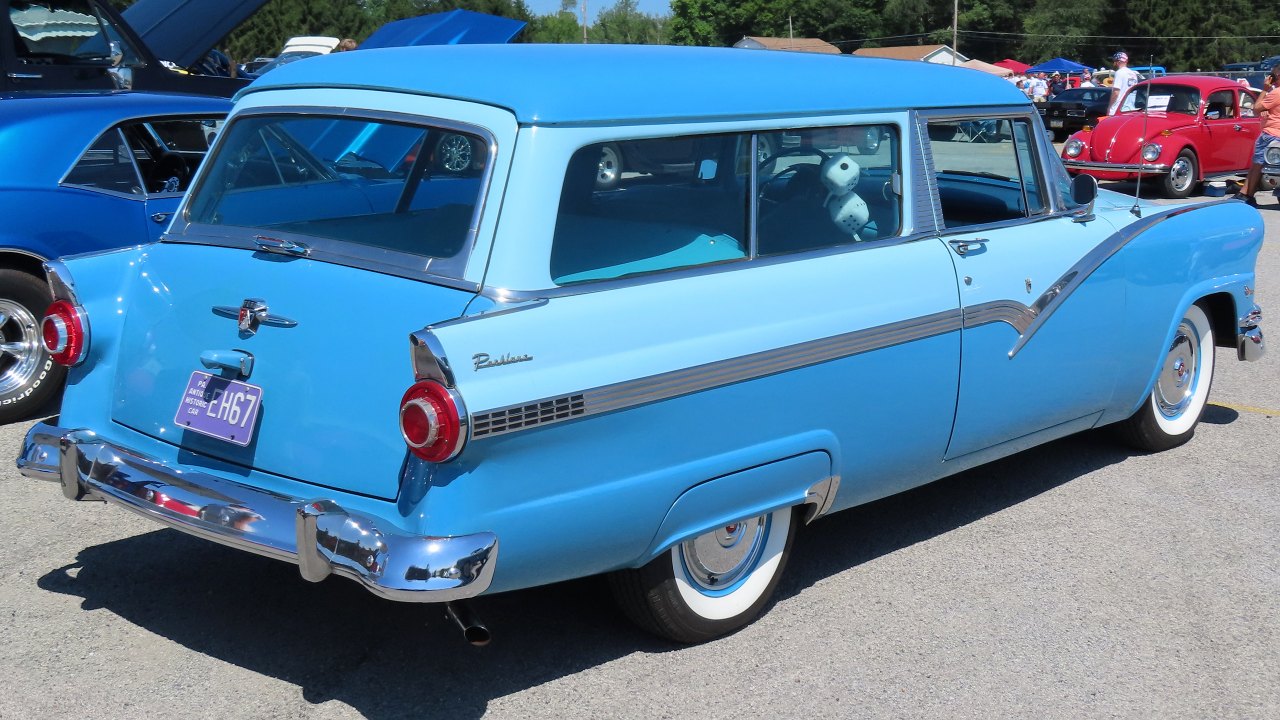
The Parklane’s most striking innovation was how thoroughly it imported Fairlane luxury into a body that buyers associated with basic family duty. Reports on the car emphasize that The Parklane carried Ford’s top-end Fairlane goodie list, which meant bright exterior trim, richer upholstery, and more elaborate interior detailing than the standard Ford Ranch Wagon. This equipment mix gave the Parklane a visual and tactile presence closer to Ford’s flagship sedans than to its fleet-oriented wagons, signaling to buyers that they were stepping into something special even if the silhouette remained familiar.
That strategy depended on the shared architecture with the Ford Ranch Wagon, which the Model overview confirms as the foundation for The Parklane. By starting with the Ranch Wagon bodyshell, Ford could focus its investment on trim, materials, and features rather than structural changes. The result was a wagon that looked and felt more expensive without requiring a ground-up redesign. In practice, that meant chrome flourishes, upgraded interior fabrics, and Fairlane-style ornamentation that transformed the cabin from a purely utilitarian space into something closer to a mid‑century living room on wheels. The Parklane thus became a showcase for how far cosmetic and comfort upgrades could elevate a mainstream platform.
Design details that made the Parklane feel special
Beyond its equipment list, the Parklane’s design details did much of the work in blurring the line between wagon and luxury car. Period descriptions highlight how Ford used two-tone paint, sweeping side moldings, and carefully placed brightwork to give The Parklane a more tailored look than the standard Ford Ranch Wagon. These touches echoed the styling language of the Fairlane, visually tying the wagon to Ford’s top-tier models and reinforcing the idea that this was not just another family hauler. Even parked, the Parklane projected a sense of occasion that most wagons of the era lacked.
Inside, Ford continued that theme with appointments that went beyond what buyers expected in a utility vehicle. Accounts of surviving cars describe upgraded upholstery patterns, additional chrome accents, and trim pieces that created a more cohesive, upscale environment. The Model overview notes that specific trim and equipment were fitted to the model line, underscoring that The Parklane was treated as a distinct offering rather than a simple option package on the Ford Ranch Wagon. By paying attention to these details, Ford made the Parklane feel like a wagon for buyers who wanted to enjoy a bit of Fairlane glamour every time they loaded groceries or luggage into the back.
Legacy of a short-lived luxury wagon
Although the Parklane lasted only a single model year, its influence can be seen in how automakers later approached the idea of premium practicality. The experiment of grafting Fairlane-level luxury onto the Ford Ranch Wagon bodyshell showed that there was at least a niche audience for wagons that looked and felt more expensive than their utilitarian roots. Enthusiast coverage of The Parklane often notes how collectors today value its blend of rarity, distinctive trim, and everyday usability, a combination that mirrors the appeal of later high-spec wagons and crossovers. In that sense, the Parklane anticipated a market where buyers expect their family vehicles to deliver comfort and style alongside cargo space.
The car’s brief run also underscores the limits of that mid‑1950s experiment. While Ford could efficiently create The Parklane by starting with the Ford Ranch Wagon structure and layering on Fairlane features, the narrow two-door wagon format and higher price point constrained its audience. The Model overview’s emphasis on the shared bodyshell hints at how closely the car remained tied to a body style that was already beginning to give way to four-door wagons and, eventually, different family vehicle formats altogether. Yet the Parklane’s willingness to challenge expectations, to make a station wagon feel like a near-luxury object, remains its most enduring contribution to automotive history.