The 1964 Pontiac GTO did not arrive as a grand corporate moonshot. It slipped into showrooms as a clever option package on a sensible midsize, then rewrote American performance culture almost by accident. By stuffing big power into an everyday body and pricing it within reach of young buyers, Pontiac created a template that would define the muscle car era.
What made that first GTO so disruptive was not just speed, but the way it bent internal rules, marketing expectations, and even magazine tests to prove a point. I want to trace how a single model year, born from quiet rule‑bending inside General Motors, ignited a “supercar war” and reshaped what Detroit thought a family car could be.
The rule-bending idea that slipped past GM
The GTO started life as a subversive engineering project, not a standalone model. Pontiac was officially the performance division inside General Motors, but corporate policy limited engine size in midsize cars, which meant the LeMans was not supposed to get a full‑size V8. Engineers and product planners got around that by turning the GTO into an option package, so on paper it was still a LeMans, even as it carried a large displacement engine that broke the spirit of the rules. Internal accounts describe how the package was quietly added to the order sheet, then left to dealers and enthusiasts to discover.
That sleight of hand mattered because it let Pontiac test the market without asking permission from cautious executives. The GTO name itself was credited to John DeLorean, who borrowed the badge from Italian racing to give the option an aura of competition credibility. Marketers then leaned into that image, with figures like Wangers pushing for bold publicity stunts, including a comparison test that pitted a GTO against European performance cars in Car and Driver. By the time corporate leadership realized how far the project had gone, the car already had a reputation as a street‑legal hot rod hiding in a family‑car shell.
How a family car became a street brawler
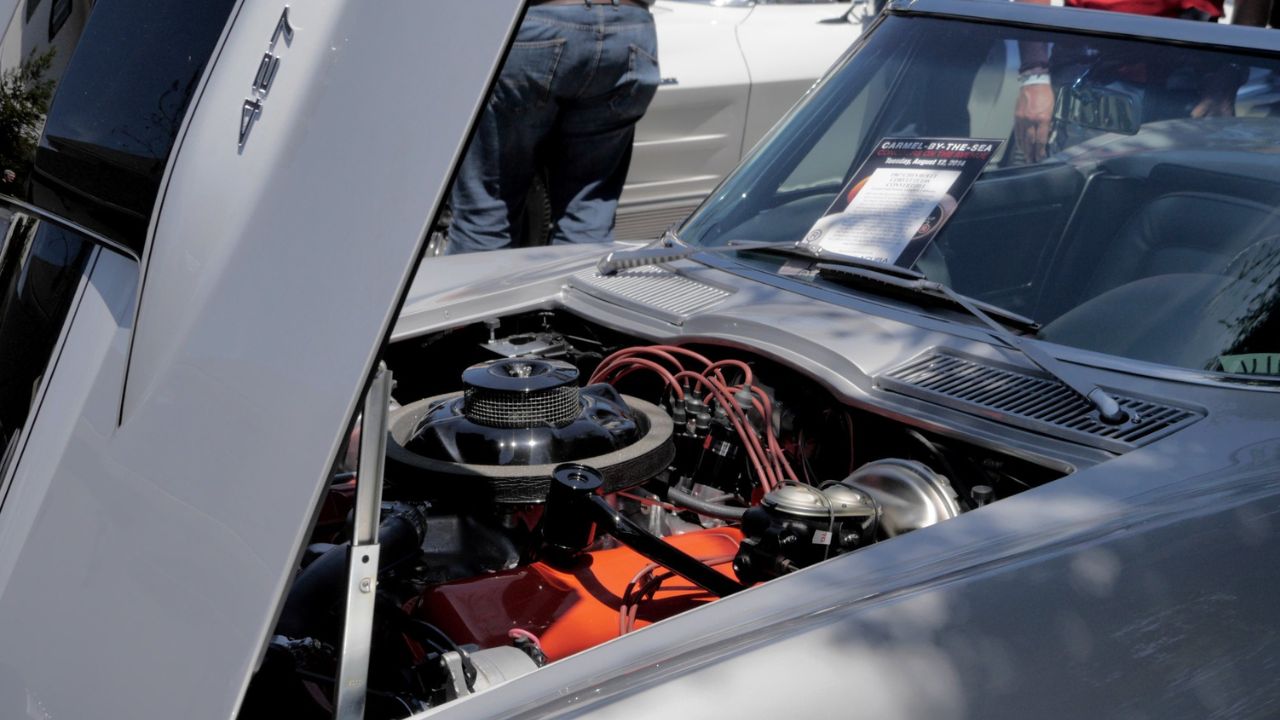
At its core, the 1964 Pontiac GTO was a simple formula: big engine, modest body, and just enough comfort to keep it livable. The car used a midsize chassis that could still carry a family, but under the hood sat a 389 cubic inch V8 that transformed its character. In performance trim, that 389 could be ordered with a Tri Powered setup, three two‑barrel carburetors feeding the engine for serious power and a distinctive intake roar. Contemporary coverage emphasized that this combination, in a relatively light package, could deliver acceleration that rivaled far more expensive sports cars.
What made the package so potent was that it did not require buyers to sacrifice everyday usability. The GTO could be had as a hardtop or convertible, with options like a pushbutton AM radio, extra‑cost tachometer, center console, and even optional seat belts that reflected the era’s gradual shift toward safety. The ignition switch sat on the left side of the dash, a small quirk that enthusiasts still point out, while a factory Hurst shifter gave the manual transmission a precise, mechanical feel. Period‑correct restorations show how owners could build a car that looked like a regular LeMans from a distance, yet behaved like a street brawler when the light turned green.

Pricing the revolution at $295
The genius of the GTO was not only mechanical, it was financial. Pontiac priced the GTO option at $295 over a base LeMans, a figure that opened serious performance to a new generation of buyers. For a few hundred dollars, a customer could transform a sensible midsize into a car that could outrun many dedicated sports machines. That price point was crucial, because it targeted younger drivers who wanted speed but could not afford exotic imports or full‑size luxury performance models.
That relatively modest surcharge also gave dealers a powerful sales tool. A shopper who walked in looking for a practical family car could be shown how a small bump in monthly payments would deliver a GTO‑spec LeMans instead of a plain one. Internal marketing framed the Pontiac GTO as a muscle car, a term that would soon define an entire segment, and the low entry cost helped turn curiosity into volume. As word spread, the GTO became a gateway for performance‑hungry fans who might otherwise have settled for something slower, proving that there was a large, underserved market for affordable American horsepower.
From dealership surprise to “supercar war”
Once the GTO hit showrooms, its impact spread quickly through Detroit. Accounts from a Pontiac dealership in suburban Detroit describe customers who arrived looking for a practical car and left with a GTO after a test drive revealed how different it felt from a standard LeMans. The car’s mix of comfort and raw acceleration created a new kind of showroom theater, where salespeople could demonstrate tire‑spinning launches on nearby roads. That experience, repeated across the country, turned the GTO into a word‑of‑mouth phenomenon that far outpaced its modest origins as an option code.
Competitors took notice. Following the GTO, Pontiac and other divisions inside General Motors, along with rival brands, rushed to field their own big‑engine midsize models, triggering what enthusiasts now call the 1960s supercar war. The GTO’s immense popularity by the mid‑1960s showed that performance could be a volume business, not just a niche. As more manufacturers joined the fight, horsepower figures climbed, styling grew more aggressive, and the idea of a muscle car became a central part of American automotive identity. The GTO deserves the utmost respect in that story, because it proved that a rule‑bending experiment could reshape an entire industry.
Why the 1964 GTO still defines “muscle”
Looking back, I see the 1964 GTO as the car that crystallized what people now mean when they say “muscle car.” It was not the first powerful American vehicle, but it was the first to combine a large displacement V8, a midsize body, accessible pricing, and youth‑oriented marketing into a coherent package. Later models would add more power and flash, yet the original GTO’s balance of everyday practicality and straight‑line speed set the pattern others followed. When enthusiasts argue that the Pontiac GTO was the world’s first muscle car, they are really pointing to that combination of traits, rather than any single performance number.
The car’s legacy also lives on in the way modern manufacturers think about performance trims. The idea that a relatively ordinary sedan or coupe can be transformed into a halo product with a stronger engine, sportier suspension, and a few visual cues traces directly back to what Pontiac did with the GTO option. Even decades later, when I see a contemporary performance package marketed as a modest upcharge on a mainstream model, I recognize the same logic that once priced the GTO at $295 over a LeMans. The 1964 Pontiac GTO did not just create a new kind of car, it created a business model that still shapes how performance is sold today.