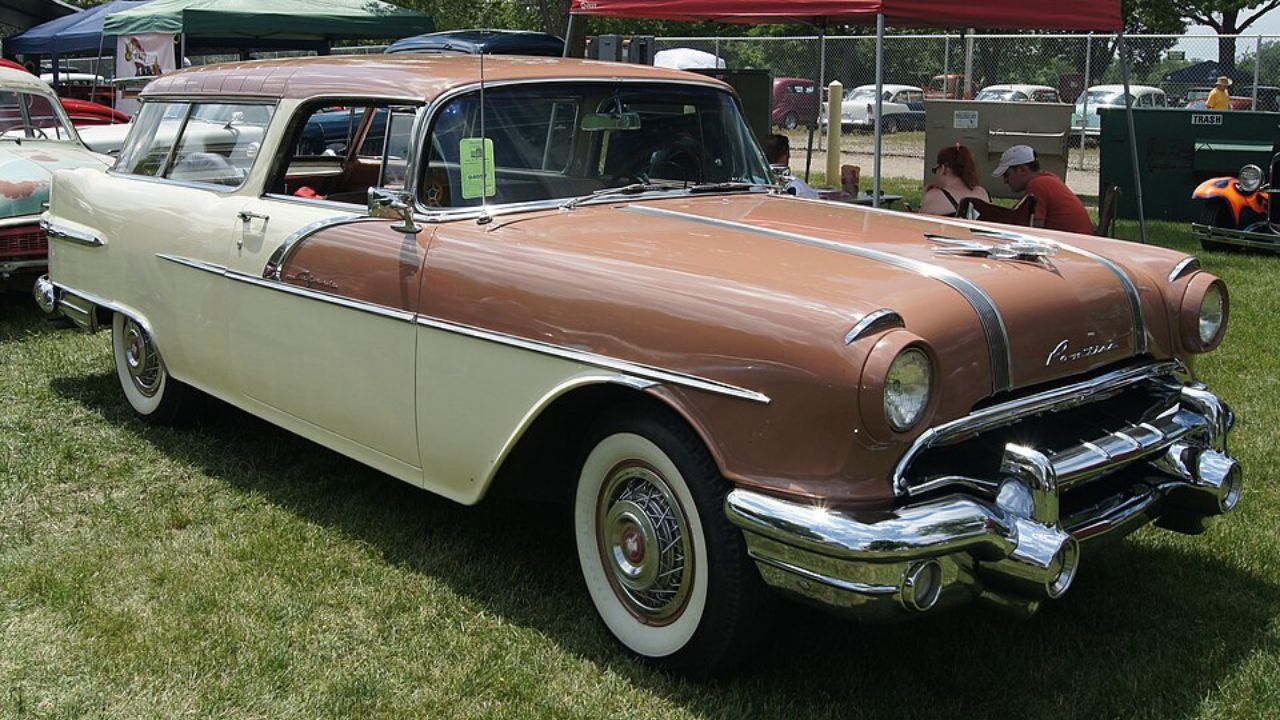
The 1956 Pontiac Safari did something few family haulers had managed before it: it made the station wagon look like the car you wanted, not just the car you needed. By wrapping utility in chrome, color and performance hardware, Pontiac turned a practical body style into a style statement that could sit proudly next to any coupe or convertible in the driveway.
From workhorse to status symbol
When I look at the 1956 Pontiac Safari, I see a deliberate attempt to pull the wagon out of the realm of delivery vans and into the world of aspirational cars. Instead of treating the long roof as a compromise, Pontiac leaned into dramatic proportions, low rooflines and intricate trim that echoed its flashiest models. The two-door layout, shared with its corporate cousin, gave the Safari a sporty stance that immediately separated it from the boxier four-door family wagons that had defined the segment.
Contemporary descriptions of a two-tone white over blue 1956 Pontiac Star Chief Safari Wagon underline how carefully Pontiac balanced function and flair. The car is described as a stylish and luxurious addition to the lineup, with design details that made it clear this was not a stripped utility vehicle but a premium interpretation of the wagon idea. Positioned as part of the prestigious Star Chief family, the Safari was marketed as a luxury station wagon, which signaled to buyers that they were getting the same upscale attitude as Pontiac’s top sedans, just with more cargo room and a tailgate.
Luxury wagon, Star Chief attitude
The decision to fold the Safari into the Star Chief range was crucial to making wagons desirable. By tying the long-roof model directly to Pontiac’s flagship nameplate, the company framed it as an aspirational purchase rather than a compromise for parents. The Safari was explicitly positioned as a luxury station wagon within the Star Chief lineup, promising an upscale alternative for drivers who wanted practicality without giving up the prestige and comfort associated with Pontiac’s top trim.
Descriptions of the 1956 Pontiac Star Chief Safari Wagon emphasize that it was a stylish and luxurious addition to the brand’s offerings, with comfort and design treated as seriously as utility. As a luxury station wagon, the Safari was presented as a full-size model that delivered generous space while still offering the kind of upscale ambiance that appealed to buyers who might otherwise have chosen a hardtop or convertible. That framing helped shift the wagon’s image from purely functional to something closer to a rolling living room, where long-distance family travel could feel indulgent rather than merely efficient.
Performance that matched the looks
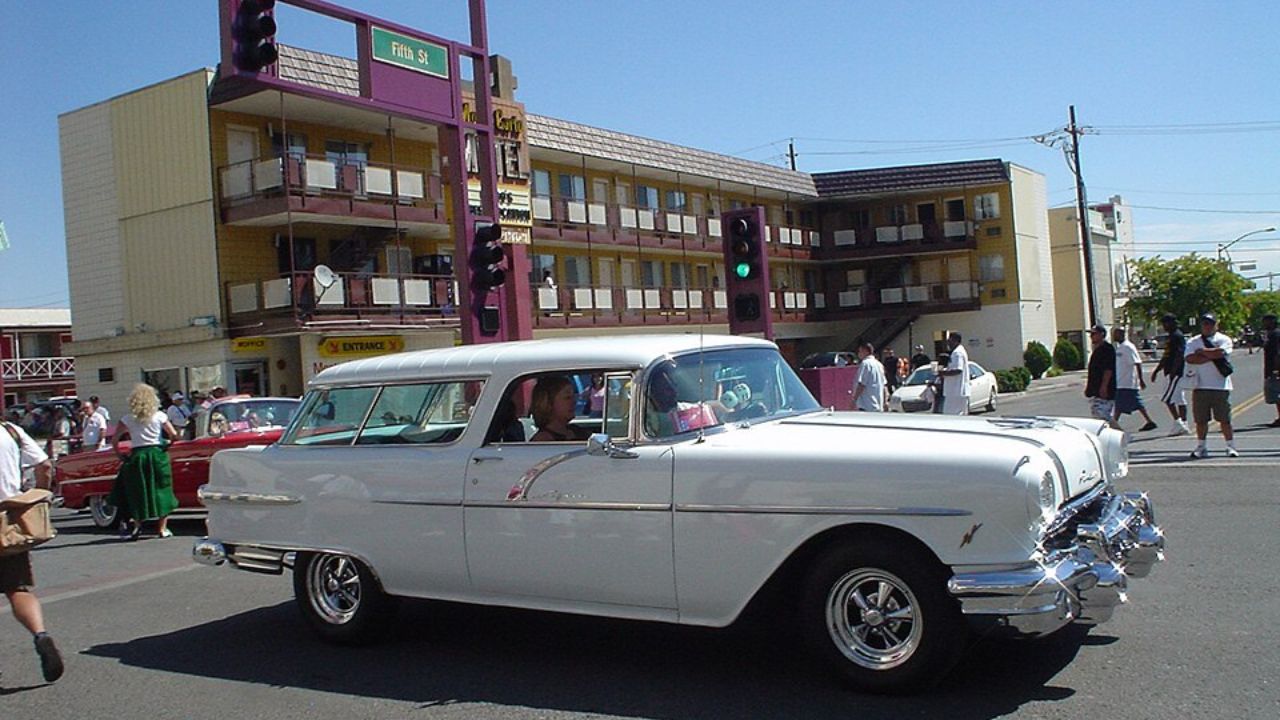
Style alone would not have been enough to change minds if the Safari had driven like a truck, so Pontiac backed the design with credible performance. Under the hood, the 1956 Safari could be equipped with a 287-cubic-inch, 4.7-liter V8 that was rated at up to 200 horsepower, a figure that put it firmly in the realm of serious passenger cars rather than underpowered haulers. That output meant the wagon could keep pace with contemporary sedans on the highway, reinforcing the idea that choosing a long roof did not mean settling for a slower, duller machine.
The drivetrain options also helped broaden the Safari’s appeal beyond enthusiasts. The engine could be paired with a Hydramatic automatic transmission, which made the car more user friendly for a wide range of drivers who valued ease of use in traffic and on long trips. By combining a 287-cubic-inch V8 with the convenience of Hydramatic, Pontiac offered a wagon that felt modern and capable, not agricultural. That blend of power and refinement supported the Safari’s luxury positioning and made it easier for buyers to justify picking a wagon that looked and drove like a premium car.
GM’s stylish sibling rivalry
Inside General Motors, the Safari did not exist in a vacuum. It shared its basic concept with the Chevrolet Nomad, another two-door station wagon that applied sporting lines to a practical body. The Pontiac Safari and the Chevrolet Nomad were explicitly paired as sister cars, both conceived as two-door station wagons styled with sporting lines that stood apart from more utilitarian wagons. By aligning the Safari with the Nomad, Pontiac tapped into a broader GM strategy of spreading development costs while tailoring each division’s version to its own audience.
Reports on the 1956 Pontiac Safari note that, even though it shared many mechanical components with the Chevrolet Nomad to help spread cost evenly at GM, the Safari carved out its own identity. Pontiac leaned on its Star Chief cues, extra chrome and distinctive trim to give the wagon a more upscale, almost custom-car flavor. One account of a 1956 Pontiac Safari sitting in a field describes it as a rare alternative to the Chevrolet Nomad, highlighting that, even with shared hardware, the Pontiac version offered a different mix of fancy trim, a comfortable interior and that 287-cubic-inch, 4.7-liter V8 rated at up to 200 horsepower. In other words, GM’s internal sibling rivalry produced two wagons that both elevated the segment, with the Safari staking out the more luxurious corner of the showroom.
Rarity, legacy and collector appeal
The Safari’s desirability today is amplified by how few were built and how fewer still survive. Contemporary commentary on surviving cars notes that only a few hundred may remain, which turns each intact example into a rolling piece of design history. One 1956 Pontiac Safari that surfaced after sitting in a field for at least 40 years was described as a rare alternative to the Nomad, a reminder that the Pontiac version never matched its Chevrolet cousin’s production volume but has gained its own following among enthusiasts who appreciate its distinct styling and luxury focus.
That scarcity feeds directly into the model’s modern reputation. The Pontiac Safari is remembered as a popular full-size station wagon produced mainly in the era when American road trips and suburban growth were reshaping car culture, and the 1956 Pontiac Star Chief Safari Wagon in particular is often singled out as a gorgeous example of how design and function were beautifully intertwined. When I look at how collectors talk about the Safari today, I see a car that did more than haul families and luggage. By combining Star Chief luxury, a 287-cubic-inch V8, Hydramatic convenience and two-door sporting lines shared with the Chevrolet Nomad, the 1956 Safari helped prove that a wagon could be aspirational, and that lesson still echoes in every modern long-roof that tries to be both practical and desirable.
More from Fast Lane Only: