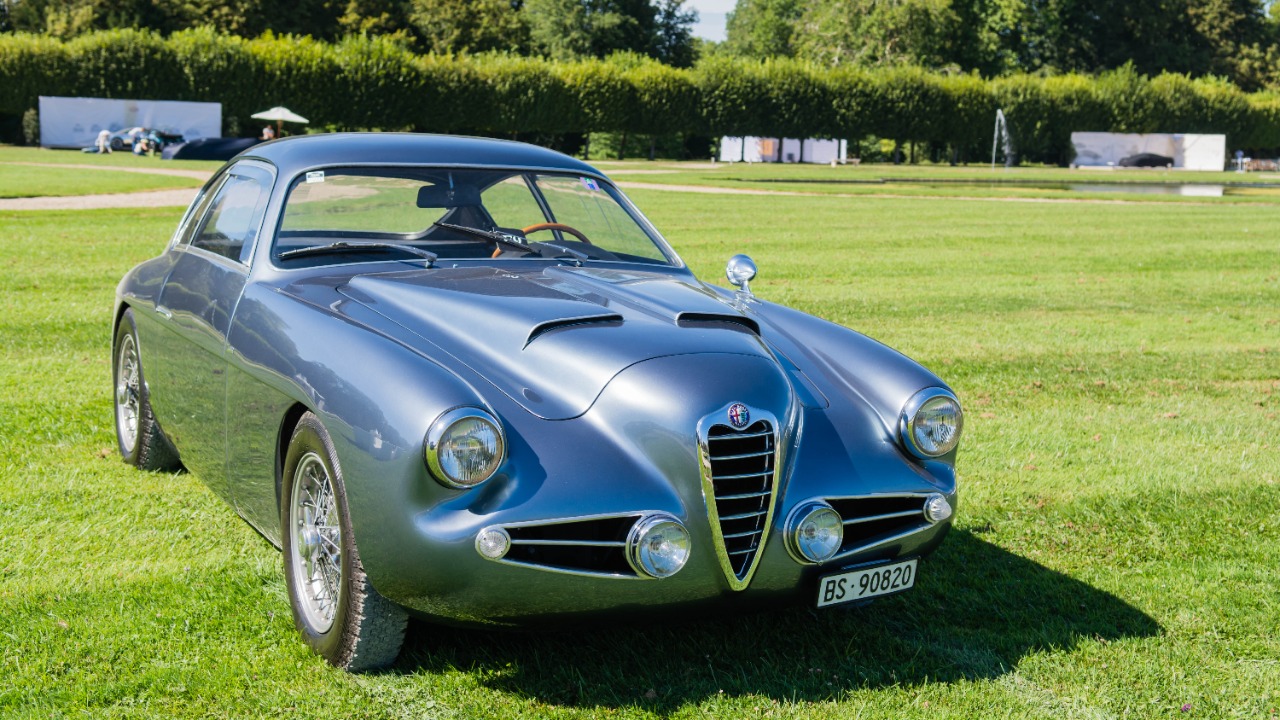
The mid‑1950s were full of glamorous sports cars that only a tiny slice of drivers could afford, yet the 1955 Alfa Romeo 1900 quietly proved that serious speed and sophistication did not have to be reserved for racing aristocracy. By pairing advanced engineering with a practical body and a relatively accessible price, it turned performance from a rarefied luxury into something an ambitious family buyer could realistically aspire to. I see that moment as a turning point, when Alfa Romeo used the 1900 to pull high technology out of the paddock and into the everyday street.
From pre‑war aristocrat to post‑war family athlete
To understand why the 1900 felt so revolutionary by 1955, I start with what came before it. In the years just after the war, Alfa Romeo was still defined by the pre‑war 6C2500, a glamorous but aging machine rooted in a very different era of coachbuilt luxury. Earlier in the decade, Alfa Romeo decided it was time to replace that “glorious but now old” 6C2500 with a car that could keep pace with new technology and a broader market, a shift that is spelled out in period histories of how Alfa Romeo rethought its lineup. Instead of building a handful of bespoke grand tourers for the wealthy, the company set its sights on a modern, mass‑produced sedan that could still carry the brand’s racing DNA.
That pivot produced the Alfa Romeo 1900, the first car from the marque designed from the outset as a series‑production model with four doors and genuine family practicality. The 1900 was offered in two‑door or four‑door models, powered by a new 1,884 cc engine with a bore of 82.55 mm (3.3 in) and a stroke of 88 mm (3.5 in), rated at 90 hp, figures that are documented in technical overviews of the Alfa Romeo 1900. Those exact numbers matter, because they show how Alfa balanced displacement, revs, and reliability to create an engine that could live in daily traffic yet still deliver the kind of performance drivers associated with the company’s racing exploits.
Engineering a “Super” for ordinary drivers
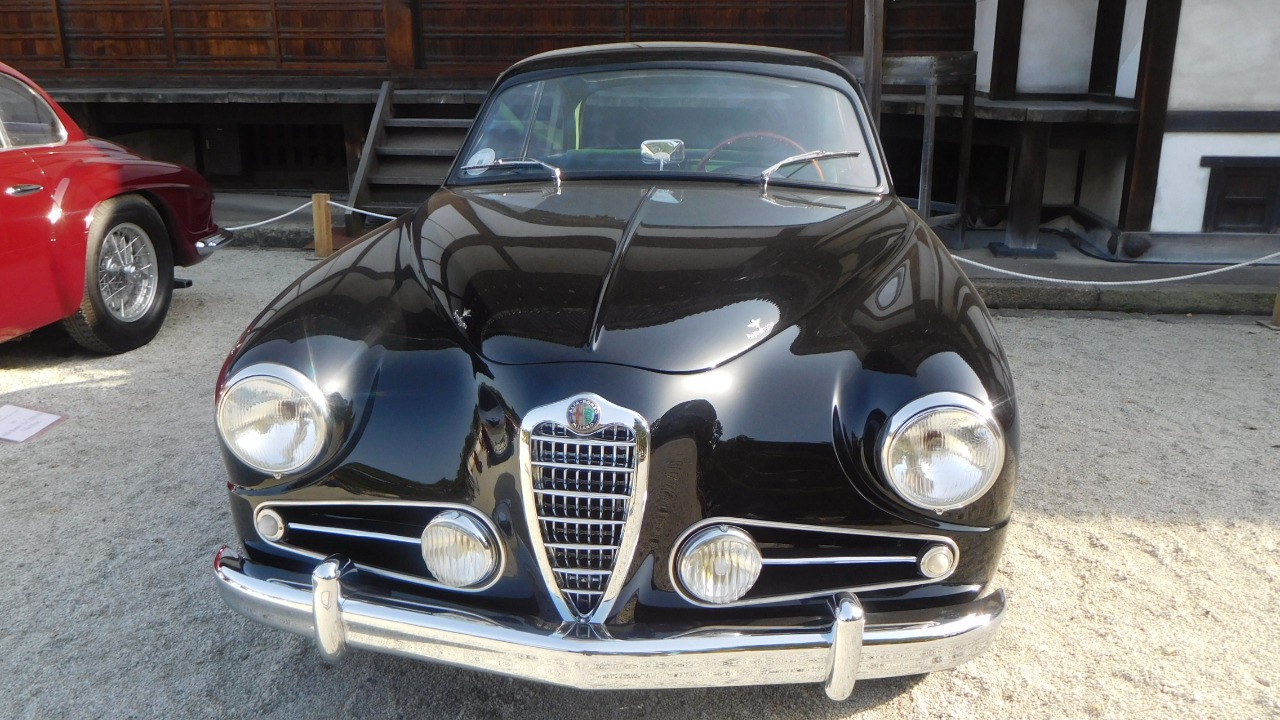
By the middle of the decade, Alfa’s engineers were not content to leave the 1900 as a merely brisk family car. They wanted a version that could back up the company’s bold advertising line that this was “the family car that wins races,” and that meant extracting more speed without sacrificing usability. In response, Alfa’s technical team developed a more potent “Super” engine, a move described in factory heritage accounts of how Alfa created the Super Sprint. The idea was not to build a fragile racing special, but to refine the existing four‑cylinder so that a committed enthusiast could enjoy real pace on public roads.
That “Super” badge was more than marketing. The uprated engine, paired with a 5‑speed gearbox in the Super Sprint, gave the 1900 sharper acceleration and longer legs on the autostrada while still sitting in a chassis that could carry passengers and luggage. By keeping the basic architecture of the sedan and layering performance on top, Alfa made the Super Sprint feel like a car you could drive to work all week and then take to a club race on Sunday. In my view, that dual‑purpose character is exactly what democratized performance: it let regular buyers tap into the same engineering mindset that had previously been reserved for pure sports cars.
Modern underpinnings for a wider audience
What really strikes me about the 1955 1900 is how thoroughly modern its structure was for a car aimed at families. Alfa Romeo moved away from the old body‑on‑frame formula and embraced a more integrated construction that improved rigidity and safety without adding excess weight. Contemporary descriptions of the project emphasize how Alfa Romeo adopted advanced suspension layouts, including front struts with a top triangle, to give the 1900 secure handling on rough post‑war roads. Those choices were not just for racing glory; they were meant to make everyday driving faster, calmer, and safer for people who had never owned a performance car before.
By combining that chassis with the compact 1,884 cc engine and its carefully chosen 82.55 mm by 88 mm dimensions, Alfa created a package that felt sophisticated without being intimidating. The car’s drum brakes and straightforward mechanicals kept maintenance within reach of ordinary workshops, while the suspension and engine tuning delivered a level of stability and speed that had previously belonged to far more exotic machinery, as the technical summaries of the Alfa Romeo 1900 make clear. I read that blend of advanced layout and accessible hardware as a deliberate attempt to spread performance engineering across a much broader slice of the market.
Coachbuilt glamour without losing the everyday core
Another reason I see the 1900 as a democratizing force is the way it bridged mass production and traditional coachbuilding. Alfa Romeo sold the 1900 as a complete sedan, but it also provided rolling chassis to specialist carrozzerie, who created sleek two‑door coupes and cabriolets on the same mechanical foundation. The 1900 C Super Sprint, for example, wrapped the “Super” engine and 5‑speed gearbox in a compact, stylish body that still traced its roots to the family car, a lineage that period histories of the Super engine and Super Sprint model underline. Instead of existing as a separate, rarefied platform, the glamorous variants were evolutions of the same basic car that a middle‑class buyer might park outside an apartment block.
That continuity mattered. It meant that when a 1900 Super Sprint won a race or appeared in a magazine, the halo effect flowed directly back to the standard sedans sharing its engine block and suspension layout. Owners of the four‑door 1900 could reasonably feel they were driving a close cousin of the competition cars, not a watered‑down imitation. In my mind, that psychological connection is part of how the 1900 spread the idea that serious performance was no longer the preserve of a tiny elite; it was something you could experience on the school run or the commute, simply by choosing the right version of a broadly available model.
A template that reshaped expectations
Looking back from today, I think the 1955 Alfa Romeo 1900 reads like an early template for the modern sports sedan. It combined a relatively small, high‑revving 1,884 cc engine with family‑friendly packaging, advanced suspension, and the option of a hotter “Super” specification, all at a scale that Alfa Romeo could build in meaningful numbers. Technical records of the Alfa Romeo project show how intentional that mix was, from the precise 82.55 mm by 88 mm engine dimensions to the use of struts and a top triangle at the front. The result was a car that felt genuinely quick and composed in an era when many family vehicles still traced their roots to pre‑war designs.
For me, that is why the 1900 deserves credit for opening up performance to a much wider audience. It did not rely on brute force or exotic materials, but on thoughtful engineering that could be replicated across thousands of cars, from the everyday four‑door to the sleek Super Sprint. By proving that a mass‑produced sedan could carry racing‑bred technology without losing its practicality, the 1955 Alfa Romeo 1900 quietly reset what ordinary drivers could expect from their next car, and in doing so, it helped turn performance from a privilege into a possibility.
More from Fast Lane Only: