The 1961 Jaguar E-Type, often hailed as one of the most beautiful cars ever made, took the automotive world by storm with its sleek design, innovative engineering, and remarkable performance. The E-Type’s release marked a transformative moment in automotive history, showcasing a blend of style and substance that captivated enthusiasts and critics alike. Various factors contributed to its legendary status, impacting the industry and car lovers for generations.
The Birth of a Legend
Jaguar’s journey leading up to the E-Type’s debut in 1961 is a tale of ambition and innovation. Founded in 1922, Jaguar initially gained recognition for its luxury cars and sports models. However, it was the post-war period that set the stage for the E-Type, with the company focusing on performance-oriented vehicles. The XK120, launched in 1948, was a pivotal model that established the brand’s reputation for speed and elegance. This momentum was bolstered by the leadership of Sir William Lyons, Jaguar’s co-founder, whose vision for a high-performance sports car laid the groundwork for the E-Type.
Key figures such as Malcolm Sayer, a former aircraft engineer, played a crucial role in the E-Type’s design. Sayer’s expertise in aerodynamics influenced the vehicle’s sleek silhouette, which would go on to become iconic. The E-Type made its grand entrance at the 1961 Geneva Motor Show, where it stole the spotlight and received widespread acclaim. Critics and spectators were taken aback by its combination of beauty and engineering excellence, leading to an immediate impact on the automotive landscape.
Design and Aesthetics
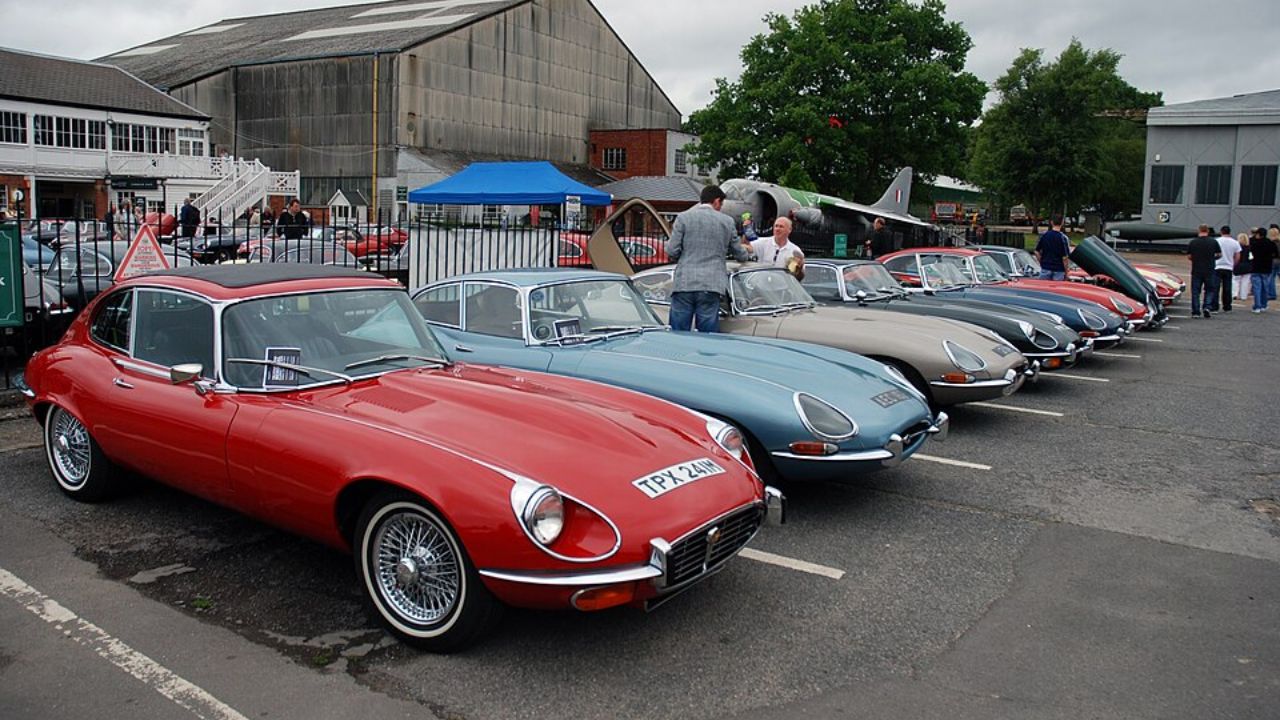
The Jaguar E-Type’s design is often regarded as one of the most striking achievements in automotive history. Its long hood, short rear, and elegant curves create a silhouette that remains timeless. Iconic design elements, such as the distinctive oval grille and the covered headlights, contributed to its unique aesthetic. Unlike many contemporaries, which emphasized raw performance, the E-Type offered a harmonious blend of style and practicality.
The influence of aerodynamic principles is evident in the E-Type’s shape, which was not only visually appealing but also functionally effective. The car’s design allowed for improved airflow, enhancing both speed and stability at high velocities. The public’s reception was overwhelmingly positive, with automotive critics praising its striking looks and innovative features. Many noted that the E-Type was a car that could turn heads while delivering an exhilarating driving experience, a rare combination that set it apart from other vehicles of the era.
Technical Innovations
The E-Type was groundbreaking in its introduction of a monocoque chassis, which provided a more rigid structure compared to traditional body-on-frame designs. This innovation allowed for improved handling and reduced weight, making the vehicle more responsive on the road. The engineering team also integrated independent suspension and disc brakes, features that were ahead of their time and contributed significantly to the E-Type’s performance. These advancements not only enhanced the driving experience but also set new standards for future sports cars.
Under the hood, the E-Type was powered by the legendary XK inline-six engine, capable of producing 265 horsepower. This engine was known for its smooth power delivery and impressive torque, which translated into remarkable acceleration. With a top speed approaching 150 mph, the E-Type quickly became a favorite among speed enthusiasts. The combination of cutting-edge engineering and robust performance metrics positioned the E-Type as a formidable competitor in the sports car market.
Performance and Driving Experience
The performance of the E-Type was nothing short of spectacular. With a 0-60 mph time of just over 6 seconds, it was among the fastest cars of its time. Its top speed, often cited at around 150 mph, showcased its capabilities on both the road and the track. The handling characteristics were equally impressive, thanks to the E-Type’s well-tuned suspension and responsive steering. Early drivers and automotive journalists alike were captivated by the driving experience, often describing it as a thrilling blend of power and precision.
Comparing the E-Type to its rivals, such as the Porsche 911 and Ferrari 250 GT, reveals its competitive edge. While the Porsche offered a more utilitarian approach, the E-Type combined performance with luxury and style, appealing to a broader audience. Automotive publications, including Car and Driver, lauded the E-Type for its exhilarating drive and luxurious features, solidifying its status as a premier sports car of the 1960s.
Market Impact and Sales Success
The E-Type’s launch was met with impressive sales figures, quickly establishing itself as a dominant force in the sports car market. During the 1960s, Jaguar sold over 70,000 units of the E-Type, a remarkable achievement for a luxury sports vehicle. Its price point, significantly lower than that of its competitors, made it accessible to a wider audience. The affordability of the E-Type contributed to its popularity, as many aspiring car enthusiasts could now own a piece of automotive excellence.
The E-Type’s success had long-term effects on Jaguar’s brand image, enhancing its reputation as a manufacturer of high-performance vehicles. The E-Type not only solidified Jaguar’s position in the sports car segment but also influenced subsequent models, paving the way for future innovations. The car’s impact on the market is still felt today, as it continues to inspire new generations of automotive design and engineering.
Cultural Significance
The cultural significance of the Jaguar E-Type extends beyond its engineering and design. It became a symbol of the swinging sixties, representing a lifestyle characterized by freedom, glamour, and sophistication. The E-Type’s appearances in popular culture, including films like “Austin Powers: International Man of Mystery” and music videos featuring celebrities, further cemented its status as an icon. Celebrities such as Steve McQueen and the Beatles were known to own E-Types, enhancing its allure and desirability.
The E-Type’s association with the British automotive industry also contributed to its cultural impact. It became a symbol of British innovation and design excellence, showcasing the country’s ability to produce world-class vehicles. The car’s legacy is celebrated in various forms, from classic car shows to dedicated enthusiast groups, ensuring that its cultural significance endures.
Legacy and Collectibility
The appreciation for the Jaguar E-Type among collectors and car enthusiasts has only grown over the decades. Its unique combination of design, performance, and history makes it a sought-after classic. Auction results for well-preserved E-Types often reach impressive figures, reflecting the vehicle’s enduring appeal. The classic car community plays a vital role in preserving the E-Type’s legacy, with enthusiasts dedicated to restoring and maintaining these iconic vehicles.
Market trends indicate a steady increase in E-Type values, with some examples fetching well over $200,000 at auction. This upward trajectory is fueled by a growing interest in classic cars and an appreciation for the E-Type’s significance in automotive history. The restoration process has become an art form in itself, with skilled craftsmen working to return these vehicles to their original glory, ensuring that the E-Type remains a staple of automotive culture.
Challenges and Controversies
Despite its acclaim, the Jaguar E-Type faced its share of challenges and controversies. Early production issues, particularly related to quality control, raised concerns among buyers and critics. Some customers reported problems with fit and finish, which tarnished the vehicle’s otherwise stellar reputation. Additionally, the transition to later models, such as the Series 2 and Series 3, received mixed reviews. While these iterations brought modern features, they strayed from the original’s purity, leading to disappointment among purists.
The impact of environmental and safety regulations in the 1970s further complicated the E-Type’s production. As the automotive landscape shifted, Jaguar had to adapt to new standards that affected design and performance. These changes often resulted in a dilution of the E-Type’s original character, which contributed to a decline in its popularity during the later years. Nevertheless, the E-Type’s iconic status remains unchallenged, with its early models still celebrated as masterpieces of automotive engineering.
More from Fast Lane Only