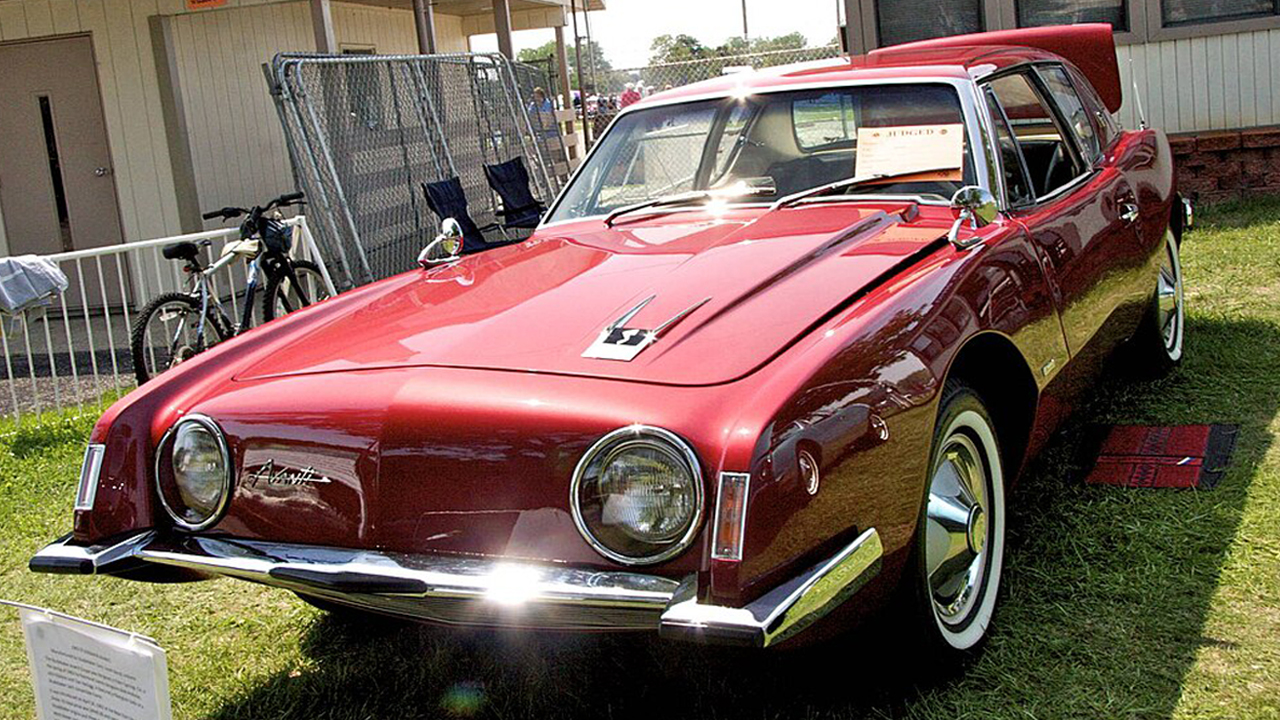
The 1963 Studebaker Avanti was not just a car; it was a bold attempt to redefine an entire automotive company on the brink of collapse. It aimed to represent not only innovation and ambition but also the challenges of reinvention in a rapidly changing market. As Studebaker grappled with its identity during a tumultuous era for American automakers, the Avanti emerged as a symbol of hope and transformation, yet it also illustrated the complex relationship between vision and execution within the automotive industry.
Background of Studebaker
Studebaker, founded in 1852, initially gained fame as a wagon manufacturer before transitioning into automobiles in the early 20th century. The company played a significant role in American automotive history, producing some of the most innovative vehicles of its time, including the 1939 President and the 1953 Commander. However, by the late 1950s, Studebaker faced mounting challenges, including increased competition from the Big Three automakers—General Motors, Ford, and Chrysler—and the changing tastes of consumers in the post-war era.
The post-war automotive boom initially brought prosperity to Studebaker, but the company struggled to adapt to shifting market demands. By the early 1960s, sales plummeted, and the company found itself operating at a loss. The decline was exacerbated by an aging product lineup and a lack of investment in new technologies. As a result, Studebaker was in dire financial straits, facing the very real prospect of bankruptcy. The introduction of the Avanti was seen as a last-ditch effort to revive the brand and re-establish its presence in the competitive automotive landscape.
The Birth of the Avanti
Conceived as a high-performance luxury coupe, the Avanti was the brainchild of a group of visionary designers and engineers seeking to redefine Studebaker’s image. The design was spearheaded by Raymond Loewy, a renowned industrial designer whose previous work included the iconic Coca-Cola bottle and the Greyhound Scenicruiser bus. Loewy envisioned a car that combined stunning aesthetics with cutting-edge engineering, a vehicle that could compete with the likes of the Chevrolet Corvette and Ford Thunderbird.
One of the most innovative aspects of the Avanti was its use of fiberglass body construction, a relatively novel approach in the early 1960s. This not only reduced the weight of the vehicle, allowing for better performance, but also enabled more intricate design curves that contributed to its striking appearance. Additionally, the Avanti featured advanced aerodynamics, with a sleek profile that minimized drag and improved fuel efficiency. These design choices were pivotal in positioning the Avanti as a forward-thinking vehicle that could attract a younger, more performance-oriented audience.
Marketing Strategy
Studebaker’s marketing strategy for the Avanti was meticulously crafted to position it as a premium offering in the automotive market. The company aimed to compete directly with established models like the Chevrolet Corvette and Ford Thunderbird by highlighting the Avanti’s unique features and performance capabilities. Promotional campaigns emphasized the car’s luxury elements, advanced technology, and exclusivity, appealing to consumers looking for a distinctive driving experience.
The launch of the Avanti was bolstered by creative marketing campaigns that included celebrity endorsements and media coverage. Notable figures from the entertainment industry, such as actor and car enthusiast James Garner, were enlisted to promote the vehicle. These endorsements helped generate buzz and excitement around the Avanti, contributing to initial sales success. Furthermore, Studebaker organized promotional events, including auto shows and exhibitions, to showcase the Avanti’s innovative design and performance, reaching a broader audience eager to experience the new model firsthand.
Design and Engineering Innovations
The Avanti’s design elements set it apart from other vehicles in its class. The car featured a distinctive front-end design, characterized by a split grille and aggressive stance that conveyed a sense of speed and power. The interior was equally impressive, boasting leather upholstery, innovative dashboard layouts, and a range of luxury features that appealed to discerning buyers. The combination of style and substance was central to the Avanti’s identity, making it an aspirational vehicle for many consumers.
From an engineering perspective, the Avanti was groundbreaking. It offered the option of a supercharged engine, a feature that was relatively rare in the luxury coupe segment at the time. This engine provided exceptional power and performance, allowing the Avanti to compete effectively with more established performance models. The Avanti’s performance metrics were impressive, with acceleration and handling that garnered praise from automotive journalists and enthusiasts alike. The combination of innovative design and performance made the Avanti a compelling choice for buyers seeking a unique and thrilling driving experience.
Challenges Faced Post-Launch
Initially, the Avanti experienced a surge in sales, driven by the excitement surrounding its launch and the effective marketing strategies employed by Studebaker. However, as time went on, the company faced several challenges that hindered its ability to maintain momentum. Production issues emerged, including difficulties in quality control and supply chain management, exacerbated by the fluctuating demand for the vehicle. This inconsistency led to delays and a tarnished reputation for the Avanti, ultimately impacting sales.
Furthermore, Studebaker’s financial instability became increasingly apparent as the company struggled to keep up with production costs and marketing efforts. The challenges faced by the Avanti were symptomatic of broader issues within Studebaker itself, which was unable to sustain the initial success of the model. As the automotive landscape continued to evolve, the company found it increasingly difficult to innovate and compete, leading to a decline in consumer interest and a sharp drop in sales figures.
Legacy and Cultural Impact
Despite its relatively short production run, the Avanti left an indelible mark on automotive design trends in the years that followed. Its unique styling and innovative features influenced a generation of designers and manufacturers, paving the way for future luxury coupes. The Avanti became a symbol of American innovation and ambition during the 1960s, embodying the spirit of a time when the automotive industry was undergoing rapid transformation.
The vehicle also found a place in popular culture, appearing in films and television shows that showcased its distinctive design. Its legacy continues to resonate within the collector car community, where it is celebrated not only for its performance and aesthetics but also for the story behind its creation. The Avanti’s role as a case study in corporate reinvention serves as a reminder of the challenges and opportunities faced by companies navigating the complexities of the automotive landscape.
Studebaker’s Downfall
Unfortunately, the initial success of the Avanti was not enough to save Studebaker from its eventual decline. The company faced numerous challenges in sustaining production and maintaining consumer interest in the model. Financial difficulties persisted, exacerbated by an inability to adapt to market trends and shifts in consumer preferences. By the mid-1960s, Studebaker’s fortunes had declined significantly, leading to the closure of its South Bend, Indiana plant in 1963.
The failure to capitalize on the Avanti’s initial success, combined with a series of poor business decisions, ultimately contributed to Studebaker’s downfall. The company’s experience serves as a cautionary tale for other automakers, illustrating the importance of adaptability and the need to align product offerings with consumer expectations. The Avanti, while a symbol of innovation, also highlights the challenges that can arise when ambition outpaces execution.
Avanti’s Revival Attempts
Following the closure of Studebaker, there were several attempts to revive the Avanti brand and model. The most notable revival efforts occurred in the late 1970s and early 2000s, with varying degrees of success. In 1965, the Avanti name was acquired by a new manufacturer, who attempted to continue production under the original design while making modifications to improve performance and reliability. However, these efforts faced significant obstacles, including financial constraints and market competition.
The legacy of the original Avanti continues to influence the revival efforts, as collectors and enthusiasts seek to honor the spirit of the iconic vehicle. Today, the Avanti is viewed as a unique piece of automotive history, cherished by those who appreciate its design and engineering innovations. The collector car community remains captivated by the Avanti, recognizing its significance within the broader narrative of American automotive culture.
More from Fast Lane Only