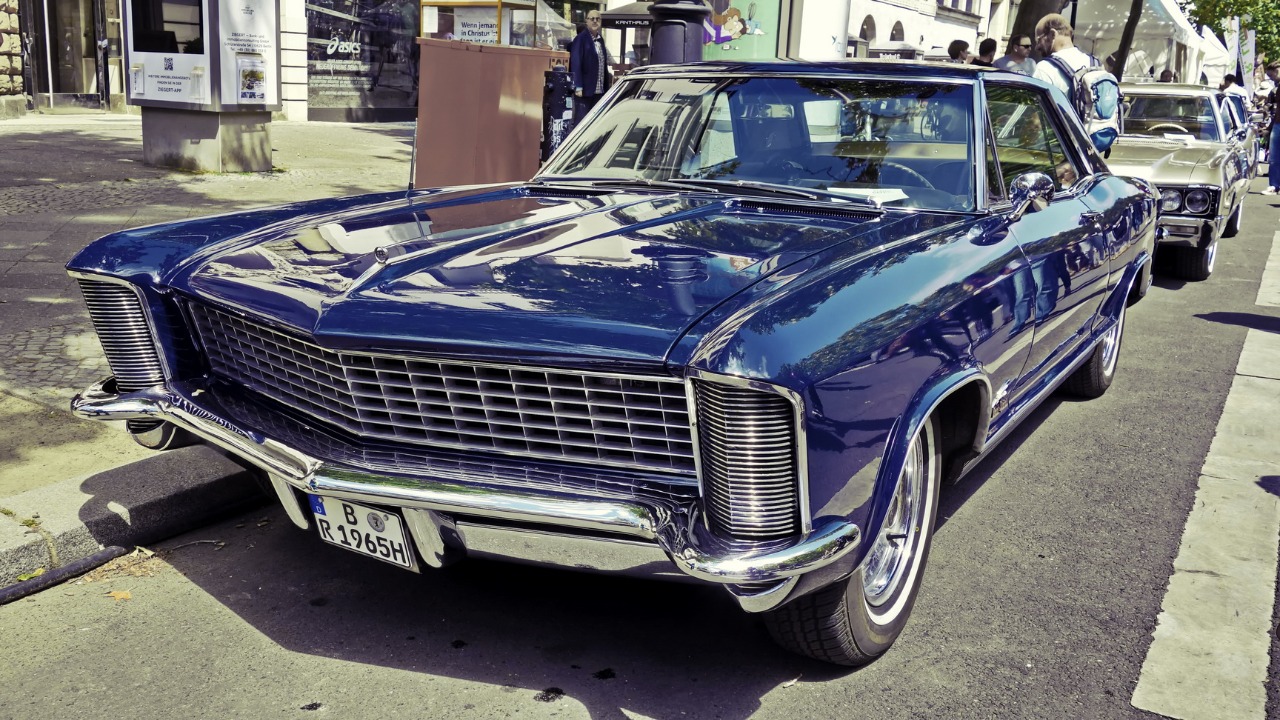
The 1965 Buick Riviera arrived at a moment when American luxury cars were still obsessed with chrome, fins, and sheer bulk, yet it managed to look both restrained and unmistakably upscale. Instead of shouting about status, it suggested it with a low roofline, crisp edges, and a kind of tailored confidence that felt closer to European grand tourers than Detroit land yachts. I see that single model year as the point where American luxury design learned that elegance could be powerful without being loud.
By the time the 1965 Riviera closed out the first generation, it had refined a new template for the “personal luxury” coupe: a car that wrapped serious performance and comfort in a body that looked like it had been cut with a razor. Its influence still shows up every time a big two-door or sleek crossover tries to balance presence with subtlety, and understanding how it got there means looking closely at its styling, its engineering, and the way it redefined what buyers expected from a premium American car.
The clean break: Mitchell’s shape and the new luxury language
What set the first Riviera apart, and the 1965 version in particular, was how deliberately it walked away from the visual excess of early sixties Detroit. Under design chief Bill Mitchell, Exterior and Interior Styling treated the Buick Riviera like a tailored suit, with sharp shoulders, a long hood, and a short rear deck that made the car look poised rather than bloated. Instead of fins or heavy ornamentation, the body sides were almost architectural, with subtle creases and a low greenhouse that made the roof seem to float over the glass. That restraint was a conscious departure from the conventional Buick look of the period, and it signaled to buyers that luxury could be sophisticated rather than flashy, a point underscored by the way Mitchell’s team carried the same clarity into the cabin, where the dashboard and door panels echoed the exterior’s linear themes according to detailed accounts of the development and styling.
By 1965, that design language had been honed even further. The car kept its signature proportions but lost some of the decorative clutter that had crept into earlier years, which only made the basic shape look more modern. The grille and lighting were integrated more cleanly, the body sides looked even more uninterrupted, and the overall impression was of a car that could sit comfortably next to a European coupe without apology. When I look at the 1965 Riviera, I see the moment when American luxury stopped trying to out-chrome its rivals and instead started competing on purity of line and stance, a shift that would ripple through later Buicks, Cadillacs, and even imported-inspired sedans that chased the same understated glamour.
Details that made 1965 the sweet spot
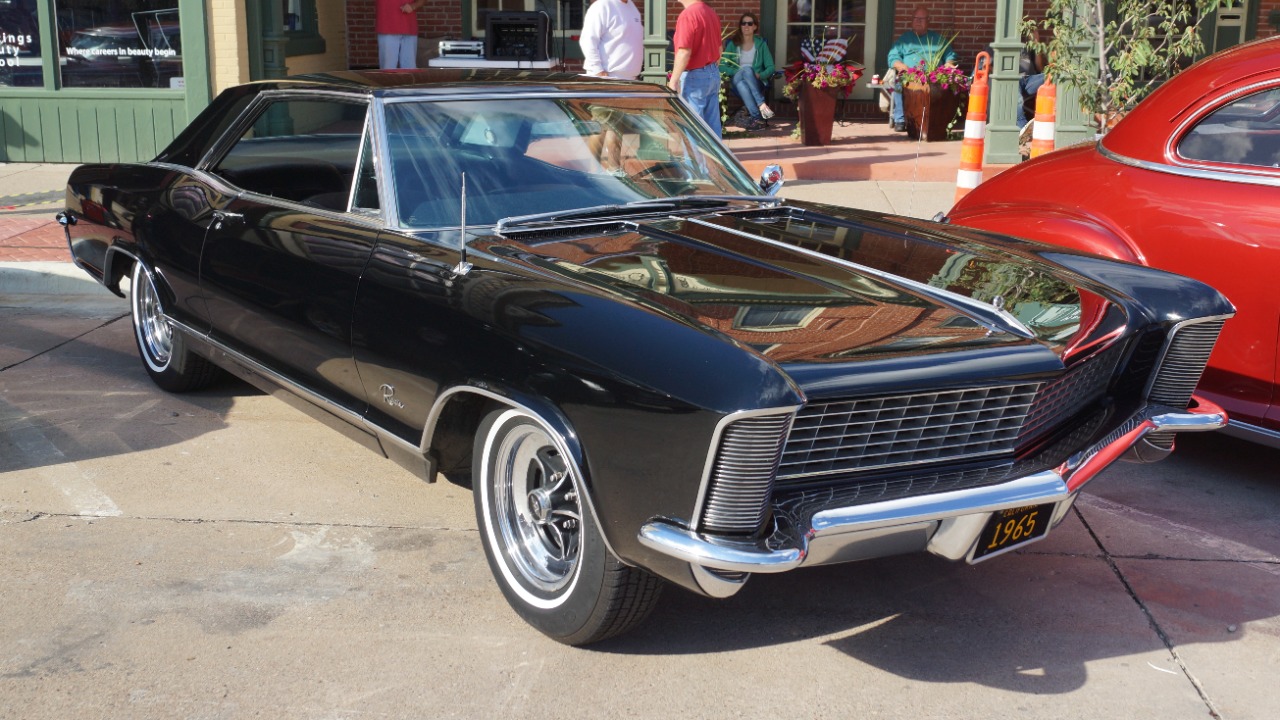
The 1965 model year was not just a mild refresh; it was a careful edit that sharpened the Riviera’s character. One of the most telling changes was the removal of the non-functional side scoops between the doors and rear wheel arches, a choice that cleaned up the profile and made the car look more honest about its performance intent. At the same time, the taillights moved from the body into the rear bumper, which visually lowered the back of the car and emphasized its width, giving the Riviera a planted, almost European grand touring stance. Under the hood, the 401 cubic inch “Nailhead” V8 that had been optional in earlier years was now standard equipment, a move that aligned the car’s mechanical specification with its visual promise of effortless, high-speed travel, as period specifications for the Buick Riviera make clear.
Those refinements mattered because they turned the Riviera from a stylish outlier into a fully realized concept. The cleaner sides and integrated lighting made the car look more expensive without adding a single extra piece of trim, while the standard big V8 meant buyers no longer had to tick an option box to get performance that matched the looks. In my view, that alignment of design and hardware is why collectors and historians keep circling back to 1965 as the high point of the first generation. It is the year when the Riviera stopped being an experiment in personal luxury and became a benchmark, the car that showed how a luxury coupe could be both minimal in decoration and maximal in presence.
Performance in a dinner jacket: Gran Sport and the “muscle in a suit” idea
Luxury design only really works when the car drives the way it looks, and the Riviera’s chassis and powertrain delivered on that promise with surprising vigor. Contemporary testing noted that the Riviera could reach 60 miles per hour significantly quicker than its main rival, the Thunderbird, which needed 9 seconds to hit 60, and that as a lighter car the Riviera handled better through corners and high speed sweepers. That combination of acceleration and composure meant the Buick did not just look like a grand touring coupe, it behaved like one, and it set expectations for American luxury cars that would not be fully met by others until a decade later, as detailed performance comparisons of the Riviera and Thunderbird make clear.
The 1965 Buick Riviera Gran Sport pushed that idea even further, effectively turning the car into what enthusiasts now like to call a muscle car in formalwear. With its uprated engine, shorter gearing, and more focused suspension tuning, the Riviera GS could reach speeds in excess of 130 mph, a figure that would have been impressive for a dedicated performance car, let alone a plush personal coupe. One vintage reviewer put it bluntly, saying the Riviera’s styling was at least as much better than the Bird’s as its dynamic qualities, and then adding, “No contest. But for me, the Riviera GS achieved in excess of 130 mph.” That mix of aesthetic superiority and raw speed, captured in period reflections on the Riviera GS, cemented the idea that a luxury car could be genuinely fast without sacrificing refinement.
How the Riviera reset expectations for American luxury
What fascinates me most about the 1965 Riviera is how thoroughly it rewrote the rules for what an American luxury coupe should be. Instead of a soft, wallowing ride and baroque styling, buyers got a car that could run with serious performance machines while still offering a quiet, carefully finished cabin. Over time, that formula became the default for personal luxury models from Detroit, but in the mid sixties it was still a revelation. Later commentators have even described the Riviera as the moment when Buick built the ultimate muscle car in a suit, a phrase that captures how the car’s elegant exterior hid a very serious drivetrain and chassis, a view echoed in retrospective discussions of how Buick Riviera performance blended with luxury.
The car’s reputation among designers and collectors only reinforces that sense of a turning point. Sergio Pininfarina, the legendary Ferrari coachbuilder, reportedly called the Riviera “one of the most beautiful American cars ever built,” a remarkable compliment from someone whose name is attached to some of the most admired Ferraris of the twentieth century. That kind of praise matters because it shows that the Riviera’s design language resonated far beyond Buick showrooms, influencing how people inside and outside the United States thought about American luxury. When a figure like Sergio Pininfarina singles out the Riviera as a standout among American cars from the 1960s, it confirms that the car’s blend of restraint and drama had real global weight.
The Riviera’s lasting pull on enthusiasts and designers
Decades later, the 1965 Buick Riviera still captivates enthusiasts, not just as a collectible but as a reference point for how to do luxury right. Modern video deep dives on the car highlight “weird facts” that continue to amaze collectors, from its hidden engineering tricks to the way small design choices add up to a cohesive whole, and they often circle back to the idea that it is one of the most beautiful coupes of its era. When I watch those breakdowns of the 1965 Buick Riviera, I am struck by how contemporary the car still looks, especially in profile, where the long hood and tight rear deck could almost belong to a modern luxury coupe with only minor updates.
The same is true when enthusiasts revisit the broader story of the Riviera’s first generation and its place in the personal luxury market. Retrospectives on the model’s development often describe how Mitchell’s vision for the Buick Riviera was a departure from the conventional American approach to prestige, and how that shift paved the way for later cars that tried to balance comfort, style, and performance in a single package. Some commentators even frame the 1965 Riviera as the moment when Buick quietly built a car that could stand alongside European grand tourers without embarrassment, a theme that runs through modern explorations of how the Buick Riviera combined elegance and speed. For designers and enthusiasts alike, the lesson is clear: when you strip away the gimmicks and focus on proportion, stance, and honest performance, you get a luxury car that can outlast trends and still feel fresh half a century later.