When the Ford Mustang debuted in April 1964, it changed the American automotive industry almost overnight. Stylish, affordable, and customizable, the Mustang created the pony car segment and quickly became one of the biggest sales successes in Detroit history.
Its appeal was broad. Young buyers loved its sporty looks, families appreciated its practicality, and Ford dealers struggled to keep enough examples in stock.
Yet as successful as the Mustang was, Ford executives recognized an opportunity.
Not every buyer wanted the Mustang’s youthful image. Some customers were looking for a car with similar proportions and performance but a more sophisticated personality. They wanted something sportier than a traditional sedan yet more refined than Ford’s new pony car.
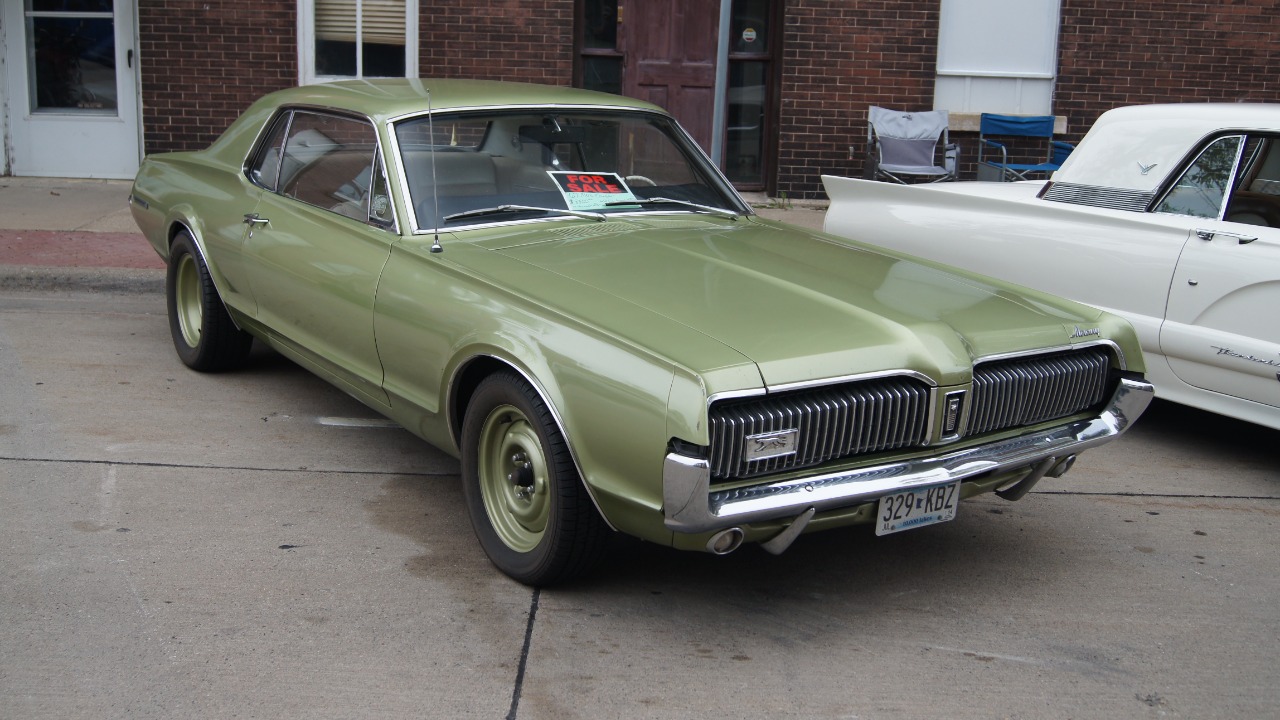
The solution arrived for the 1967 model year in the form of the Mercury Cougar.
Built on the same basic platform as the Mustang, the Cougar offered a more upscale interpretation of the pony car formula. It combined sporty styling with additional luxury features, helping Mercury attract buyers who might have considered the Mustang a little too youthful or too common.
The strategy worked.
The Cougar became an immediate success and established itself as one of the most important vehicles in Mercury’s history.
Mercury Needed Its Own Identity
During the 1960s, Mercury occupied a unique position within the Ford Motor Company hierarchy.
Ford products generally targeted mainstream buyers, while Lincoln focused on luxury customers. Mercury sat between those divisions, offering vehicles that blended comfort, style, and premium features at prices below Lincoln’s flagship models.
The challenge was differentiation.
As the Mustang exploded in popularity, Mercury dealers naturally wanted a comparable product to attract customers into their showrooms. Simply rebadging a Mustang, however, would not have been enough.
Mercury needed a vehicle that reflected the division’s own identity.
Executives believed there was room in the market for a more mature pony car—one that emphasized refinement alongside performance.
That belief became the foundation for the Cougar.
The Mustang Provided the Foundation
Although the Cougar and Mustang shared many mechanical components, Mercury’s designers worked hard to ensure the new car possessed its own character.
The Cougar rode on a slightly longer wheelbase and featured unique sheet metal from nose to tail. Buyers familiar with the Mustang immediately noticed the differences.
The Cougar looked longer, lower, and more formal.
Its front end featured a distinctive grille with vertically divided sections and hidden headlights, a premium feature rarely found in the segment at the time. The hidden headlamp design gave the car an elegant appearance while helping distinguish it from its Ford cousin.
The rear styling was equally distinctive.
Sequential taillights, a feature already associated with larger Mercury models, provided an upscale touch that made the Cougar instantly recognizable after dark.
The result was a vehicle that felt more expensive than the Mustang despite sharing much of its underlying architecture.
Luxury Was a Major Selling Point
One of the biggest differences between the Cougar and Mustang involved interior appointments.
Ford designed the Mustang to appeal to a broad audience, including younger buyers seeking affordable style. Mercury targeted customers willing to spend more for comfort and sophistication.
As a result, the Cougar’s cabin featured a noticeably more upscale atmosphere.
Woodgrain trim, higher-grade materials, and additional sound insulation helped create a quieter and more refined driving experience. The dashboard design emphasized elegance rather than outright sportiness.
Many buyers appreciated those upgrades.
The Cougar felt less like an entry-level sporty car and more like a personal luxury coupe that happened to possess athletic credentials.
That distinction proved important.
Mercury wasn’t trying to steal Mustang customers. It was trying to attract buyers who might otherwise have looked elsewhere.
Performance Was Still Part of the Formula
Despite its luxury focus, the Cougar wasn’t merely a comfort-oriented cruiser.
Mercury understood that performance remained central to the pony car market.
The company offered a range of V8 engines that provided strong acceleration and competitive performance. Buyers could choose from several powerplants depending on their priorities, ranging from comfortable everyday driving to genuine muscle car capability.
The most famous performance variant arrived in the form of the Cougar GT.
The GT package included a larger V8 engine, upgraded suspension components, and styling enhancements that emphasized the car’s sporting nature.
While the Cougar generally projected a more mature image than the Mustang, it was fully capable of delivering impressive performance when equipped properly.
The car offered buyers the best of both worlds.
Hidden Headlights Made a Big Impression
If one feature defined the 1967 Cougar, it was its hidden headlight system.
At a time when many American cars relied on conventional exposed headlights, Mercury’s designers gave the Cougar an upscale appearance normally associated with far more expensive automobiles.
When the headlights were off, the grille appeared clean and uninterrupted.
When activated, the doors covering the headlights moved aside to reveal the lamps.
The system added a sense of drama and sophistication that helped elevate the Cougar above many competitors.
More importantly, it reinforced Mercury’s marketing message.
This wasn’t simply another pony car.
It was a premium pony car.
The hidden headlights became one of the Cougar’s most recognizable styling cues and remain a favorite feature among enthusiasts today.
A Different Kind of Buyer
The Cougar’s target customer differed from the typical Mustang buyer.
While the Mustang often appealed to younger drivers and first-time performance-car owners, Mercury focused on slightly older and more affluent customers.
Many Cougar buyers appreciated performance but weren’t necessarily interested in the youthful image associated with some muscle cars.
They wanted a car that looked sophisticated at the country club, the office parking lot, and the neighborhood driveway.
The Cougar delivered that balance.
It offered sporty proportions and V8 power without appearing flashy or rebellious.
In many ways, it became one of the earliest examples of what would later be known as the personal luxury performance coupe.
Sales Success Came Quickly
Mercury’s gamble paid off almost immediately.
The Cougar was named Motor Trend’s Car of the Year for 1967, an impressive achievement for a brand-new model.
Customers responded enthusiastically.
More than 150,000 Cougars were sold during the model’s first year, a remarkable figure that exceeded many expectations within Ford.
The strong sales validated Mercury’s belief that a market existed for a more refined pony car.
Buyers clearly appreciated the Cougar’s unique blend of style, comfort, and performance.
Rather than competing directly against the Mustang, the Cougar successfully carved out its own niche.
That distinction would help ensure the model’s long-term success.
The Beginning of Mercury’s Most Famous Nameplate
Over the following decades, the Cougar evolved significantly.
Later generations moved away from the original pony car formula, adopting larger bodies and a greater emphasis on luxury. By the 1970s and 1980s, the Cougar had become one of Mercury’s most recognizable products.
Yet many enthusiasts continue to view the 1967 model as the purest expression of the concept.
It captured the ideal balance between sportiness and sophistication.
The car offered all the excitement that made the Mustang famous while adding a layer of refinement that appealed to a different audience.
That combination helped establish the Cougar as something more than a derivative product.
It became a respected nameplate in its own right.
Why the 1967 Cougar Still Matters
The original Cougar succeeded because Mercury understood that not every buyer wanted the same experience.
The Mustang proved there was enormous demand for sporty, affordable coupes. Mercury recognized that some customers desired those same qualities wrapped in a more elegant package.
Rather than simply copying the Mustang, Mercury created a vehicle with its own personality.
The hidden headlights, upscale interior, distinctive styling, and refined driving experience gave buyers a genuine alternative.
The strategy broadened Ford’s reach within the rapidly growing pony car market.
More importantly, it demonstrated that performance and luxury didn’t have to be mutually exclusive.
The Pony Car With a Tie Instead of a T-Shirt
Looking back, the 1967 Mercury Cougar can be viewed as the pony car segment’s first true gentleman’s express.
It shared much of the Mustang’s DNA, but it wore that heritage differently.
Where the Mustang projected youthful energy, the Cougar offered confidence and sophistication. Where the Mustang emphasized accessibility, the Cougar added exclusivity. And where many competitors focused solely on performance, the Cougar blended speed with comfort.
That formula helped Mercury create one of the most successful vehicles in its history.
The 1967 Cougar wasn’t designed to replace the Mustang.
It was designed to complement it.
By offering a more upscale alternative, Mercury expanded the pony car market and proved that there was more than one way to build a successful performance coupe.
More from Fast Lane Only