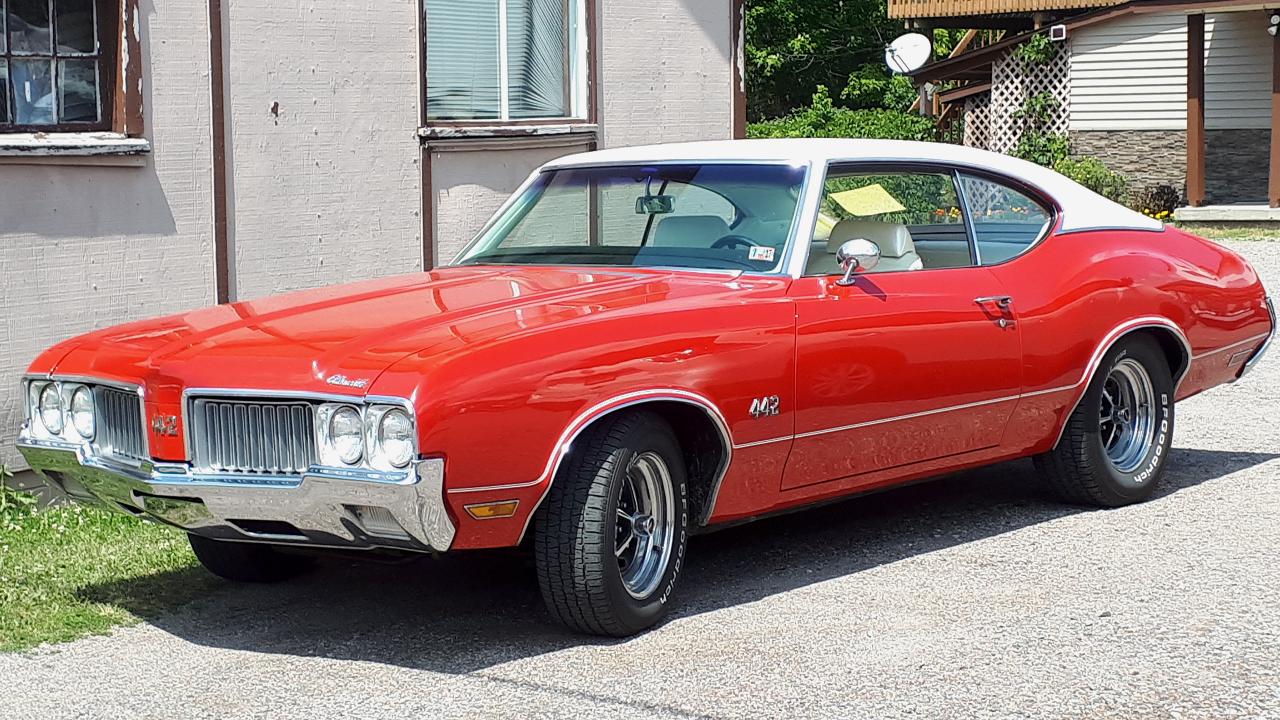
Few muscle car names are as recognizable as the 442.
For enthusiasts, the designation immediately brings to mind one of the most respected performance cars of the 1960s and 1970s. The Oldsmobile 442 combined powerful V8 engines, aggressive styling, and a reputation for refined performance that helped it stand apart from many competitors.
What many people don’t realize, however, is that by 1970 the famous “442” name no longer accurately described the car’s actual specifications.
In fact, the numbers that once explained exactly what buyers were getting had gradually become little more than a brand name.
The transformation reflected both the rapid evolution of the muscle car market and the challenges manufacturers faced as performance expectations changed throughout the 1960s. What began as a simple description of hardware eventually became something much more valuable: an identity.
By 1970, the 442 badge meant performance—but it no longer meant what it originally stood for.
The Origins of the 442 Name
When Oldsmobile introduced the 442 package in 1964, the name served a practical purpose.
Unlike many performance cars that relied on flashy marketing names, the 442 designation actually described key components included with the package.
The original meaning was straightforward:
- Four-barrel carburetor
- Four-speed manual transmission
- Dual exhausts
In other words, “4-4-2.”
The formula made perfect sense in the early muscle car era.
Performance packages were often defined by specific equipment combinations, and the 442 designation gave buyers a quick way to understand what made the car special.
At the time, the name was both descriptive and informative.
If a car wore 442 badges, buyers knew exactly what hardware was under the hood and beneath the floor.
That clarity wouldn’t last.
The Muscle Car Wars Changed Everything
The mid-1960s witnessed an explosion in performance competition among Detroit manufacturers.
Cars became more powerful almost every year.
Engines grew larger.
Horsepower climbed steadily.
Buyers demanded more options and greater flexibility.
As a result, manufacturers increasingly expanded the number of available drivetrain combinations.
The simple formulas that had defined early muscle cars became harder to maintain.
Oldsmobile faced the same challenge.
The 442 package continued evolving as customer preferences changed, and eventually the original definition became restrictive.
Buyers wanted automatic transmissions.
They wanted different axle ratios.
They wanted more choices.
To remain competitive, Oldsmobile had to adapt.
The problem was that every new option pushed the car further away from the meaning behind its famous name.
Automatic Transmissions Broke the Formula
One of the biggest changes involved the transmission.
When the 442 debuted, the four-speed manual gearbox was a central part of its identity. Manual transmissions were closely associated with performance driving, and they fit perfectly within the original 4-4-2 formula.
But not every buyer wanted to shift gears.
As automatic transmissions improved during the 1960s, more customers began selecting them—even in high-performance cars.
Oldsmobile recognized the demand and made automatic-equipped 442s available.
The moment that happened, the name’s logic began to unravel.
A car equipped with an automatic transmission obviously no longer possessed the “four-speed” represented by the second “4.”
Yet the 442 badge remained.
The name had already started evolving from a literal description into a marketing identity.
The Engine Story Became More Complicated
The original 442 formula centered on a four-barrel carburetor.
For a time, that remained accurate.
However, as performance expectations increased, Oldsmobile introduced more sophisticated engine configurations.
The most famous example arrived in 1970 with the W-30 package.
Widely considered one of the most formidable muscle car options of the era, the W-30 featured numerous performance upgrades designed to extract additional power from Oldsmobile’s already impressive 455-cubic-inch V8.
The package included a distinctive induction system that differed significantly from the straightforward four-barrel arrangement associated with the original 442 concept.
While the car remained a 442, its engineering had evolved far beyond the simple formula that inspired the name.
By this point, enthusiasts cared far more about performance than numerical accuracy.
The Arrival of the 455
If there was one specification that defined the 1970 442, it wasn’t a carburetor or transmission.
It was displacement.
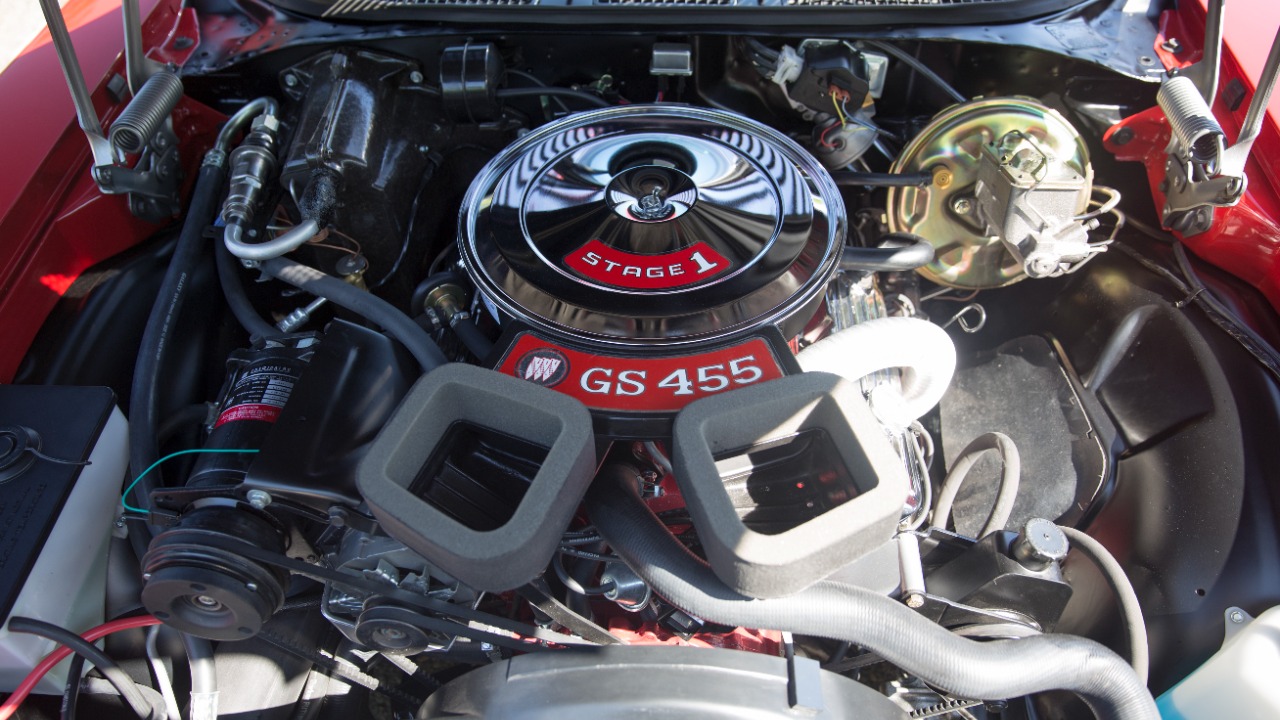
For 1970, Oldsmobile equipped the 442 with its massive 455-cubic-inch V8.
The engine transformed the car into one of the most respected muscle machines of the era.
Officially rated at 365 horsepower in standard form, the 455 delivered something enthusiasts valued just as much: tremendous torque.
The engine’s immense pulling power made the 442 exceptionally quick in real-world driving situations.
Many contemporary road tests praised the car’s ability to accelerate effortlessly from virtually any speed.
Drivers weren’t talking about four-barrel carburetors anymore.
They were talking about big-block power.
The original meaning of the badge had become increasingly irrelevant.
The 442 Became Its Own Brand
By 1970, Oldsmobile understood that the 442 designation carried significant value.
The name had developed a reputation independent of its original specifications.
Buyers no longer interpreted the badge as a technical description.
Instead, they viewed it as a promise.
A 442 represented performance, regardless of the exact transmission, carburetion system, or equipment combination involved.
This transition mirrored what happened with many famous automotive names.
Over time, successful model names often evolve beyond their original meanings.
What matters is not the literal definition but the reputation attached to the badge.
The 442 had reached that stage.
The numbers no longer needed to explain the car.
The name itself told buyers everything they needed to know.
The W-30 Took Things Even Further
For enthusiasts seeking maximum performance, the W-30 package elevated the 442 to another level.
The option transformed an already potent muscle car into one of the quickest vehicles available from any American manufacturer.
The W-30 package included special cylinder heads, revised camshaft specifications, unique induction components, and other upgrades aimed at improving performance.
Road tests frequently placed W-30-equipped cars among the fastest muscle cars of the era.
Ironically, the more advanced the 442 became, the less relevant the original name’s meaning appeared.
The engineers were focused on maximizing power and performance.
Nobody was designing the car around preserving a numerical formula from 1964.
Performance had outgrown the badge’s original definition.
Buyers Didn’t Care
If Oldsmobile executives worried about the mismatch between the name and the specifications, customers certainly didn’t.
By 1970, enthusiasts weren’t buying a 442 because the numbers represented specific hardware.
They were buying it because the car had earned credibility.
The 442 had built a reputation through years of strong performance, successful marketing, and positive reviews.
Owners understood what the badge stood for.
It stood for speed.
Whether the transmission was manual or automatic made little difference to the car’s image.
The market had spoken.
The 442 name had become more powerful than its original meaning.
A Common Automotive Evolution
The 442’s transformation wasn’t unique.
Automotive history is filled with examples of names that gradually detached from their original definitions.
As products evolve, manufacturers often retain successful branding even when the underlying specifications change.
Consumers tend to care more about reputation than literal accuracy.
The 442 followed that path naturally.
What began as a technical shorthand evolved into a performance identity recognized throughout the industry.
The name survived because enthusiasts continued to associate it with excitement and capability.
Its original meaning became secondary.
Why the 1970 Model Matters
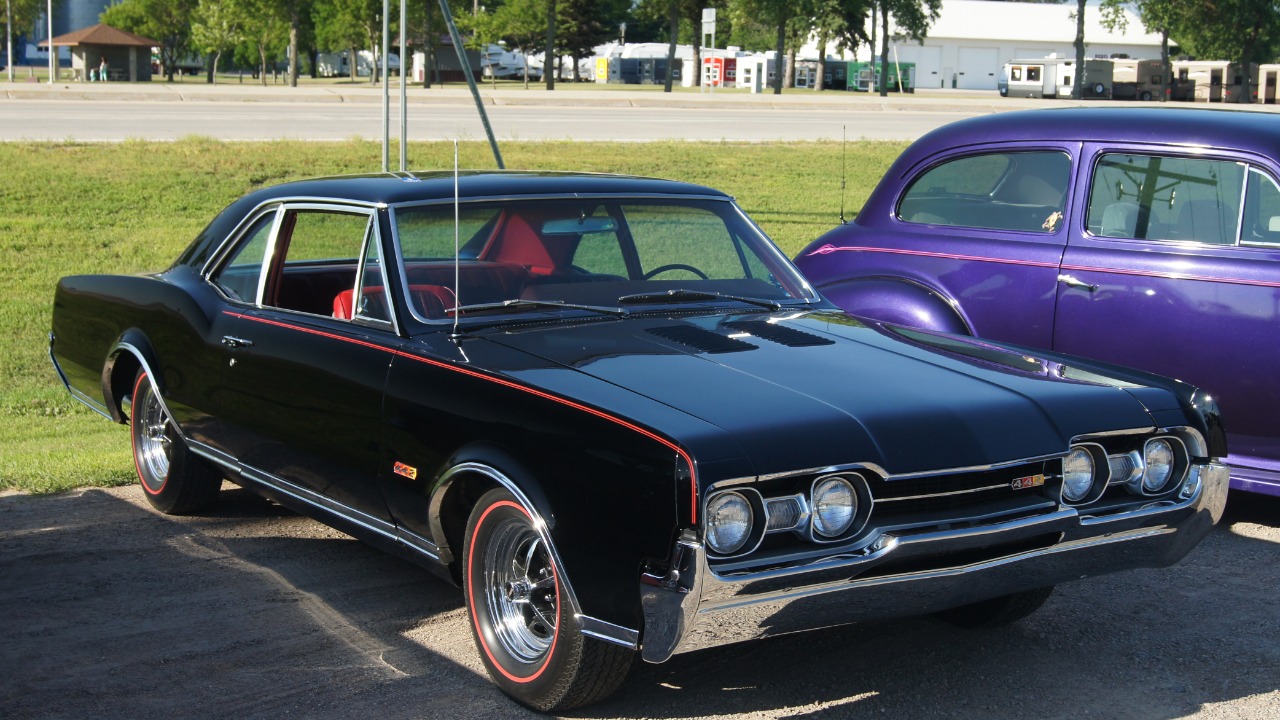
Today, many enthusiasts view the 1970 Oldsmobile 442 as the ultimate version of the breed.
The combination of bold styling, the massive 455 V8, and available W-30 performance upgrades represents the peak of Oldsmobile’s muscle car efforts.
Ironically, this celebrated version arrived after the badge had largely lost its literal connection to the equipment it once described.
Yet that fact only makes the story more interesting.
The 442 succeeded because it evolved.
Oldsmobile refused to let an aging definition limit the car’s development. Instead, engineers and marketers allowed the badge to grow alongside changing customer expectations.
The result was a better muscle car.
When a Name Becomes Bigger Than Its Meaning
The 1970 Oldsmobile 442 marked the point where the famous designation had fully transcended its original purpose.
The numbers once described a four-barrel carburetor, a four-speed transmission, and dual exhausts. By 1970, many examples no longer fit that formula.
It didn’t matter.
The 442 had become something far more valuable than a specification sheet.
It had become a legend.
Buyers no longer needed the badge to explain what was under the hood. They only needed it to tell them what kind of experience awaited behind the wheel.
And by 1970, that experience remained exactly what enthusiasts wanted: one of the finest muscle cars Detroit ever built.
More from Fast Lane Only