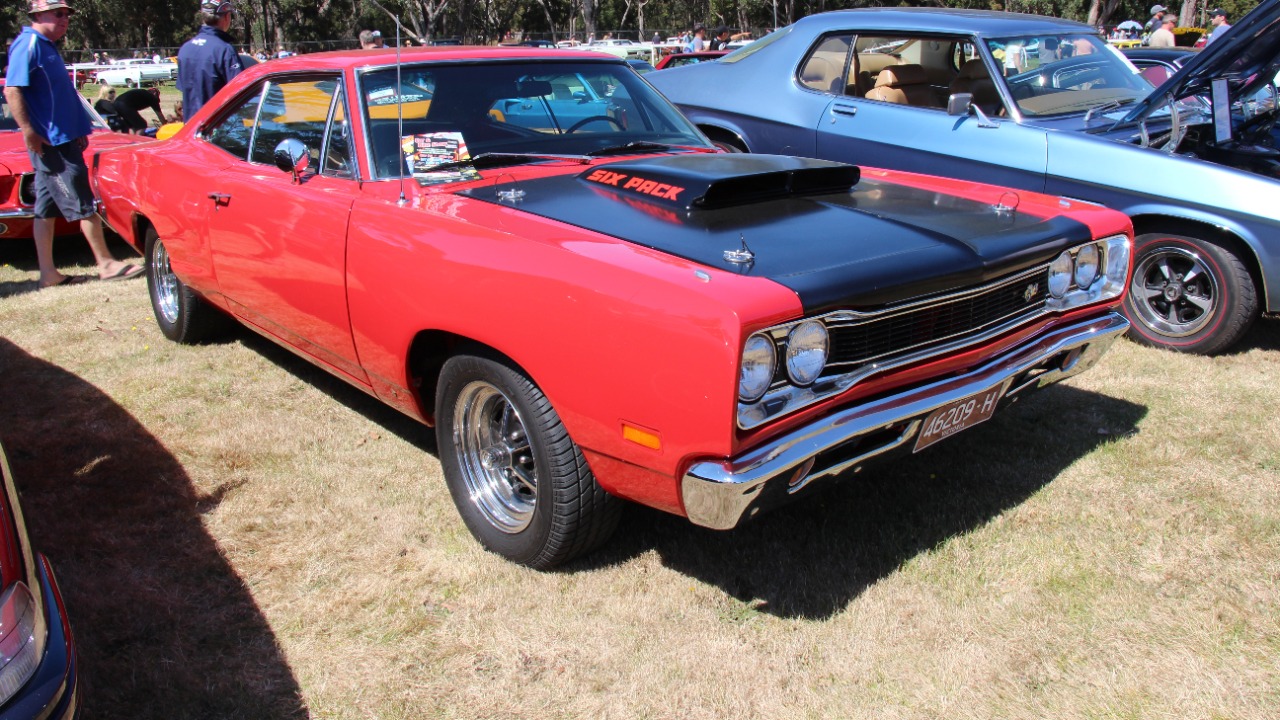
The 1968 Dodge Super Bee was not built for polite trips to the grocery store. It was engineered and priced to poach young street racers who were timing quarter miles in back alleys and on the fringes of local drag strips. By stripping out frills, sharpening the hardware, and leaning into a brash identity, Dodge turned the Super Bee into a factory answer to the underground racing scene.
From sensible Coronet to bare‑knuckle Super Bee
When I look at the Super Bee’s origin story, the first thing that jumps out is how deliberately Dodge raided its own parts bin to keep costs down for speed‑hungry buyers. The car started life as a humble Coronet, then was recast as a budget bruiser that could run hard without the premium price tag of a halo muscle car. New for 1968 was a bargain-basement Super Bee based on the Coronet 440 coupe, and Dodge made sure it came standard with serious muscle in the form of a 383-cid, 335-hp V-8, a combination that instantly told street racers this was not a poseur package.
That decision to anchor the car to the Coronet 440 platform was crucial, because it let Dodge reuse body panels and interior pieces while pouring the savings into performance hardware. The company could then market the Super Bee as a stripped, no‑nonsense alternative to more ornate siblings, signaling that every dollar was going toward going quicker, not extra chrome. The result was a car that felt purpose built for the kid who cared more about elapsed times than about power windows, and the factory spec sheet for the Coronet-based Super Bee made that priority crystal clear.
Powertrains that spoke the language of the street
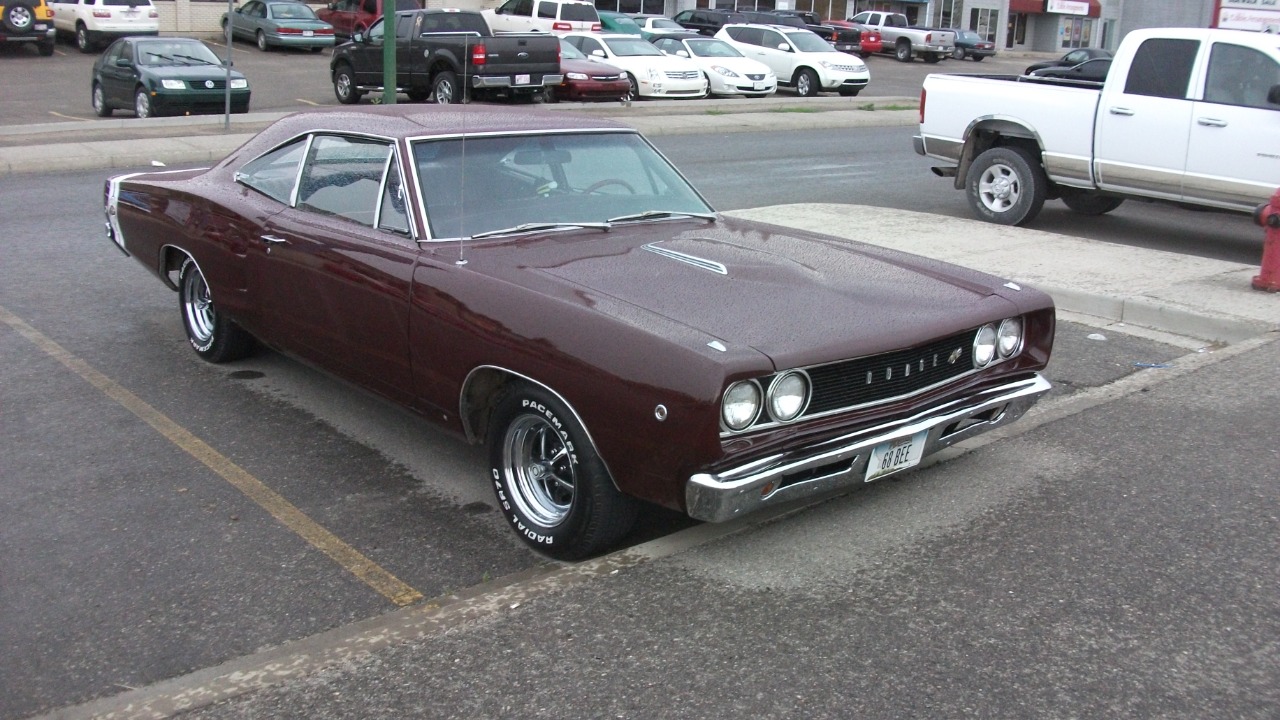
Under the hood, Dodge understood that numbers sell, especially to racers who lived by bragging rights. The standard 383-cid, 335-hp engine was already stout, but the real bait for the most serious street contenders was the availability of the legendary 426 Hemi. In period and in modern walk‑arounds, the 1968 Dodge Superb with a 426 Hemi V8 is described as putting out 425 horsepower and 490 pound-feet of torque, figures that still sound aggressive in an era of computerized traction control and launch modes.
Those raw numbers mattered because they translated directly into how the car behaved on a deserted stretch of asphalt late at night. A Super Bee with the 426 under its hood could idle with a lumpy menace, then rip through the revs in a way that left small-block rivals scrambling. When I watch modern comparisons of a 1968 Hemi car to later versions, the way the early Dodge Superb Hemi package is framed, with its 425 horsepower and 490 pound-feet, underlines how Dodge intentionally overbuilt the drivetrain to dominate impromptu stoplight duels, a point that comes through clearly in footage of the 1968 Hemi Super Bee being stacked up against a 1971 counterpart.
Chassis, shifter, and the feel of a factory hot rod
Power alone does not win a street race if the car cannot put it down, and this is where I see Dodge’s engineering choices as a direct nod to weekend racers. To keep the Super Bee composed when launched hard, Dodge gave the car a beefed-up, stiffened suspension that could handle aggressive weight transfer without turning the rear end into a hop‑happy mess. High-performance tires wrapped around sturdy wheels, and the whole setup was tuned so that the car felt ready for the drag strip the moment you rolled off the dealer lot.
The transmission choices reinforced that same mission. Buyers could opt for a heavy-duty manual transmission complete with a Hurst Competition Shifter, a detail that matters because it changed how the car felt in your right hand at the critical moment between first and second gear. That short, mechanical throw is exactly what a street racer wants when trying to shave tenths off a run, and it shows how Dodge and the Super Bee program were thinking about real-world launches rather than just brochure specs. The combination of the stiffened suspension, the sticky rubber, and the Hurst-equipped gearbox is laid out clearly in period-style rundowns of how Dodge tuned the Super Bee to excel on both the race track and the drag strip.
Pricing, image, and the youth-market bullseye
Targeting street racers was not only about hardware, it was also about making the car attainable to the very people who were already building home‑brew hot rods. Dodge kept the Super Bee’s price aggressive, positioning it as a cheaper alternative to more luxurious muscle while still offering big‑block performance. Later coverage of the broader Super Bee line notes that Mopars in this family started at around $3400 to start, and while that figure is tied to a 1970 example, it shows how the brand consistently tried to keep these cars within reach of young buyers who might otherwise be shopping used iron.
That strategy put the Super Bee in direct competition with rivals like the Pontiac GT and other mid‑size performance models that were chasing the same demographic. By leaning into a brash name, bold graphics, and a no‑nonsense spec sheet, Dodge made the car feel like a factory‑blessed street brawler rather than a dressed‑up family sedan. The way those Mopars were priced, with that around $3400 starting point and a clear focus on value against the Pontiac GT and similar offerings, underscores how Dodge used the Super Bee as a volume play in the youth performance market, a point that comes through in retrospectives on how Mopars stacked up on price against their rivals.
How the legend still speaks to modern gearheads
Decades later, I am struck by how the Super Bee’s original mission still resonates with enthusiasts who grew up far from the 1960s street scene. Modern video deep dives treat the 1968 Dodge Coronet Super Bee as a kind of time capsule, walking through the way its 383-cid, 335-hp heart and bare‑bones interior captured a moment when Detroit was willing to build cars that felt almost illicit. In one such look back, the host of Retroles Vault, appearing as Retro Vault, frames the 1968 Dodge Coronet Super Bee as “Mopar’s Street-Legal Stinger,” a phrase that neatly captures how the car blurred the line between sanctioned performance and outlaw speed.
Those modern perspectives also highlight how the Super Bee’s formula, from its Coronet roots to its Hemi options, still feels refreshingly honest in a world of complex drive modes and digital dashboards. When I watch a detailed breakdown of the 1968 Dodge Coronet Super Bee from Aug on the Retroles Vault channel, the emphasis on the car’s raw character and straightforward engineering reinforces the idea that Dodge built it with one clear purpose: to give street racers a factory tool that could hold its own against anything they might meet on a late‑night run. That enduring appeal, captured in the way Retroles Vault presents the Super Bee, is the final proof that Dodge hit its target when it turned a sensible Coronet into a street racer’s weapon.
More from Fast Lane Only: