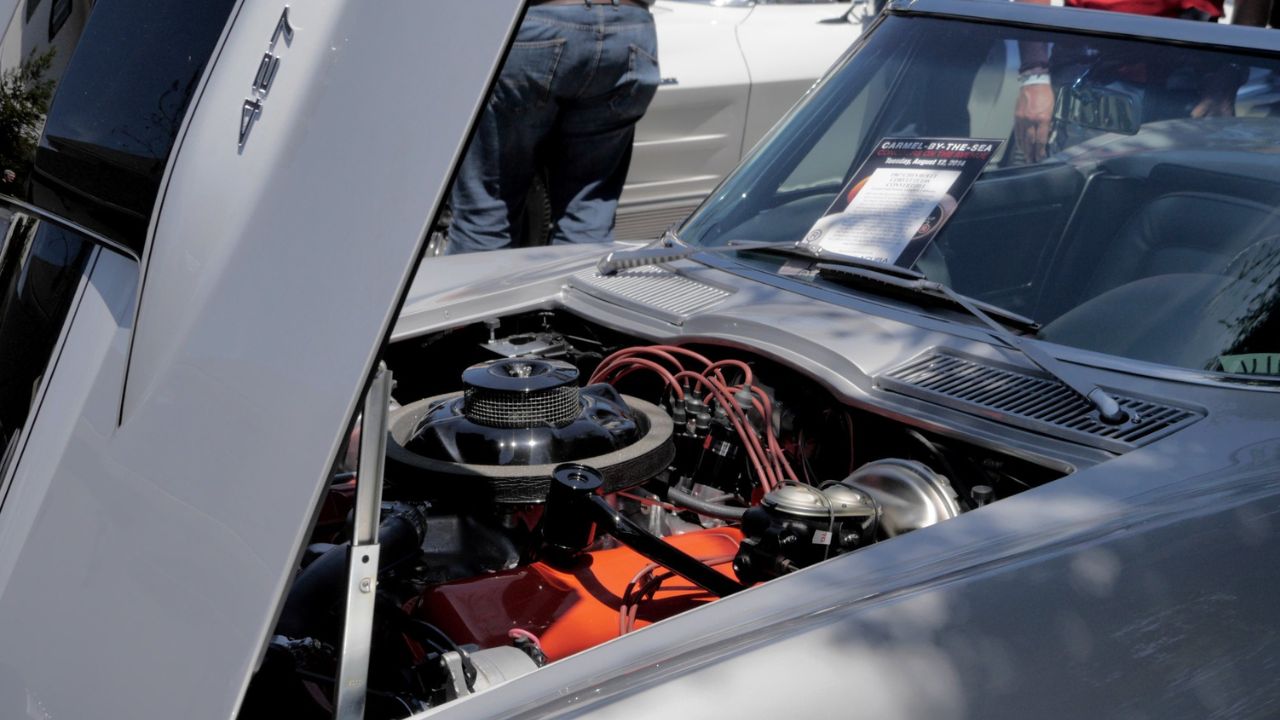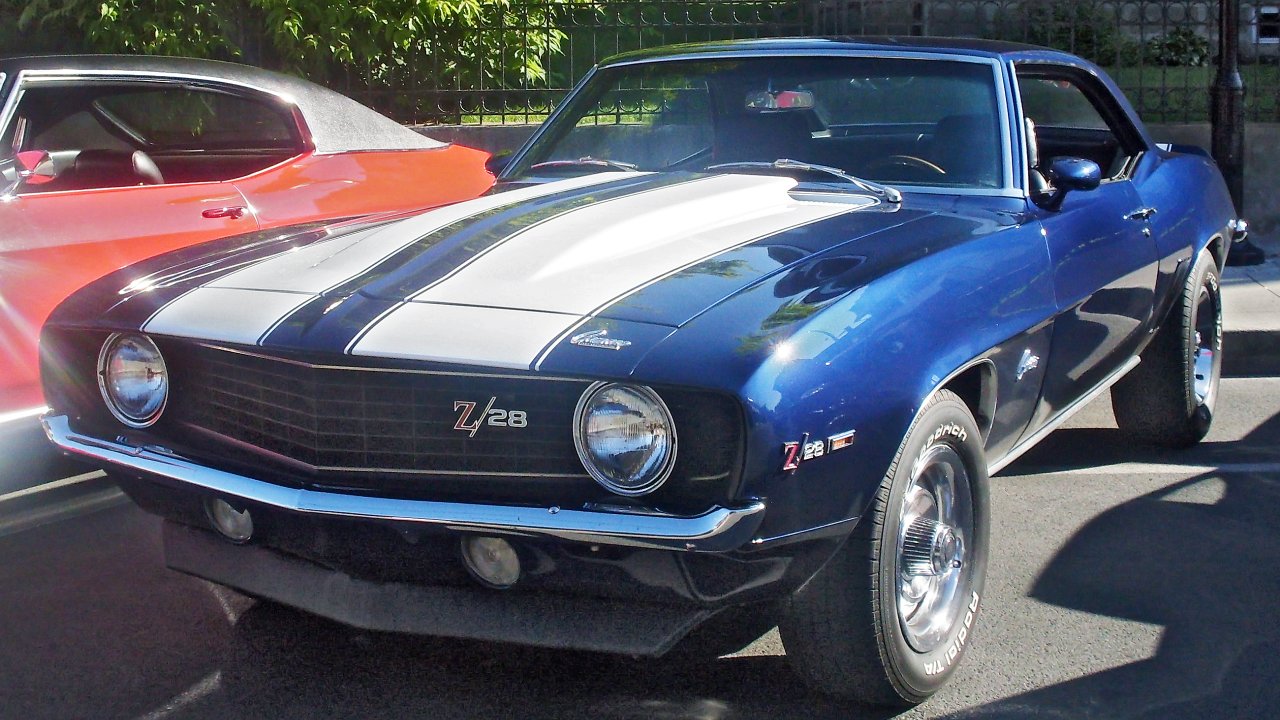
The 1969 Chevrolet Camaro Z/28 arrived in the middle of the horsepower wars, yet it did not rely on cubic inches to earn its reputation. Instead of chasing the biggest big block, Chevrolet built a small block road racer that could embarrass larger rivals where it mattered most, on a twisting track. I see the car’s legacy today in how it reframed muscle car performance, proving that balance and precision could beat brute force.
Trans‑Am rules that forced Chevrolet to think small
To understand how the 1969 Camaro Z/28 challenged big block muscle, I have to start with the rulebook that shaped it. The Sports Car Club of America’s Trans‑Am series capped engine displacement at 5.0 liters, which translated to roughly 305 cubic inches. That limit made Chevrolet’s existing big block V8s irrelevant for this form of racing, so engineers had to create a high winding small block that could live at race pace while still being sold in street cars. The Z/28 package became the bridge between showroom and circuit, a homologation special built so the Camaro could compete where the rules favored agility over raw size.
Chevrolet’s answer was the now legendary 302 cubic inch V8, a small block that combined a short stroke with a relatively large bore so it could rev freely and breathe at high rpm. Reporting on the engine’s development notes that Z28s received the 302 along with heavy duty cooling hardware, stiffened suspension, front disc brakes, and deep groove V‑belt pulleys to keep accessories spinning at sustained high speeds. By bundling this hardware into a single option code, Chevrolet effectively turned the Camaro into a track focused package that still met showroom requirements, a direct response to Trans‑Am’s displacement ceiling rather than a simple marketing exercise.
The underrated 302 that punched above its weight
On paper, the 302 did not look like a big block killer. Chevrolet rated the engine at 290 horsepower, a figure that seemed modest next to the 396 and 427 big blocks advertised with far higher numbers. Yet period testing tells a different story. A detailed account from the Newport Car Museum notes that Dynamometer tests at close to 400 hp made a joke of its 290 hp rating, revealing how conservative the factory figures really were. That gap between the brochure and the dyno is central to why the Z/28 could run with, and often outrun, larger engined cars that appeared stronger on spec sheets.
The 302’s character also set it apart from the big blocks it was up against. Where a 396 relied on low end torque, the Z/28’s small block came alive at higher rpm, encouraging drivers to keep the tach needle sweeping toward redline. Contemporary coverage of the car’s performance highlights how the engine’s willingness to rev, combined with close ratio gearing, let the Camaro stay in its power band through a series of corners. That behavior made the car feel more like a purpose built road racer than a traditional muscle coupe, and it is a key reason the Z/28 could exploit its horsepower advantage revealed by those 400 hp Dynamometer pulls.
Chassis balance versus big block brute force
Power alone did not allow the 1969 Camaro Z/28 to challenge big block rivals, and I find its chassis tuning just as important. Big block Camaros carried extra weight over the front axle, which could dull steering response and push the car toward understeer when driven hard. In contrast, the Z/28’s lighter small block helped preserve better weight balance, so the car could change direction more eagerly and maintain grip through long corners. Reporting on the model’s development emphasizes that it was engineered as a focused road racer, with suspension tuning and component choices made to support high speed handling rather than straight line launches.
That philosophy extended to details that might seem minor until you drive the car at the limit. Sources describing the 1969 Z/28 point to its upgraded suspension, front disc brakes, and period correct performance tires as a package that worked together to keep the car controllable on both track and street. Weight balance, tires, and everyday drivability were all considered, which meant the Z/28 could be used as a daily driver during the week and still hold its own at weekend events. In the context of the golden age of American muscle, where bigger was often considered better, this emphasis on composure and feedback gave the small block Camaro a real edge when the road stopped being straight.
How the Z/28 humbled big block muscle on track
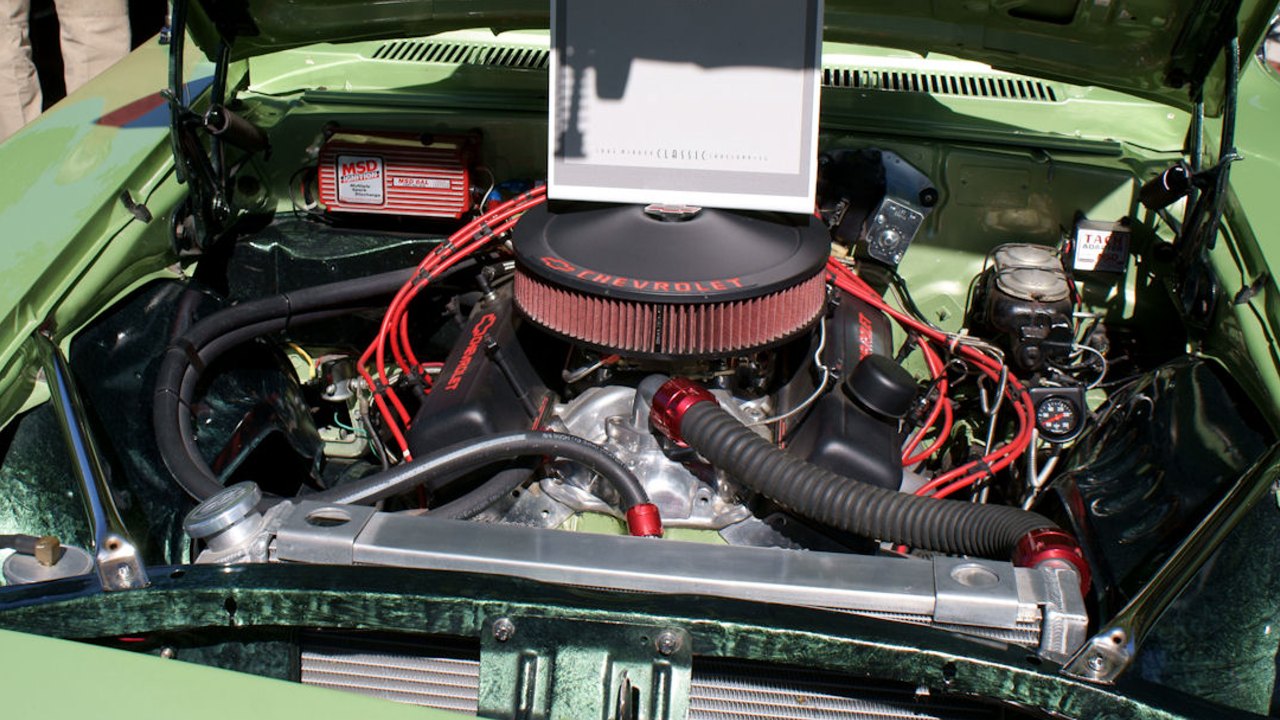
When I look at period accounts of American muscle car battles, the 1969 Z/28 stands out because it often beat larger engined cars in the environment it was built for. In the golden age of American muscle, bigger was often considered better, and big block Chevelles, Camaros, and rivals from other brands dominated drag strips and boulevard bench racing. Yet on road courses and technical back roads, the Z/28’s combination of rev happy 302, close ratio gearbox, and tuned suspension allowed it to carry more speed through corners and brake later, which translated into quicker lap times even when the competition boasted higher advertised horsepower.
Coverage focused on how the 1969 Z/28 took down big block muscle cars underscores that the car’s advantage was not just mechanical, but strategic. Chevrolet built the Z/28 to exploit a rule set that neutralized the displacement advantage of big blocks, then doubled down with chassis tuning that rewarded skilled drivers. Accounts of its performance describe a car that demanded commitment, since the 302 needed to be kept on the boil, but rewarded that effort with pace that surprised owners of heavier, more powerful machines. In that sense, the Z/28 did not simply keep up with big blocks, it reframed the contest around handling and endurance, where its design choices paid off.
Why the 1969 Z/28 still defines driver’s muscle
More than five decades later, I see the 1969 Camaro Z/28 regarded as the driver’s choice in the first generation Camaro range, and the reasons trace directly back to how it confronted big block thinking. Enthusiast oriented reporting describes the car as a standout performer because it paired a high revving small block with a chassis tuned for road racing, rather than quarter mile dominance. That balance helped the Z/28 earn a reputation that outlasts many of its contemporaries, since modern drivers often value steering feel, braking confidence, and composure as much as raw straight line bragging rights.
The car’s legacy also lives on in how manufacturers approach performance models today. The idea that a slightly smaller, lighter engine combined with focused suspension and braking upgrades can outperform a heavier, more powerful package is now a familiar formula, but in the late 1960s it cut against the prevailing wisdom of ever larger big blocks. By proving that a 302 rated at 290 horsepower, yet capable of roughly 400 on a Dynamometer, could topple larger rivals when the road turned, the 1969 Camaro Z/28 showed that smart engineering and rule savvy design could beat displacement. That is why, when I think about how it took on the big blocks, I see not just a single model year triumph, but a turning point in what American performance could mean.