The muscle car era produced no shortage of outrageous machines.
Manufacturers competed relentlessly for horsepower supremacy, introducing larger engines, more aggressive styling, and increasingly specialized performance packages. By 1969, buyers could walk into dealerships and order cars with power levels that only a few years earlier would have seemed almost unbelievable. The horsepower wars were approaching their peak, and Detroit’s engineers were pushing boundaries wherever possible.
Even in that environment, some cars stood apart.
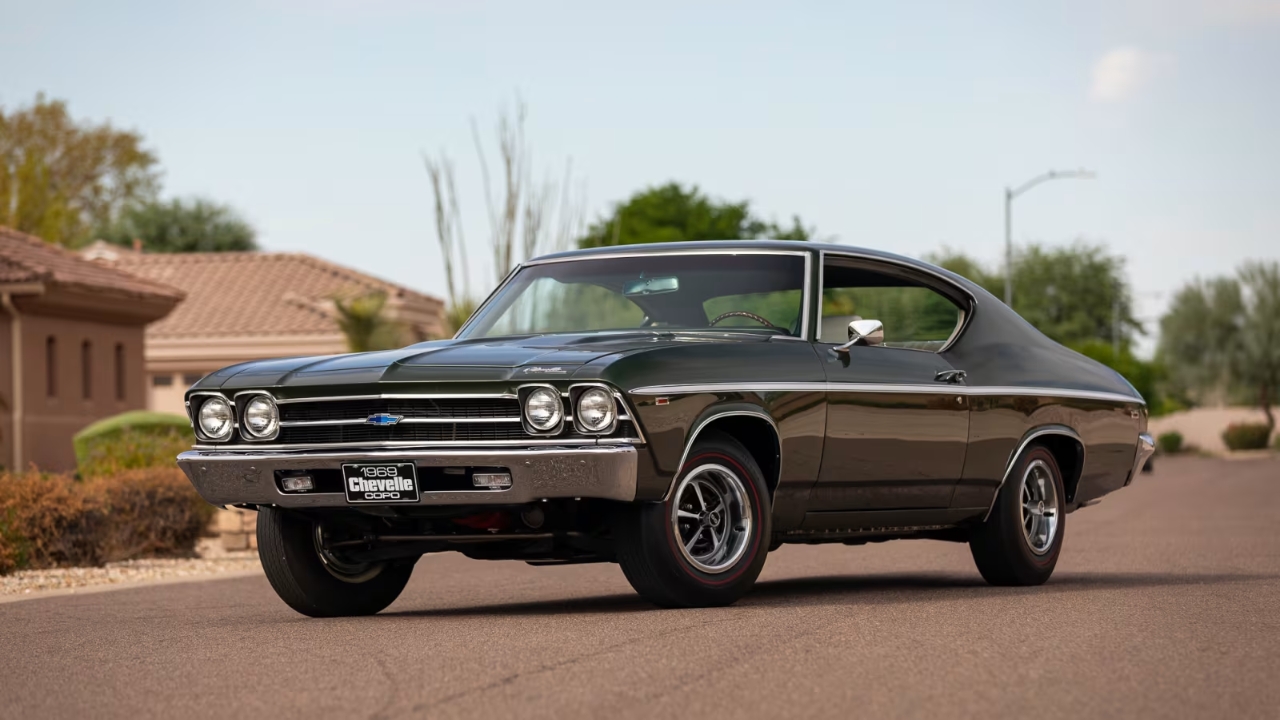
The 1969 Chevrolet Chevelle COPO was one of them.
Unlike many famous muscle cars, the COPO Chevelle was never intended to be a mainstream showroom attraction. It wasn’t heavily advertised, it didn’t appear prominently in sales brochures, and many Chevrolet customers never even knew it existed. Yet those who understood what the car offered realized they were looking at something extraordinary.
The COPO program allowed certain dealers to bypass normal ordering restrictions and create combinations that Chevrolet generally avoided offering through standard channels. In the Chevelle’s case, that meant installing one of the most intimidating engines available anywhere in General Motors’ lineup.
The result was a factory-built car that bordered on the outrageous.
More than fifty years later, the COPO Chevelle remains one of the most fascinating and extreme vehicles Chevrolet ever produced.
Chevrolet Had Internal Limits
To understand why the COPO Chevelle existed, it’s important to understand General Motors’ corporate policies during the late 1960s.
GM management maintained guidelines that restricted the size of engines installed in midsize vehicles. Although divisions such as Chevrolet, Pontiac, Oldsmobile, and Buick competed aggressively in the performance market, they still operated within broader corporate rules.
For Chevrolet, this meant the popular Chevrolet Chevelle SS typically topped out with engines such as the 396 big-block.
For most buyers, that was more than enough.
However, a small group of enthusiasts wanted something even more extreme.
Certain dealers believed there was demand for larger and more powerful engines than Chevrolet officially offered in its midsize lineup.
The COPO system provided a way to make that happen.
What COPO Actually Meant
COPO stood for Central Office Production Order.
The system was originally designed to allow dealers and fleet customers to request special equipment combinations that were not normally available through standard ordering processes. It was intended for practical business purposes rather than high-performance experimentation.
Performance-minded dealers quickly recognized its potential.
By using the COPO system creatively, they could request unusual configurations that effectively bypassed certain corporate limitations. The approach allowed dealers to build vehicles tailored to specific customer demands without requiring Chevrolet to officially market those combinations nationwide.
This loophole became legendary.
Some of the most famous COPO cars emerged because ambitious dealers understood how to navigate the system.
The Chevelle became one of the most remarkable examples.
Dealers Wanted More Than a 396
By 1969, muscle car competition had become incredibly intense.
Manufacturers throughout Detroit were offering increasingly powerful engines, and buyers paid close attention to performance specifications. While Chevrolet’s 396 remained highly respected, some enthusiasts wanted even greater displacement and stronger acceleration.
Dealers understood these desires.
They recognized that certain customers were willing to pay for maximum performance regardless of practicality. These buyers weren’t interested in compromise. They wanted the fastest and most powerful cars available.
The standard Chevelle lineup could satisfy many enthusiasts.
For a select few, however, it wasn’t enough.
The COPO program opened the door to something much bigger.
The 427 Changed Everything
The defining feature of the COPO Chevelle was its engine.
Through the COPO system, dealers could arrange for the installation of Chevrolet’s formidable 427-cubic-inch big-block V8. This engine had already earned an impressive reputation in racing and high-performance applications.
Placing it in the Chevelle transformed the car completely.
The 427 produced the kind of power that demanded respect. Its immense torque and strong horsepower output gave the midsize Chevrolet performance capabilities that rivaled some of the most feared muscle cars of the era.
The combination felt almost excessive.
That was precisely why enthusiasts loved it.
The COPO Chevelle represented the kind of factory-built hot rod that many performance fans dreamed about owning.
It Was Built for Serious Performance
The COPO Chevelle wasn’t created simply to generate impressive specifications.
The entire package focused on delivering meaningful performance.
The powerful 427 engine worked in conjunction with heavy-duty driveline components and other supporting hardware designed to handle the increased output. Chevrolet and participating dealers understood that adding substantial horsepower required corresponding upgrades elsewhere.
The result was a car capable of handling its newfound strength.
Owners received more than just a larger engine.
They received a thoughtfully assembled performance package engineered to take advantage of the available power.
This attention to detail contributed significantly to the car’s reputation.
The COPO wasn’t a gimmick.
It was the real thing.
The Appearance Remained Surprisingly Understated
One of the most fascinating aspects of the COPO Chevelle was its appearance.
Unlike some muscle cars that advertised their performance through bold graphics, oversized scoops, and dramatic trim packages, many COPO examples looked relatively restrained. Their visual presentation often failed to reveal the extraordinary capabilities hidden beneath the hood.
This subtlety enhanced the car’s appeal.
The COPO became a classic sleeper—a vehicle capable of surprising competitors who judged performance solely by appearance. Enthusiasts appreciated the idea of owning something rare and powerful without attracting excessive attention.
The contrast between appearance and capability became part of the legend.
People underestimated the car at their own risk.
It Was Never a Mass-Market Product
Another reason the COPO Chevelle remains so intriguing is its rarity.
Chevrolet never intended the car to become a high-volume production model. The COPO process naturally limited the number of vehicles built because special ordering required knowledgeable dealers and motivated buyers.
This exclusivity created immediate appeal.
Owners knew they possessed something unusual, while enthusiasts recognized that sightings would always be relatively uncommon. The car occupied a unique space within Chevrolet’s performance hierarchy.
It wasn’t a mainstream offering.
It was something special.
That distinction continues to attract collectors today.
The COPO Reflected the Creativity of the Era
The existence of the COPO Chevelle says a great deal about the muscle car era itself.
This was a period when manufacturers, dealers, and enthusiasts constantly searched for ways to gain an edge. Creativity often mattered as much as engineering. Dealers developed innovative solutions, manufacturers explored unconventional ideas, and buyers eagerly embraced new performance opportunities.
The COPO system embodied that spirit.
Rather than accepting limitations, participants found ways to work within existing structures while still achieving extraordinary results.
The Chevelle COPO became a symbol of that ingenuity.
Its existence demonstrated how flexible the performance market could be during its most exciting years.
Collectors View It as a Hidden Gem
Modern collectors place enormous value on authenticity and historical significance.
The COPO Chevelle offers both.
Because production numbers remained limited and documentation plays such an important role in verifying authenticity, genuine COPO cars occupy a special place within the collector community. Enthusiasts appreciate not only the performance but also the story behind the vehicle.
The car represents an alternative path through muscle car history.
It wasn’t created through conventional channels.
That unusual origin only increases its appeal.
Today, the COPO Chevelle is often viewed as one of Chevrolet’s most fascinating factory performance machines.
It Helped Define the Ultimate Chevelle
Many enthusiasts consider the COPO Chevelle one of the ultimate expressions of the Chevelle platform.
The standard SS models were already respected performance cars, but the COPO took the concept further. By pairing the midsize body with Chevrolet’s formidable 427, the program unlocked a level of capability that few factory vehicles could match.
The formula was simple.
Take a great muscle car.
Add one of Chevrolet’s best engines.
Enjoy the results.
Sometimes the most memorable ideas are also the most straightforward.
The Factory Muscle Car That Pushed Boundaries
Looking back, the 1969 COPO Chevelle succeeded because it challenged assumptions.
It demonstrated that factory performance could extend beyond standard catalog offerings. Through the creativity of dealers and the flexibility of the COPO system, Chevrolet customers gained access to a vehicle that seemed almost too wild to exist.
Yet it did exist.
And that’s what makes the story so compelling.
One of Chevrolet’s Most Extreme Creations
The 1969 Chevrolet Chevelle COPO created one of Chevy’s wildest factory cars because it combined a respected midsize platform with the mighty 427 big-block through a special-order process that bypassed traditional limitations.
The result was a rare, powerful, and highly capable muscle car that delivered performance far beyond what most buyers expected from a factory Chevrolet. Its understated appearance, limited production, and remarkable engine choice helped establish a reputation that has only grown stronger with time.
More than fifty years later, the COPO Chevelle remains a reminder of what made the muscle car era so exciting.
Rules were tested.
Boundaries were pushed.
And sometimes, the most extraordinary cars were the ones that almost weren’t supposed to exist at all.
More from Fast Lane Only