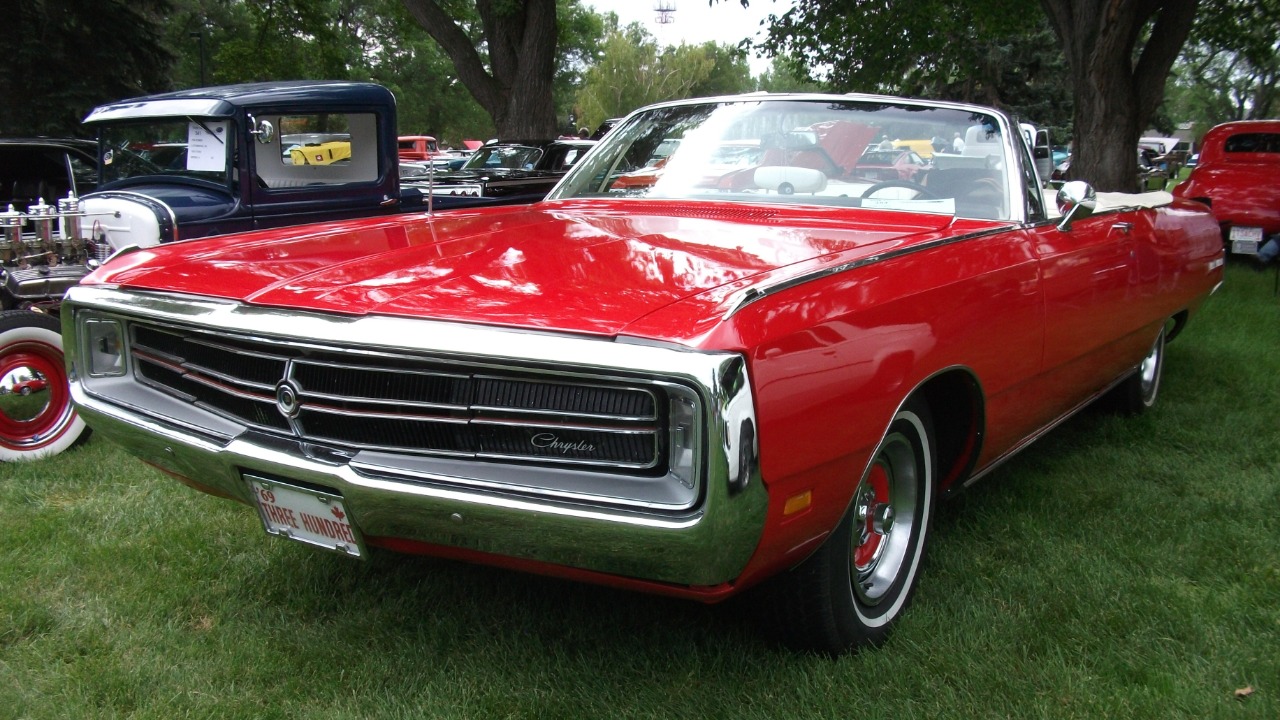
The 1969 Chrysler 300 arrived at a moment when Detroit’s big luxury bruisers were starting to feel the heat from smaller, sharper muscle cars. Instead of surrendering, Chrysler tried to fuse its long-running prestige coupe formula with genuine high performance hardware and a new, sleeker body. The result was a car that aimed to keep luxury muscle relevant by leaning into comfort and power at the same time, rather than choosing one over the other.
When I look at that single model year, I see a company trying to protect a legacy that stretched back to the original 300 “letter cars” while adapting to a market obsessed with quarter-mile times. The 1969 Chrysler 300 did not reset the sales charts, but it did show how far a full-size luxury coupe could be pushed toward the muscle-car end of the spectrum without losing its manners.
The 300 legacy meets a changing muscle era
By 1969, the 300 badge already carried serious weight. The line went back to the mid‑1950s, when the early “letter series” cars built a reputation for speed and sophistication, culminating in models like the 300-G that marked the last hurrah for designer Virgil Exner’s dramatic fins and introduced a new inverted grille treatment for the brand’s halo coupe. That heritage is laid out in club histories that trace how the 300-G and its siblings turned Chrysler into a quiet terror at high speed, long before the muscle car label became fashionable, and those same histories show how the company eventually closed out the letter series with the Chrysler 300L as tastes shifted toward cleaner shapes and more overt performance cues.
By the late 1960s, though, the market had changed. Smaller intermediates and pony cars were stealing the spotlight, yet Chrysler still saw value in a big, prestige two‑door that could run hard. Internal retrospectives describe how the company moved from the finned era into the so‑called “fuselage” body cycle, a clean and elegant look that wrapped the full‑size cars in smooth, aircraft‑inspired sides and a more integrated profile, even if that styling did not become the runaway sales hit the brand hoped it would. Against that backdrop, the 1969 Chrysler 300 was tasked with carrying forward the performance image of the earlier letter cars while wearing this new fuselage skin and competing in a showroom suddenly crowded with leaner, cheaper muscle machines.
Fuselage style and full-size presence
What strikes me first about the 1969 Chrysler 300 is how unapologetically big it is, even as the fuselage design tries to make that size look graceful. Contemporary analysis of the Chrysler lineup notes that the new body cycle brought a smoother, almost Coke‑bottle side profile and a more integrated front and rear, a deliberate break from the slab‑sided look of earlier 1960s full‑size cars. The 300 shared this architecture with other Chrysler models, but its specific trim, grille treatment, and badging signaled that it was the sporty luxury car of the company, a role that had been cultivated since the first 300s appeared in showrooms and that enthusiasts still recognize when they discuss how the fuselage coupes carried themselves on the road.
That mix of presence and subtle aggression helped the 300 stand apart from both the more conservative New Yorker and the wilder intermediate muscle cars. Period coverage of the Chrysler class of 1969 points out that while the fuselage look did not deliver a sales boom, it did give the big cars a distinctive identity at a time when the corporation was cycling through styling themes quickly. In the 300, that identity was sharpened by performance‑oriented details and a stance that suggested the car was meant to cruise at high speed rather than simply float along in traffic, a visual promise that its mechanicals were ready to back up.
Big‑block power with luxury manners
Under the hood, the 1969 Chrysler 300 did not pretend to be modest. The Chrysler 300 came standard with a 440 cubic‑inch V8, an engine it shared with the New Yorker but tuned here for a more assertive personality, and factory literature notes that this big‑block could be optioned to deliver up to 375 brake horsepower through a combination of carburetion and internal tweaks. That 440 gave the 300 the kind of effortless thrust that let it run with smaller muscle cars in real‑world conditions, especially on the highway where torque mattered more than weight, and it kept the car firmly in the conversation whenever enthusiasts compared full‑size performance machines.
What kept the 300 from feeling like a brute was the way Chrysler wrapped that power in comfort. Surviving equipment lists for a 1969 Chrysler 300 coupe read like a catalog of conveniences: Power steering, power brakes, power windows, power door locks, 6 way power seats, power antenna, climate control, and even a headlight system designed to make night driving easier were all part of the package or available options. That focus on amenities meant the 300 could be driven daily as a quiet, well‑equipped luxury car, then asked to hustle when the road opened up, a dual personality that reviewers at the time praised when they described how these hefty carriages could still be hustled with verve despite their size.
The Hurst experiment and limited‑run bravado
If the standard 300 was Chrysler’s attempt to balance luxury and performance, the Hurst edition was the brand’s way of shouting that message. Additional 485 were 2‑door, 5‑passenger “Hurst” models, a high‑performance version of the Chrysler 300 built by the Hurst Performance Co with distinctive paint, spoilers, and other hardware that pushed the car closer to the muscle‑car mainstream. Those limited numbers alone tell me how experimental the project was, a calculated risk to see whether a full‑size luxury coupe with serious drag‑strip associations could find enough buyers to justify its existence.
Enthusiast discussions of the Chrysler 300 from 1969 to 1971 often single out the Hurst additions, including lightweight panels and unique trim, as both technically interesting and visually polarizing, with some praising the crisp details and others finding them a bit much on such a large canvas. Social media posts that circulate photos of the 1969 Chrysler 300 Hurst still describe it as the sporty luxury car of the company, and even casual comments from fans like Kerri Antonious and 40 others, reflected in 41 reactions and a handful of shares, show how this rare variant continues to spark conversation decades later. In that sense, the Hurst experiment did exactly what Chrysler needed: it kept the 300 name in the enthusiast spotlight, even if the car itself remained a niche choice.
From letter‑car prestige to non‑letter survival
To understand how the 1969 Chrysler 300 tried to keep luxury muscle relevant, I have to place it in the broader arc of the badge. Club histories explain that the models released during the first decade of the 300’s life were referred to as the letter series because each new model was followed by a letter, a sequence that eventually ended the letter series with the Chrysler 300L as the company shifted strategy. By the time the non‑letter 300 returned for 1969, it was no longer a limited‑production hot rod but a regular part of the full‑size lineup, a change reflected in reference tables that list the Chrysler 300 from 1969 to 1971 alongside other big Chryslers rather than as a separate, exotic entry.
More from Fast Lane Only: