When enthusiasts talk about the great muscle cars of 1970, a familiar group of names usually dominates the conversation. The Chevrolet Chevelle SS 454, Plymouth Road Runner, Dodge Super Bee, Pontiac GTO Judge, and Buick GSX tend to receive most of the attention. These cars became the stars of the horsepower wars, appearing on magazine covers and earning lasting places in automotive history.
Lost among those famous machines was a car that was every bit as serious about performance.
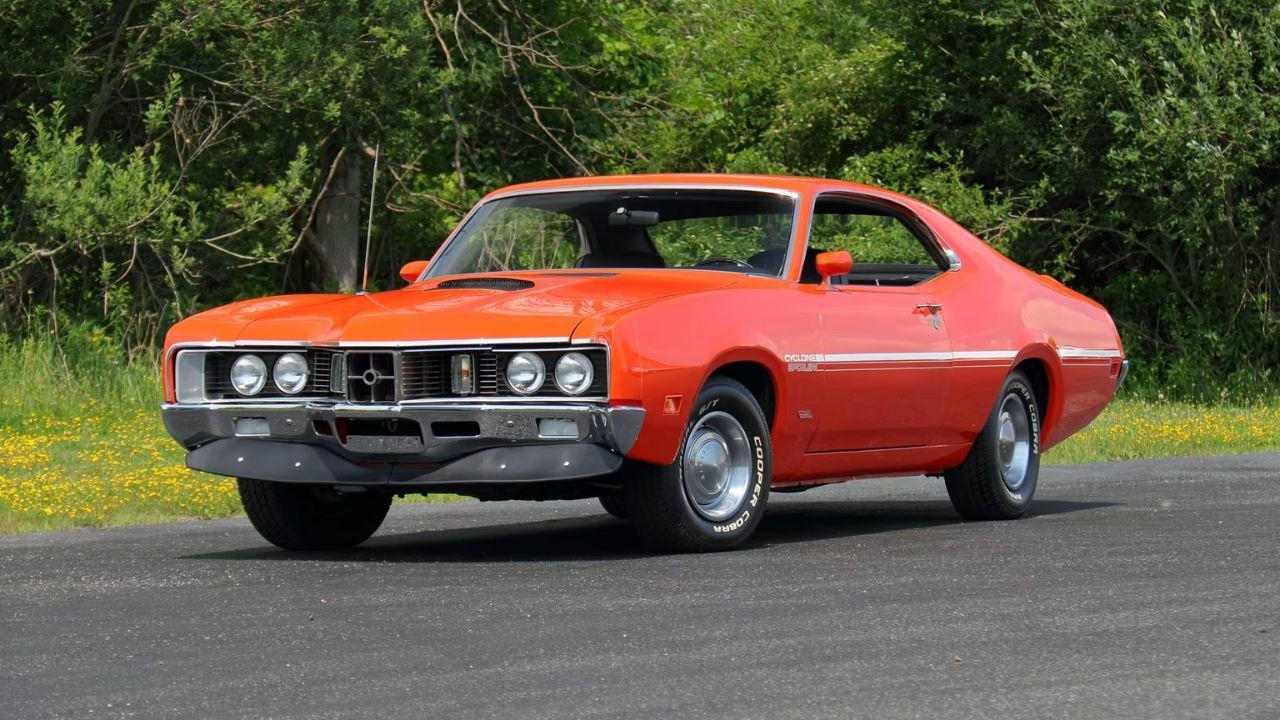
The 1970 Mercury Cyclone Spoiler arrived during the peak of the muscle car era with aggressive styling, powerful engine options, racing credentials, and enough speed to challenge many of Detroit’s most celebrated muscle machines. Yet despite its capabilities, it never achieved the same level of fame as some of its rivals.
Part of the reason was simple geography.
Mercury lived in the shadow of Ford.
While Ford enjoyed enormous visibility thanks to the Mustang, Torino, and various racing programs, Mercury often occupied a secondary role within the company’s performance strategy. That position caused many enthusiasts to overlook some remarkably capable automobiles.
The Cyclone Spoiler was one of them.
Today, it stands as one of the most underrated muscle cars of the golden era—a machine that proved you didn’t need the biggest reputation to deliver serious performance.
Mercury Wanted a Stronger Performance Identity
Throughout much of the 1960s, Mercury occupied an unusual place within the Ford Motor Company hierarchy.
Ford generally targeted mainstream buyers, while Lincoln catered to luxury customers. Mercury sat between those divisions, offering vehicles that blended comfort, style, and premium features.
The challenge was creating a unique identity.
As the muscle car market expanded, Mercury executives recognized an opportunity to strengthen the brand’s performance image. The division already enjoyed some success through racing and performance-oriented models, but it needed vehicles capable of attracting enthusiasts directly into Mercury showrooms.
The Cyclone became one of the primary tools for accomplishing that goal.
Originally introduced as a sporty version of the Comet, the Cyclone gradually evolved into a legitimate muscle car.
By 1970, it had become something much more serious.
The Redesigned Intermediate Platform Helped
The 1970 model year brought significant changes to Mercury’s intermediate lineup.
The Cyclone adopted new styling that gave it a more aggressive and aerodynamic appearance than previous generations. Designers emphasized a sleek front end, muscular proportions, and body lines that suggested speed even when the car was standing still.
The redesign reflected lessons learned through NASCAR competition and high-speed testing.
While many muscle cars focused primarily on straight-line performance, Mercury engineers increasingly paid attention to aerodynamics and stability.
The result was a car that looked purpose-built for speed.
The styling also helped distinguish the Cyclone from many competitors.
It possessed a unique appearance that felt more sophisticated than some rivals while still communicating performance intentions clearly.
The Spoiler Was More Than a Name
The Spoiler package represented the most performance-oriented version of the Cyclone lineup.
Mercury understood that muscle car buyers wanted visual excitement, so the package included distinctive graphics, aggressive trim, and styling enhancements designed to emphasize the car’s capabilities.
Most notably, the Spoiler featured front and rear aerodynamic elements that helped create a race-inspired appearance.
These components weren’t purely decorative.
During the late 1960s and early 1970s, manufacturers increasingly recognized the importance of aerodynamics in both racing and production vehicles.
The Cyclone Spoiler reflected that growing awareness.
Its appearance suggested a connection to competition, and that connection was very real.
NASCAR Helped Shape the Car
One reason the Cyclone Spoiler deserves more recognition is its relationship with NASCAR.
Mercury invested heavily in stock car racing during this period, and the Cyclone benefited from lessons learned on the track.
Drivers competing in NASCAR demonstrated that aerodynamic efficiency could provide meaningful advantages at high speeds. As a result, Mercury developed increasingly sophisticated body designs intended to improve airflow and stability.
The Cyclone Spoiler emerged from that environment.
Although the production car remained practical for street use, its styling clearly reflected racing influence.
The connection gave Mercury credibility among performance enthusiasts and helped distinguish the Cyclone from competitors that lacked such direct ties to motorsport development.
Cobra Jet Power Made It Competitive
Styling alone doesn’t create a muscle car legend.
Fortunately, the Cyclone Spoiler had plenty of performance to back up its appearance.
One of the most popular engine options was Ford’s legendary 429 Cobra Jet V8.
This massive powerplant represented one of the most formidable engines available anywhere in Detroit.
Officially rated at 370 horsepower, the Cobra Jet delivered immense torque and exceptional acceleration. Like many engines of the era, enthusiasts often believed the actual output exceeded published figures.
Whether or not that was true, the performance results spoke for themselves.
The Cyclone Spoiler could run with the best muscle cars available.
It wasn’t merely competitive.
It was genuinely quick.
The Ram Air Version Raised the Stakes
For buyers seeking maximum performance, Mercury offered the Super Cobra Jet package.
This option included performance upgrades designed to extract even more capability from the already potent 429.
Engine modifications, enhanced cooling, and specialized drivetrain components transformed the Cyclone into an even more serious performance machine.
The Super Cobra Jet package also reflected the increasingly intense nature of Detroit’s horsepower wars.
Manufacturers weren’t content simply offering powerful engines.
They wanted to offer the most powerful engines.
The Cyclone Spoiler participated fully in that competition.
Buyers who selected the right combination of options received a car capable of delivering impressive acceleration both on the street and at the drag strip.
It Faced Tough Competition
The Cyclone Spoiler’s biggest challenge wasn’t performance.
It was visibility.
The muscle car market in 1970 was overflowing with outstanding vehicles. Buyers choosing a performance car could select from an extraordinary range of options across virtually every major manufacturer.
Many of those competitors enjoyed stronger brand recognition.
The Chevelle SS 454 attracted Chevrolet loyalists.
The Plymouth Road Runner offered affordable performance and memorable marketing.
The Pontiac GTO Judge carried significant prestige.
The Buick GSX delivered enormous torque.
Against such competition, standing out proved difficult.
The Cyclone Spoiler often matched or exceeded rivals in performance, but it lacked the same level of public attention.
Buyers Appreciated the Balance
Those who chose the Cyclone Spoiler often discovered that it offered a compelling blend of attributes.
The car provided strong acceleration, distinctive styling, and comfortable road manners. It wasn’t as stripped-down as some budget-oriented muscle cars, nor was it excessively luxurious.
Instead, it occupied a useful middle ground.
The Cyclone delivered performance without sacrificing practicality.
For many buyers, that balance represented the ideal formula.
The car could serve as everyday transportation while still providing excitement whenever the road opened up.
That versatility helped earn it a loyal following.
Timing Wasn’t on Its Side
Like many high-performance cars introduced around 1970, the Cyclone Spoiler arrived just before major changes swept through the industry.
Insurance costs for powerful muscle cars began rising sharply.
Emissions regulations became increasingly restrictive.
Fuel economy concerns gradually gained importance.
These trends affected all manufacturers, including Mercury.
The original muscle car era would soon begin fading.
As a result, the Cyclone Spoiler’s moment in the spotlight proved relatively brief.
Its performance credentials remained impressive, but market conditions were changing rapidly.
Collectors Have Started Paying Attention
For many years, the Cyclone Spoiler remained one of the more overlooked muscle cars of its generation.
Collectors often focused on better-known rivals, leaving Mercury’s performance machines somewhat undervalued.
That situation has changed.
Enthusiasts increasingly recognize the Cyclone’s significance as one of Mercury’s strongest muscle car efforts. Its NASCAR connections, powerful engine options, distinctive styling, and relative rarity have all contributed to growing interest.
Well-preserved examples are now highly sought after by collectors who appreciate vehicles that offer both performance and uniqueness.
The market is finally giving the Cyclone some of the recognition it missed when new.
Mercury’s Forgotten Muscle Car Hero
The 1970 Mercury Cyclone Spoiler succeeded because it delivered everything muscle car buyers wanted.
It looked aggressive.
It offered serious horsepower.
It benefited from racing influence.
And it could challenge many of the most famous performance cars available.
Its problem wasn’t capability.
Its problem was competition.
The muscle car era produced so many legends that some excellent vehicles inevitably received less attention than they deserved.
The Cyclone Spoiler was one of those casualties.
The Challenger That Deserved More Credit
Looking back, the 1970 Mercury Cyclone Spoiler stands as one of the most underrated performance cars of the muscle car era.
It possessed the styling, engineering, and power necessary to compete with Detroit’s biggest names. Whether equipped with a Cobra Jet or Super Cobra Jet engine, the car offered performance that demanded respect.
Yet because it wore a Mercury badge rather than a more famous nameplate, it often remained overlooked.
Today, enthusiasts have the benefit of hindsight.
They can see what many buyers missed in 1970.
The Cyclone Spoiler wasn’t merely Mercury’s answer to the muscle car craze.
It was one of the strongest contenders in the entire field.
And for those willing to look beyond the usual legends, it remains one of the era’s most rewarding discoveries.
More from Fast Lane Only