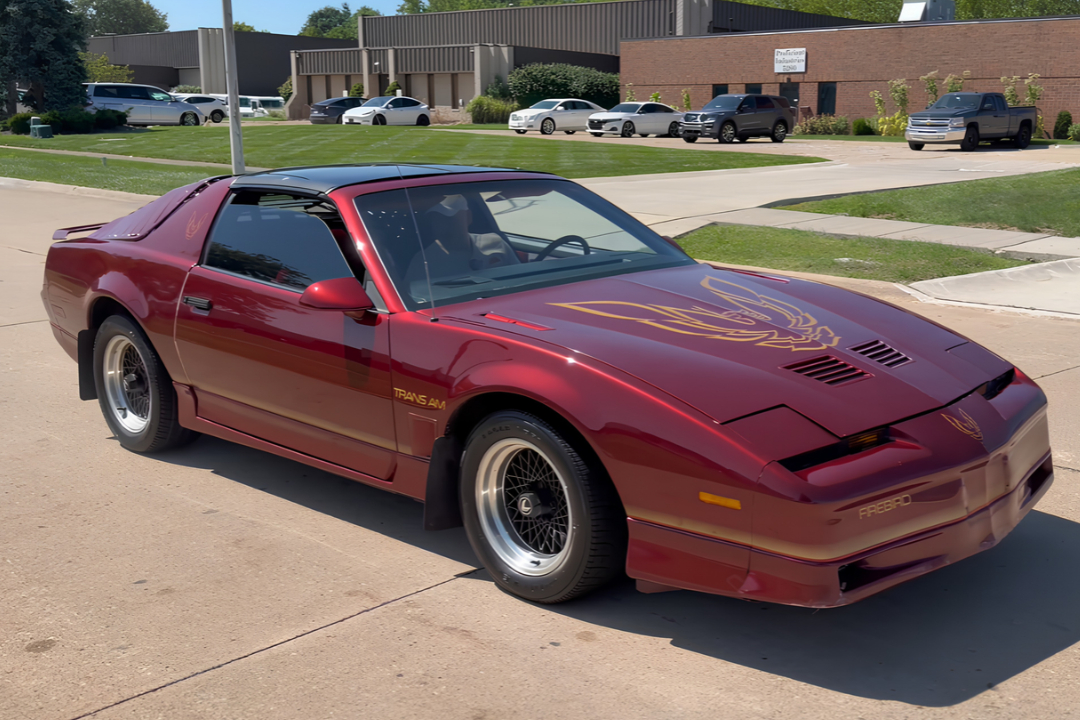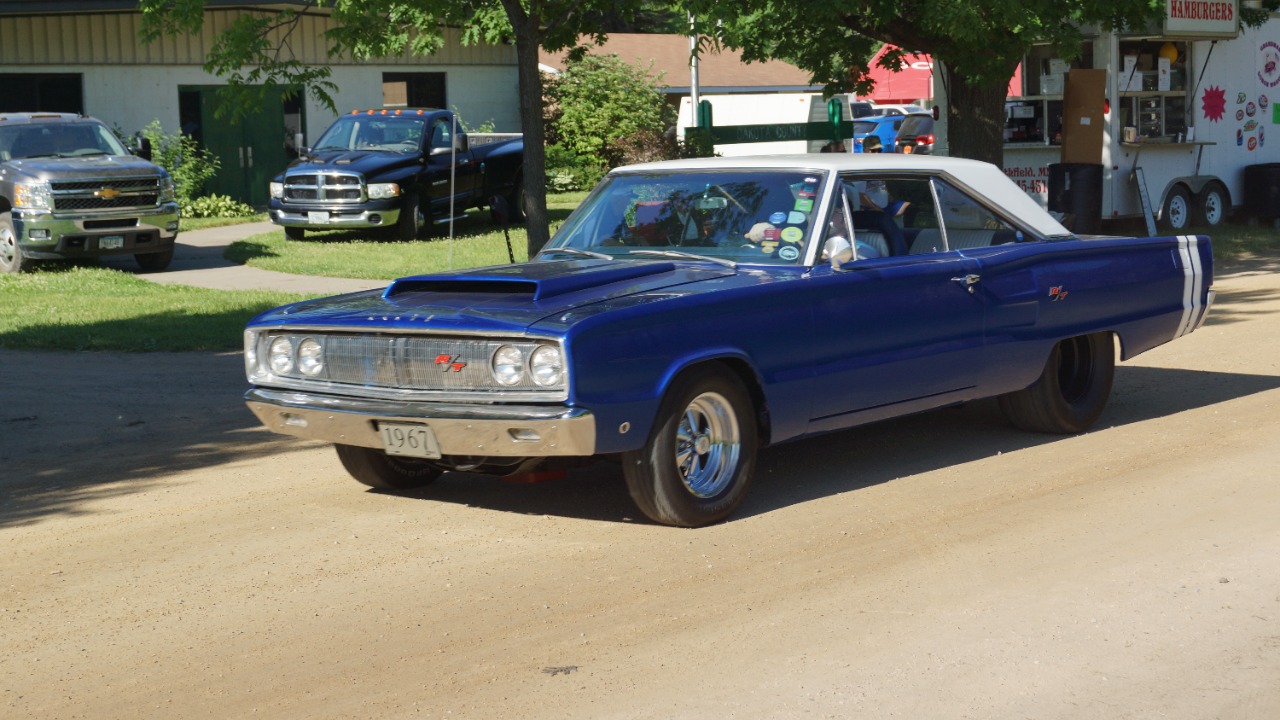
The muscle car era produced plenty of vehicles that demanded attention.
Bright paint colors, hood scoops, racing stripes, graphics packages, and aggressive styling became common sights in American showrooms during the late 1960s. Manufacturers competed not only in horsepower but also in visual drama, creating cars that looked every bit as fast as they actually were.
Yet not every buyer wanted to announce their intentions to the world.
Some enthusiasts preferred a different approach. They wanted powerful engines and serious performance, but they didn’t necessarily want the attention that came with driving a flashy muscle car. They valued speed over spectacle and capability over celebrity.
For those buyers, the 1967 Dodge Coronet R/T offered a compelling alternative.
Introduced for 1967, the Coronet R/T delivered impressive performance credentials wrapped in relatively restrained styling. It shared many of the mechanical ingredients found in more famous muscle cars but presented them in a package that appeared mature, understated, and surprisingly discreet.
In an era increasingly defined by excess, the Coronet R/T proved that performance didn’t always need to shout.
Sometimes it could simply get the job done.
Dodge Was Expanding Its Performance Lineup
By the mid-1960s, Dodge had become increasingly committed to performance.
Across Detroit, manufacturers were discovering that powerful engines sold cars. Young buyers wanted speed, and racing success often translated directly into showroom traffic.
Dodge already offered a variety of performance-oriented vehicles, but the company recognized that different buyers wanted different experiences.
Some customers preferred flashy, youth-oriented machines.
Others wanted performance without sacrificing comfort or sophistication.
The Coronet helped fill that second role.
Based on Dodge’s midsize platform, the Coronet occupied an important position within the lineup. It was large enough to provide comfort and practicality yet small enough to benefit from the powerful engines becoming available throughout the industry.
For 1967, Dodge introduced a new version specifically designed for enthusiasts.
The result was the Coronet R/T.
What R/T Actually Meant
The letters “R/T” stood for “Road and Track.”
Unlike some performance packages that focused exclusively on straight-line acceleration, Dodge intended the designation to suggest a more complete performance experience.
The company wanted buyers to view the Coronet R/T as a well-rounded performance automobile rather than simply a drag-strip special.
The badge quickly became one of Dodge’s most important performance identifiers.
Over time, it would appear on numerous models, but the Coronet was among the first vehicles to wear it.
From the beginning, the R/T designation signaled serious performance.
It also signaled a degree of sophistication.
The car wasn’t stripped down or bare-bones.
Instead, it combined power with comfort in a way that appealed to mature enthusiasts.
The Styling Stayed Surprisingly Restrained
One reason the Coronet R/T remains fascinating today is how subtle it appeared compared to many rivals.
Certainly, the car possessed visual cues that distinguished it from ordinary Coronets. Special badging, unique trim, and performance-oriented details helped establish its identity.
Yet Dodge avoided some of the more dramatic styling techniques that would become common later in the muscle car era.
There were no oversized graphics packages.
No wild decals.
No attention-grabbing paint schemes required to make the car stand out.
At a glance, many casual observers might not immediately recognize the Coronet R/T as a high-performance automobile.
That understated appearance became one of its greatest strengths.
Enthusiasts often refer to such vehicles as sleepers.
The Coronet R/T fit the description perfectly.
Standard Big-Block Power Set It Apart
While the styling remained relatively conservative, the engine choices left little doubt about the car’s purpose.
Unlike many competitors that required buyers to pay extra for serious performance, the Coronet R/T came standard with Chrysler’s 440-cubic-inch Magnum V8.
That was a significant statement.
The 440 represented one of the most respected big-block engines of its era. It delivered abundant torque, strong horsepower, and the kind of effortless acceleration enthusiasts craved.
The engine transformed the Coronet from an ordinary midsize car into a legitimate muscle machine.
Drivers didn’t need to search the option sheet for adequate performance.
It was included from the start.
That decision helped establish the R/T as a premium offering within Dodge’s lineup.
The 440 Magnum Was Built for the Street
One reason the Coronet R/T appealed to so many buyers was the character of its standard engine.
The 440 Magnum wasn’t necessarily the most exotic powerplant available in Chrysler’s catalog, but it excelled in real-world driving situations.
Its substantial displacement produced impressive low-end torque.
Torque is what creates the sensation of effortless acceleration. It’s what pushes a driver back into the seat and allows a car to surge forward without requiring constant gear changes.
The Coronet R/T had plenty of it.
Whether merging onto a highway or accelerating away from a stoplight, the car delivered performance with remarkable ease.
Many owners appreciated that flexibility.
The R/T felt fast almost everywhere.
The Hemi Option Raised the Stakes
For buyers who wanted maximum performance, Dodge offered an even more intimidating choice.
The legendary 426 Hemi could be ordered in the Coronet R/T.
Officially rated at 425 horsepower, the Hemi was one of the most feared engines of the muscle car era. Its hemispherical combustion chambers allowed exceptional airflow and helped produce extraordinary performance.
A Hemi-equipped Coronet R/T became something special.
The car retained its relatively understated appearance while gaining one of the most powerful production engines available anywhere in America.
That combination appealed strongly to enthusiasts who enjoyed surprising competitors.
From the outside, the car looked respectable.
Under the hood, it was anything but ordinary.
Comfort Was Part of the Formula
Unlike some performance cars that sacrificed refinement in pursuit of speed, the Coronet R/T maintained a high level of comfort.
The interior featured upgraded materials, attractive trim, and amenities that made the car suitable for everyday driving.
This approach reflected Dodge’s broader vision for the model.
The company wasn’t trying to create a bare-bones racer.
Instead, it wanted a vehicle capable of delivering performance without forcing owners to endure unnecessary compromises.
The result was a car equally comfortable on long highway trips and spirited weekend drives.
That versatility broadened its appeal considerably.
It Competed Against Flashier Rivals
The Coronet R/T entered a marketplace crowded with impressive competitors.
The Pontiac GTO had already established itself as a performance icon. The Chevrolet Chevelle SS was gaining momentum. Plymouth offered powerful alternatives of its own, while Ford and Mercury continued expanding their muscle car offerings.
Many of these vehicles relied heavily on visual excitement.
The Coronet R/T took a different path.
Rather than trying to outshine competitors stylistically, Dodge focused on providing substance.
The strategy didn’t generate the same headlines, but it earned the respect of knowledgeable enthusiasts.
Those who understood performance recognized exactly what the Coronet offered.
Buyers Appreciated the Discretion
One reason the Coronet R/T developed a loyal following was its ability to fly under the radar.
Insurance companies, law enforcement, and competitors often paid more attention to vehicles with obvious performance credentials.
The Coronet’s relatively restrained appearance helped it avoid some of that scrutiny.
Owners enjoyed driving a car that delivered serious performance without constantly attracting attention.
That quality became increasingly valuable as the muscle car era progressed.
Not everyone wanted their vehicle announcing its capabilities at every opportunity.
The Coronet provided an alternative.
The R/T Name Would Live On
Although the 1967 Coronet R/T represented only the beginning of Dodge’s R/T story, it helped establish a performance tradition that continues today.
Over the decades, the R/T badge would appear on numerous Dodge vehicles, becoming one of the company’s most recognizable performance designations.
The original Coronet R/T helped define what the badge represented.
Powerful engines.
Strong street performance.
Comfortable interiors.
And a focus on delivering substance rather than relying solely on image.
Those qualities became central to Dodge’s performance identity.
Collectors Are Rediscovering the Coronet
For many years, the Coronet R/T remained somewhat overshadowed by more famous muscle cars.
Collectors often focused on Chargers, Challengers, and other high-profile models.
Recently, however, appreciation for the Coronet has increased significantly.
Enthusiasts have begun recognizing the car’s unique combination of performance, rarity, and understated character.
Well-preserved examples equipped with the 440 Magnum or 426 Hemi have become increasingly desirable.
The market is gradually acknowledging what owners understood decades ago.
The Coronet R/T was special.
The Muscle Car for Grown-Ups
Looking back, the 1967 Dodge Coronet R/T occupied a unique niche within the muscle car world.
It offered the same kind of powerful engines and impressive acceleration that made the era famous, but it delivered those qualities in a more mature package.
The car didn’t need wild graphics or flamboyant styling to establish credibility.
Its performance spoke for itself.
That restraint helped distinguish it from many contemporaries.
Fast Without Being Flashy
The 1967 Dodge Coronet R/T succeeded because it understood that not every performance buyer wanted the same thing.
Some enthusiasts wanted attention.
Others simply wanted speed.
The Coronet catered to the second group.
With its standard 440 Magnum, available 426 Hemi, comfortable interior, and understated styling, it provided serious muscle car performance without the constant spotlight that followed more flamboyant competitors.
More than half a century later, that combination remains appealing.
The Coronet R/T proved that a muscle car didn’t have to be loud to be fast.
Sometimes the most impressive cars were the ones that let their performance do the talking.
More from Fast Lane Only