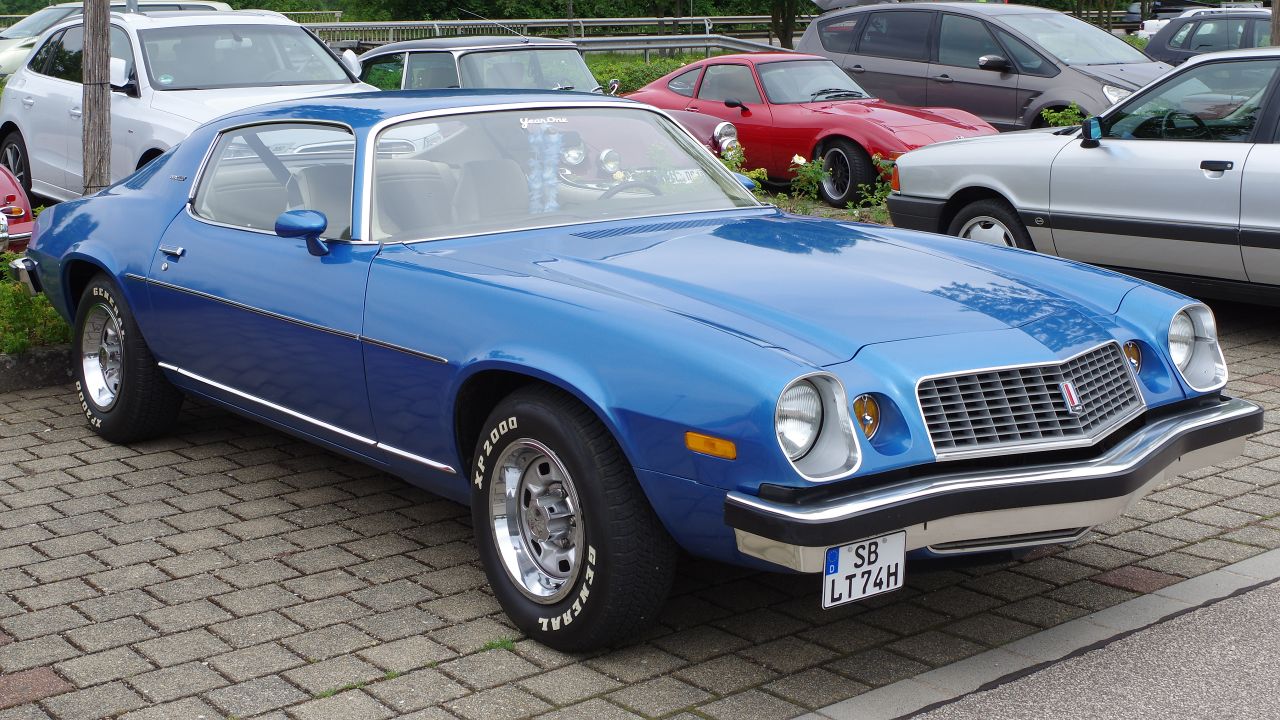
The 1974 Camaro arrived at a moment when federal safety and emissions rules were reshaping every American performance car, yet it still had to look and feel like a desirable coupe. Instead of walking away from style, Chevrolet stretched and reshaped its second-generation body to absorb new bumpers, seat belt systems, and crash standards while keeping the car recognizably sporty. The result was a model year that quietly proved a pony car could adapt to regulation without losing its visual drama or everyday usability.
Stretching the second generation without breaking its lines
By 1974, the second-generation Camaro already carried a distinctive fastback profile, and the challenge was to integrate new safety hardware without sacrificing that basic shape. The underlying body still used the long hood and short deck proportions, with a fastback roofline and ventless full-door glass that defined the generation, but the car grew longer to accommodate impact-absorbing structures. The overall length increase, roughly seven inches compared with the previous year, came from extended front and rear sections that had to meet updated crash standards while preserving the low, aggressive stance that buyers expected from a Camaro.
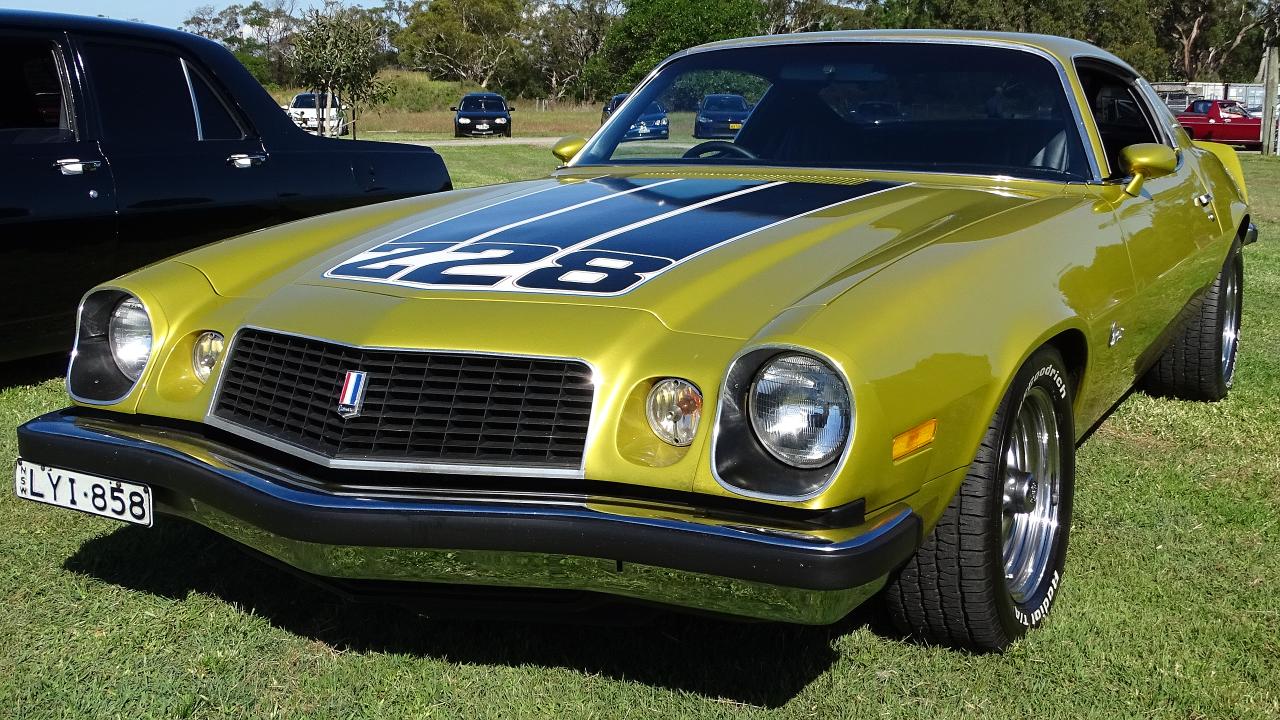
That stretch was not just sheet metal for its own sake, it was a response to bumper regulations that demanded more protection in low speed impacts. The 1974 Chevrolet Camaro Z28 Type LT, for example, is described as seven inches longer than a comparable 1973 model, a change tied directly to the mid-cycle refresh that reworked both ends of the car. Both the front and rear of the 1974 Camaro were redesigned with aluminum bumpers, and that redesign added length and a significant amount of weight, yet the basic fastback silhouette and wide-track posture remained intact. The car looked bulkier, but it still read as a performance coupe rather than a safety experiment.
New bumpers, new face, same attitude
The most visible evidence of the safety push was the Camaro’s new bumpers, which had to satisfy stricter impact rules without turning the car into a box. Designers leaned on new extruded aluminum face bars supported on flat leaf springs, a technical solution that allowed the bumpers to absorb energy while sitting closer to the body than heavy chrome beams. Both the front and rear were reworked, with a sloping body colored fascia that included the grille and headlamp surrounds, so the bright metal appeared as a crisp accent rather than a protruding battering ram. The front end, grille, and headlights were redesigned, and a new rear bumper completed the transformation, giving the refreshed Camaro a cleaner, more integrated look than many of its contemporaries that simply bolted on massive guards.
That approach helped the car keep its personality even as regulations tightened. The sloping fascia and tucked-in aluminum bumpers meant the Camaro could meet impact standards while still presenting a pointed nose and muscular tail, instead of the flat, upright faces that began to appear on some rivals. The mid-cycle refresh that created the 1974 Chevrolet Camaro Z28 Type LT shows how far the design team went to blend safety and style, using the new bumper system to visually widen the car and emphasize its performance image. New extruded aluminum face bars and the revised rear bumper did add mass, but they also framed the taillights and grille in a way that made the car look more modern, not merely more compliant.
Seat belts, “Occupant protection,” and the new safety culture
Safety in 1974 was not just about what happened outside the car, it was also about how people were restrained inside it. Beginning with 1974 models, the law required that all automobiles sold in the United States be equipped with a passenger restraint system that met new federal standards, and Chevrolet leaned into that requirement with a more formal focus on “Occupant protection.” The 1974 Camaro brochure highlights seat belts with pushbutton buckles for all passenger positions, a detail that signaled a shift from basic lap belts to a more user-friendly, standardized system. Two combination seat and shoulder belts for front occupants reflected the growing expectation that drivers and passengers would be secured across both the lap and torso, not just held in place at the waist.
Dealership training materials from the period underscore how central this change was to the Camaro’s story. Beginning with the 1974 model year, the law required that all automobiles be equipped with a passenger restraint system that dealers had to explain and demonstrate, turning belts from optional accessories into core equipment. The Camaro’s pushbutton buckles and integrated front shoulder belts were part of that broader shift, and they were marketed as features that enhanced comfort and convenience as much as safety. By framing these systems as part of a comprehensive Occupant protection package rather than a regulatory burden, Chevrolet managed to fold new rules into the Camaro’s appeal, presenting the car as both responsible and fun to drive.
Performance under pressure from emissions rules
While safety hardware reshaped the Camaro’s body and cabin, emissions regulations and unleaded fuel were quietly reshaping what happened under the hood. By the mid 1970s, many enthusiasts argued that emissions controls and the move to unleaded gasoline robbed the second generation of horsepower, and the 1974 model sat squarely in that debate. The car carried more weight from its extended bumpers and structure, yet it also had to breathe through cleaner exhaust systems and lower compression ratios, a combination that inevitably dulled straight line performance compared with the peak early muscle years. The tension between regulation and raw output became part of the Camaro’s identity, as fans weighed the benefits of a more refined, safer car against the loss of some high rpm drama.
Even with those constraints, the 1974 Camaro still offered credible performance for drivers who knew what they were getting. Contemporary reviews of the 1974 Camaro Z28 LT describe a car that remained quick and engaging, with the chassis and steering benefiting from the second generation’s wider track and more sophisticated suspension layout. A later test drive of a 1974 Camaro Z28 LT by Chad and Dalton from Coyote Classics in Iowa highlights how the car’s character survived the regulatory squeeze, with the reviewers noting the rarity and desirability of a well preserved example. The broader narrative around the second generation, captured in reflections on the Gen Cam era, acknowledges that emissions controls took a toll on peak numbers, yet it also credits the platform with keeping the performance coupe concept alive when many competitors faded.
How enthusiasts remember the 1974 Camaro today
Half a century later, the 1974 Camaro occupies a nuanced place in enthusiast memory, often appreciated more for its balance of style and survivability than for outright speed. Owners and fans who grew up with the car frequently recall it as a dream machine from their high school years, even as they admit that styling and the 5 mile per hour bumper look can be debated. In one short video, a longtime fan calls the “74 Z28” one of his favorite cars precisely because it was his teenage dream, a reminder that emotional attachment often outlasts spec sheet arguments. That kind of nostalgia has helped lift interest in later second generation cars, which were once overlooked in favor of earlier, higher horsepower models.
More from Fast Lane Only: