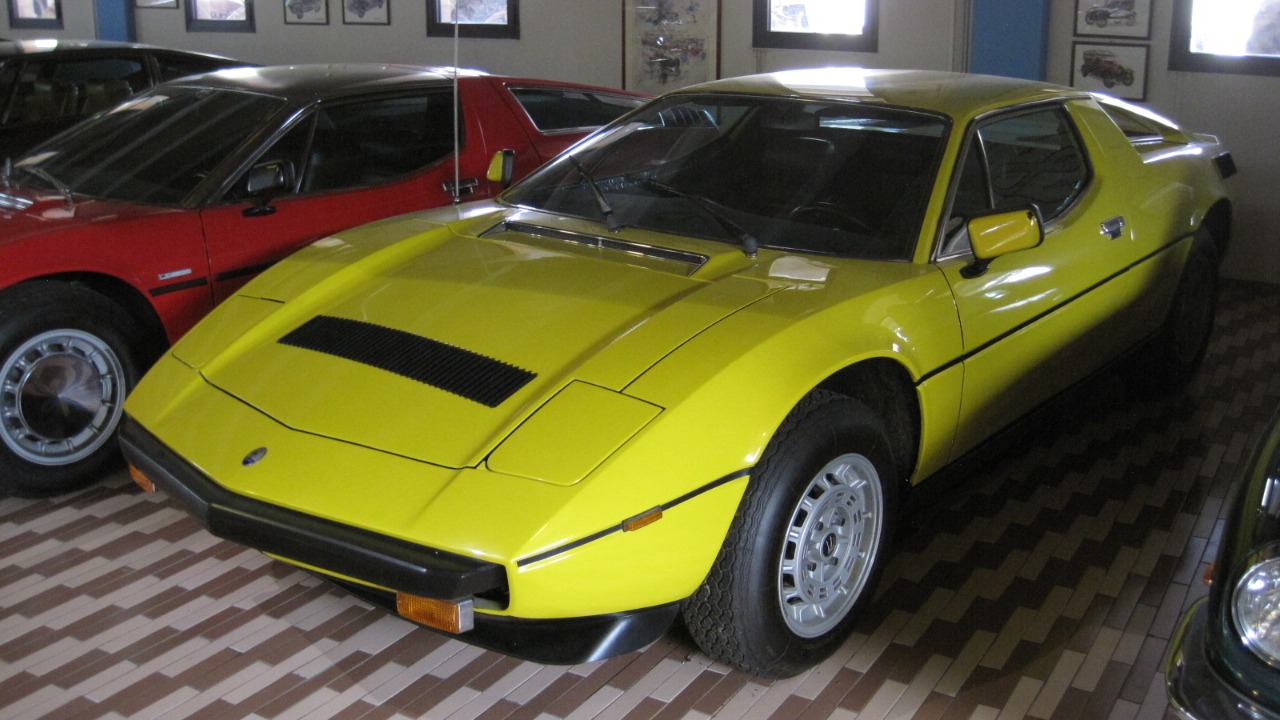
The 1975 Maserati Merak arrived as a mid‑engined Italian exotic that tried to be less intimidating and more attainable than the brand’s purebred supercars. Instead of chasing only wealthy collectors, it aimed at drivers who wanted drama in the driveway but also seats for the kids and a running cost that did not feel like a racing budget. I see it as one of the earliest attempts by a traditional luxury marque to broaden its base without completely diluting its mystique.
From Bora bloodline to broader brief
When I look at the Merak, I see a car born directly from the shadow of the Bora yet pointed at a very different buyer. The Bora was a V8 hammer, a two‑seat flagship that put Maserati in the same conversation as the wildest Italian exotics of the early seventies. The Merak shared that basic mid‑engine layout and low wedge stance, but it swapped out the big V8 for a smaller unit and stretched its mission from pure speed to everyday usability. That shift in hardware and packaging is where the chase for a wider audience really begins.
Unlike the V8‑powered Bora, the Merak used a punchy 3.0‑liter V6 derived from the Citroën SM, a decision that immediately changed the character of the car. The more compact engine allowed the Merak to carry a 2+2 layout rather than the Bora’s strict two‑seat cabin, and that extra pair of seats, however occasional, signaled that Maserati wanted owners to think about school runs and weekend trips as much as late‑night blasts on empty roads. The Merak still looked like a thoroughbred, but its mechanical heart and interior layout were tuned to invite more people in.
Giorgetto Giugiaro’s shape, softened for real life
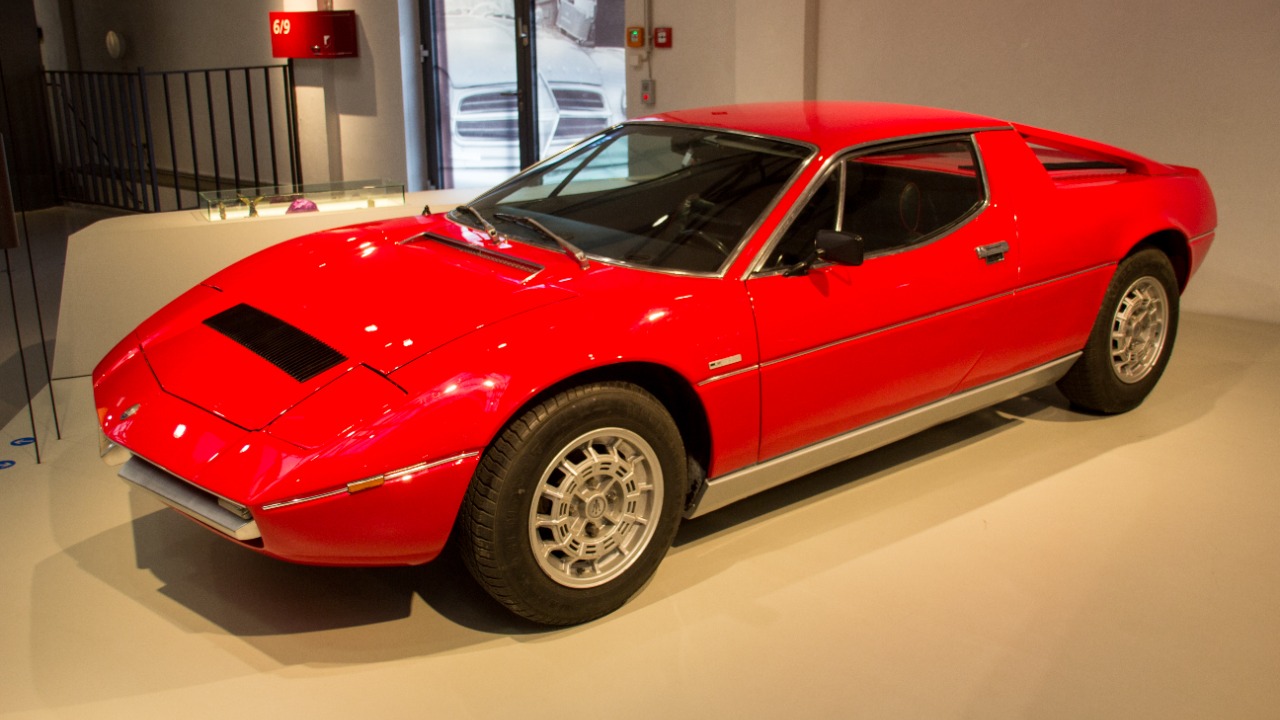
Styling is where I think the Merak pulled off its cleverest balancing act. The body was penned by Giorgetto Giugiaro, and The Maserati Merak immediately attracted attention with its spectacular design that combined sharp edges with flowing surfaces in a way that still feels modern. The silhouette echoed the Bora, yet the Merak’s open rear buttresses and lighter tail treatment made it appear less brutal and more approachable, almost as if Giugiaro had sanded down the visual aggression to match the car’s more inclusive mission.
That design did more than turn heads, it helped Maserati pitch the Merak as a car that could sit outside a suburban house without looking absurd. The 2‑door 2+2 layout wrapped in Giugiaro’s lines suggested a grand touring role rather than a track‑only toy, even if some critics later argued that the spectacle of the body did not always match the car’s performance. By keeping the drama but dialing back the menace, The Maserati Merak managed to look every inch the Italian exotic while quietly promising a friendlier ownership experience.
Packaging the V6: more seats, more sense
Under the skin, the Merak’s V6 layout was the key that unlocked its broader appeal. By shrinking the engine compared with the Bora, Maserati freed up precious cabin length, which it used to squeeze in those rear seats that turned the car into a genuine 2+2. The smaller engine allowed the Merak to hold four people of roughly human proportion rather than two like in the Bora, and that single change made it far easier for an enthusiast to justify the car as a family’s only special machine instead of a selfish toy.
There was a practical upside beyond seating. The V6, derived from the Citroën SM, promised improved reliability and more manageable running costs over time, which mattered to buyers who were stretching to get into a Maserati rather than adding one to a stable. With the engine sitting behind the cabin but not dominating the chassis, the Merak offered a blend of mid‑engine balance, usable luggage space, and a cabin that could handle daily life. In my view, that combination of packaging and perceived durability was central to Maserati’s attempt to widen its customer base.
The SS evolution and the push for credibility
As the decade moved on, Maserati had to prove that the Merak was not just a pretty face with a practical streak, so the Merak SS arrived as a sharpened evolution. Power and performance were lifted, and the car’s image shifted slightly back toward the serious sports‑car end of the spectrum without abandoning its 2+2 promise. When I watch Aug and Harry guide a Maserati Marac SS through modern traffic, what stands out is how the car still feels compact and usable, even as it stretches its legs toward a claimed 154 mph, a reminder that Maserati wanted the SS to silence anyone who thought the Merak was soft.
The refinement of the formula is clear in later cars such as the 1980 Maserati Tipo AM122/A Merak SS 2+2, which shows how the company kept iterating on the original idea. That model, often referred to simply as Maserati Tipo in enthusiast circles, retained the 2+2 layout but layered in detail improvements to the cabin and mechanicals that made it a more polished companion. A pristine Merak SS from that era shows how Maserati tried to keep the car relevant for buyers who wanted both the cachet of an Italian badge and the reassurance of a more mature product. In my eyes, the SS variants were Maserati’s way of telling the market that practicality did not mean compromising on pace or presence.
Legacy of an accessible exotic
Looking back from today, I see the 1975 Merak as a template for how a luxury sports‑car maker can reach beyond its traditional clientele without losing its soul. By borrowing the Bora’s basic architecture, wrapping it in Giorgetto Giugiaro’s dramatic yet livable bodywork, and dropping in a Citroën‑sourced V6 that enabled a 2+2 cabin, Maserati created a car that spoke to enthusiasts who needed their dream machine to do more than sit under a dust cover. The Merak’s mix of spectacle and sense did not always satisfy purists who wanted raw numbers, but it resonated with drivers who valued the idea of an exotic they could actually use.
In a market now full of “everyday supercars,” the Merak’s strategy feels surprisingly modern. It chased a wider audience by softening the edges of the Bora formula, adding seats, and promising more approachable ownership while still delivering the sound, stance, and theater people expected from an Italian mid‑engine coupe. When I picture a 1975 Merak threading through traffic or parked outside a modest house, it captures a moment when Maserati tried to democratize a slice of the exotic‑car experience, and that ambition is a big part of why the car still matters to me today.
More from Fast Lane Only: