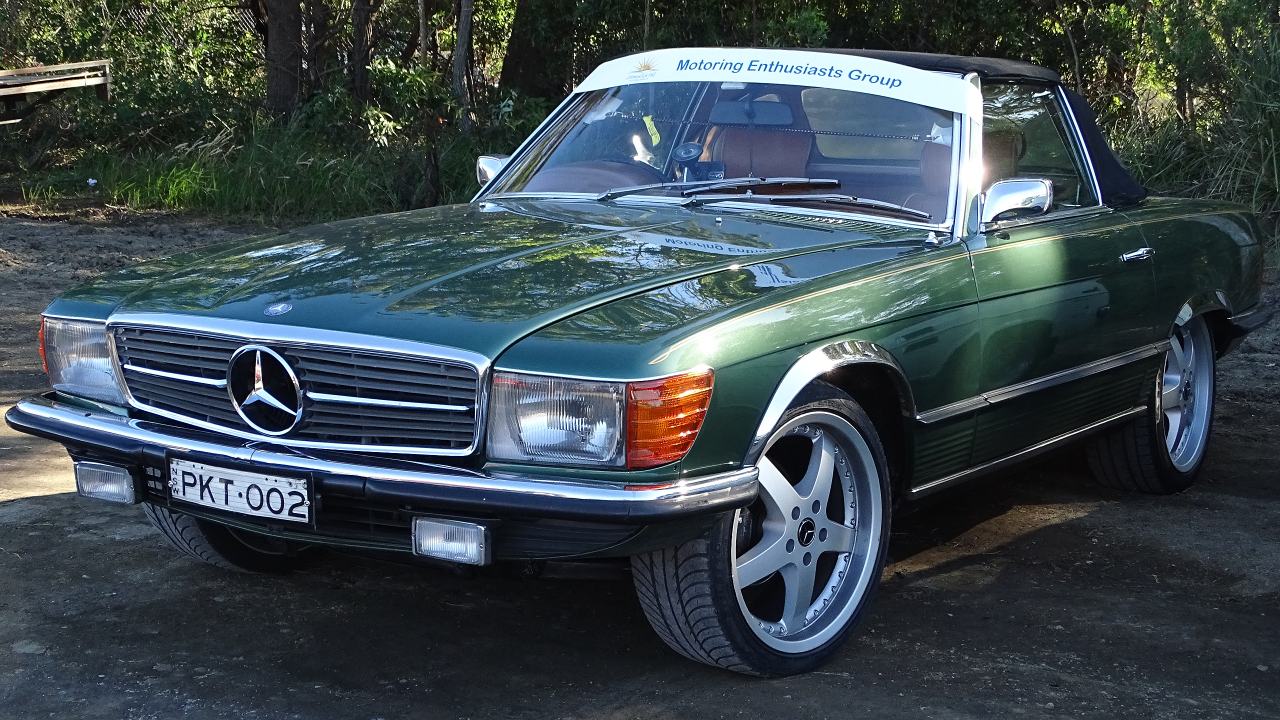
The 1976 Mercedes-Benz 450SL arrived at a moment when drivers were being asked to care as much about crash protection as chrome. Rather than treating safety as a grudging add-on, Mercedes-Benz used the R107 roadster to prove that structural engineering, passive protection and relaxed grand-touring style could live in the same elegant two-seat package. Nearly fifty years later, the car’s mix of robust construction, thoughtful ergonomics and understated glamour still feels like a blueprint for how to make safety desirable.
Looking closely at the 450SL, I see a car that wears its engineering lightly. Beneath the long hood and slim bumpers is a carefully managed crumple structure, a rigid passenger cell and a cabin packed with comfort features that quietly support driver focus. The result is a roadster that feels less like a fragile toy and more like a compact luxury coupe that just happens to let the sky in.
Engineering a safer roadster without sacrificing presence
At a time when many convertibles were little more than chopped coupes, the 1976 450SL was engineered from the outset as a structurally serious open car. The R107 platform used reinforced sills, a strong transmission tunnel and a rigid windshield frame to create a safety cell around the occupants, while the front and rear were designed to deform progressively in an impact. That philosophy echoed the larger sedans of the era, which housed a Daimler-Benz SOHC V8 of 4.5 litres and 275.8 CID, and it carried over to the roadster’s focus on a strong central shell backed by carefully managed crush zones.
Under the hood, the 450SL shared that same basic 4.5 litre V8 architecture, tuned for smooth torque rather than outright speed, which helped the car feel composed rather than frantic at modern highway pace. Contemporary retrospectives on the related 450 SEL highlight how the Daimler and Benz SOHC design balanced performance with durability, and that same character made the roadster a relaxed long-distance partner rather than a nervous sports car. The emphasis on stability and predictability, rather than razor-edge handling, was itself a safety choice that made the car easier to control in poor conditions or during sudden maneuvers.
Cabin comfort as a safety feature
Inside, the 450SL treated comfort and clarity as part of its protective brief. The dashboard layout favored large, legible instruments and simple switchgear so the driver could check speed or coolant temperature with a quick glance instead of a long stare. Reports on surviving cars describe cabins trimmed in durable materials with firm, supportive seats and a thick-rimmed steering wheel that gives the driver a confident grip, all of which reduce fatigue on long drives and help keep reactions sharp when something unexpected happens.
The equipment list underlined that same philosophy. Period-correct examples are routinely documented with power steering, power assisted brakes, seat belts, air conditioning, cruise control, power windows and modernized audio systems that include AM/FM/CD units. Those features, described in detail in classic car listings and video walkarounds, were not just luxuries. Power steering and strong braking assistance made the relatively heavy roadster easier to place and stop precisely, while cruise control and effective A/C helped drivers stay relaxed and alert on long highway stretches. Even the presence of well-integrated seat belts, still not universally embraced in every market at the time, signaled that Mercedes-Benz expected owners to use the car’s passive safety systems every day.
Exterior design that hides serious protection
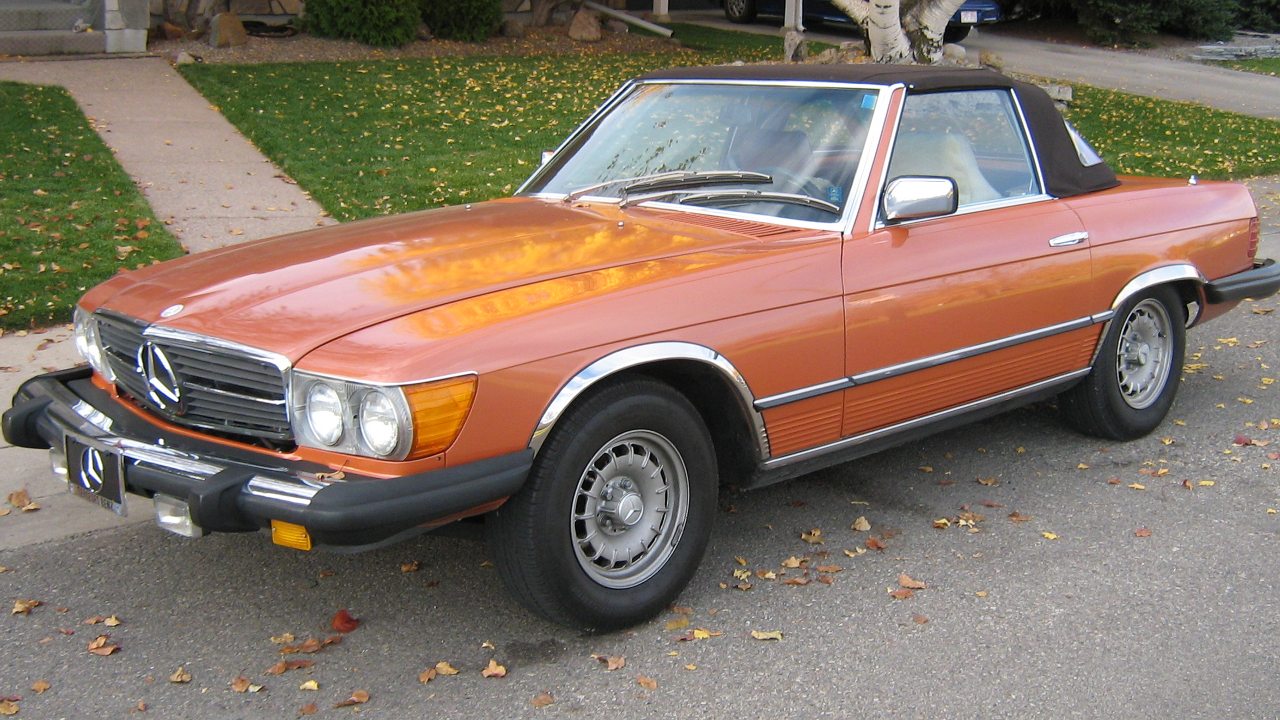
From the outside, the 450SL reads as pure style: a long hood, short rear deck and a gently rising beltline that gives the car a planted stance. Yet many of the visual signatures that enthusiasts love also serve practical purposes. The relatively upright windshield and thick A-pillars contribute to the structural cage around the occupants, while the broad sills and subtly flared wheel arches help distribute impact forces into the body shell. Walkaround videos of 1976 Cabrio models, filmed at events such as Classic Expo Salzburg, show how the panel gaps, door heft and solid latching all reflect that underlying rigidity.
Even the brightwork and wheels play a role in the car’s dual mission. Period footage and dealer presentations highlight classic hub caps that accentuate the 450’s vintage charm, but those steel wheels also provide a robust mounting point for tires sized to deliver predictable grip rather than knife-edge performance. Bumpers, which grew in size during the 1970s to meet evolving regulations, were integrated into the design so the car still looked elegant while gaining better low-speed impact protection. The result is a roadster that appears light and airy yet feels reassuringly solid when you close the door or hit a rough patch of pavement.
Driving dynamics that reward calm, controlled inputs
On the road, the 450SL’s character leans toward grand touring, and that temperament is central to how it balances safety and style. Reviews from specialists who still sell and drive these cars describe a medium blue 450 that glides rather than darts, with a suspension tuned to absorb bumps and a steering system that is light at parking speeds but reassuringly weighty as speed rises. That tuning encourages smooth, deliberate inputs, which in turn keeps the car stable in corners and under braking. The V8’s broad torque band means there is little need to rush the engine, reducing the temptation to make risky overtakes or aggressive downshifts.
Modern video segments on well-preserved 1976 examples, including those showcased by Bullet Motorsports and other classic dealers, reinforce that impression. Presenters note how the car feels composed at contemporary traffic speeds, with the automatic transmission shifting unobtrusively and the chassis remaining unflustered by uneven pavement. Safety and control are described as paramount, with the combination of power steering, strong brakes and predictable handling giving the driver confidence rather than adrenaline. In practice, that makes the 450SL a car that invites its owner to settle into a steady rhythm, a driving style that is inherently safer than the on-off aggression encouraged by some sports cars.
A legacy that shaped later SL safety benchmarks
The 1976 450SL also matters because of what it set in motion. The R107 series became one of the longest-running passenger car lines in Mercedes-Benz history, a sign that the basic formula of a structurally robust, luxuriously equipped roadster resonated with buyers for well over a decade. Later SL generations, including the 600SL of the 1990s, would be praised as having no other SL built with the same degree of intensity in engineering, technology and safety, but that reputation did not appear out of nowhere. It rested on the groundwork laid by cars like the 450SL, which proved that open-top glamour could coexist with serious protective engineering.
Looking back from today, I see the 1976 450SL as a turning point where safety stopped being the enemy of style in the luxury roadster world. Contemporary listings for surviving cars emphasize both their sophisticated safety and luxury features and their enduring visual appeal, from Anthracite Gr finishes to carefully preserved beige interiors. That balance is why the model still attracts buyers who want a classic that feels usable in modern traffic rather than a fragile museum piece. The 450SL did not just blend safety and style for its own era, it helped redefine what drivers could expect from a premium convertible, setting expectations that continue to shape how manufacturers design open cars now.
More from Fast Lane Only: