The 1977 model year turned the Chevrolet Monte Carlo from a stylish personal coupe into a genuine showroom phenomenon. At a time when performance was fading and fuel economy anxiety was high, Chevrolet’s mid-size luxury two-door suddenly hit the sweet spot of image, comfort, and price, and buyers responded in huge numbers.
From niche personal coupe to mainstream hit
When the Monte Carlo debuted for 1970, Chevrolet positioned it as a personal luxury car, a two-door with a long hood, formal roofline, and upscale trim that sat apart from the brand’s more utilitarian sedans. Early versions leaned on muscular proportions and rear-wheel-drive hardware shared with other mid-size Chevrolets, but the emphasis was always on style and comfort rather than outright speed. Over the first half of the decade, the car evolved gradually, with the basic formula of a pillarless coupe body, rear-drive chassis, and V8 power staying consistent as the Monte Carlo carved out a loyal following among buyers who wanted something more glamorous than a family sedan without stepping up to a full-size luxury model, a trajectory reflected in period overviews of the Monte Carlo.
By the mid 1970s, the personal luxury segment had become one of Detroit’s most competitive arenas, and Chevrolet refined the Monte Carlo’s styling and equipment to keep it fresh. The car’s front end, for example, was updated to a rectangular, four-headlight “stack” arrangement for 1976, a change that sharpened its presence and aligned it with contemporary design trends in domestic coupes. That update set the stage for 1977, when Chevrolet kept the basic body but polished the details, including a revised grille and the Monte Carlo “knight’s crest” emblem moved to a stand-up hood ornament, as documented in historical summaries of the Monte Carlo. Those touches helped the car look more expensive than it was, a crucial factor in its breakout year.
Why 1977 was the breakout year
The Monte Carlo’s surge in 1977 did not happen in a vacuum. American buyers were still adjusting to the fuel shocks and tightening emissions rules of the 1970s, and many traditional performance cars had lost their edge. In that environment, a mid-size coupe that promised comfort, a hint of luxury, and a manageable footprint looked far more appealing than a thirsty full-size or a compromised muscle car. The 1977 Monte Carlo delivered that mix, pairing its formal roofline and long-hood proportions with interiors trimmed to feel more upscale than a typical mid-size, a balance that contemporary histories of the Monte Carlo highlight as central to its appeal.
At the same time, the car’s mechanical package was familiar and relatively straightforward, which reassured buyers wary of untested technology. The Monte Carlo shared its basic platform with other Chevrolet mid-sizers, and while power outputs had dropped from early 1970s highs, the available V8 engines still provided adequate performance for highway cruising. Period analyses describe the 1977 Chevrolet Monte Carlo as “a deluded larger pe…” in the sense that it projected big-car luxury while riding on a more modest footprint, a characterization that underscores how the car’s image outstripped its actual size. That illusion of grandeur, delivered at a mid-range price, was exactly what many shoppers wanted in 1977.
Design details that sold the dream
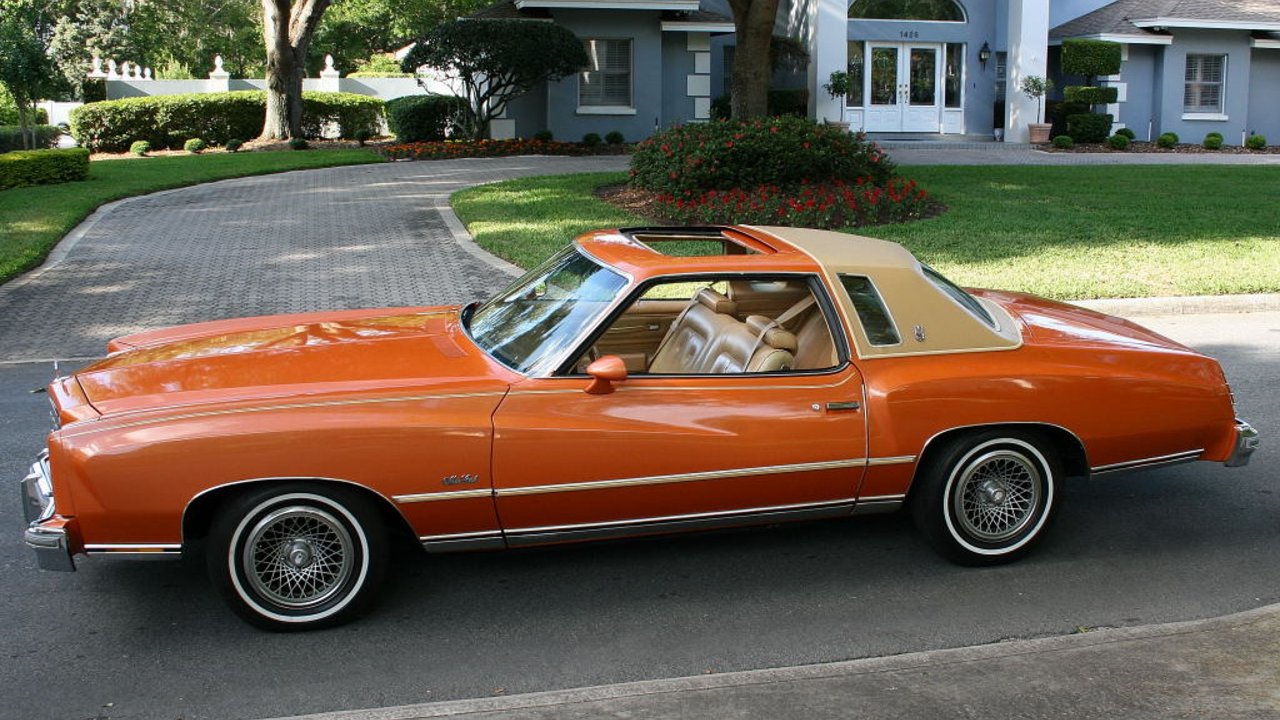
The 1977 Monte Carlo’s styling was carefully tuned to communicate status without alienating cost-conscious buyers. The revised grille with smaller segments and the stand-up hood ornament gave the front end a more formal, almost European flavor, while the long hood and short deck preserved the classic American coupe stance. Side sculpting and the distinctive rear quarter treatment emphasized length and elegance, even though the underlying dimensions were mid-size. Historical descriptions of the Monte Carlo note how these cues, combined with the “knight’s crest” emblem, positioned the car as a cut above ordinary Chevrolets in the showroom.
Inside, the Monte Carlo leaned into plushness, with available split-bench or bucket seats, thick carpeting, and generous use of wood-tone trim. The Landau variant, in particular, amplified the luxury message with a vinyl roof treatment and additional brightwork, details that valuation guides for the 1977 Chevrolet Monte Carlo Landau still call out when describing the model. Even though the underlying hardware was shared with more workaday Chevrolets, the way the Monte Carlo was dressed made it feel like a personal statement piece. In an era when buyers were increasingly sensitive to fuel costs, that ability to deliver a luxury look and feel without the bulk of a full-size car was a powerful selling point.
The Landau and the art of rolling sculpture
Among the 1977 Monte Carlo lineup, the Landau version crystallized the car’s role as a piece of driveway theater. With its vinyl roof, additional trim, and often more elaborate color combinations, the Landau pushed the styling toward what some enthusiasts now describe as “rolling sculpture.” A period walkaround of a 1977 Monte Carlo Landau frames the car against the backdrop of popular culture touchstones like Star Wars, Disco Balls, and television shows such as CHiPs, underscoring how the Monte Carlo fit into a broader late 1970s aesthetic of flash and spectacle. The Landau’s visual drama made it a natural choice for buyers who wanted their car to stand out in the office parking lot or outside the disco.
That emphasis on visual impact did not mean the Landau was mechanically exotic. Valuation tools that track the 1977 Chevrolet Monte Carlo Landau point out that the underlying car was an evolution of earlier models, with changes like the 5 mph rear bumpers and taller, slimmer tail light housings first seen on the ’74 car, and the knowledge that the Monte Carlo would become smaller and lighter in 1978. In other words, the 1977 Landau represented the last full expression of the larger, more ornate Monte Carlo before downsizing. Buyers who sensed that shift coming had an extra incentive to grab the most lavish version while they still could, which helped sustain demand for the Landau trim.
Legacy, values, and the last of the big Montes
Looking back, the 1977 Monte Carlo stands at a turning point between the expansive personal luxury coupes of the early 1970s and the more compact, efficiency-focused cars that followed. Historical accounts of the Monte Carlo note that the model would be made smaller and lighter in 1978, a response to regulatory pressure and changing consumer expectations. That makes the 1977 cars, especially the richly trimmed Landau versions, the final chapter for the original big-bodied Monte Carlo formula. Enthusiasts and collectors now see these cars as the culmination of a design language that prized long hoods, formal rooflines, and ornate trim, before the industry pivoted toward sharper, more restrained shapes.
Today, valuation tools for the 1977 Chevrolet Monte Carlo and 1977 Chevrolet Monte Carlo Landau show that these cars occupy an accessible niche in the collector market, with typical prices reflecting their status as nostalgic icons rather than blue-chip investments. Those same tools reference the continuity from the ’74 car, which had already adopted features like the 5 mph rear bumpers and revised tail lamps, reinforcing how 1977 was less a radical redesign than a careful refinement of a proven package. For many enthusiasts, that continuity is part of the charm: the 1977 Monte Carlo represents the moment when a well-honed recipe, polished over several model years, finally aligned perfectly with the tastes and anxieties of American car buyers, turning a stylish coupe into a bona fide sales star.
More from Fast Lane Only: