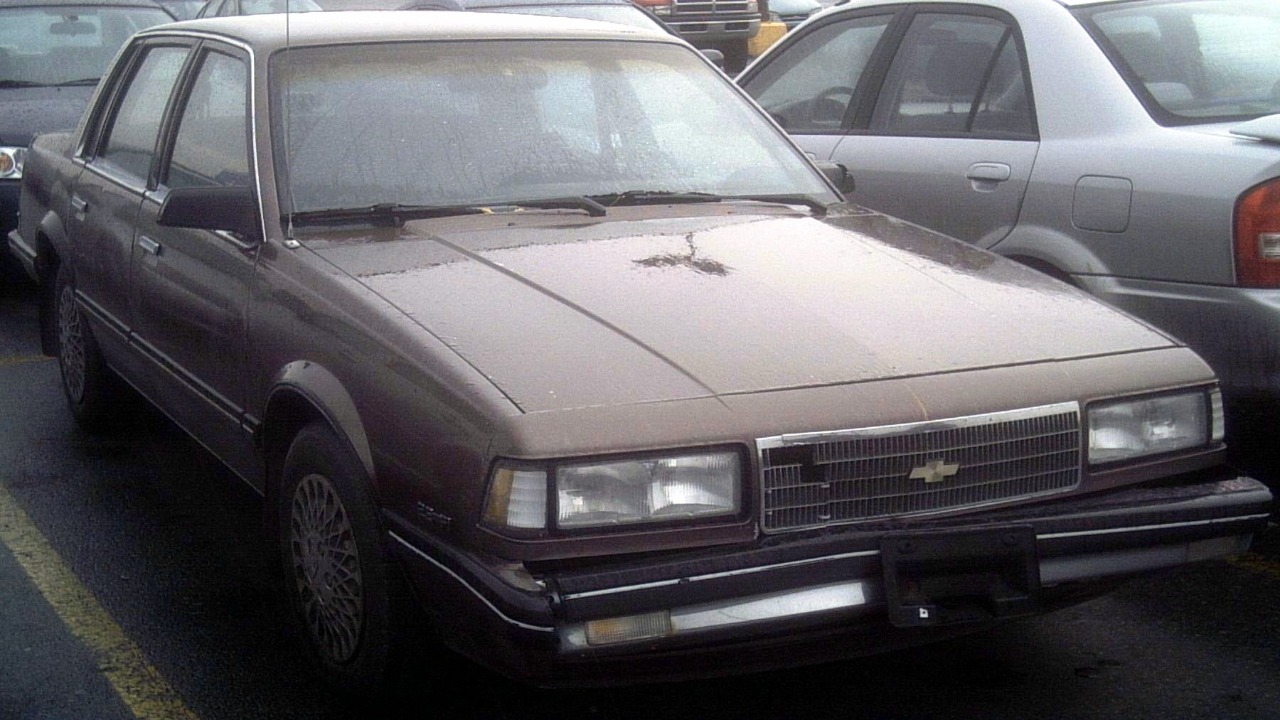
The 1986 Chevrolet Celebrity did not chase headlines or posters on teenage bedroom walls. It quietly filled driveways, office parking lots, and school pickup lanes, becoming the kind of car people remember not for drama but for how seamlessly it fit into everyday life. By looking closely at how it was built, sold, and lived with, I can see how this unassuming sedan ended up defining what “normal” meant for an American family car in the mid‑1980s.
In an era obsessed with turbo badges and digital dashboards, the Celebrity’s real achievement was different. It translated new engineering ideas into something that felt familiar, affordable, and unremarkable in the best possible way. That is exactly why it mattered, and why the 1986 model year still feels like the clearest snapshot of its quiet influence.
The car that quietly topped the charts
When I think about what “normal” meant on American roads in the mid‑1980s, I start with sales, because nothing is more ordinary than buying what everyone else is buying. Within Chevrolet, the Production During the decade shows that the Chevrolet Celebrity was competing directly with the Cavalier as the brand’s highest‑selling car, and it even became the best‑selling car in the United States for 1986. That is not cult‑favorite territory, it is the statistical center of the market, the car most people actually drove to work. The Celebrity was sold from 1982 to 1990, and one owner’s account notes that The Celebrity went through three facelifts in that span, a reminder that Chevrolet kept refining a formula that was already working for a huge slice of buyers.
Those numbers only matter because they match the way people used the car. In one personal story, a family traded in a 1982 Chevrolet Cavalier and drove home in a brand new 1986 Chevrolet Celebrity Cla sedan, treating it as a natural step up rather than a special occasion. That kind of upgrade, from one sensible Chevrolet to another, is exactly how a car becomes the default choice. Reportedly, Celebrity buyers were drawn to a straightforward package of space, a high roof top, and plush interior seats that felt a little nicer than the price suggested, which only reinforced the sense that this was the safe, rational pick in a crowded showroom.
Front‑wheel drive without the fanfare
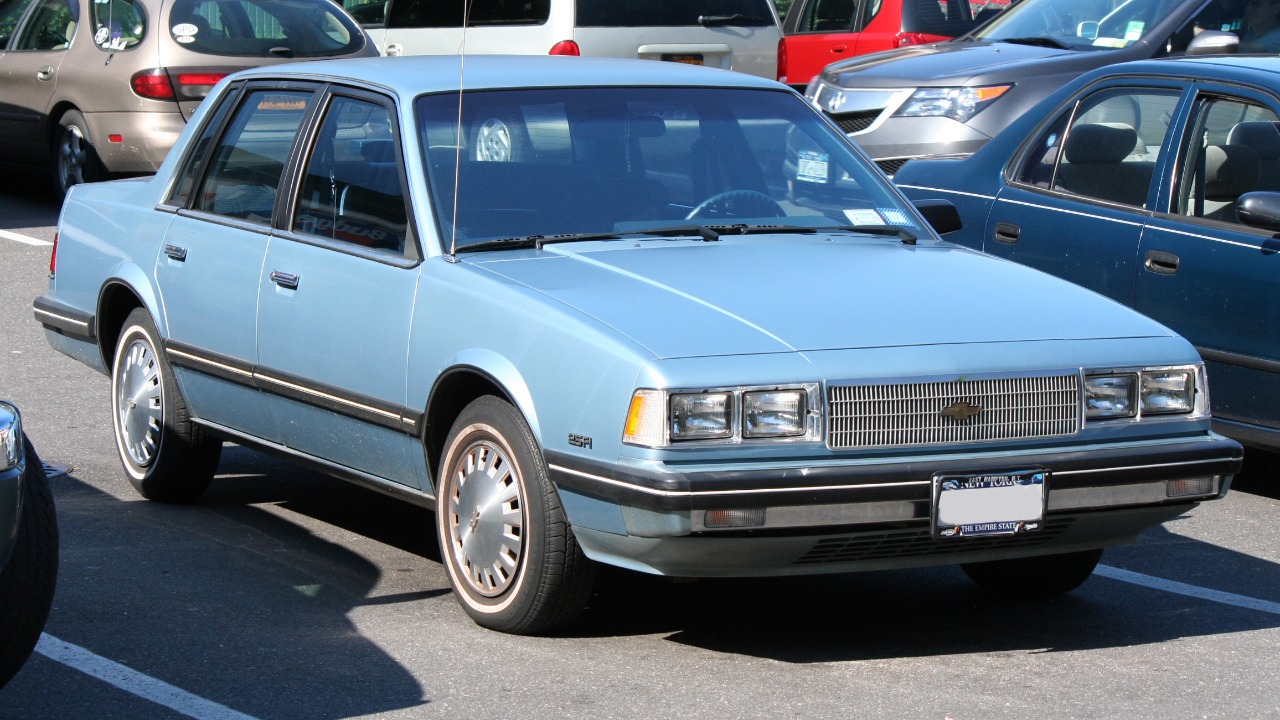
Under the skin, the Celebrity was part of a quiet revolution. It rode on General Motors’ A‑body platform, one of the company’s early mass‑market front‑wheel‑drive architectures, and a detailed Feb review of a 1986 Chevrolet Celebrity walks through how that layout reshaped the car’s proportions and packaging. Moving the driven wheels to the front freed up interior room and helped the car feel more secure in bad weather, but Chevrolet wrapped that engineering in a boxy, upright body that looked reassuringly traditional. The result was a car that smuggled new technology into the suburbs without asking drivers to change their habits.
It is important to remember that the Celebrity was not the first front‑wheel‑drive domestic family sedan. As one analysis points out, But Chrysler and General Mo had already pushed front‑drive family cars into American garages, and juggernaut General Motors beat Ford to market with its own offerings. What the Celebrity did was normalize that layout, making it feel less like a bold experiment and more like the obvious next step. By the time a buyer slid behind the wheel of a 1986 model, front‑wheel drive was no longer a novelty, it was simply how a sensible mid‑size Chevrolet worked.
Body styles for every driveway
Normal is not one‑size‑fits‑all, and Chevrolet understood that a family car had to meet different needs without turning into a niche product. The official catalog for the 1986 model year lists the Celebrity in four distinct forms: a 2‑Door Coupe, a 4‑Door Sedan, a 4‑Door 2‑Seat Station Wagon, and a 4‑Door 3‑Seat Station Wagon. That spread let Chevrolet cover young couples, growing families, and carpool warriors with the same basic mechanical package. The styling barely changed between them, which meant the wagon in the school lot and the coupe in the apartment complex both read as the same familiar car.
From my perspective, that consistency is part of what made the Celebrity feel like the baseline American car. You could choose a Door Coupe for a slightly sportier profile or a Door Sedan for maximum practicality, and the wagons added either a 2‑Seat Station Wagon layout or a third row in the 3‑Seat Station Wagon for larger families, but none of those choices pushed you out of the mainstream. They were variations on a theme, not separate statements. When a neighbor bought a Celebrity wagon and another opted for the sedan, they were not signaling different identities, just different cargo needs, which is about as “normal” as car buying gets.
Everyday comfort in a Malaise hangover
To understand why the Celebrity’s quiet competence resonated, I have to place it in the shadow of the so‑called Malaise era. Earlier in the decade, American cars had been criticized for soft suspensions, vague steering, and underwhelming performance, and one enthusiast host named Adam introduces the A‑body platform as a classic example of a Malaise era vehicle on his Rare Classic Cars channel. Yet by 1986, that softness had become part of the appeal for buyers who wanted comfort more than cornering grip. The Celebrity leaned into that preference with a ride tuned for potholes and long commutes, not mountain passes.
Inside, owners remember the car less for cutting‑edge gadgets and more for how it felt to sit in. One long‑term driver recalls that The Celebrity offered a high roof top and plush interior seats that made daily use easy on the back and knees, a small but telling detail captured in a Mar reflection on living with the car. That kind of comfort, paired with straightforward controls and clear sightlines, turned the Celebrity into a rolling living room, the place where kids did homework on the way to practice and parents decompressed after work. It was not aspirational luxury, it was the everyday ease people quietly value most.
Innovation hiding in plain sight
What fascinates me is how the Celebrity managed to feel so ordinary while sitting at the crossroads of bigger engineering shifts. In a broader look at front‑wheel‑drive history, one commentator notes that the first front‑wheel drive mass‑produced car in the American market was a very different machine, and that the only other GM front‑wheel drive car at the time would have been the Cadillac El, a luxury outlier rather than a family hauler. That context, explored in a Jun discussion of early front‑drive designs, makes the Celebrity’s role clearer. It took a layout once reserved for premium or experimental models and made it feel as routine as a trip to the grocery store.
At the same time, Chevrolet was not afraid to let its sensible sedan moonlight as something wilder. A look back at concept cars from the decade notes that The Chevy Celebrity was a run of the mill front‑drive family sedan, but that in 1986 Chevy partnered with a specialty outfit to turn it into a radical pace car, part of a lineage that later included the 1989 PPG XT‑2. That transformation, detailed in a feature on The Chevy Celebrity and other wild projects, shows how flexible the underlying package was. Yet for the vast majority of buyers, the Celebrity never left its comfort zone, staying firmly in the lane of school runs and office commutes even as its bones proved capable of much more.
Memory, nostalgia, and the meaning of “normal”
Looking back now, I am struck by how often people’s first‑car stories circle back to the Celebrity. One owner remembers that On April they climbed into a modest 1986 sedan with their parents, a Chevrolet Celebrity Cla that felt “very characteristic for the time,” and that phrase captures the car’s legacy better than any performance figure. It was not the fastest, the flashiest, or the most advanced, but it was the car that matched the era’s expectations so precisely that it almost disappeared into the background. That is exactly why it shows up so often in nostalgic essays and driveway snapshots.In that sense, the Celebrity’s greatest achievement was to make a period of rapid change feel stable. Front‑wheel drive, new safety standards, and shifting fuel prices were all reshaping the American car, yet the Celebrity presented those changes in a familiar three‑box silhouette with a bench seat and a column shifter. It defined normal not by standing still, but by absorbing new ideas and smoothing them into everyday life. When I picture a typical American street in 1986, I do not see the poster cars or the exotics. I see a row of mid‑size sedans, and somewhere in the middle, quietly doing its job, a 1986 Chevrolet Celebrity.
More from Fast Lane Only: