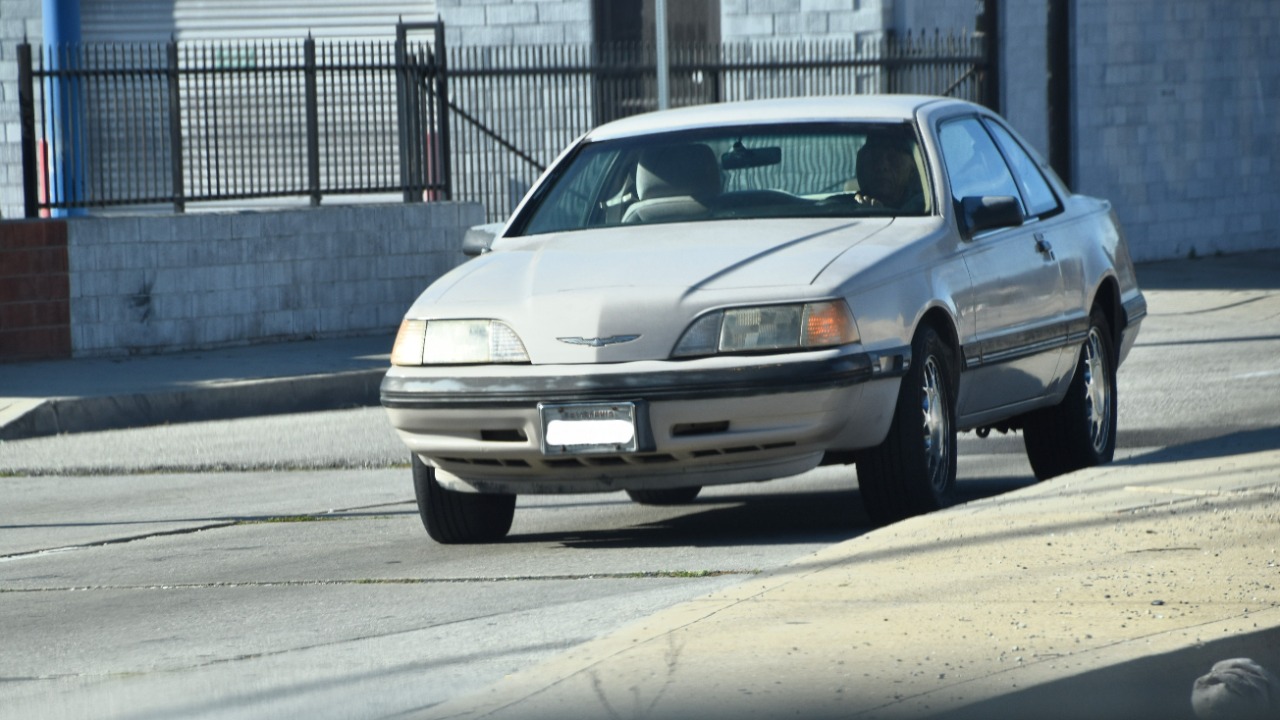
The 1988 Ford Thunderbird Turbo Coupe arrived at a moment when many drivers expected personal luxury coupes to be soft, heavy, and predictable. Instead, this car mixed turbocharged performance, chassis sophistication, and real-world comfort in a way that caught enthusiasts and everyday owners off guard. I see it as one of those rare machines that quietly rewrote expectations, then slipped into cult status while the rest of the market chased bigger engines and flashier badges.
What surprised people most was not any single headline feature, but how the Turbo Coupe blended them into a cohesive whole. It looked sleek, handled with poise, and delivered serious speed, yet it was still practical enough to commute in and refined enough to cross states in one shot. That balance, more than any spec sheet bragging right, is why the car still sparks passionate debate among fans today.
The unlikely performance numbers that changed expectations
When I look at the late-eighties landscape, the idea of a turbocharged four-cylinder Thunderbird pulling serious performance duty sounds almost like a corporate dare. Yet period testing described the 1988 Ford Thunderbird Turbo Coupe as Capable of 0-60 mph in 8.5seconds and a top speed of 145 mph, plus generating 0.82 lateral g on the skid pad, numbers that put it squarely in the conversation with contemporary European grand tourers. Those figures mattered because they proved that a domestic personal coupe could be more than a straight-line cruiser, it could actually carve corners and stay composed at speed. For drivers used to floaty suspensions and vague steering, the first hard run in a Turbo Coupe must have felt like a revelation.
The surprise deepened when owners realized how approachable that performance felt. The car’s chassis tuning and turbocharged torque curve made it easy to drive quickly without demanding race-driver reflexes, which is exactly why some reviewers framed it as a genuinely comfortable, easy-to-drive grand tourer rather than a temperamental hot rod. In an era when many American performance cars still leaned on big-displacement V8s and live-axle drama, the Thunderbird’s ability to combine 145 mph capability with 0.82 g grip and everyday civility reset expectations for what a mid-priced Ford could deliver.
A turbo four where a V8 “should” have been
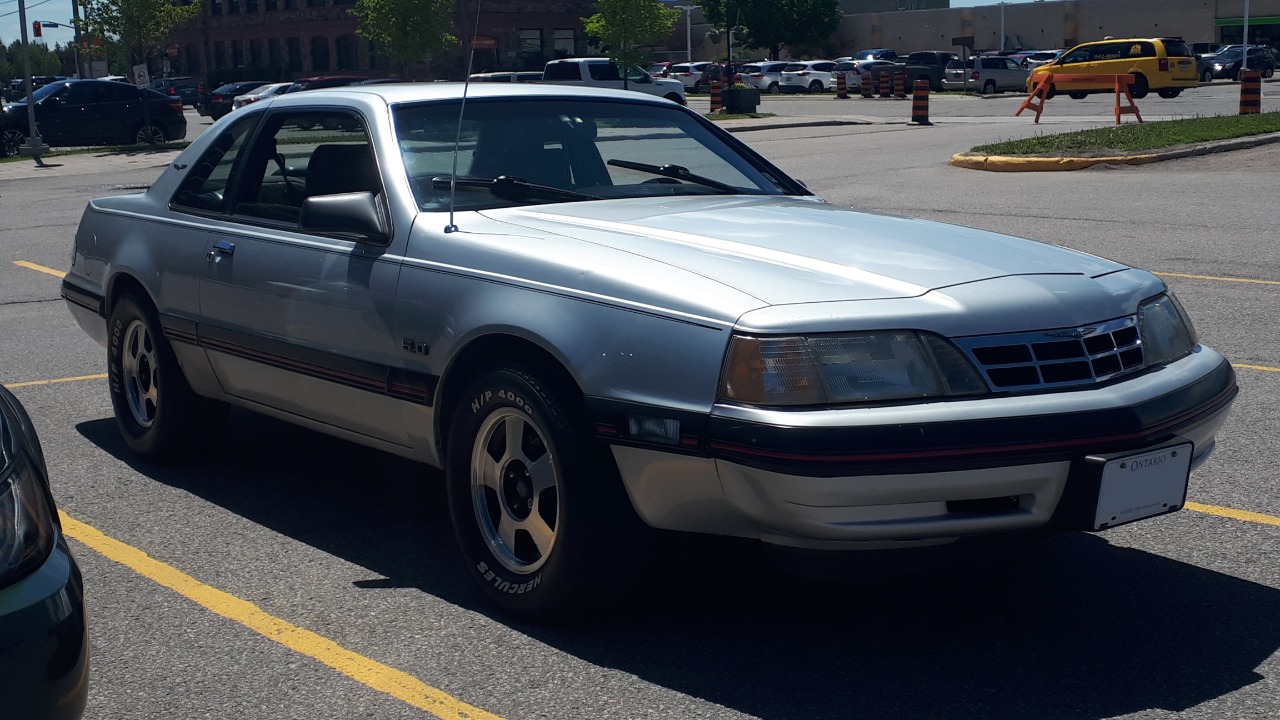
What really challenged people’s assumptions was the engine sitting under that long hood. Instead of a burbling V8, the 1988 Ford Thunderbird Turbo Coupe relied on a 2.3 L turbo-4 that shared key hardware with the Ford Mustang SVO and used an air-to-air intercooler to boost power into territory that embarrassed some larger engines. Enthusiasts on builder forums still point to that 2.3 L turbo-4 as a smart donor choice, precisely because it delivered strong output without the weight and packaging penalties of a big Windsor 5.0 V8. For drivers in the late eighties, the idea that a four-cylinder Thunderbird could hang with V8 rivals was both counterintuitive and thrilling.
From my perspective, that engine choice is a big part of why the car still feels modern in spirit. The turbo four rewarded drivers who learned to work with boost, building power progressively instead of just dumping torque off idle, and it hinted at a future where efficiency and performance would coexist. At the time, though, many shoppers walked into showrooms expecting a traditional eight-cylinder Bird and instead found a high-tech, intercooled four that owed more to the Ford Mustang SVO and European turbo sedans than to old-school muscle. That mismatch between expectation and reality is exactly what made the first test drive so memorable.
Chassis sophistication hiding in a “personal luxury” shell
Even if someone arrived skeptical of the engine, the way the Turbo Coupe drove could win them over in a few corners. Contemporary observers noted that by the late eighties, Ford was already deep into development of the MN-12 Bird and Cougar, but the outgoing car did not feel like an afterthought. Instead, the 1988 model benefited from careful suspension tuning, serious brakes, and electronic ABS that gave it a level of control drivers did not associate with big American coupes. One detailed retrospective on the 1988 Turbo Coupe makes the point that, after you get past the nostalgia, you see how All the work Ford put into the chassis, brakes and aforementioned electronic ABS turned it into a genuinely capable driver’s car.
From behind the wheel, that engineering translated into a car that could hustle down a back road without feeling nervous or sloppy. I picture an owner who bought the Thunderbird for its styling and comfort, only to discover that the firmed-up suspension and advanced braking system let them brake later, turn in harder, and carry more speed than they ever expected from a so-called personal luxury coupe. The surprise was not just that it could corner, but that it did so with a level of refinement that made long trips less tiring, blending grip and stability in a way that still feels impressive when you look back at the era’s broader lineup.
From Car of the Year to cult favorite
The industry did not ignore what Ford had pulled off. When Ford Motor Co saw its 1987 Thunderbird Turbo Coupe named car of the year, it signaled that the formula of turbocharged power, sharp handling, and sleek styling had real credibility beyond the enthusiast fringe. That recognition, recorded in coverage of how Ford Motor Co saw its Thunderbird honored by Motor Trend, validated the idea that a turbo four-cylinder coupe could stand at the top of the market’s attention. For buyers who might have dismissed the car as a niche experiment, that award was a powerful nudge to take a second look.
Over time, though, the Turbo Coupe’s reputation shifted from mainstream star to cult favorite. Modern video reviews, like one from New Cars TV where host Andre Clemente walks around a preserved example, show how the car’s mix of analog controls and turbocharged character now appeals to enthusiasts who want something different from the usual Fox-body Mustang. In that walkaround, New Cars TV host Andre Clemente treats the Ford as both a time capsule and a surprisingly usable modern classic, underscoring how the same traits that once shocked buyers now feel like a refreshing alternative to today’s digital-heavy performance cars.
The emotional hook: design, sound, and that “black sheep” charm
Numbers and awards explain part of the story, but the 1988 Ford Thunderbird Turbo Coupe also surprised drivers on a more emotional level. Its long hood, short deck, and sculpted rear gave it a distinctive profile that still turns heads, especially when paired with period-correct wheels and subtle aero add-ons. One enthusiast video that revisits the model’s legacy even highlights a ROTISSERIE restored, mini tubbed, NASCAR exhaust example, with Ford consultant Jackie Stewart explaining why the Thunderbird Turbo Coupe represented a rare combination of style and engineering. Watching Thunderbird Turbo Coupe segments where Jackie Stewart praises its balance, I am reminded that the car’s appeal was as much about how it made people feel as how quickly it could lap a track.
That emotional connection shows up in grassroots commentary too. On enthusiast forums and social platforms, owners describe the 1988 Ford Thunderbird Turbo Coupe the black sheep of the fox bodies, a car with a shapely butt that stands apart from its Mustang cousins. One widely shared discussion on r/cars captures that sentiment, with a reviewer admitting, “I have got a car crush,” and celebrating the way the coupe’s proportions and turbo personality give it a charm all its own. When I read that Ford Thunderbird Turbo Coupe the black sheep label, it feels less like an insult and more like a badge of honor, a recognition that this car never quite fit the mold and is more interesting because of it.
In the end, that is why the 1988 Turbo Coupe still lingers in enthusiasts’ minds. It delivered serious performance from an unexpected 2.3 L turbo-4, wrapped it in a chassis that could genuinely handle, and topped it off with styling and character that refused to blend into traffic. Drivers who expected a soft, forgettable personal luxury coupe instead found a sharp, engaging machine that rewarded attention and rewarded skill. Decades later, that sense of pleasant shock has mellowed into affection, but the core surprise remains: the car was better, braver, and more forward-thinking than almost anyone gave it credit for at the time.
More from Fast Lane Only: