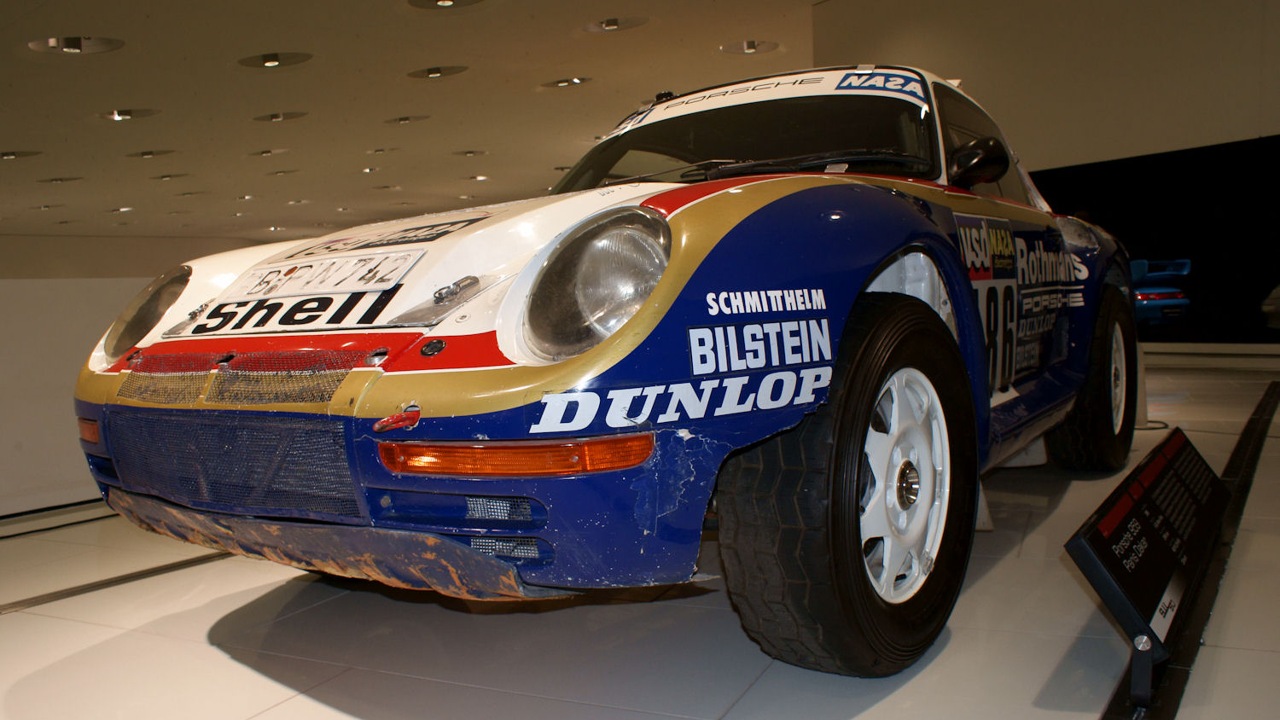
The 1986 Porsche 959 arrived at a moment when supercars were still largely blunt instruments, obsessed with top speed more than technology. Instead of chasing drama, Porsche treated its Group B refugee as a rolling laboratory, folding in electronics, aerodynamics and all-wheel drive that would quietly define performance cars for decades. I see the 959 not just as a fast Porsche, but as the car that turned supercar engineering into a systems problem rather than a horsepower contest.
Nearly forty years on, its influence is visible in everything from modern 911 Turbos to everyday crossovers that rely on adaptive all-wheel drive and computer-managed stability. The 959 proved that a car could be faster than a Ferrari, smarter than a Lamborghini and still usable in daily traffic, and that combination of speed, intelligence and civility is now the default expectation for any serious performance machine.
From Group B experiment to road‑legal benchmark
The 959 began life as a competition project, conceived for the brutal Group B rally category where manufacturers were free to experiment with radical powertrains and materials. Porsche built the road version as a homologation special, but instead of stripping it back like a race car with plates, engineers layered in comfort, refinement and electronic control that made it feel eerily complete compared with its contemporaries. While rivals such as the Ferrari F40 leaned into rawness, the 959 treated extreme performance as something that should be accessible rather than intimidating.
That philosophy is why, in the 1980s, no car came close to the Porsche 959 in terms of all‑round capability. Contemporary reporting notes that it was faster than a Ferrari, smarter than a Lamborghini and more advanced than anything else on sale, a combination that made pretty much everything around it seem dated. Even today, enthusiasts describe how usable it is compared with the Ferrari F40, which was essentially a race car with a license plate, while the 959 could be driven in traffic, in the rain and over long distances without punishing its driver.
A turbocharged flat‑six that redefined usable power
At the heart of the 959 sat a 2.85-litre turbocharged rear‑mounted flat‑six engine based on the flat‑six out of a 911, a configuration that linked it directly to Porsche’s core sports car while pushing far beyond its limits. The engine used sequential turbocharging, with one turbocharger coming in early and a second joining at higher revs, to smooth out the violent lag that plagued other turbo supercars of the era. With around 450 hp at 6500 rpm, it delivered the kind of performance that let the 959 run with or ahead of anything on the road while still feeling tractable at low speeds.
That balance of output and drivability is what made the 959’s powertrain feel decades ahead of its time. Instead of a peaky, all‑or‑nothing surge, the sequential system gave a broad, manageable torque curve that drivers could exploit on real roads, not just on a test track. Later coverage of the car’s engineering highlights how this 2.85-litre flat‑six, combined with sophisticated engine management, set a template for modern turbocharged performance engines that chase responsiveness and efficiency as much as outright power.
All‑wheel drive as a thinking traction partner
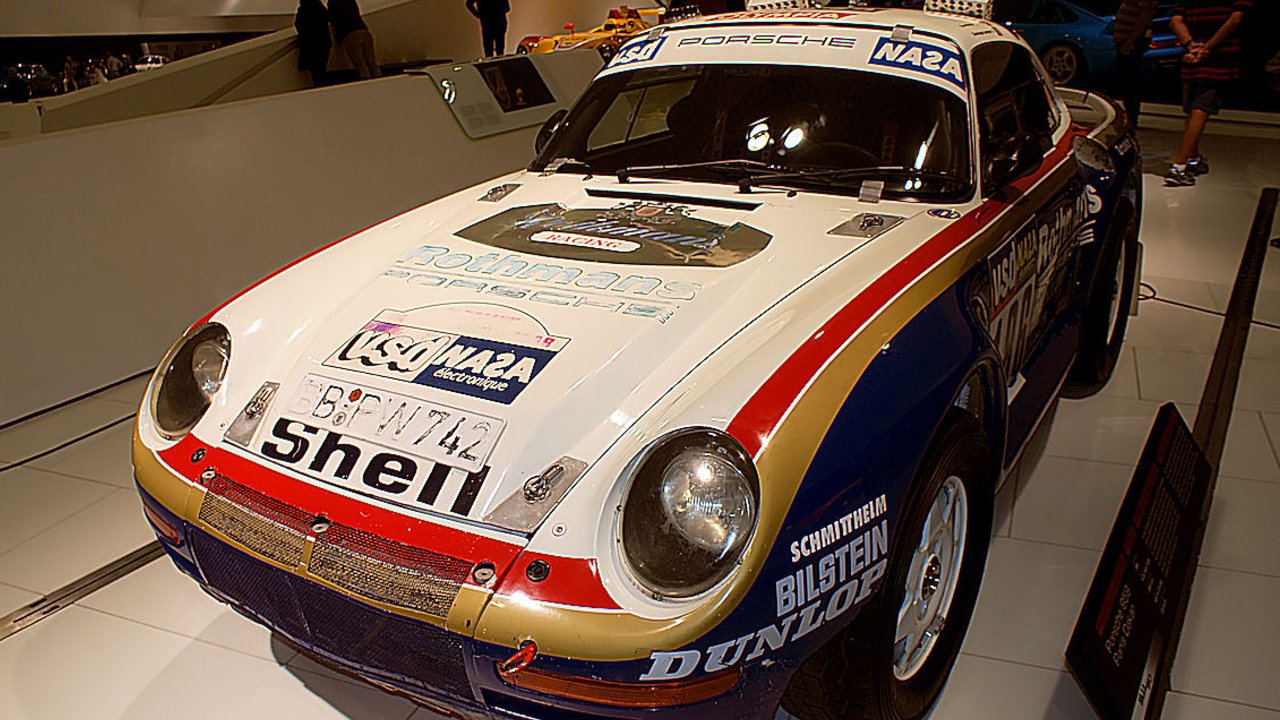
If the engine provided the muscle, the 959’s all‑wheel drive system supplied the brain. Porsche treated traction as a dynamic problem, not a fixed mechanical split, and built a computer‑controlled system that could vary torque between the axles based on conditions. The most efficient way to harness that 450 hp was to send power where it could actually be used, and the 959’s drivetrain constantly adjusted to the terrain at hand rather than relying on a simple fixed ratio.
That approach made the 959 feel almost preternaturally secure in poor weather and on rough surfaces, a trait that came directly from its rally roots. Drivers like Walter Rohrl, known as an exceptional driver with deep experience in extracting performance from rally machinery, demonstrated how the car’s all‑wheel drive mastery allowed it to put down power where others would simply spin. Modern analysis of the 959’s traction system notes that its logic and adaptability anticipated the electronically managed all‑wheel drive setups that performance cars and even SUVs now take for granted.
Electronics, aerodynamics and everyday usability
Beyond its powertrain and drivetrain, the 959 integrated electronics and aerodynamics in a way that made it feel almost otherworldly at the time. Adjustable suspension, sophisticated anti‑lock braking and carefully tuned bodywork worked together to keep the car stable at very high speeds without sacrificing ride quality. Contemporary observers remarked that, at the time, the Porsche 959 seemed otherworldly with the technology it packed, making pretty much everything else seem old‑fashioned by comparison.
What impresses me most is how all that complexity served usability rather than spectacle. Owners and reviewers have long pointed out that the 959 is more than just a supercar, describing it as a technological showcase that can be driven daily without drama. Compared with the Ferrari F40’s bare‑bones cabin and uncompromising setup, the 959 offered climate control, comfortable seats and a level of refinement that made its speed feel almost casual. That blend of comfort and capability is a big reason why modern buyer’s guides still describe it as one of the most appealing Porsche models ever produced and a Unique Collector Car to Buy.
Legacy, collectability and the 959’s long shadow
The 959’s impact did not end when production stopped; if anything, its legend has grown as the rest of the industry caught up to its ideas. Enthusiast retrospectives argue that in the 1980s no car came close to the Porsche 959, and that its mix of speed, intelligence and usability was decades ahead of its time. That reputation has turned it into a halo object for collectors, with modern guides emphasizing how its limited production, advanced engineering and usability make it one of the most appealing Porsche models ever produced.
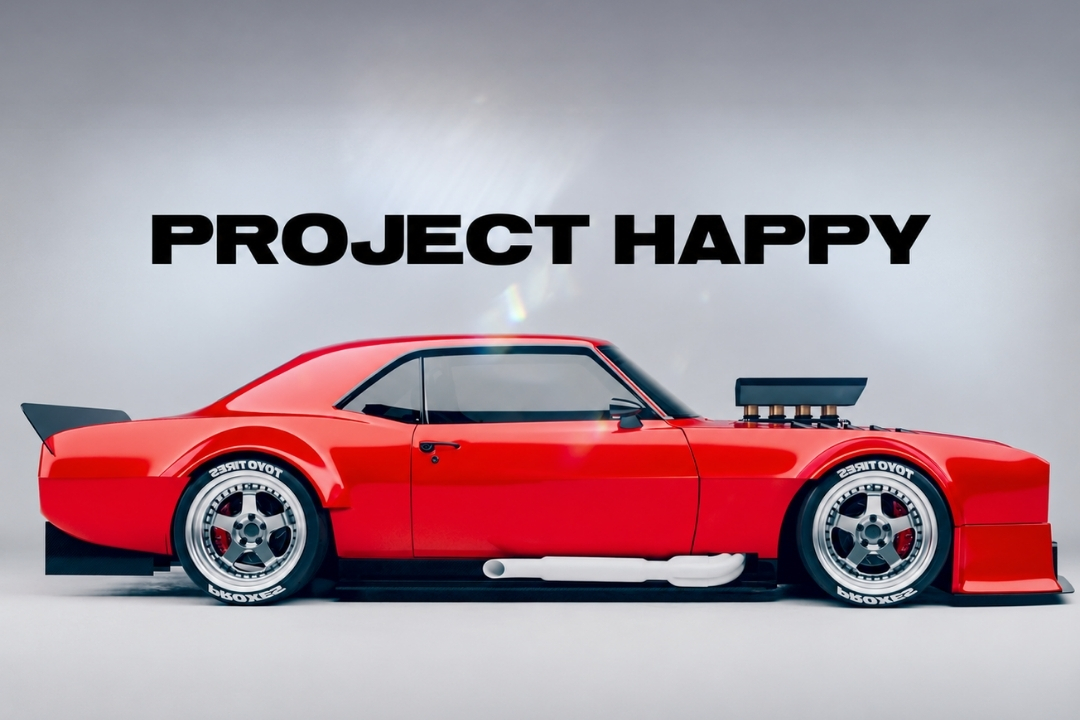
The car’s pull is so strong that it even helped reshape import law in the United States. Bill Gates and other enthusiasts were so determined to own a 959 that they pushed for regulatory change, and reporting notes that About $133,000 in accumulated fines later, Congress listened to Bill Gates and decided to create the Show and Display clause, which the 959 definitely qualified under. That episode underlines how far the car’s influence extends beyond engineering circles, touching legislation and popular culture alike. Even speculative projects that imagine what a modern 959 m might look like speak to how deeply this 1980s experiment still shapes the way I, and many others, think about what a supercar should be.