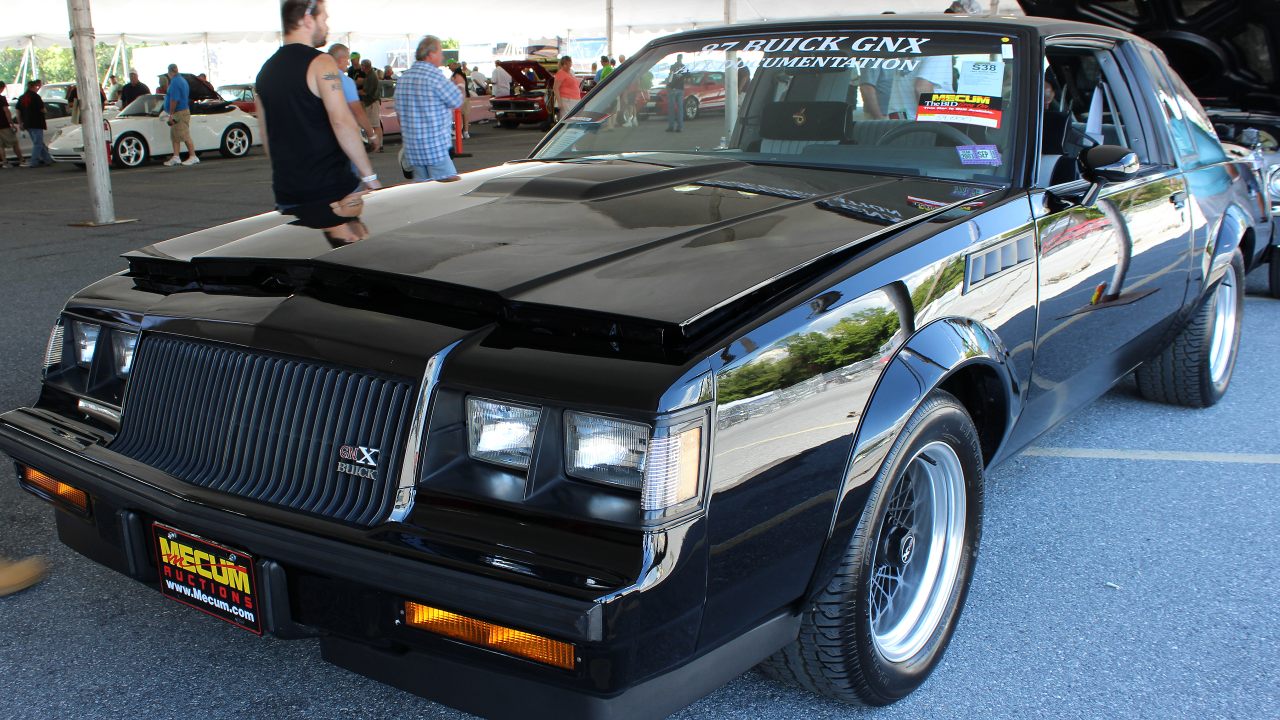
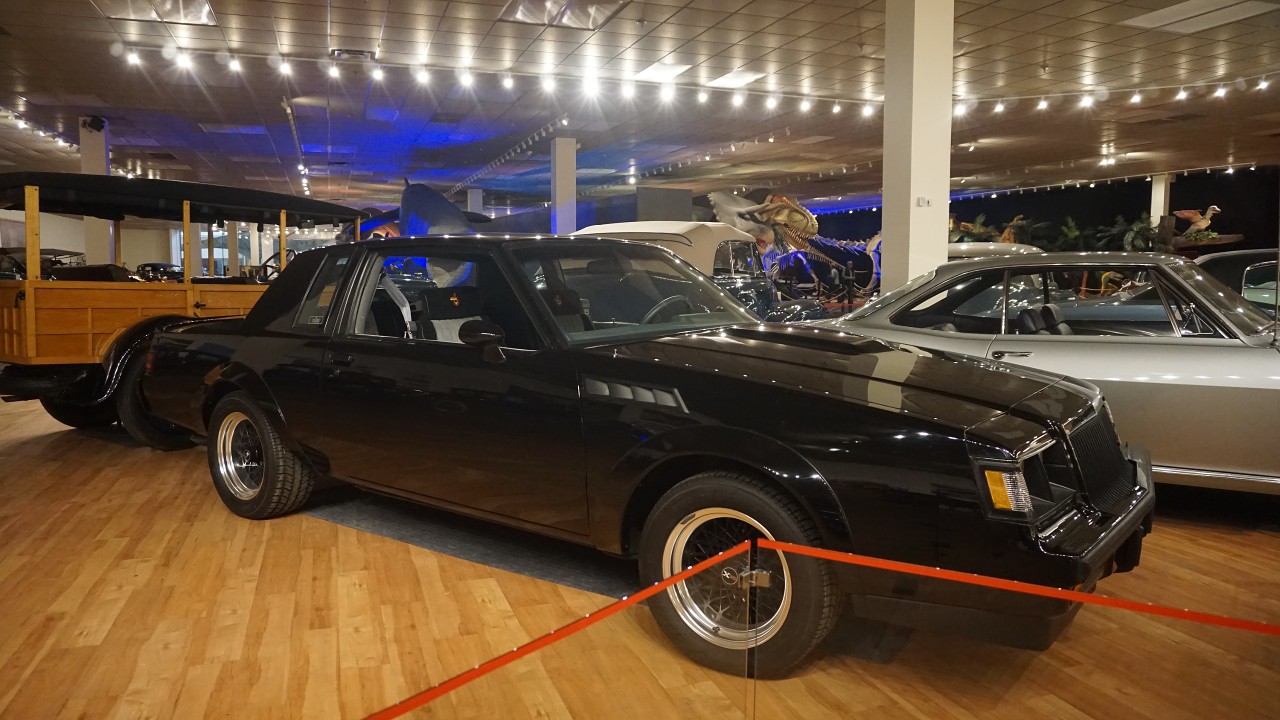
The 1987 Buick GNX arrived at the end of the muscle car era and immediately made almost everything else on the road look slow. With a stealthy black body and a turbocharged V6 that hit harder than many big-block V8s, it turned a conservative Buick coupe into a factory hot rod that embarrassed European exotics and domestic heroes alike. I see its legend as rooted in a simple, brutal fact: the GNX was engineered to dominate real-world street performance, not just spec sheets.
The last, wild swing from Buick and General Motors
By the time the Buick GNX appeared, General Motors was winding down the rear-drive Regal platform and knew it had one last chance to build a statement car. The company had already created the Buick Grand National, but the GNX was conceived as a more extreme sendoff that would let the model line, in the words of one period description, go out with a look that demanded respect. Only a limited run was built, which immediately separated it from the more common turbo Regals and framed it as a kind of factory-sanctioned outlaw.
To pull this off, Buick partnered with McLaren Performance Technologies and ASC, turning a fairly ordinary coupe into a focused performance machine. The collaboration between Buick and ASC/McLaren Performance Technologies went far beyond cosmetic tweaks, with the outside firms reworking key systems to create what Buick itself promoted as the “Baddest Buick Yet.” That factory blessing for such an aggressive image, combined with the car’s scarcity, helped the GNX feel more like a sanctioned street weapon than a typical showroom model.
Turbo V6 power that hit harder than big blocks
What truly terrified rivals was how the GNX’s V6 delivered its power. Under the hood sat a 3.8-liter V-6 that was anything but ordinary, combining a turbocharger and carefully tuned hardware to produce explosive midrange torque. Officially, the GNX was rated at 276 horsepower and 360 pound-feet of torque, figures that already put it in the realm of serious performance cars of its day. Contemporary analysis has noted that this output allowed the GNX to generate more torque than some big block V8 engines, despite having fewer cylinders and less displacement.
The way that power translated to the pavement was even more shocking. Officially, the GNX could sprint from 0 to 60 mph in about 4.7 seconds, a number that put it in direct contention with high-end European exotics of the era. Reports have also highlighted that Buick deliberately underrated the GNX’s performance, listing the same 276 horsepower and 360 lb-ft of torque on paper while real-world tests suggested even stronger output. For drivers used to lazy, softly tuned American coupes, the sudden, turbocharged surge of the GNX felt almost violent, which is exactly why it gained a reputation for humiliating more prestigious machinery in stoplight sprints.
Quarter-mile shock: quicker than halo exotics
The GNX’s straight-line performance did not just threaten other domestic cars, it encroached on the territory of halo exotics that defined 1980s performance culture. Period comparisons have pointed out that in the quarter mile, the Buick GNX could out-accelerate icons such as the Ferrari F40. That kind of matchup was not supposed to favor a boxy American coupe with a V6, yet the GNX’s combination of torque, gearing, and traction made it brutally effective over real-world distances where street races were actually decided.
Part of the shock came from expectations. Buyers looking at a Ferrari or a Lamborghini Countach anticipated extreme performance and paid accordingly, while few people expected a Buick to run with, or even outrun, those cars in a straight line. When testing showed the GNX covering the quarter mile more quickly than some of those exotics, it upended assumptions about what a Buick could be. That mismatch between the brand’s conservative image and the car’s actual capability is a big reason I see the GNX as so intimidating: it was not just fast, it was fast in a way that caught everyone off guard.
Engineering tricks that made the GNX hook and go
Raw power alone would not have been enough if the GNX simply spun its rear tires, so the chassis and suspension received serious attention. ASC’s Role in the project included work that Reinvented the suspension geometry to improve traction and reduce wheel hop, a common problem in powerful rear-drive cars of the era. The team also Installed unique hardware that helped the rear axle stay planted under hard acceleration, allowing the car to put its torque to the ground instead of wasting it in smoke.
These under-the-skin changes meant that when the turbo came on boost, the GNX launched with a level of composure that surprised drivers used to more unruly muscle cars. The Buick GNX Takes Turbo Engineering to New Heights compared with the Buick Grand National, even though the two looked similar at a glance. Though the body remained largely that of a standard Regal or Grand National, the GNX’s reworked suspension, upgraded drivetrain components, and carefully tuned turbo system turned it into a far more serious performance tool. I see that contrast as central to its menace: it looked like a familiar Buick, but it behaved like a purpose-built drag-strip weapon.
Stealth styling and a legend that only grew
Visually, the GNX leaned into understatement, which only amplified its impact on the street. The all-black paint, subtle fender flares, and functional vents gave it a sinister presence without the flamboyant wings or graphics of many 1980s performance cars. From a distance, it still read as a Buick Regal, which meant that unsuspecting drivers often had no idea what they were lining up against. When that unassuming coupe then delivered a 0 to 60 mph blast in about 4.7 seconds and pulled away from far more expensive machinery, the psychological effect was as powerful as the acceleration itself.
Over time, the GNX’s rarity and performance have turned it into a high-dollar collectible, with some examples trading hands for prices that would have seemed unthinkable when the car was new. Enthusiasts still reference it as the Fastest Production Car In The World of its time, a claim tied to the way the GNX’s 3.8-liter turbo V6 and carefully tuned chassis outperformed expectations. Stories of individual cars, including one GNX purchased for around $300000, show how its reputation has only intensified as the market recognizes what Buick and ASC created. For me, that enduring aura is the final piece of why the 1987 Buick GNX terrified everything on the street: it was not just a quick car in its day, it became a benchmark that still commands respect decades later.
More from Fast Lane Only: