The 1994 Alfa Romeo 164 arrived at a moment when its maker was fighting to stay visible in a luxury market dominated by German sedans. It was pitched as a modern, rational four door that could still deliver the emotional hit enthusiasts expected from the badge. In chasing that relevance, the 164 became both a technical turning point and, in the United States, a poignant last stand.
A sharp suit for a struggling marque
By the mid 1980s, Alfa Romeo needed a flagship that looked as contemporary as it drove, and the 164 delivered a shape that still reads clean today. The car was styled by Enrico Fumia of Pininfarina, with the first full scale model completed early in that decade, and the result was a crisp three box sedan with a low nose, strong shoulder line, and subtly kicked up tail. The Design language was a break from the softer curves of earlier Alfas, signaling that the company understood the squared off, aerodynamic look that had made executive cars from Germany and Sweden feel modern.
Underneath that body, the 164 was also a product of collaboration, not isolation. It shared the Type Four platform with the Fiat Croma, Lancia Thema and Saab 9000, all riding atop the same basic chassis but wearing very different personalities. According to period histories, it was the last model to be developed while the marque was still independent, even though it reached showrooms after Alfa had been folded into the Fiat group, a detail echoed in contemporary analysis that notes that by the time the 164 debuted, Alfa was already part of Fiat. That timing meant the car carried the last of the old Alfa DNA while also serving as a bridge to a more corporate future.
Engineering a front drive Alfa that still felt special
For a brand built on rear wheel drive sports sedans, putting its flagship on a front drive platform was a gamble, but the 164 tried to turn that layout into an advantage. Contemporary reviews of the 1994 Alfa Romeo 164 LS highlighted a supple ride, strong brakes, and a chassis that felt more agile than its size suggested, even as they acknowledged that enthusiasts would need to forgive the driven front axle. One detailed video review of a 1994 Alfa Romeo 164 LS underscored how the car blended comfort and performance, with a rev happy V6 and communicative steering that kept it from feeling like a generic executive sedan.
Later retrospectives have argued that this balance made the 164 one of the best driving Alfas of its era, even if it did not topple its German rivals. A deep dive into why the car struggled against BMW framed the project as Alfa’s attempt to build a sporting saloon that could beat BMW, noting that ever since BMW’s rise in the 1970s and 1980s, that had been the benchmark. The analysis concluded that while the 164 delivered character and involvement, it could not quite match the polish and brand momentum of its Bavarian competitor, which limited its impact in the very segment it was designed to conquer.
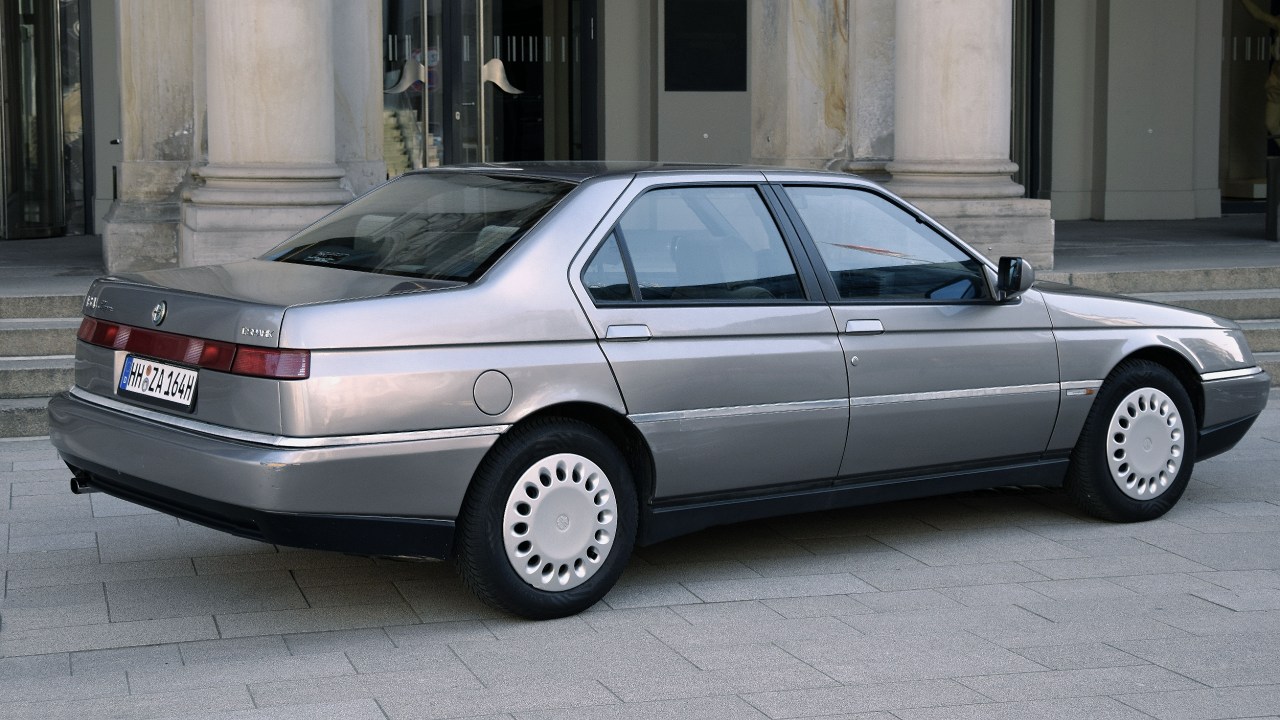
Type Four siblings and the Saab-adjacent identity
Part of the 164’s challenge was that it was not alone in its own skin. The Type Four project that produced the Alfa sedan also yielded the Fiat Croma, Lancia Thema and Saab 9000, all using the same basic architecture. Enthusiast histories of Saab point out that this agreement created four distinct cars from one chassis, and later commentary on the 1994 Alfa Romeo 164 has described it as a “Saab adjacent sedan” to emphasize how closely related it was to the Swedish model. That shared foundation helped Alfa control costs and improve quality, but it also meant the car had to work harder to justify itself as something more than a rebadged corporate cousin.
Alfa’s answer was to lean into style and mechanical character. While the Saab 9000 and Fiat Croma prioritized practicality and understated design, the 164 wore sharper lines and, in higher trims, more aggressive bodywork and wheels. It also offered distinctive powertrains, including the sonorous V6 that became a calling card for the model. Autopedia’s entry on the Alfa Romeo 164 notes that it was the first large front wheel drive Alfa, a technical milestone that set it apart from its platform mates and signaled a new direction for the brand’s engineering.
America’s brief encounter with the 164
In the United States, the 164’s quest for relevance was compressed into a very short window. Alfa Romeo had struggled in the American market for years, and a detailed blog from a long time observer notes that Sadly, Alfa pulled out of the U.S. market after the 1995 model year, leaving the few 164s sold there as orphans. That exit meant the car never had the chance to build a long term reputation among American buyers, even though it was intended to be a credible alternative to the European sedans that were gaining ground in upscale suburbs.
The rarity of certain versions underlines how tentative Alfa’s American push had become by the mid 1990s. A listing for a 1994 Alfa Romeo 164 Quadrifoglio notes that this particular Quadrifoglio is one of only 35 that was imported to the USA in 1994 and around 100 total that were imported in 1994 and 1995 before Alfa withdrew permanently. Those figures show how limited the car’s footprint really was, especially in its most performance oriented trim, and help explain why even dedicated enthusiasts can go years without seeing one on American roads.
Legacy, costs, and the orphan effect
Three decades on, the 164’s legacy is shaped as much by ownership realities as by its original engineering ambitions. Modern guides to Owning an Alfa Romeo emphasize that the brand comes with higher than average maintenance costs, driven by specialized parts, premium fluids, and a smaller network of service centers compared to mainstream brands. That pattern is echoed in enthusiast discussions of the 164 specifically, where one owner considering a 164S acknowledged that The Fwd layout was forgivable, but warned that the cost of parts and inevitable labor costs should be a red flag for an older model. Those concerns are magnified for a car that was sold in relatively small numbers and then abandoned by its manufacturer in a key market.
At the same time, the 164 benefits from some practical strengths that help it survive as a classic. A detailed technical overview of the model notes that the resistance to rust of galvanized iron is very high, and that the guarantee against through corrosion was a selling point when the car was new, a claim backed up in a Jul era explainer on the car’s construction. Combined with its role as Alfa’s first large front wheel drive sedan and the last project developed before full integration into Fiat, the 164 has become a touchstone for enthusiasts who see it as Alfa’s first last stand in the modern era, a phrase used in a retrospective that explicitly labeled the 1991 to 1995 Alfa Romeo 164 that way. In that sense, the 1994 model did manage to chase relevance, not by beating BMW on sales charts, but by crystallizing a moment when Alfa was trying to reconcile its past with a very uncertain future.
More from Fast Lane Only: