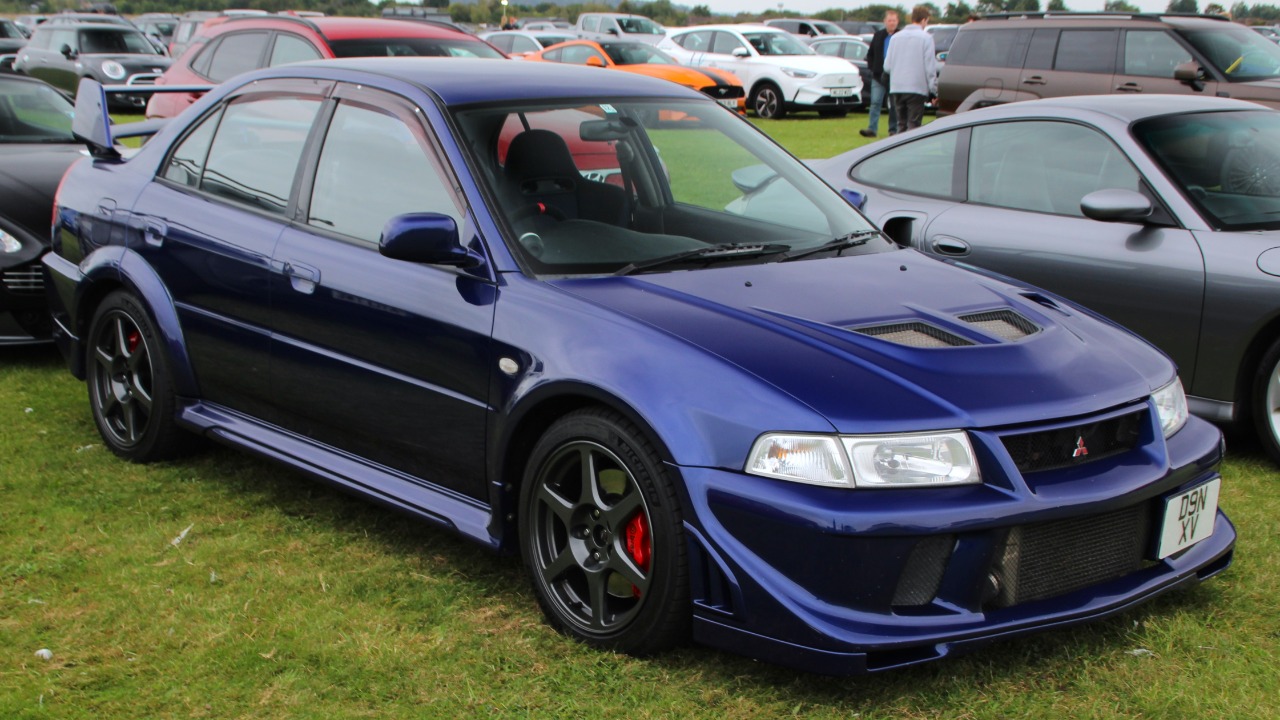
The 1999 Mitsubishi Lancer Evolution VI did not just win rallies, it arrived as a fully focused weapon built to exploit every corner of the regulations and every patch of loose gravel. Its blend of mechanical toughness, clever aerodynamics, and relentless development around top-level competition turned a compact sedan into a serial winner on the world stage. When I look back at that season, I see a car that translated engineering detail into stage times with ruthless efficiency.
To understand how the Lancer Evolution VI dominated, I need to trace how Mitsubishi refined the platform for the World Rally Championship, how the car’s hardware was tuned for brutal mixed-surface events, and how its competition record, including the Tommi Mäkinen Edition, cemented a legacy that still shapes how we talk about rally-bred performance today.
From Group A roots to a title-winning weapon
The story of the 1999 car starts with regulation sheets rather than posters on bedroom walls. The Evolution line had been honed under strict Group A homologation rules, and the VI was the last generation of Evo that had to stay faithful to the road-going Mitsubishi Lancer Evolution shell while still delivering world-class pace. That constraint forced engineers to chase gains in cooling, durability, and aerodynamics rather than radical chassis redesigns, which is exactly where the 1999 car pulled ahead of its rivals. The Evolution VI’s changes mainly focused on cooling and engine durability, with a larger intercooler, a larger oil cooler, and revised internals that let the turbocharged four-cylinder survive full-boost punishment over long stages, as detailed for The Evolution VI.
That engineering focus paid off in the World Rally Championship, where reliability was as decisive as outright speed. Official accounts from CYPRESS, Calif describe how Mitsubishi Motors North America framed the 1999 season as a high point, noting that success in the FIA World Rally Championship led to the 1999 Championship for the brand and its star driver, with the Lancer platform at the center of that achievement from FIA competition. When I connect those dots, I see a car that was not just quick on a single stage but robust enough to carry a full-season campaign, which is the real test of a rally machine.
How the Evo VI exploited the 1999 WRC landscape
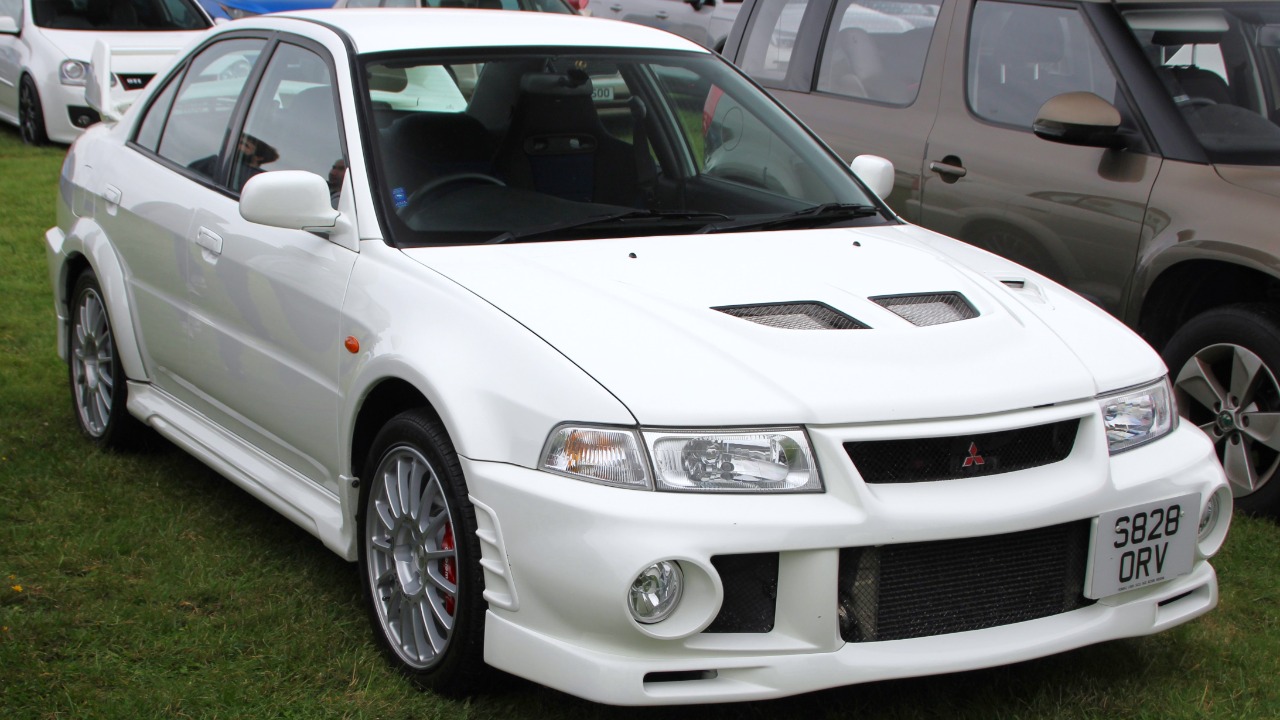
Context matters, and in 1999 the World Rally Championship was in the middle of a regulatory shift that the Lancer Evolution VI managed to surf perfectly. The Evo VI was the last Group A Lancer to compete in the WRC before Mitsubishi was forced to adopt World Rally Car rules, which allowed more radical body and suspension changes, as chronicled in a detailed history of The Evo VI. That meant the 1999 car was fighting against increasingly specialized rivals while still rooted in a production shell, yet it remained competitive enough to deliver a fourth straight drivers’ title for its lead driver. The fact that it could do that while carrying the constraints of Group A tells me just how well optimized the package had become.
At the same time, the rules were being stretched by other manufacturers. Official WRC records note that, Despite the production model the compact 206 WRC was based on, it did not meet the minimum overall length of 4m imposed by the WR regulations, which forced creative homologation solutions for the 206. While rivals were bending the rulebook to shrink their cars, Mitsubishi doubled down on refining the existing Lancer footprint, trusting that a well-sorted, slightly larger chassis with proven suspension geometry could still win. In my view, that decision to evolve rather than reinvent gave the Evo VI a stability advantage on rough rallies where predictability mattered more than ultimate nimbleness.
Aerodynamics, chassis tuning, and that towering rear wing
On loose surfaces, grip is a currency you never have enough of, and the Lancer Evolution VI treated aerodynamics as a way to buy a little more of it. The rear spoiler was adjusted for better downforce, which helped maintain stability at high speeds, a critical factor in both rally stages and the road-going versions that shared the same basic hardware, as explained in a comprehensive rear spoiler guide. I see that wing not as a styling flourish but as a functional tool that kept the rear axle planted over crests and through fast sweepers, letting drivers commit earlier to the throttle without the car feeling nervous.
Underneath, the chassis tuning was equally single-minded. The Lancer Evolution VI, introduced in 1999, was engineered for the rigors of the World Ra calendar, with suspension and drivetrain settings that could be adapted from ice to gravel to tarmac while preserving the same basic handling balance, a point underlined in a profile of The Lancer Evolution VI. When I picture the car attacking a stage, I think of that combination of downforce, all-wheel drive traction, and carefully matched spring and damper rates that let it float over rough sections without losing contact, which is exactly what wins rallies measured in tenths of a second.
Monte Carlo, Mäkinen, and the art of winning on ice
If there is a single event that captures why the Evo VI was so dominant, it is the Monte Carlo Rally at the start of the 1999 season. In Jan of that year, the Monte Carlo Rally served as a crucible of ice, snow, and tarmac, and one machine emerged as the benchmark in those treacherous conditions, as highlighted in a retrospective that revisits the Monte Carlo Rally. Watching footage from that event, I am struck by how composed the Lancer looks on mixed grip, its nose darting into corners while the rear wing and all-wheel drive system keep the car aligned with the driver’s intent rather than the camber of the road.
The season that followed confirmed that Monte Carlo was no fluke. In spite of still driving a group A car, things started very well for Mitsubishi, as Mäkinen got his third consecutive Monte Carlo win by a narrow margin of 8 seconds, a result that set the tone for the rest of the year and is dissected in a technical analysis of how Mitsubishi and its driver extracted that performance. For me, that razor-thin victory margin illustrates how every detail on the Evo VI, from cooling upgrades that preserved power to aero tweaks that stabilized the car, translated directly into stage time when it mattered most.
Tommi Mäkinen Edition and the lasting legacy of the Evo VI
Even away from the stages, the 1999 car’s influence is obvious in how enthusiasts still talk about it. It represented the pinnacle of Mitsubishi’s success in World Rally Championship competition, cementing the Evo series as a reference point for turbocharged, all-wheel drive performance and continuing to shape the automotive landscape long after the regulations moved on, as argued in a feature on how Mitsubishi reached its rallying peak. When I talk to fellow fans, the Evo VI is often the mental image they have when they hear the word “Evo,” which says a lot about how deeply that season imprinted itself.
Part of that legacy comes from the road-going specials that spun directly out of rally success. However, the most popular model is arguably the Tommi Mäkinen Edition, sometimes referred to as the “Evo 6.5,” which sharpened throttle response and delivered more accessible torque by making peak twist available at a lower rpm, as detailed in an enthusiast breakdown of the Tommi Edition. That car distilled the lessons of the 1999 campaign into a package ordinary drivers could buy, and in my mind it is the clearest proof that the Evo VI’s dominance was not just about trophies but about creating a template for how a rally car should feel on any road.
More from Fast Lane Only: