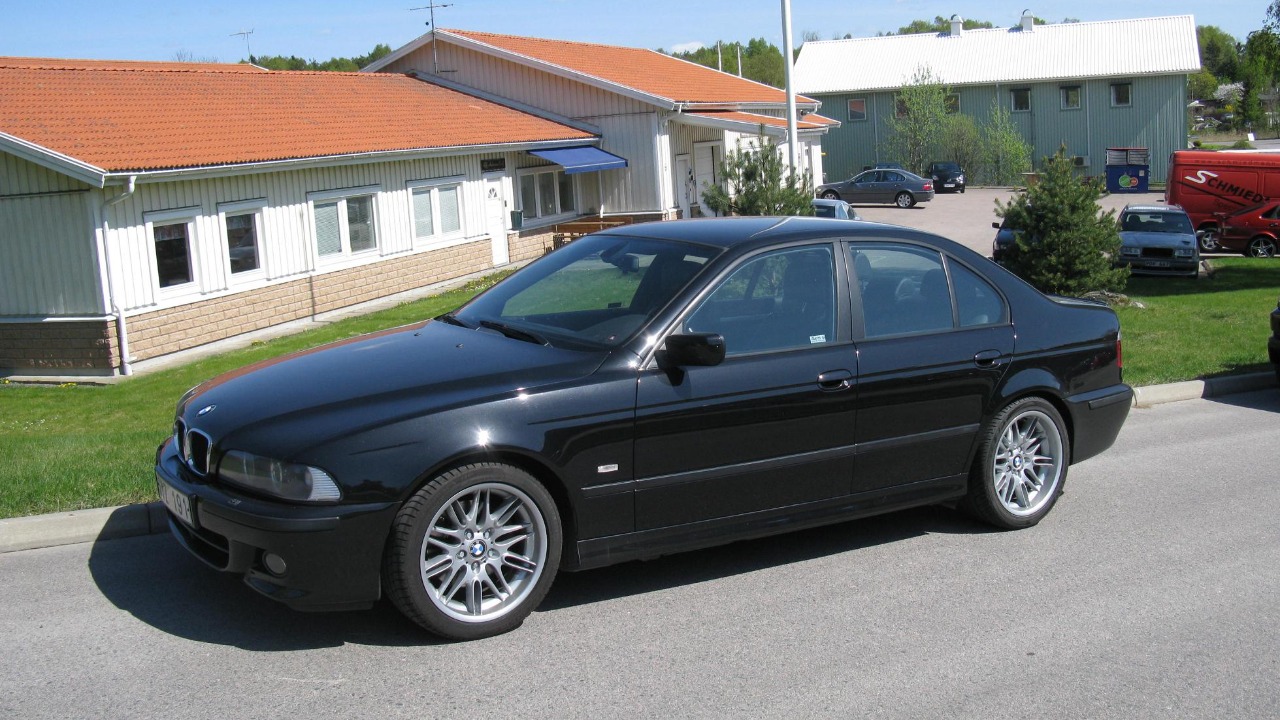
The 1995 BMW M5 did not arrive with fireworks or a radical new silhouette, yet it quietly reset expectations for what a fast four-door could be. Beneath its reserved E34 body, it fused race-bred engineering with everyday usability in a way that still feels like a benchmark for sports sedans. I see that final-year car as the moment when the M5 formula matured, proving that genuine performance did not need to shout to be taken seriously.
The last analog M5 finds its stride
By 1995, the E34-generation BMW M5 had evolved into a confident, highly polished machine that hid its intent behind a straight-edged, almost conservative suit. The basic shape dated back to the late 1980s, but the final cars carried a depth of development that made them feel more complete than their age suggested. Rather than chasing visual drama, BMW focused on refining the chassis and powertrain so the car could deliver serious pace while still behaving like a calm executive sedan on a long motorway run.
That restraint is part of why I think the 1995 model year stands out. It represents the end of an era in which a super-sedan could still pass for a regular 5 Series at a glance, even as it was being hand-finished by specialists. The bodies were built on the main line, then the shells were transported to BMW M GmbH in Garching where each car was assembled by hand over a period of weeks, a process that gave the E34 an almost coachbuilt feel that later, higher-volume M5s could not quite replicate.
A straight-six with supercar roots
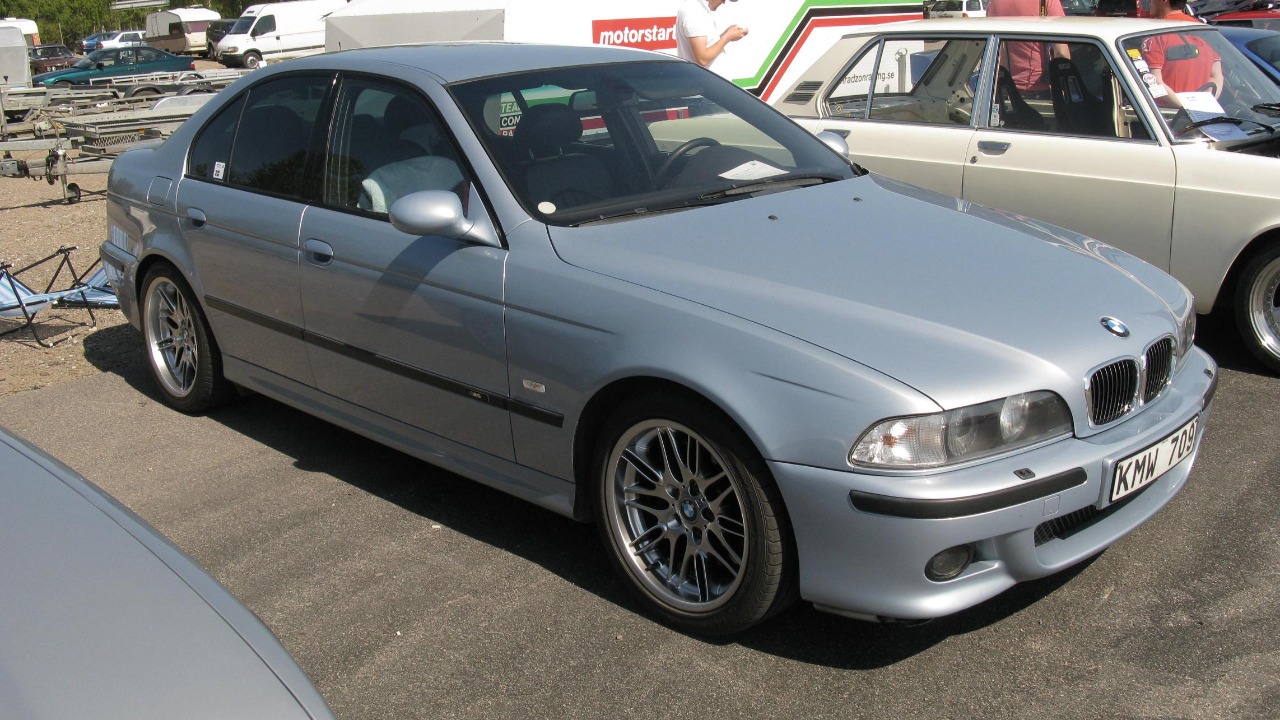
At the heart of the 1995 BMW M5 sat the S38B38, a 3.8 liter straight-six that traced its lineage directly back to the BMW M1. That connection matters, because it meant the sedan’s engine shared DNA with a mid-engined supercar rather than a mass-market saloon. In its final form, the S38B38 combined high-revving character with a broad spread of torque, so the car felt alert whether I imagine it being short-shifted through traffic or stretched out on an empty autobahn.
The details of that engine underline how serious the package was. The S38B38 used revised internals, including stronger and lighter pistons and rods, and enthusiasts still talk about it as one of those powerplants that car lovers dream of when they think of classic straight-sixes. Each unit was part of a car that was hand-assembled, giving the E34 M5 a reputation for almost obsessive attention to detail and a driving experience that mixed jet thrust with what one period account memorably described as murderous style, a character that is captured in depth in Sep writing about the E34 M5’s S38B38.
Performance that matched sports cars, not sedans
On paper, the 1995 BMW M5 delivered numbers that still look respectable today, and in the mid‑1990s they were startling for a four-door. The 3.8 liter engine produced 335 horsepower, and contemporary figures quote a top speed of 155 m per hour, a 0 to 60 sprint in 5.9 seconds, and a displacement listed simply as 3.8. Those figures, all wrapped in a package with seating for five and a usable trunk, meant the car could run with dedicated sports machines while carrying a family and luggage, a balance that few rivals could match at the time.
What impresses me is how those statistics were delivered without electronic trickery or all-wheel drive. The 1994 and 1995 E34 sedans relied on a front‑engine, rear‑drive layout, a manual gearbox, and carefully tuned suspension rather than complex driver aids. Period technical breakdowns list the engine as a 3.8 L Inline 6 with 335 hp, a 155 m per hour maximum, and a 5.9 second sprint to highway speeds, all summarized in the kind of Tech Specs Summary that makes it clear just how advanced the car was for its day.
The “gentleman’s missile” character
Numbers only tell part of the story, though, and the E34 M5’s real magic lies in how it blended speed with subtlety. Contemporary enthusiasts often describe it as a gentleman’s express, a car that could cross continents at high speed without ever drawing the wrong kind of attention. The styling was understated, with only modest bodywork changes and discreet badging to hint at what was going on under the skin, so the car looked more like a well‑optioned 5 Series than a track refugee.
That dual personality is why I think the 1995 model quietly set a template that later performance sedans would follow. It had the pace of a serious sports car but the looks of a family saloon, a combination that one retrospective summed up with the line that the BMW E34 M5 Had Sports Car Speed And Family Car Looks. The same analysis likened the earlier E28 M5 to a Boeing 737 in speed and argued that, If the first‑generation car was a 737, the E34 was closer to a Concorde in the way it moved the game on, a comparison that captures just how far the second‑generation M5 advanced the formula, as explored in detail in a piece on how the BMW E34 M5 Had Sports Car Speed And Family Car Looks.
How the 1995 car shaped the M5 legacy
Looking back, I see the 1995 BMW M5 as the point where the M5 stopped being an experiment and became an institution. The original E28 had proven that a super‑saloon could exist, but the E34, unveiled in the late 1980s and refined through to its final years, showed that the concept could be executed with real polish. By the time that last 3.8 liter car rolled out of Garching, the idea of a discreet four‑door with supercar‑level pace had become part of the BMW identity rather than a niche curiosity.
Later generations would add more power, more cylinders, and eventually more electronics, yet they all trace their lineage back to the template set by the E34. Guides to every generation of the M5 consistently highlight how BMW refused to let the M1’s straight‑six go to waste and revised it for this second‑generation sedan, a decision that anchored the car’s character in motorsport‑derived engineering rather than marketing spin. That continuity, from the M1 to the E34 and beyond, is why I think the 1995 model year still feels like a quiet benchmark, a moment when the M5’s core values were locked in place, as reflected in overviews of every generation of the BMW M5.
More from Fast Lane Only: